

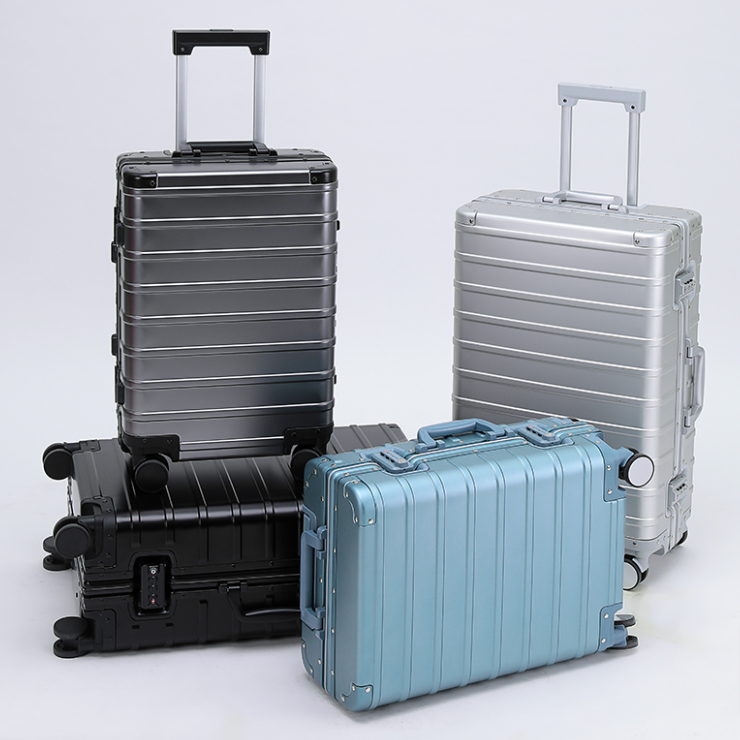
Titanium Luggage Manufacturer: OEM Sourcing Guide for Premium Brands
Titanium luggage occupies the highest tier of the hard-shell market — lighter than aluminum, stronger than steel, with a surface character that no other material replicates. It is also the most frequently misrepresented material in luggage OEM quotes.
The manufacturing process for genuine titanium luggage requires specialist forming equipment, alloy-specific tooling, and raw material sourcing that most factories have not invested in. The result is a market where factories quote titanium production, provide aluminum samples, and describe the difference as a finish variation. For premium brand buyers, the gap between what is quoted and what arrives in bulk production can define the brand’s credibility at its highest price point.
This guide covers what genuine titanium luggage manufacturing requires, how to verify factory capability before any budget is committed, and what realistic production parameters look like for a brand positioning titanium at the top of its product line.
At Aluvox, we manufacture titanium luggage alongside aluminum and polycarbonate lines from our Dongguan, Guangdong facility. Our titanium program starts from 300 pieces for existing styles, with sample production in 20 working days. The framework below reflects what we know from actually producing this material — and what buyers should ask any factory that claims the same.
Why Titanium Luggage Is Different to Manufacture
The properties that make titanium attractive as a luggage material are the same properties that make it difficult to manufacture.
Titanium’s strength-to-weight ratio is higher than aluminum — a titanium shell can be formed thinner and lighter while maintaining greater structural integrity. Its corrosion resistance requires no surface treatment for protection, unlike aluminum which requires anodizing or coating to prevent oxidation. And its surface character — a distinctive muted metallic appearance — cannot be convincingly replicated with paint or surface treatment on other materials.
The manufacturing challenge is that titanium cannot be processed using the same tooling and equipment as aluminum. Aluminum luggage is produced by stamping aerospace-grade Series 5 alloy sheet using steel stamping dies. Titanium requires different die materials, different forming pressures, and longer production cycles. The alloy grade matters: Grade 1 and Grade 2 commercially pure titanium are workable for luggage applications; lower-grade or unspecified titanium alloys produce shells with inconsistent mechanical properties.
What this means for sourcing:
A factory that produces aluminum luggage has not automatically acquired titanium production capability. The equipment overlap is limited. A factory quoting titanium production should be able to show you forming equipment rated for titanium alloy, demonstrate active titanium production — not staged equipment — and provide alloy grade documentation for their raw material sourcing.
Factories that cannot do any of these three things are not manufacturing titanium luggage. They are finishing aluminum product with a surface treatment designed to approximate the titanium appearance.
Verifying Genuine Titanium Manufacturing Capability
The verification process for titanium manufacturers is more rigorous than for aluminum or PC because the misrepresentation rate is higher and the price point consequences of discovering the misrepresentation post-delivery are more severe.
Raw Material Documentation
Request the alloy grade certificate for the titanium used in production. Grade 1 and Grade 2 commercially pure titanium are the appropriate specifications for luggage-grade shells — they provide the combination of formability and structural performance the application requires. Unspecified “titanium alloy” in a quote, without grade documentation, is a flag.
A legitimate titanium supplier provides a mill certificate documenting alloy composition, mechanical properties, and batch traceability for every production run. This is standard practice in aerospace and industrial titanium supply chains. Luggage manufacturers using genuine titanium source from the same supply chains and have the same documentation available.
Production Equipment Verification
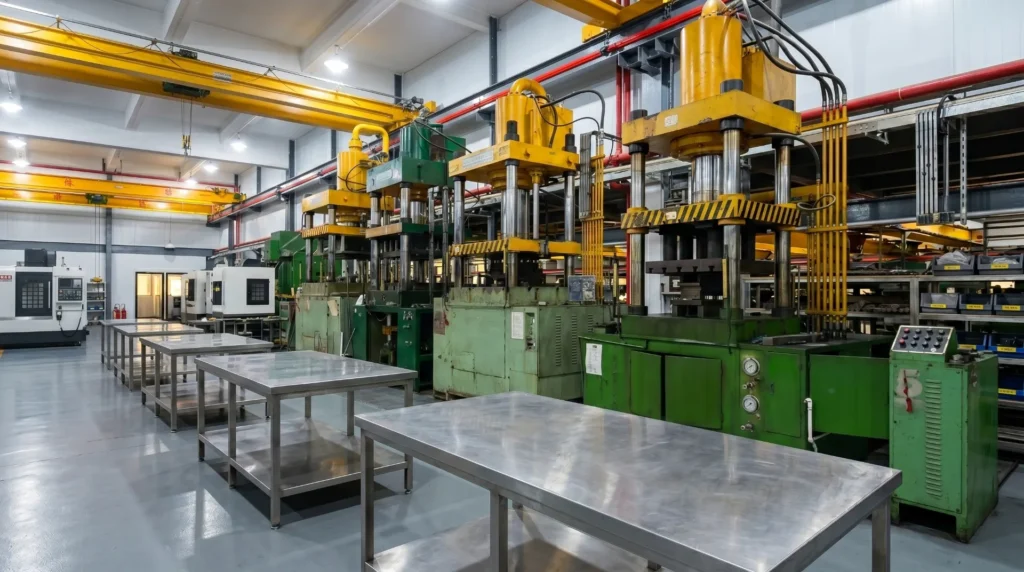
Request documentation of the forming equipment used for titanium production — equipment model, rated capacity, and evidence of active use. During a site visit, verify that the equipment is operational, that titanium material is present in the production area, and that production staff can speak to the forming process parameters for titanium specifically.
A factory that redirects site visit requests, provides only showroom access, or cannot demonstrate active titanium production is not producing it in-house. At Aluvox, our titanium production runs on dedicated equipment at our Dongguan facility, and third-party factory audits are supported on request.
Surface Authenticity
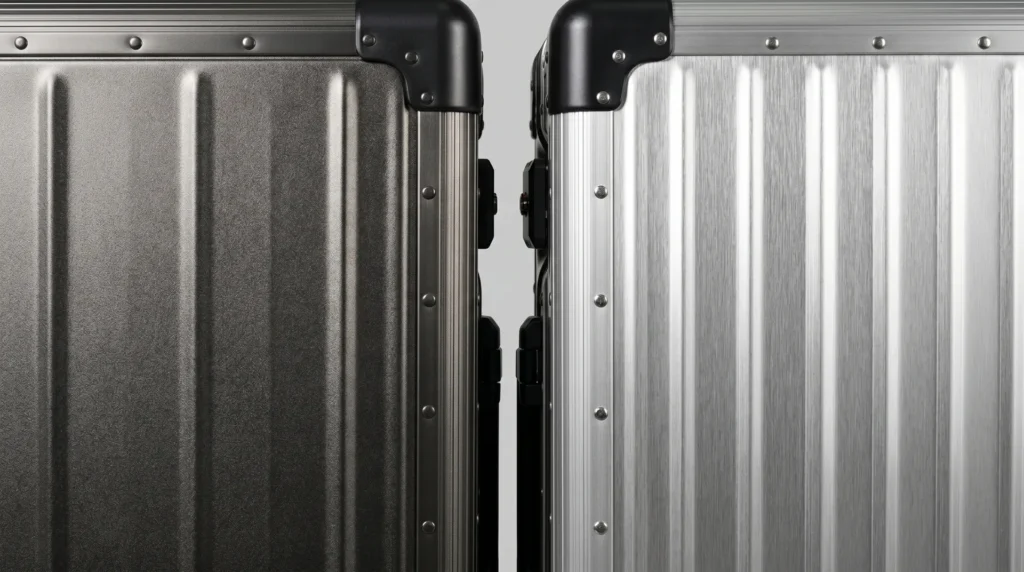
Genuine titanium has a distinctive surface character that cannot be replicated with surface treatment. Under close inspection, a painted or coated aluminum shell — even one finished to approximate the titanium appearance — shows a different surface depth and light response than machined or anodized titanium.
Request an unfinished shell sample and a finished shell sample. Compare the surface at different lighting angles. Ask the factory to explain the surface treatment process step by step. A factory producing genuine titanium can explain this immediately. A factory finishing aluminum to look like titanium will describe a coating or treatment process rather than a material-native surface.
Aluvox Titanium Luggage OEM Program
For brand buyers evaluating Aluvox as a titanium luggage manufacturing partner:
Material specification: Aerospace-grade titanium alloy, forming process optimized for luggage shell geometry. Surface finish reflects the material’s native character — no coating applied to simulate titanium appearance on an alternative substrate.
Production parameters:
| Parameter | Specification |
|---|---|
| MOQ | 300–500 pcs / style |
| Sample lead time (existing tooling) | 20 working days |
| Bulk production lead time | Project-dependent |
| Customization scope | Shell finish, hardware, logo, lining |
| Export ports | Huangpu, Nansha, Shekou, Yantian |
| Shipment terms | FOB, EXW, CIF |
Brand fit: Aluvox’s titanium program is structured for premium brands positioning a hero SKU at the top of their product line — a flagship carry-on or limited edition that establishes material authority for the brand. The low MOQ threshold relative to the material’s exclusivity allows brands to launch titanium without the volume commitment that most factories require.
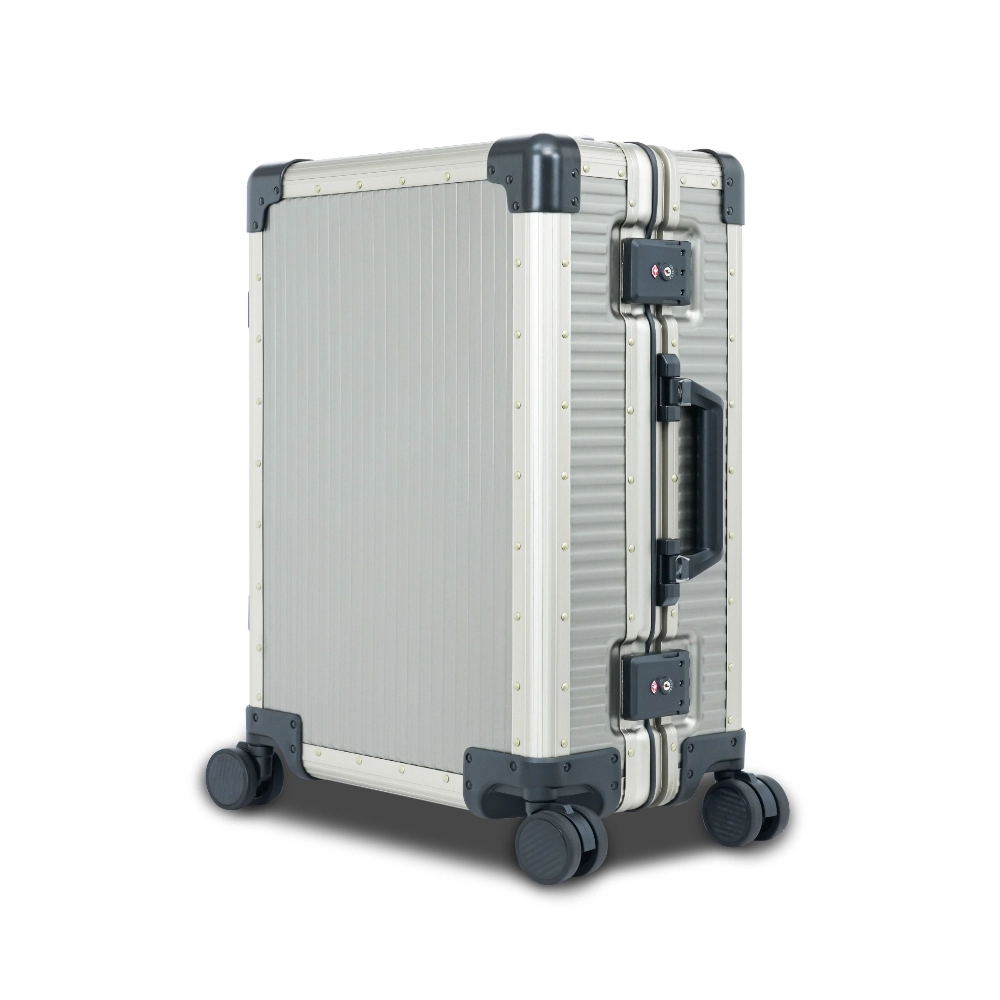
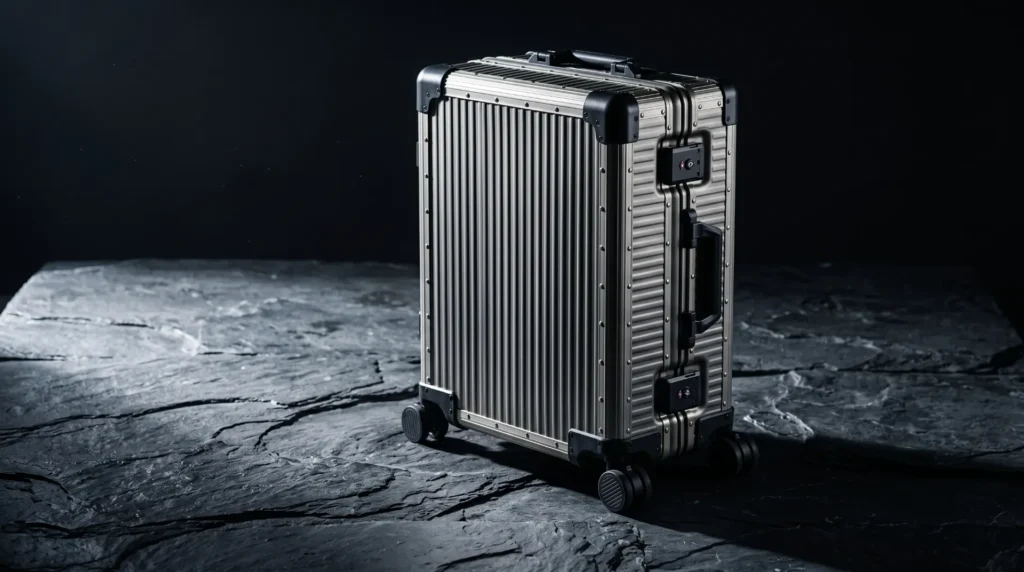
View the Aluvox TT-001 titanium luggage as a reference for current production capability →
For brands considering both titanium and aluminum in their product line, see: Aluminum vs Polycarbonate Luggage: OEM Material Selection Guide →
Request a titanium luggage sample — verify material authenticity, surface character, and production quality before committing to bulk production. Request Sample
Positioning Titanium in Your Product Line
Titanium works as a brand positioning tool when it is used with intention. A brand that launches with titanium as its only product is making a significant bet on a material that limits commercial reach by price point. A brand that introduces titanium as a hero SKU above an established aluminum or polycarbonate line uses it to expand brand authority without sacrificing volume.
When titanium makes strategic sense:
Your brand already has an established aluminum or PC line and needs a product that signals material leadership at a higher price point. Your target distribution channel — duty-free, specialty retail, direct-to-consumer at the premium tier — supports a retail price of $400 and above for a carry-on format. You are targeting a brand segment — professional travel, corporate gifting, limited edition collectibles — where material exclusivity has direct commercial value.
When titanium is premature:
Your brand is in its first product cycle and has not yet established consumer demand at any price point. Your primary channel is e-commerce or mass retail where the price point titanium requires is above the conversion threshold for your audience. Your volume requirements are too low to justify the production economics of a specialist material.
For most brands, the progression is: polycarbonate to establish market presence, aluminum to establish material authority, titanium to establish material leadership. Aluvox supports all three stages within a single manufacturing relationship — eliminating the supplier transition risk that typically accompanies brand scaling in the luggage category.
For guidance on evaluating OEM manufacturing partners across material categories, see: How to Choose an OEM Luggage Manufacturer in China →
Four Red Flags When Sourcing Titanium Luggage
Factory cannot provide alloy grade documentation
No mill certificate means no verified material sourcing. A factory that cannot identify the specific titanium grade they use is either sourcing from unverified channels or is not using titanium at all. This is a disqualifying condition.
Site visit reveals no titanium-specific forming equipment
Titanium forming requires different equipment than aluminum stamping. A factory showing only aluminum stamping presses and claiming titanium capability is not producing titanium in-house. Verify equipment during the site visit — do not accept catalog photographs as evidence.
Sample surface shows coating or paint application
A genuine titanium surface does not require coating for appearance or protection. A sample with a painted or coated finish is almost certainly aluminum finished to approximate titanium. Request an unfinished shell and examine the substrate.
Quote is priced at aluminum levels
Titanium raw material carries a significant cost premium over aluminum. A titanium luggage quote priced comparably to aluminum production is either using a different material, sourcing from unverified channels, or pricing in a way that cannot be sustained through bulk production without quality substitution.
For a complete supplier evaluation framework, see: How to Vet Industrial Luggage Suppliers →
The Right Titanium Partner Is a Specialist, Not a Generalist
Titanium luggage production is a specialist capability. Most factories that produce aluminum and polycarbonate luggage well have not made the equipment and process investment required to produce titanium to specification. The verification framework above identifies which factories have made that investment — and which ones have not.
A brand positioning titanium at the top of its product line is making a material promise to its customers. The factory that produces that product needs to be capable of keeping that promise across every production run, not just the sample.
If you are evaluating titanium production for a premium product line, Aluvox engineers are available to discuss your specifications and provide a production quote with full material documentation and factory audit support.
Contact an Aluvox Engineer — submit your target retail positioning, order volume, and timeline. We will provide a titanium production assessment and indicative quote within 2 business days. Contact Engineering Team