

Buying Luggage in Bulk: A Wholesale Sourcing Guide
Buying luggage in bulk is a fundamentally different decision from buying a few pieces. The volume changes everything downstream: your unit price drops, but your upfront cash commitment rises; your supplier options shift from retailers to wholesalers and manufacturers; and you take on inventory that has to sell. Bulk buying is where a reseller, retailer, or corporate buyer either builds a healthy margin or ties up cash in stock that moves too slowly.
This guide covers the mechanics most first-time bulk buyers learn the hard way. How order volume sets your unit price, the trade-offs that come with buying in quantity, the difference between buying from a luggage wholesaler versus a manufacturer, and how to source bulk luggage at the volume that fits your business rather than the volume a supplier pushes.
It is written for the buyer’s side — resellers, retailers, corporate buyers, and brands — not as a sales pitch. At Aluvox, we manufacture luggage in volume for brands and bulk buyers from our Dongguan facility, so the framework applies to sourcing from us as readily as from any wholesaler or factory.
What “Bulk” Actually Means — And the Volume Tiers
“Bulk luggage” covers a wide range of volumes, and the volume tier you fall into determines your price, your supplier type, and your terms. Roughly, bulk buying breaks into three tiers.
Small bulk — tens to low hundreds. A retailer stocking a shelf, a small reseller testing a product, or a company outfitting a team. At this tier you buy from wholesalers and distributors who hold stock, accept smaller orders, and ship quickly. Unit prices are better than retail but not at factory levels, because you are buying through a middleman who holds inventory for the convenience of smaller, faster orders.
Mid bulk — several hundred to low thousands. A growing reseller, a retail chain, or a brand placing a production order. This tier reaches manufacturer minimums — most luggage factories set MOQs in the few-hundreds range per style. Buying at this tier from a manufacturer rather than a wholesaler captures factory pricing, but requires a production lead time rather than shipping from stock.
Large bulk — thousands and up. A large retailer, a national distributor, or a brand scaling a proven line. At this tier unit price drops significantly as fixed costs amortize across the order and the factory optimizes a full production run and container load. This is where bulk economics work hardest in your favor.
Knowing your tier tells you who to source from. Small bulk points to wholesalers; mid and large bulk point to manufacturers. The most common bulk-buying mistake is sourcing from the wrong supplier type for your volume — paying wholesaler markups on a manufacturer-sized order, or pushing a wholesaler for factory prices it cannot offer. For the deeper comparison of these sourcing models, see: Wholesale Luggage Buying Guide →
How Volume Sets Your Unit Price
The central mechanic of bulk buying is that unit price falls as volume rises — but understanding why helps you negotiate and plan, rather than just hoping for a discount.
Fixed costs amortize across more units. Every order carries fixed costs — setup, tooling if customized, quality control, documentation, and the factory’s minimum run economics. Spread across 100 units, those fixed costs add meaningfully to each piece. Spread across 1,000, they nearly disappear per unit. This is why the jump from small bulk to mid bulk often produces the steepest per-unit savings.
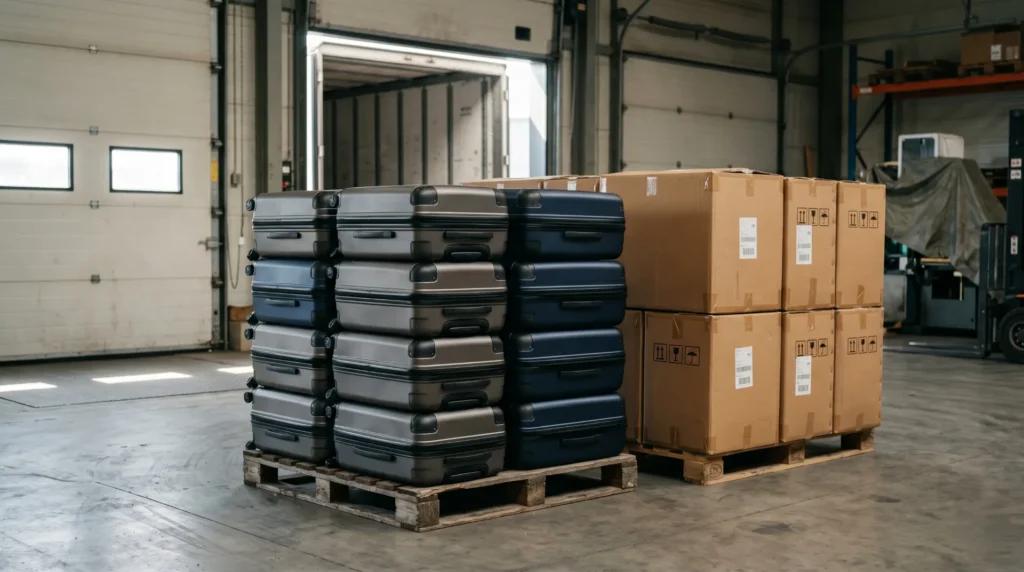
Container economics reward full loads. Freight is a major component of landed cost, and shipping is most efficient at full-container-load volumes. An order that fills a 40-foot high-cube container moves at a far better per-unit freight rate than a partial load. Buyers who plan their volume around container capacity capture a freight efficiency that smaller orders cannot.
Material and production efficiency at scale. Larger runs let a factory buy raw materials more efficiently and run production without costly line changeovers. A vertically integrated factory controlling its own materials passes more of this efficiency through at volume than a trader reselling finished stock.
The practical takeaway. When modeling bulk luggage economics, model at realistic volume and full landed cost — not just the quoted unit price at the minimum. The per-unit price at the volume you will actually reorder is the number that determines your margin. And remember the trade-off behind every discount: a lower unit price at higher volume only helps if that volume actually sells. For how minimum orders and color splitting work in practice, see: Custom Luggage MOQ Guide →
The Trade-offs of Buying in Bulk
Bulk buying lowers unit cost, but it is not free money — it shifts risk onto your balance sheet. Being honest about the trade-offs is what separates profitable bulk buying from cash tied up in a warehouse.
Cash commitment. A bulk order ties up capital upfront, often months before the goods sell. The deeper the discount, the larger the order, and the more cash committed. A bulk buy that captures a great unit price but drains the working capital the business needs elsewhere is not a good deal. Match your order size to the cash you can commit without starving operations.
Inventory risk. Bulk luggage has to sell, and at the rate you projected. Overestimate demand and you hold stock that ages, occupies warehouse space, and may need discounting to clear — erasing the margin the bulk price created. Conservative first orders that prove sell-through before scaling are how experienced buyers manage this risk.
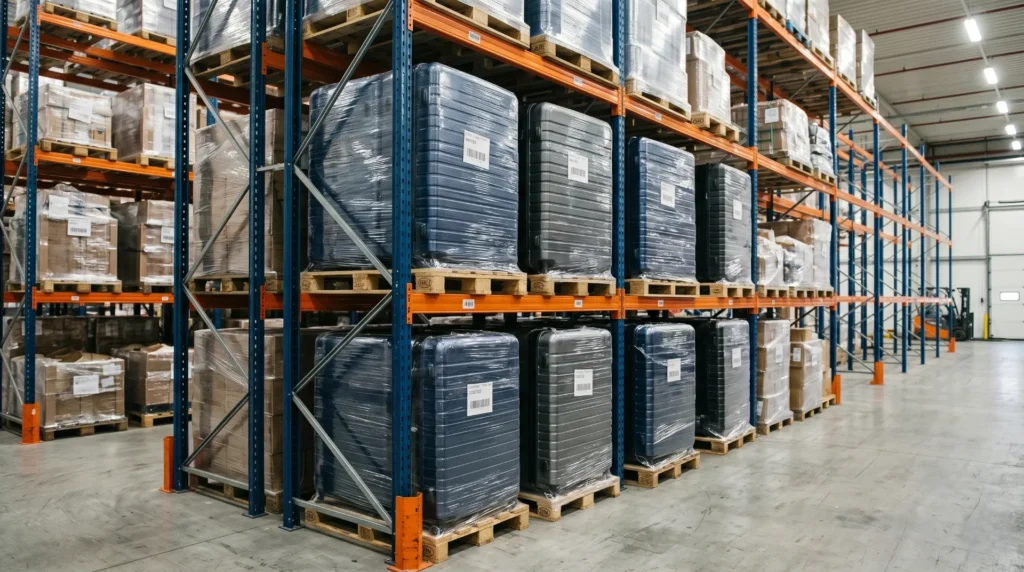
Storage and handling. Luggage is bulky by nature — it occupies significant warehouse volume per unit of value. Factor storage cost and handling into the true cost of a bulk order; the unit price on the invoice is not the full carrying cost.
Reorder flexibility. A very large single order locks you into one specification and one moment’s demand read. Sometimes several mid-sized orders — even at a slightly higher unit price — give a business the flexibility to adjust styles, colors, and volumes as it learns what sells. The lowest unit price is not always the best business decision.
The discipline of bulk buying is matching order size to what you can finance, store, and sell — not simply chasing the lowest unit price. A well-sized bulk order builds margin; an oversized one builds a warehouse problem.
Luggage Wholesalers vs Manufacturers for Bulk Orders
A key bulk-sourcing decision is whether to buy from a luggage wholesaler or directly from a manufacturer. They serve different volumes and offer different advantages.
Luggage wholesalers and distributors. Wholesalers hold stock and sell it on in bulk, typically serving the small-to-mid bulk tiers. Their advantages are speed (they ship from inventory rather than producing to order), lower minimums, and the ability to buy a mix of styles without per-style production minimums. The trade-off is price — you pay the wholesaler’s markup over factory cost — and limited customization, since you are buying existing stock rather than a made-to-order product.
Manufacturers. Buying directly from a manufacturer captures factory pricing and unlocks customization — your branding, colors, and specifications — but requires reaching the factory’s MOQ per style and accepting a production lead time. For mid and large bulk, and for any buyer who wants branded or private-label product, the manufacturer is the better source. For pure speed on small mixed orders of generic stock, the wholesaler wins.
The hybrid reality. Many growing businesses start with wholesalers to test the market quickly at low volume, then move to manufacturers once volume justifies factory minimums and they want their own branding. The shift from wholesaler to manufacturer is a natural step as a bulk buyer scales — it trades speed and flexibility for price and brand control. For the full vetting framework on either path, see: Suitcase Manufacturers: A Buyer’s Evaluation Guide →
How to Source Bulk Luggage Well
Beyond choosing a supplier type, a few practices separate a smooth bulk purchase from a costly one. These apply whether you buy from a wholesaler or a factory.
Request samples before the bulk order. Always assess a physical sample before committing to volume. A sample confirms quality, finish, and specification, and lets you verify the product matches the description before your capital is committed. Skipping the sample on a bulk order is the most expensive shortcut in sourcing.
Confirm how MOQ applies. For manufacturer orders, confirm whether the minimum is per style, per color, or total — and whether color splitting is supported. A bulk order that can spread across colors within one minimum gives you a varied assortment at a manageable total commitment.
Model the full landed cost. The quoted unit price is the start, not the total. Add freight, duties, customs, and inland transport to get your true per-unit landed cost before comparing suppliers. A lower factory quote can land higher than a competitor’s once freight and duties are added.
Negotiate terms, not just price. Payment terms, lead times, and quality guarantees matter as much as unit price on a bulk order. A common structure is a deposit with the balance against shipping documents. Document the agreement, including what happens if goods fail inspection.
Verify reliability before a large commitment. On-time delivery, consistent quality, and responsive communication matter more at bulk volume, where a single failed order is expensive. Verify a supplier’s reliability — ideally starting with a smaller order — before placing a large bulk commitment.
Request a bulk luggage quote — tell us your target volume, styles, and any branding needs, and we will provide factory pricing with MOQ, lead time, and landed-cost guidance within 2 business days. Request Quote
Aluvox Bulk Luggage Sourcing
For buyers sourcing bulk luggage at manufacturer volumes, Aluvox produces across materials and tiers, with the transparency that bulk buying requires.
Production parameters:
| Parameter | Specification |
|---|---|
| MOQ | 300 pcs / style |
| Color splitting | Supported — total order MOQ across colors |
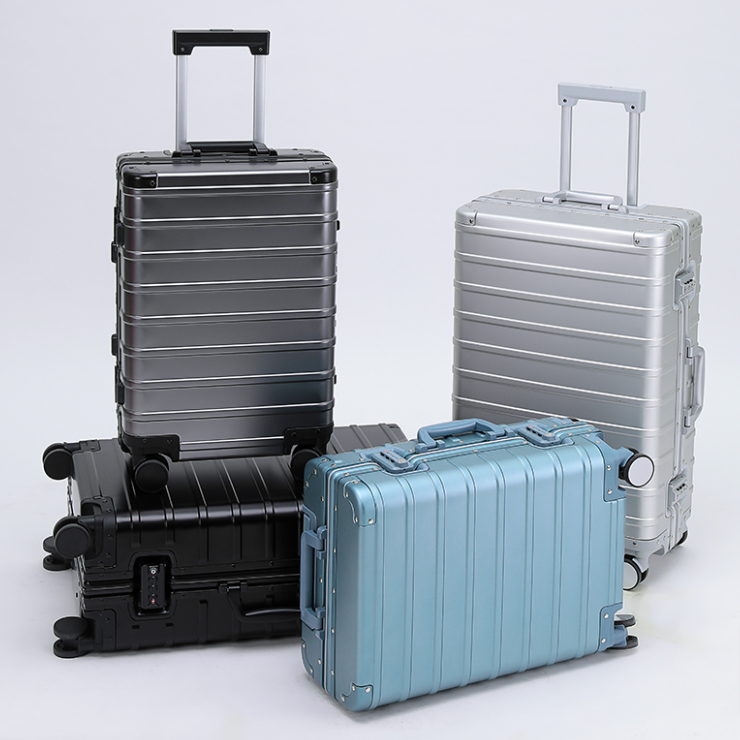
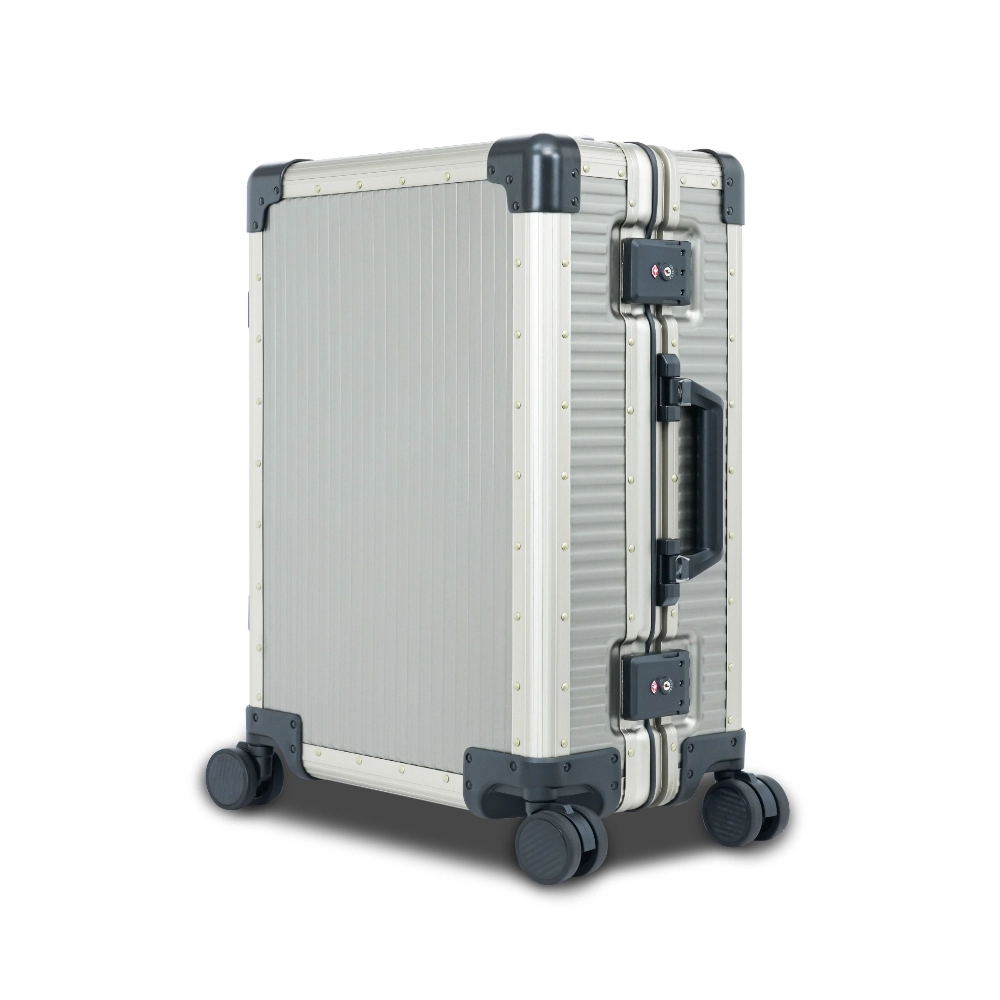
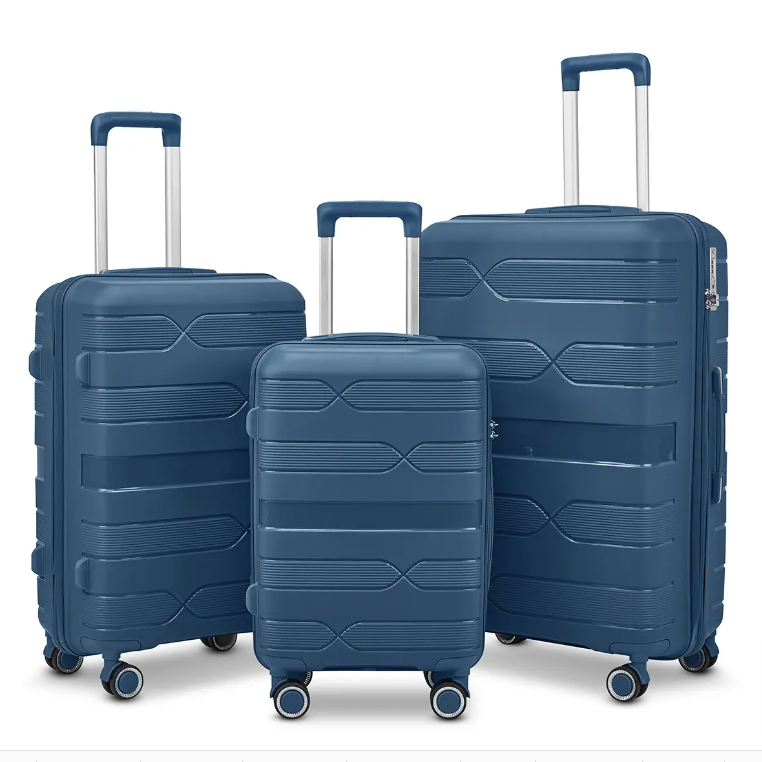
| Materials | Aluminum, PC, ABS, PP, titanium |
| Customization | Color, logo, hardware, interior, packaging |
| Sample lead time (existing tooling) | 20 working days |
| Bulk production | 45 days from deposit |
| Payment terms | 30% deposit + 70% against B/L |
| Container optimization | Carton dimensions engineered for freight efficiency |
| Export ports | Huangpu, Nansha, Shekou, Yantian |
| Shipment terms | FOB, EXW, CIF |
Bulk-buyer transparency: Aluvox quotes unit price, MOQ structure, and lead time separately, and engineers carton dimensions for container efficiency so your per-unit freight is optimized — a meaningful component of bulk landed cost. Samples are provided before bulk production for sign-off, and material documentation (mill certificates, virgin-material confirmation) is available on request. For bulk buyers who want their own branding, the same order can carry private-label customization at no sacrifice to factory pricing.
Browse the Aluvox travel luggage collection →
Visit the Aluvox private label luggage manufacturer page →
Buy the Volume Your Business Can Sell
Buying luggage in bulk rewards the buyer who matches order size to their tier, their cash, and their real demand — not the one who simply chases the lowest unit price. The volume sets your price and your supplier type: small bulk from wholesalers for speed and flexibility, mid and large bulk from manufacturers for factory pricing and branding. The discount at higher volume is real, but it only helps if the inventory sells and the cash commitment does not starve the business.
Source the volume your business can finance, store, and move — sample before you commit, model the full landed cost, confirm how the MOQ applies, and verify reliability before a large order. Done with that discipline, bulk luggage buying is one of the most reliable ways for a reseller, retailer, or brand to build margin.
If you are planning a bulk luggage purchase and want factory pricing with honest guidance on volume, MOQ, and landed cost, Aluvox can provide a quote and help you size the order to your business.
Contact our Sales Team — tell us your target volume, styles, and branding needs. We will provide a bulk luggage quote with MOQ, lead time, and landed-cost guidance within 2 business days. Contact Sales Team