

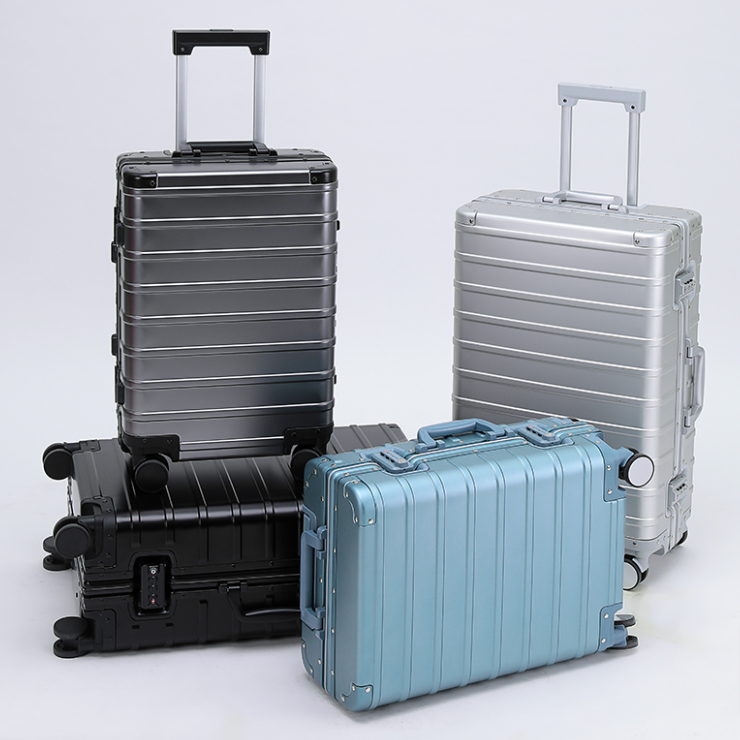
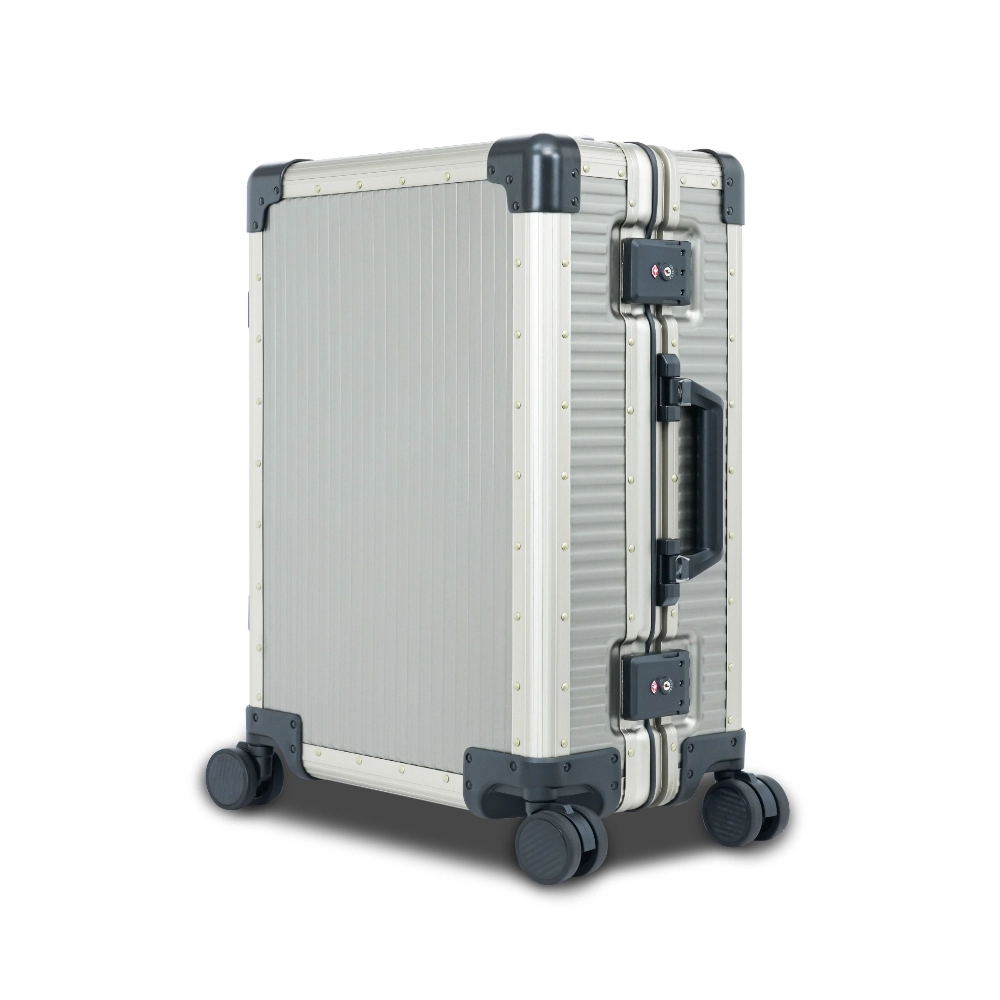
Titanium Luggage Supplier: A B2B Sourcing Guide
Search “titanium luggage supplier” and something odd happens. Google fills the page with luxury retail brands — RIMOWA, Tecknomonster, Tumi, Delsey — at $1,500 to $5,000 a case. Next to several of those results sits a quiet correction from the search engine itself: Missing: supplier. Google is telling you what procurement teams already suspect: genuine titanium luggage suppliers are scarce, and most pages ranking for the term sell finished cases at retail, not OEM partnerships.
If you are a brand owner, distributor, or category buyer trying to put titanium luggage into your own catalog, that gap is the opportunity worth working. This guide is written for the sourcing side of the desk: what titanium actually delivers, who you are really competing against, how to separate a real supplier from a label, and what to demand before a single sample ships.
Why titanium is worth putting in your catalog
Titanium earns its place in aerospace, surgical tools, and high-end watches for the same properties that make it work as a suitcase shell: an exceptional strength-to-weight ratio, strong corrosion resistance, and a surface that resists denting far better than aluminum under repeated impact. The difference is measurable, not marketing. One titanium-shell maker publishes internal drop-hammer testing showing roughly 10x lower dent depth — about a 90% reduction — versus its own 5000-series aluminum cases at the same 12 lb weight. For an end customer who pays a premium, that translates into a case that still looks clean after years of rough handling, shrugs off humidity on coastal and tropical routes, and reads as a status object on the carousel.
Sell that story honestly and your supplier should be ready for the pushback, because sophisticated buyers raise it. Titanium is stronger than aluminum but not dramatically lighter once a case is packed — the real advantage is its durability-to-weight ratio, not raw lightness. Commercially pure (Grade 1) titanium can scratch and develop a patina over time; some buyers prize that “well-traveled” look, others want it to stay pristine. Reviewers tend to frame the category in one line: if aluminum is the Mercedes of luggage materials, titanium is the Rolls-Royce. A capable supplier can talk through grade, finish, and coating to match the positioning you are after — not just repeat the word “titanium.”
The benchmark you are sourcing against
Before you brief a supplier, know the shelf you are competing with, because your buyers will compare you to it. The titanium market is small and led by a handful of names, and studying them tells you exactly what “good” looks like.
Tecknomonster builds 100% titanium trolleys in Italy using what it calls helicopter-grade technology, priced roughly $2,120 to $4,950. Sterling Pacific positions itself as a manufacturer of full-metal cases from Grade 4 titanium — the strongest commercially pure grade — with 1mm titanium corners, die-cast aluminum trolley housings where rivals use plastic, over a hundred 304 stainless rivets, Italian full-grain leather handles, a TSA double-combination lock, SATRA-certified endurance testing, a batch identification number engraved on every case, and a lifetime warranty. Press shorthand for it runs to “the Airstream of luggage” and a “James Bond carry-on.” On the newer end, the Kickstarter hit Aerionn Forma uses commercially pure Grade 1 titanium to standard ASTM B265, a 38 L / 4 kg carry-on with an integrated TSA lock. And then there is the trap on the same page: brands like Delsey and RIMOWA also surface for “titanium,” but often as a colour or finish name rather than a titanium shell.
What these benchmarks share is the recipe a serious buyer should demand: a named titanium grade, a published material standard, real endurance testing, metal hardware instead of plastic, and traceability. What they leave wide open is price, availability, and minimum order quantity — none of them exists to help you build your own line at a workable cost. That is precisely the space a real OEM supplier fills.
It is just as useful to know how these cases behave in the wild, because that is what your reviews and returns will hinge on. Owners of full-metal cases describe them in unusually physical terms — one verified buyer says his case closes “like a vault,” another compares the first lift to picking up a platinum watch after years of stainless steel. The honest flip side shows up too: aluminum reviewers report a single rough handling pass leaving a visible crease in a corner panel, and even premium metal shows dust and fine scratches against dark finishes. Titanium’s whole pitch to a buyer is that it narrows that gap — harder to dent, slower to mar — which is exactly why the grade you source on matters more than the word printed on the label.
The sourcing trap: real titanium vs. a “titanium” label
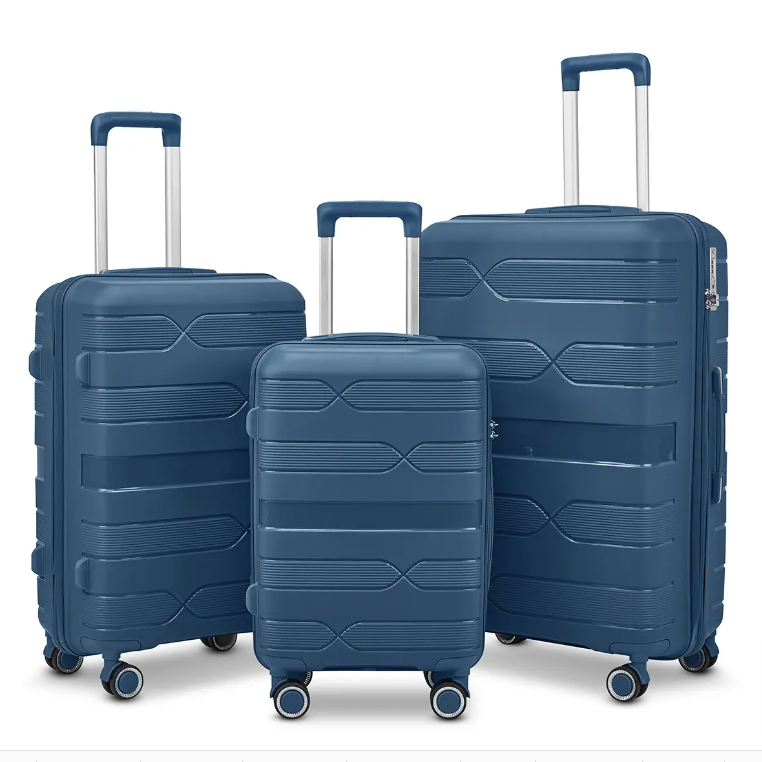
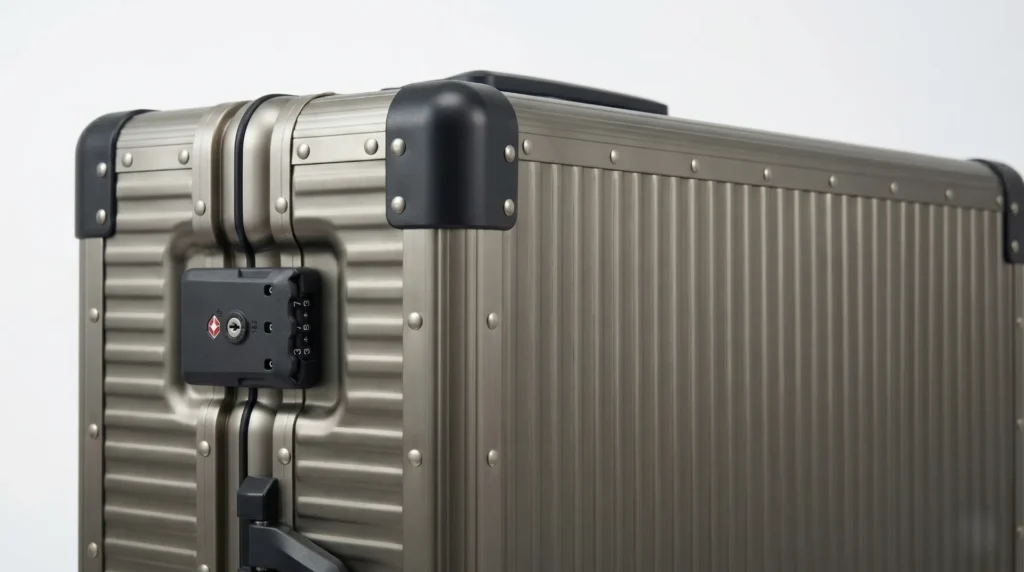
This is where most sourcing projects quietly go wrong. The first failure mode is the colorway: a mass-market case marketed as “titanium” that is actually polycarbonate or aluminum in a titanium-grey finish. The second is more dangerous for a B2B buyer — a generalist factory that mainly produces soft bags, backpacks, or PP/ABS luggage, and bolts on a single “titanium set” page to catch the search, with no genuine metal-forming behind it. Their own copy gives it away: pages that lead with fabric, recycled polyester, and aluminum-frame (not full-aluminum) construction, then list a titanium SKU as an afterthought.
So before you ever discuss price, verify substance. Ask three blunt questions. First, what grade is the shell — commercially pure (Grade 1 or Grade 4) or an alloy such as Ti-6Al-4V (Grade 5 / TC4)? Second, which material standard does it meet — for example ASTM B265 for titanium sheet? Third, can you provide a mill test certificate tied to the actual production batch, not a generic spec sheet? A real titanium luggage supplier answers all three without flinching and can show you the forming process — how titanium sheet is pressed or die-cast into a shell. A label-only seller changes the subject to price.
Sourcing titanium luggage for your brand? Aluvox is a metal hard-shell specialist that forms its own cases, not a generalist relabeling stock — browse our titanium cases and ask us anything about grade and spec.
A B2B checklist for evaluating a titanium luggage supplier
Once substance is confirmed, treat the rest like any serious procurement decision and score every candidate against the same list:
- Material proof. A named grade, the finish, and a mill test report bound to your order — not a brochure. If they cannot name the grade, they are not forming the metal themselves.
- MOQ and economics. Confirm minimum order quantity, sample cost, and any tooling or mold fees up front. Metal hard-shell carries a higher MOQ and a longer sampling window than fabric or PP work; a supplier who pretends otherwise is hiding something.
- Testing regime. Ask for the actual tests run and their results — telescopic-handle cycling (tens of thousands of pulls), wheel-durability rolling, drop tests, and salt-spray for corrosion. The serious players publish SATRA-style endurance results; numbers and reports beat adjectives.
- Compliance. BSCI, SGS, or ISO documentation, plus a workable TSA-approved lock option for the U.S. market.
- Traceability and warranty. The benchmark brands engrave a batch identification number and stand behind a repair program. Ask how your supplier handles defect batches and spare parts.
- Customization depth. Logo, color, lining, lock, handle, and interior layout — and crucially, whether they can build to your drawing rather than rebrand a catalog item.
A supplier that clears this list is one you can build a multi-season product line on. One that cannot is a reseller wearing a factory’s clothes.
Watch for the tells that separate a forming factory from a trading desk. A quote that lands in minutes with no questions about your spec, a “titanium” SKU buried under pages of fabric and PP product, an inability to share a single test report or a photo of an engraved batch number, or a sample lead time that sounds too short for real metal tooling — each is a reason to slow down and ask more. The cost of vetting one extra supplier is trivial next to the cost of a first production run that arrives as aluminum wearing a titanium coat.
The cost reality: titanium OEM vs. luxury retail
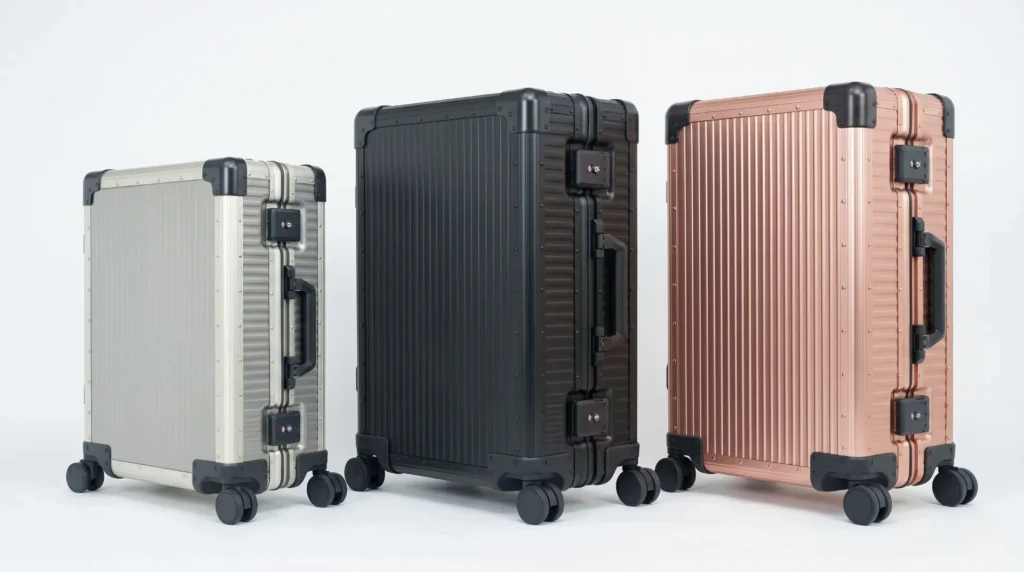
The luxury benchmark is steep on purpose. Tecknomonster’s titanium Kronos line runs roughly $2,120 to $4,950; RIMOWA’s titanium pieces sit around $1,525 to $2,475; Sterling Pacific’s metal cases command four figures with a lifetime-service story attached. Those numbers reflect brand equity, retail margin, and Western assembly as much as the metal itself. Buyers feel the price — the recurring question in titanium discussions is simply whether a case from a couple of thousand dollars up to five figures is worth it.
On the OEM side the economics look different, and that difference is your margin. Titanium genuinely costs more than aluminum to source and to form, and metal hard-shell tooling and sampling cost more than soft-bag work — but a brand buying direct from a real supplier captures the spread between factory cost and that luxury shelf price. The lever that matters is not hunting for the cheapest “titanium” page; it is finding a supplier whose metal-forming is genuine, whose MOQ fits your launch volume, and whose unit cost leaves defensible room beneath the $2,000-plus incumbents.
Put rough numbers on it. When a luxury titanium carry-on retails near $2,500 and a comparable case lands from a genuine OEM at a fraction of that delivered cost, the gap is not just savings — it is room to price competitively, fund marketing, and still protect a healthy margin across the season. Sourced right, titanium is not just a halo product for your range — it is one of the few categories where a challenger brand can undercut the icons without cheapening the story. The brands that win it are not the ones who found titanium cheapest; they are the ones who found a supplier they could scale with.
Sourcing titanium luggage with Aluvox
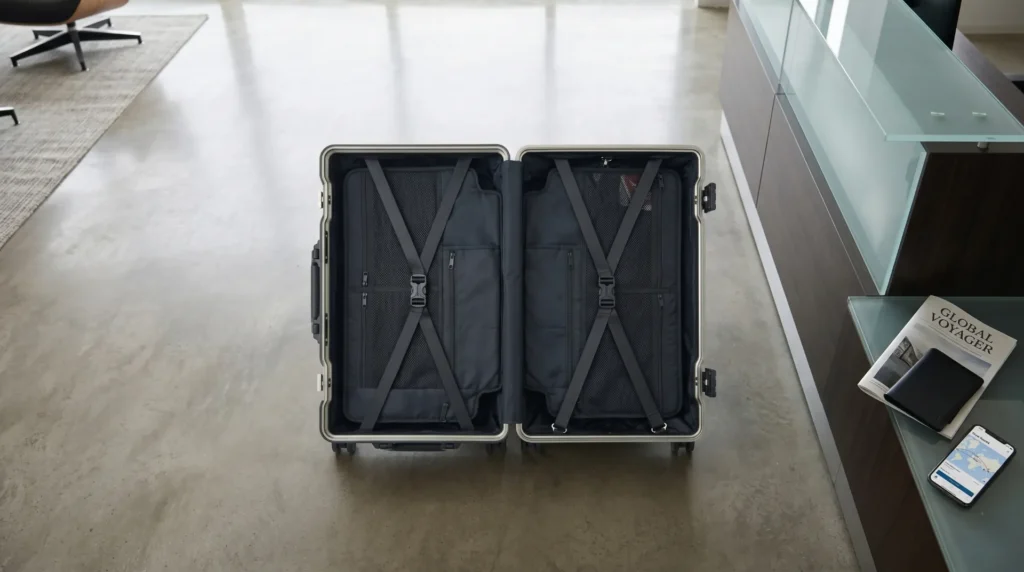
Aluvox has spent more than twenty years as a full-metal hard-shell manufacturer in Dongguan, China — aluminum and titanium cases formed by integral die-casting, the same craft that gives a shell clean curves and far fewer screw holes than assembled sheet stock. That focus is the line between a genuine titanium luggage supplier and a generalist adding a titanium page to catch traffic.
For brands and distributors, that means real grade-and-spec conversations, low-MOQ OEM and private-label runs, in-house testing, traceable production, and customization to your drawing rather than a relabeled catalog item. If titanium is the line you want to own, start with a real titanium case and the hard questions — and bring the checklist above.
See the range and request a quote: Aluvox titanium luggage.