

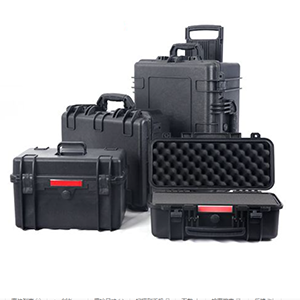
Aluminum Makeup Case Manufacturer: OEM Sourcing Guide
Search “aluminum makeup case manufacturer” and the page splits in two. On one side are the brand-proven factories — the kind that already supply names like L’Oréal, Dior, and Lancôme — quoting OEM and ODM runs from China. On the other is a wall of professional makeup train cases: rolling, lighted, multi-tray, lockable, sold to artists and salons under dozens of labels. The gap between those two worlds is exactly where a B2B buyer has to operate.
If you are building a beauty brand, kitting out a salon chain, or supplying makeup artists with a private-label line, “aluminum makeup case” is not one product — it is a spec sheet of decisions: the mirror, the lights, the trays, the wheels, the lock, the lining. This guide walks the sourcing side: who buys these, why aluminum, the features that decide whether an artist loves or returns the case, and how to evaluate a manufacturer before you place an order.
Who sources aluminum makeup cases, and why aluminum
The buyers here are rarely end users. They are beauty brands adding a hero accessory, salon and academy chains equipping staff, distributors serving working artists, and private-label sellers who want a case that carries their logo. What they share is a need for a case that looks premium on a shelf and survives a working life of travel.
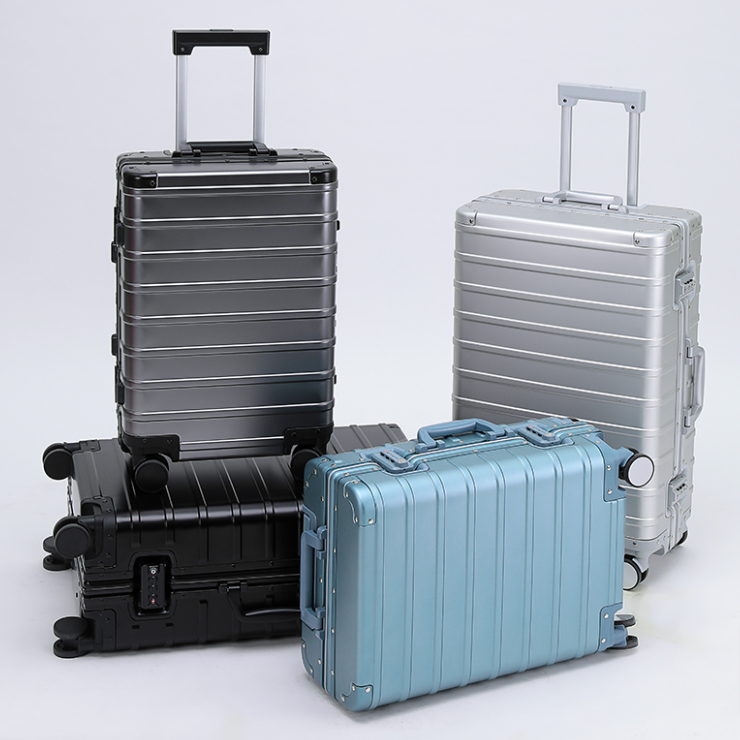
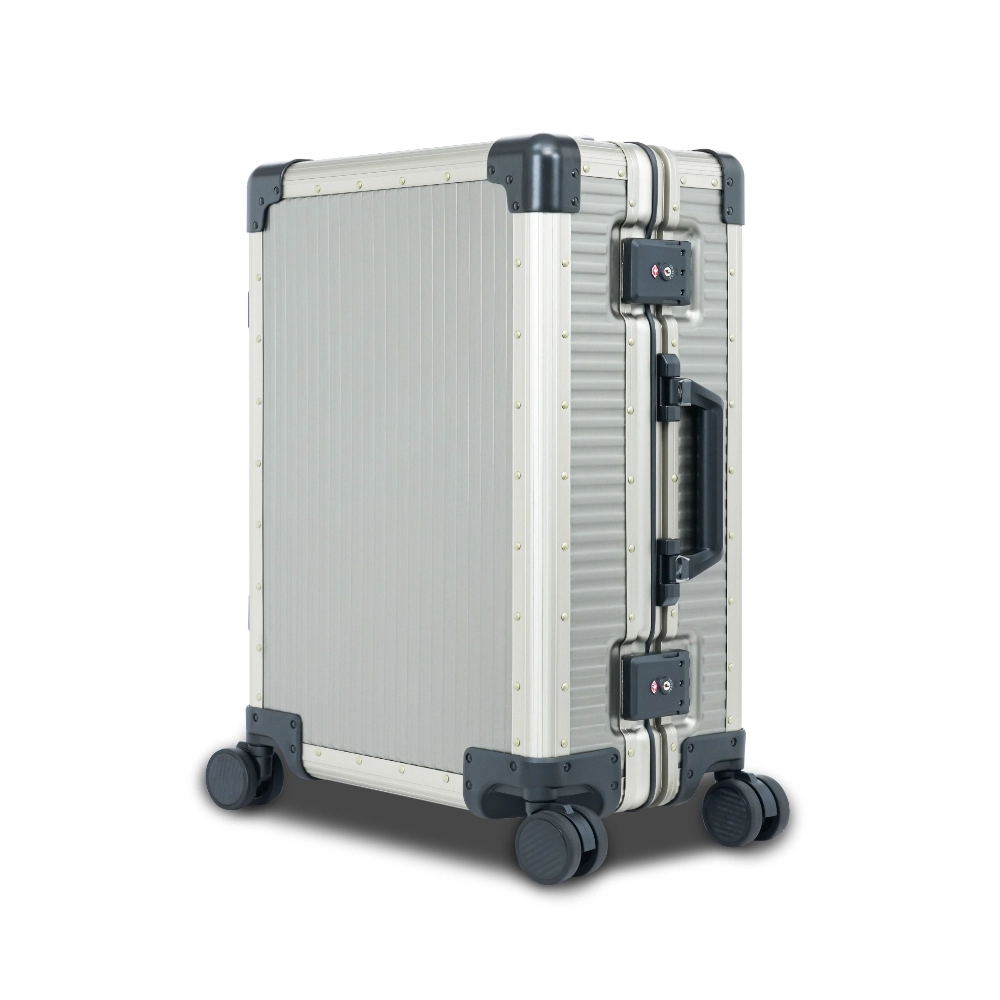
Aluminum earns that brief against the alternatives. A soft cosmetic bag is cheap but offers no protection; an ABS or MDF-framed train case is lighter on the wallet but flexes and wears; an aluminum-shell case reads as professional, resists impact and moisture, and protects fragile glass bottles and pressed pigments far better. In practice many trolley train cases use a hybrid build — an aluminum frame and reinforced corners around an ABS or MDF body — which is a legitimate way to hit a price point, as long as you know which parts are metal and which are not. The premium positioning is real — industry reviews consistently rate aluminum cases with integrated LED mirrors at the top of the category, at a 30-50% price premium over plastic. The honest trade-offs apply too: aluminum is heavier than a soft bag, costs more, and shows scratches with use. For a brand whose case represents its image, and for an artist who needs the kit to arrive intact, that trade is easy to defend.
It helps to know who you are sourcing against, because the search mixes brand-proven OEM factories with consumer train-case labels. The factories compete on design libraries, compliance, and the ability to put your logo on a proven build; the consumer brands compete on price and features. Your job is to find a manufacturer with the factory’s rigor and the artist’s feature set.
The features that decide whether an artist keeps the case
Buyers fixate on the shell, but a makeup case lives or dies on its working details — and artists are blunt about what they need. A professional guide sums it up: look for adjustable dividers, extendable trays, and lockable sections. Translate that into a sourcing spec and five things matter.
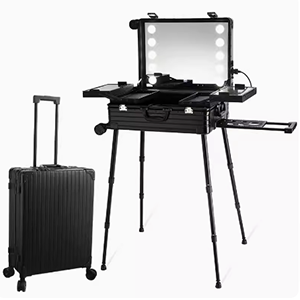
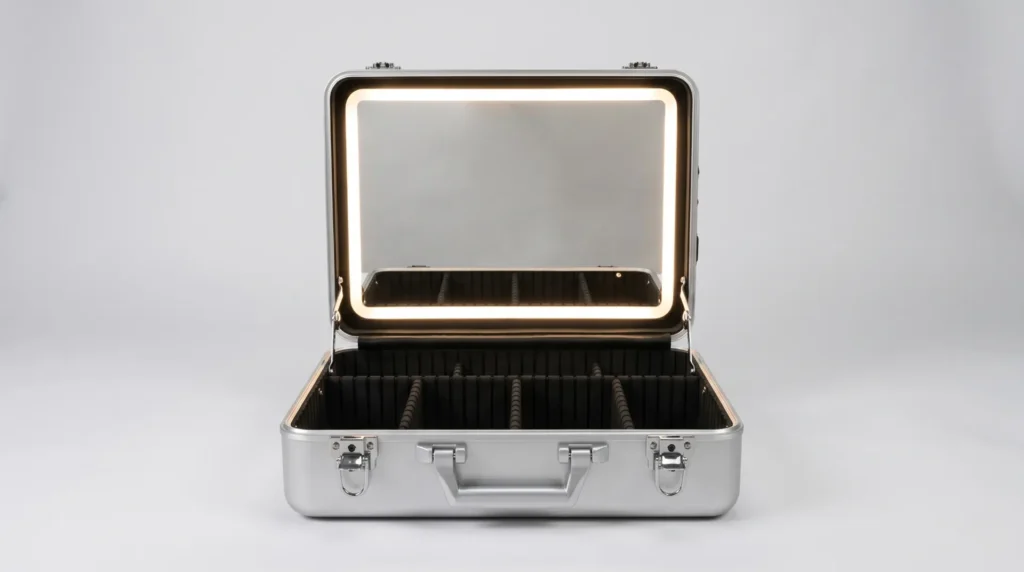
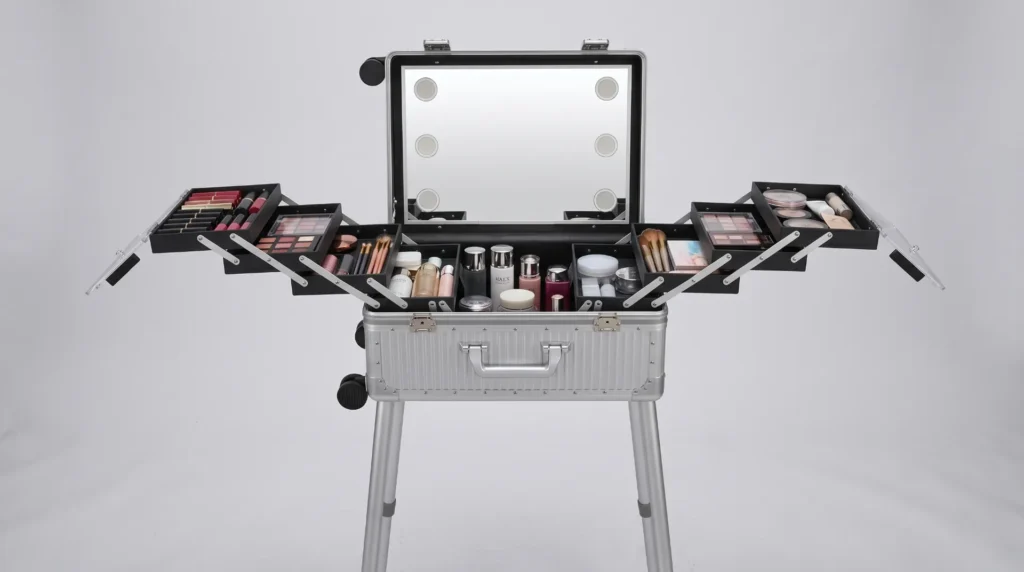
First, the mirror and lights. The strongest cases integrate a built-in mirror — ideally high-definition, explosion-proof tempered glass so it cannot shatter in transit — paired with LED lighting, often in three color temperatures for accurate work in any room. Second, the interior: modular trays, pull-out drawers, dividers, and shelves that an artist can reconfigure to their kit, because organization is what prevents breakage and speeds setup. Third, mobility: a trolley build with 360-degree spinner wheels and a telescopic pull rod turns a heavy kit into a one-hand roll; detachable wheels are a bonus for storage. Fourth, security: solid latches or a TSA-style combination lock with keys, since artists leave cases in public, shared, and backstage spaces. Fifth, the lining: PU, leather, or a durable polyester that looks premium and wipes clean.
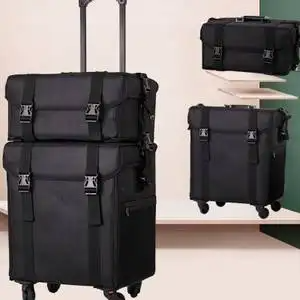
Get those five right and you have a case an artist recommends; get them wrong and you have returns. The voice of the working buyer is consistent — a hairstylist who both works a salon and freelances calls a detachable two-in-one case “perfect” because the top doubles as a movable tray, and notes how professional it looks. Modularity is a recurring theme: two-in-one and four-in-one builds that split a tall trolley into smaller train cases let one product serve a salon day, a freelance call, and a flight without the artist owning three cases. A face painter who works events put it plainly, saying the case makes her “look professional” when she arrives — the case is part of the artist’s brand, not just storage, and your buyer is paying for that impression as much as the protection.
The benchmark you are sourcing against
Before you brief a factory, know the bar. The procurement-grade leaders on this search are not consumer brands — they are beauty-industry OEM houses. KONCAI, for example, has manufactured since 2000 as a direct supplier to L’Oréal, with Dior, Lancôme, Mary Kay, and Shiseido among its clients, a BSCI membership, and a Disney-audited factory; it runs a hard-aluminum factory alongside a soft-bag one and offers ODM from 300 pieces because it works from a library of 100-plus proven designs. SUN CASE and Lucky Case bring 15-plus years each in aluminum cosmetic and rolling cases, with LED-mirror and multi-tray builds and OEM support from low hundreds.
What these benchmarks share tells you what “good” looks like: brand-proven quality control, real compliance, an in-house design library that keeps MOQ workable, and genuine LED-mirror and trolley integration rather than a bolted-on afterthought. What they leave open is the same thing every category leaves open — a partner sized and priced for your specific launch. That is the opening for a focused aluminum manufacturer.
Sourcing aluminum makeup cases for a brand or salon line? Aluvox builds lighted-mirror and trolley makeup cases in aluminum — explore our aluminum makeup cases and tell us your kit and your logo.
How to evaluate an aluminum makeup case manufacturer
Once the feature set is clear, score every candidate against the same procurement checklist:
- Material and construction. A named alloy — for example aviation-grade 5000-series aluminum-magnesium — with a reinforced frame and corners, or an honest aluminum-and-ABS hybrid where weight matters. Vague “high quality aluminum” is a flag.
- Mirror and lighting. Confirm the mirror is tempered, explosion-proof glass and the LEDs are genuine multi-temperature, not a sticker-grade panel that fails after a season.
- Interior customization. Trays, drawers, shelves, dividers, and brush holders built to your kit, with the ability to design the layout from your drawing.
- Hardware and mobility. Reinforced corners, quality hinges and latches, a working lock with keys, and 360-degree wheels with a stable telescopic rod for the trolley builds.
- Compliance and credentials. For cosmetics export, ask for BSCI, ISO 9001, SGS, and the market certifications your buyers need — REACH for the EU, CPSIA or Prop 65 for the US.
- MOQ, sampling, and branding. Confirm MOQ, sample cost and lead time, mold or tooling fees, and logo options — engraving, plate, or print. Many beauty factories sample in days, not weeks, when they work from a design library.
A manufacturer that answers all six can carry a beauty-brand program. One that deflects to price is reselling someone else’s case.
The packaging detail buyers learn the hard way
One more check separates a good supplier from a painful one, and the buyers who have been burned name it directly: a case that “came already bent.” Aluminum protects the contents, but the case itself has to survive your freight, and a mirror or a corner damaged in transit becomes a return and a refund. Ask how the manufacturer packs for export — individual protective wrap, corner reinforcement, and sturdy master cartons — and order a sample to inspect the build and the box before you commit a container. The cost of one sample is trivial next to a pallet of cases that arrive creased.
On the upside, the working buyer’s verdict on a well-built run is just as direct: one B2B purchaser reported buying 28 rolling cases that “arrived on time and are great quality,” with more orders to follow. That is the outcome a real manufacturer and proper packaging deliver.
Stock, custom, and the MOQ reality for beauty
Beauty sourcing has a comfortable middle path. Because the leading factories keep a library of proven case designs, you rarely start from a blank mold: you pick a base build — a lighted-mirror vanity case, a multi-tray train box, a trolley train case with shelves — then customize the color, lining, layout, and logo. That design-library model is why ODM minimums sit around 300 pieces while full OEM development runs higher, and why sampling can take days rather than weeks.
Match the build to the order. A lighted-mirror case or a multi-tray train box keeps MOQ and lead time low for a first beauty-brand drop; a fully bespoke trolley with custom shelving and a branded interior makes sense once the line justifies the tooling. Either way, sample first — confirm the mirror, the lights, the trays, and the roll before you scale. The LED, mirror, and trolley features carry a premium, so price them in early.
Sourcing aluminum makeup cases with Aluvox
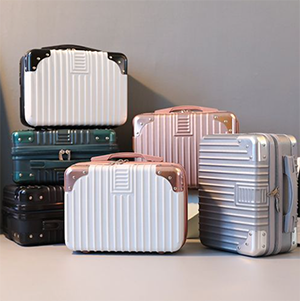
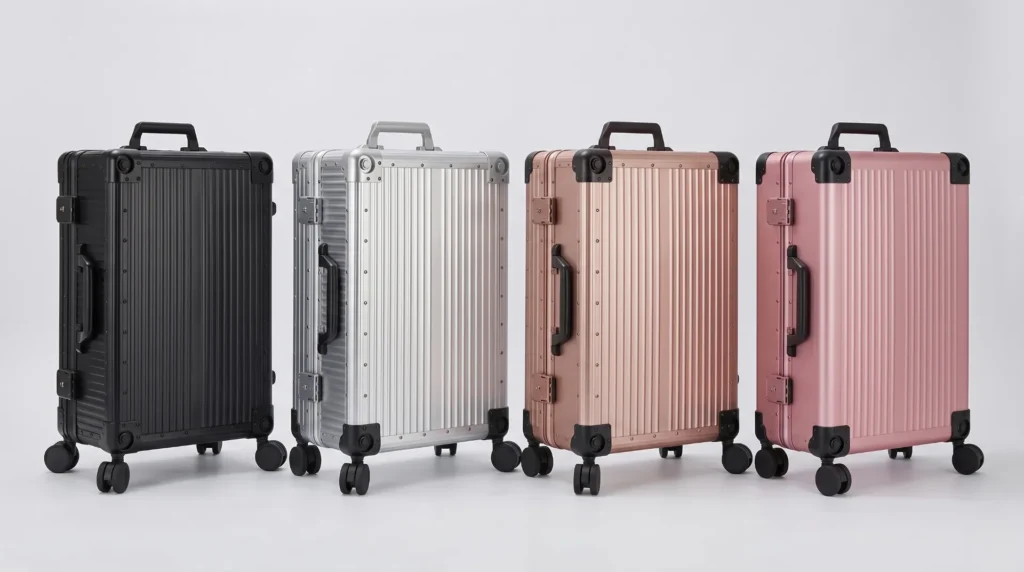
Aluvox builds aluminum makeup cases that match the feature set artists ask for, using real products you can quote today. The YCT-026T is an aluminum trolley makeup train case in aviation-grade 5000-series aluminum-magnesium, with four 360-degree spinner wheels, a telescopic handle, a TSA-approved combination lock, an LED light, a high-definition explosion-proof tempered-glass mirror, and ABS foldable storage with shelves and a tray — available in black, silver, rose gold, and pink. The JNZ-BR-001 and SH-001 add lighted-mirror beauty cases in silver aluminum with metal handles and PU-lined interiors for a more compact, premium kit.
For beauty brands, salons, and distributors that means OEM and private-label runs from an MOQ of 300, roughly 20-day sampling, aluminum and ABS options, and customization of color, lining, layout, mirror, lighting, and logo — built to your drawing rather than a relabeled catalog box. If you are sourcing an aluminum makeup case line, start with the build and the features your artists need, then bring your logo and your volumes.
See the range and request a quote: Aluvox aluminum makeup cases.