

Makeup Trolley Case: How to Choose and Source One
A makeup trolley case is a train case that rolls — and that one change reshuffles every priority. Search “makeup trolley case” and the page fills with rolling 4-in-1 and 5-in-1 builds between roughly $70 and $300, lighted-mirror vanity trolleys, and detachable cases that split into smaller boxes. Behind those listings sit two kinds of buyer: the working makeup artist or stylist choosing one for a mobile kit, and the brand, salon, or distributor sourcing them in bulk.
This guide serves both. The trolley form lives or dies on its rolling system, its layout, and its material, so this is how to judge a makeup trolley case on the things that actually matter on a travel day — and how to source one that holds up when you order a few hundred with your own logo.
What makes a “trolley” case different
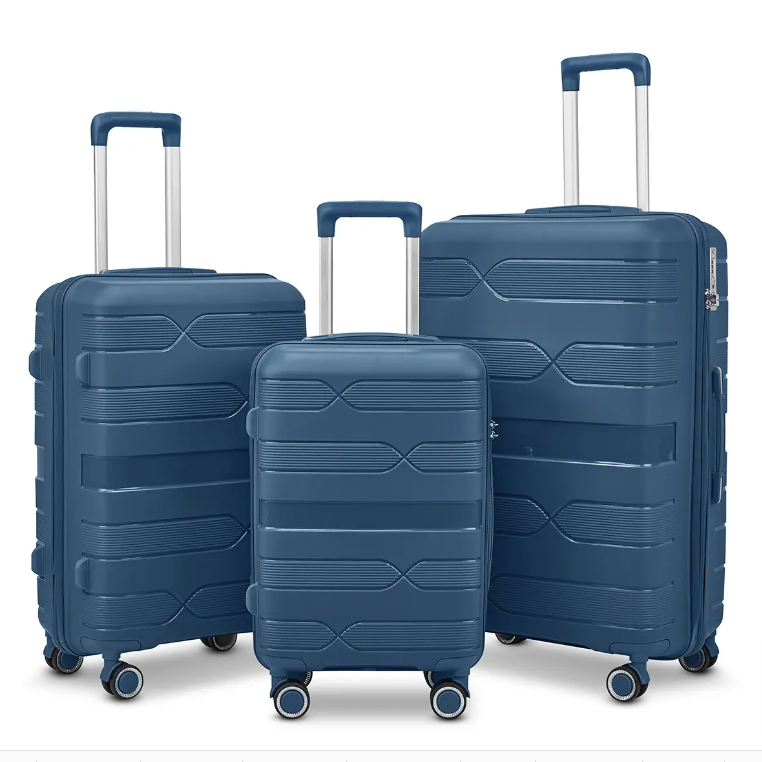
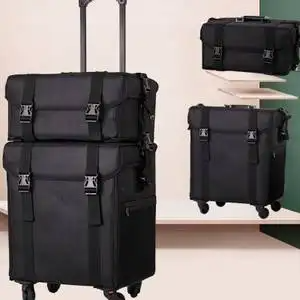
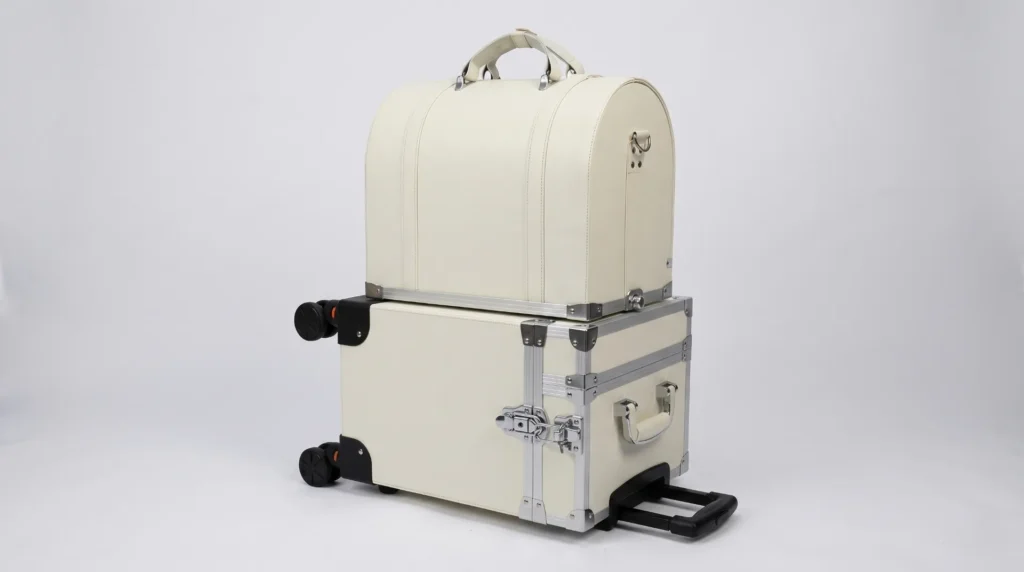
A trolley case is defined by three parts a static case does not have, and each is a decision. The first is the handle: a telescopic pull rod that should lock at a comfortable height — many extend to around 40 inches — and sit stable under a loaded case. The second is the wheels: two-wheel designs tilt and pull, while four-wheel 360-degree spinners roll upright beside you and turn in place; the best are removable for storage and replacement. The third is modularity: many trolley cases are detachable n-in-1 builds — two, three, four, or five pieces — that split a tall rolling tower into smaller train cases for a quick freelance call or a flight, then stack back together for a full salon day.
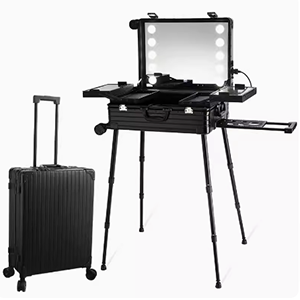
Add the working interior — sliding trays, drawers, adjustable dividers, often a lighted mirror — and the trolley becomes a mobile studio rather than a box on wheels. When you choose or brief one, treat the handle, the wheels, and the n-in-1 layout as the core spec, because they are what the artist touches on every trip.
The n-in-1 idea deserves its own thought, because it is what makes a trolley flexible rather than just big. A four-in-one might stack a deep base box, a tray case, and a brush case onto a wheeled frame; the artist rolls the whole tower into a salon, then lifts out just the brush case for a chair-side touch-up or a single client. Match the number of pieces to how your buyer actually works — more pieces mean more flexibility but more latches and weight — and confirm that the modules lock together tightly enough to pull as one without rattling.
The wheels and handle are what make or break it
Here is the blunt truth about rolling cases: the shell rarely fails first — the rolling system does. A cracked wheel, a seized swivel, or a pull rod that wobbles or jams turns a premium case into a dead weight, and buyers know it. The durability worry is loud in real discussions: artists transporting kits to markets and events warn that a flimsy trolley will not survive outdoor and repeated use, with some saying a rugged rolling toolbox would outlast a cheap makeup trolley. That is the bar your case has to clear.
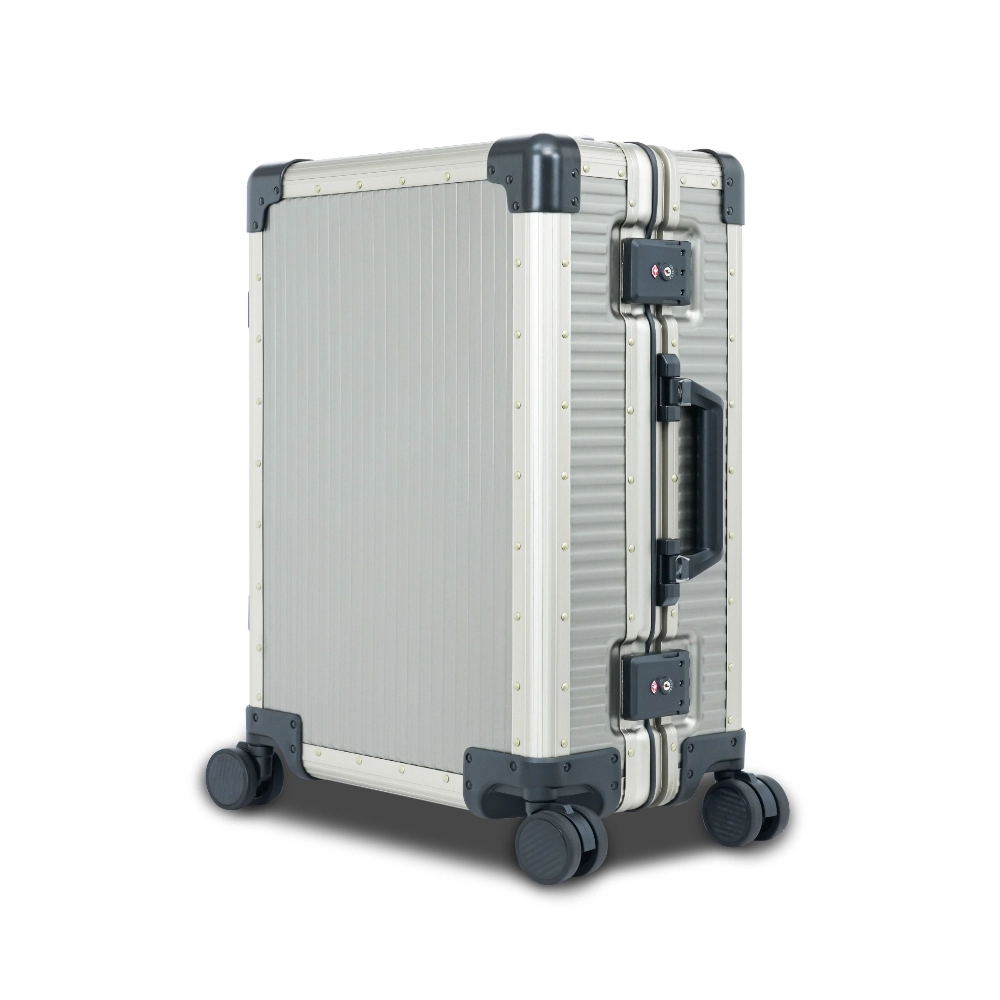
So scrutinize the rolling system above everything. Look for genuine 360-degree spinner wheels mounted on a reinforced base, ideally removable so a damaged wheel is a swap rather than a write-off; a telescopic rod with a solid multi-stage lock and minimal side-to-side play; and reinforced corners where the wheels meet the body, since that joint takes the impact every time the case is dropped onto a curb. For anyone transporting a kit on foot, by bus, or through an airport, that hardware is the difference between years of service and a one-season case. When sourcing, ask for the wheel and handle specs and their test results — not just a photo.
This is also where the cheapest cases expose themselves, and experienced buyers say so plainly. Artists who haul kits to outdoor markets report that a budget trolley feels too flimsy for the abuse, and that a rugged wheeled toolbox can outlast a discount makeup trolley — a warning that the rolling hardware, not the pretty shell, is where corners get cut. The fix on the sourcing side is to insist on removable, replaceable wheels and a serviceable handle, so a single broken part does not retire the whole case. A case the artist can repair is a case the artist keeps, and a returns rate you can live with.
Choosing the material: aluminum, composite, or soft
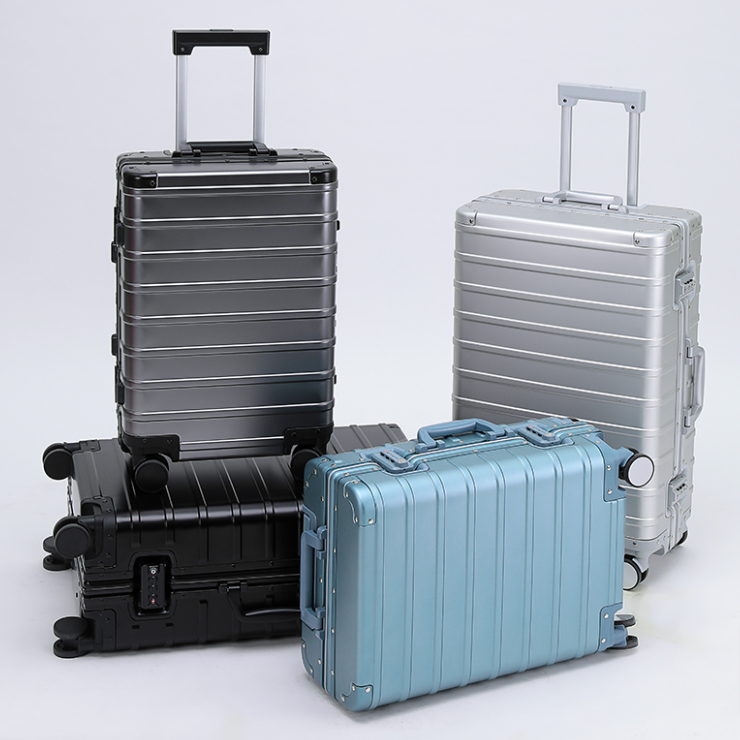
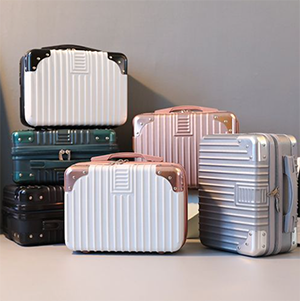
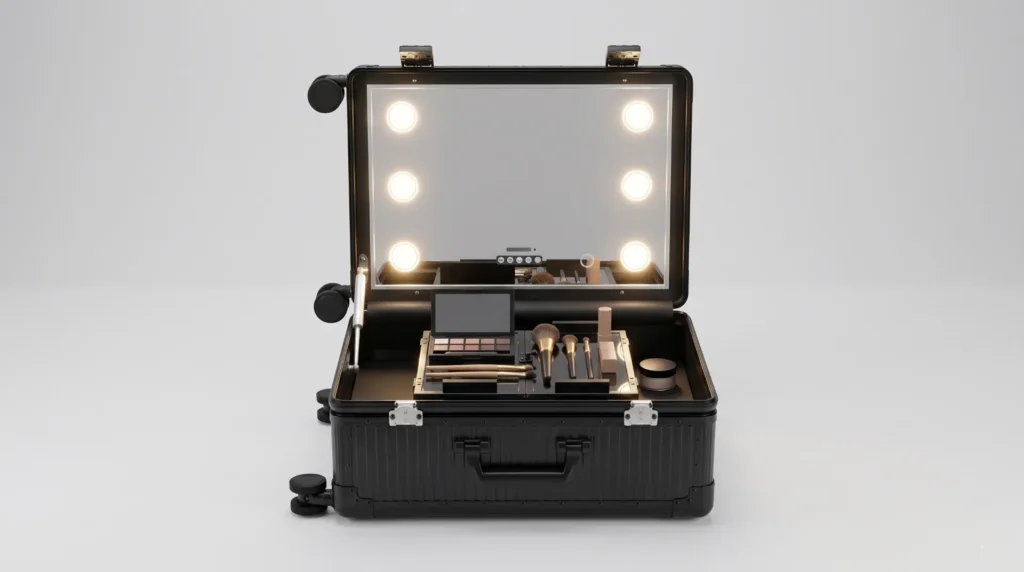
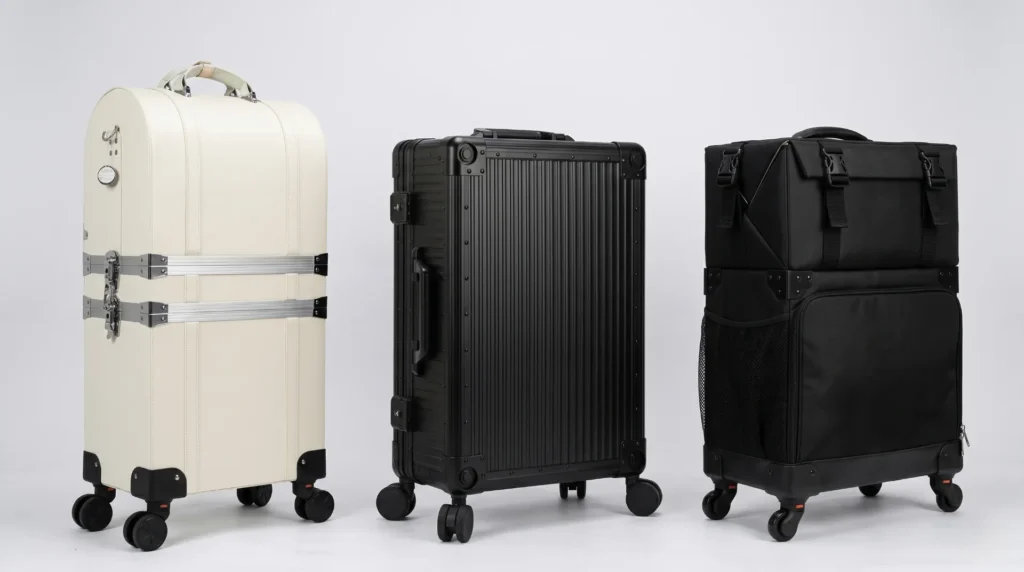
A trolley case comes in the same materials as any makeup case, and the rolling use-case sharpens the trade-off. An aluminum trolley is the premium, rugged choice — a metal shell on a telescopic frame with spinner wheels, often with a lighted mirror and shelves — best for a flagship case or a professional who travels constantly; see our aluminum makeup case manufacturer guide. A composite trolley — an ABS or fibreboard-and-PVC shell with patterned finishes — keeps the price down for retail and promotional ranges; our ABS makeup case manufacturer guide covers that tier. A soft trolley — a nylon or PVC rolling bag on an aluminum frame — is the lightest and often expandable, ideal for artists who prioritize weight and packability over a hard shell.
There is no single right answer; there is a right answer for your buyer. A salon investment and a market-stall artist want different things, and a strong range often offers all three on the same rolling platform. The mirror-and-drawers “vanity trolley” sits on top of this as the premium configuration: a lighted mirror, multiple drawers, and sometimes fold-out legs that turn the case into a working table.
It helps to know the field you are sourcing against, because the trolley category is crowded and the benchmarks are clear. Consumer leaders such as SHANY, Byootique, VEVOR, Yaheetech, and Omysalon sell n-in-1 rolling and lighted-mirror trolleys roughly from $70 to $300, while premium names like MAC’s ZÜCA-built case sit higher; on the OEM side, factories such as OBeautyCase run a dedicated trolley category built, in their words, for mobility and heavy-duty daily use. The takeaway is that buyers can compare your case against a deep shelf, so the rolling system and the layout have to hold up next to brands they already know.
Sourcing makeup trolley cases for a brand or salon line? Aluvox builds rolling makeup cases in aluminum, composite, and soft builds — explore our makeup trolley cases and tell us your material and your layout.
How to evaluate a makeup trolley case manufacturer
Sourcing in bulk adds checks a single buyer never makes. Score every candidate against the same list:
- Rolling system. Spinner wheels (removable preferred), a stable multi-stage telescopic rod, and reinforced wheel mounts — with the spec and test results, not just an image.
- Material and construction. A named build — aluminum shell and frame, ABS-and-fibreboard composite, or nylon on an aluminum frame — with reinforced corners and quality hinges.
- Modularity. The n-in-1 configuration you want — detachable two, three, four, or five pieces — that actually locks together and pulls as one.
- Interior and features. Trays, drawers, adjustable dividers, a securely mounted mirror, LED lighting where the build calls for it, and a metal or dual-clasp lock.
- MOQ, sampling, and branding. Confirm MOQ, sample cost and lead time, and logo options. Many factories work from a library of proven n-in-1 designs, which keeps minimums and sampling reasonable.
- Packaging. Rolling cases are bulky and damage-prone in transit; ask how wheels and corners are protected and whether the case ships in a sturdy master carton.
A manufacturer that answers all six builds a trolley case that survives the road. One that deflects to price is selling the kind of case that ends up in the durability complaints.
Budget is real in this category — buyers shopping trolley cases often set a ceiling around a couple of hundred dollars and look for the most case under it — so the temptation to cut the rolling hardware is strong. Resist it on the parts that fail: a few cents saved on a wheel or a rod becomes a return, a refund, and a one-star review about a case that “broke on the second trip.” Spend the margin where the artist feels it — the wheels, the handle lock, and the corners — and economize on cosmetic extras instead.
Stock, custom, and the MOQ reality
Trolley cases are well suited to a stock-plus-customization model. Because the rolling platform and the common n-in-1 layouts are already engineered, the leading factories keep a design library you can build on: pick a base — an aluminum vanity trolley, a detachable leather-look rolling train case, an expandable soft trolley — then customize the color, finish, lining, layout, mirror, and logo. That is why minimums in this category typically sit around 300 pieces and why pre-production samples come back quickly rather than after a long tooling cycle.
Match the build to the order, and always sample first. With a trolley case the sample test is physical: extend and lock the handle, load it to weight, and roll it over a hard edge and a threshold to confirm the wheels, the rod, and the corners before you commit a container. A rolling case that fails that test in your hand will fail it in your customer’s, so the sample is the cheapest insurance you can buy on a few-hundred-piece run.
Sourcing makeup trolley cases with Aluvox
Aluvox builds makeup trolley cases across all three materials, using real products you can quote today. The YCT-026T is an aluminum trolley makeup train case in aviation-grade aluminum-magnesium, with four spinner wheels, a telescopic handle, a TSA combination lock, an LED light, an explosion-proof mirror, and internal shelves. The DB-508BT is a detachable rolling train case with a leather-look fibreboard-and-PVC shell, four spinner wheels, a vintage leather handle, a metal key lock, and fitted trays. The BH-0090 is an expandable soft rolling bag on an aluminum frame with a telescopic handle and four spinner wheels for buyers who want the lightest option.
For brands, salons, and distributors that means OEM and private-label runs from an MOQ of 300, your choice of aluminum, composite, or soft build, n-in-1 detachable configurations, and customization of color, lining, layout, mirror, and logo — built to your drawing rather than a relabeled rolling box. Start with the rolling system and the layout your artists need, then bring your logo and your volumes.
See the range and request a quote: Aluvox makeup trolley cases.