

Custom Luggage MOQ Guide: What Brand Buyers Need to Know Before Placing Their First Order
Minimum order quantity is the first number most brand buyers ask about — and the one that causes the most confusion in luggage OEM sourcing. Ask ten factories the same question and you will get ten different answers, often with no explanation of why the number is what it is.
MOQ is not arbitrary. It is a direct reflection of the factory’s cost structure: raw material procurement thresholds, tooling amortization, and production line changeover costs. Understanding the logic behind the number gives buyers two advantages — the ability to assess whether a factory’s MOQ is reasonable, and the ability to structure orders that minimize capital exposure on a first run.
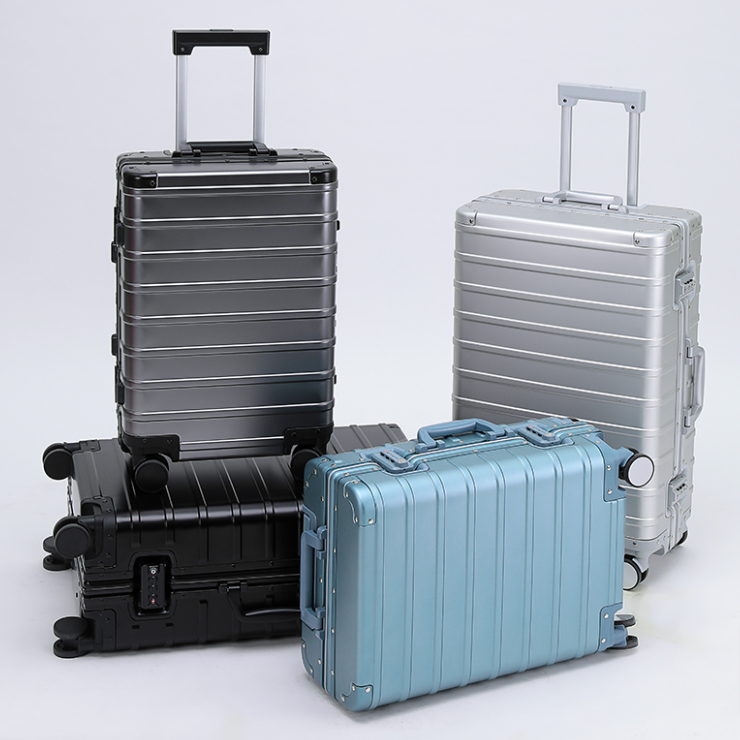
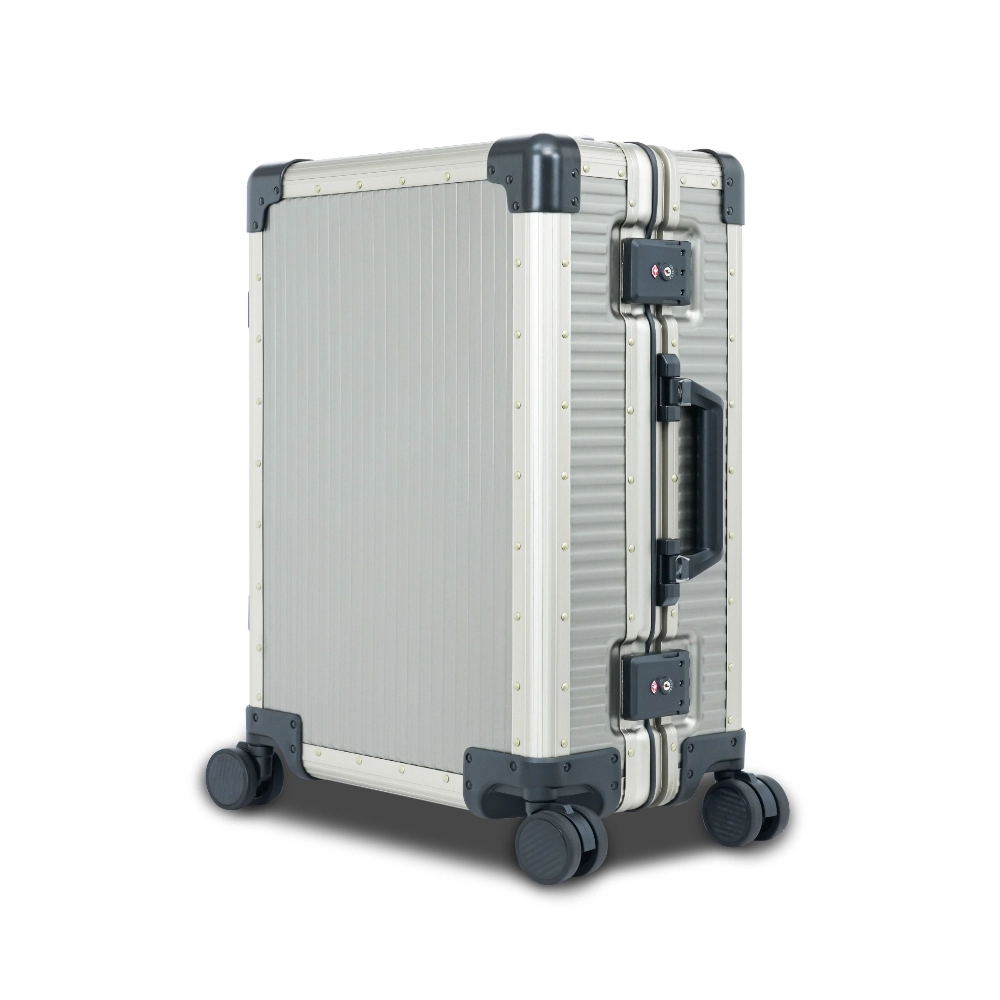
At Aluvox, we manufacture aluminum, polycarbonate, and titanium luggage from our Dongguan, Guangdong facility, with OEM and ODM programs starting from 300 pieces. The framework below reflects what buyers consistently need to understand before committing to their first production order.
What Is MOQ and Why Do Hard-Shell Luggage Factories Set It
MOQ — minimum order quantity — is the smallest number of units a factory will accept for a single production run. It exists because manufacturing has fixed costs that do not scale down proportionally with order size.
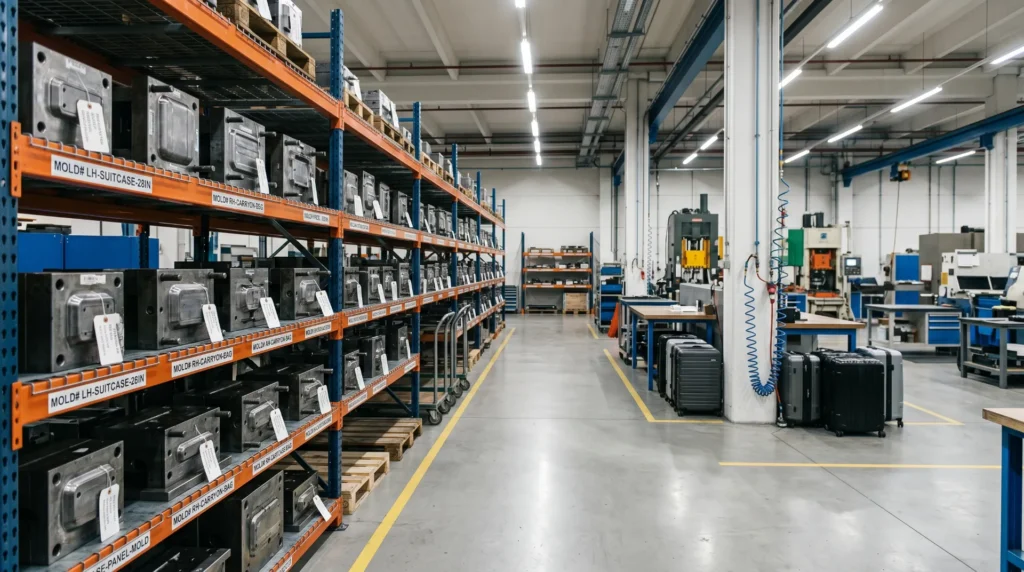
For hard-shell luggage specifically, those fixed costs are higher than most buyers expect. Before a single aluminum shell comes off a stamping press, the production line requires setup time, die installation, material loading, and quality calibration. If you order 50 units, those setup costs are distributed across 50 pieces — making the per-unit cost prohibitive for the factory and the buyer alike. At 300 units, the same fixed costs become economically viable for both parties.
The cost structure difference between hard-shell luggage and soft bags is significant:
| Cost category | Hard-shell luggage (aluminum/PC) | Soft bags (fabric) |
|---|---|---|
| Tooling / mold cost | $3,000–$15,000 per SKU | $200–$2,000 per design |
| Material procurement minimum | Aluminum sheet: coil minimums apply | Fabric: cut by the meter |
| Production line changeover | 4–8 hours per material/color change | 1–2 hours |
| QC complexity | Structural + surface + hardware | Primarily surface and stitching |
This is why hard-shell luggage MOQs are typically higher than soft bag MOQs — and why a factory quoting 50-piece minimums on aluminum luggage should raise a question about whether they are actually producing the shells in-house or sourcing them from a third party.
At Aluvox, MOQ for both aluminum and polycarbonate luggage starts at 300 pieces per style for existing tooling — one of the lower entry points in the industry for custom luggage manufacturing at this material specification.
Four Factors That Determine Your MOQ
MOQ is not a fixed policy — it shifts based on what you are ordering and how you are ordering it. These four variables have the most direct impact.
1. Material Type
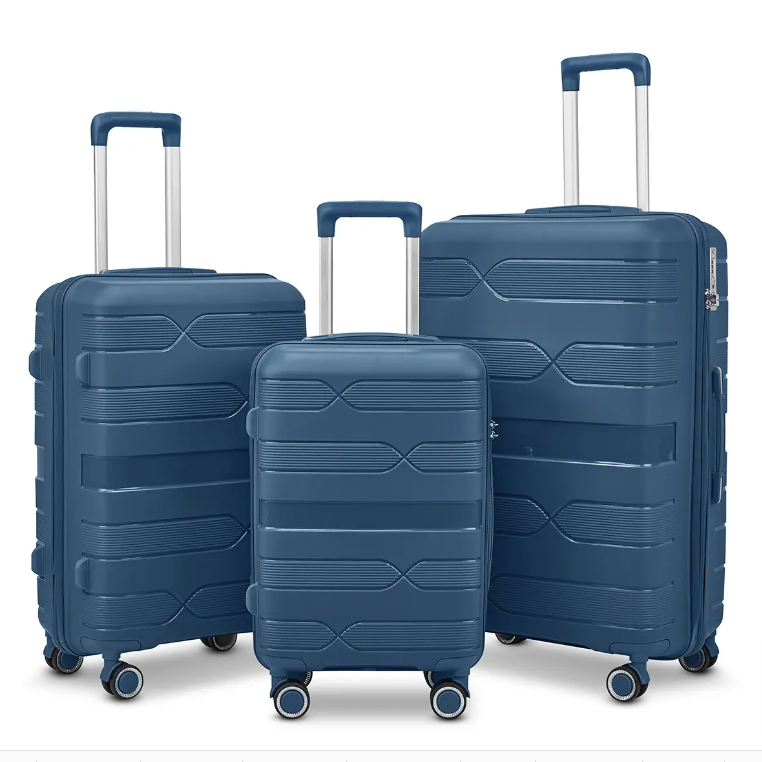
The material you choose sets the floor for your MOQ. Aluminum luggage production requires stamping dies, anodizing processes, and precision hardware assembly — all of which carry higher fixed costs than thermoplastic production. PC and ABS shells are formed via vacuum thermoforming or injection molding, which has lower tooling entry costs and faster changeover times.
As a reference point: aerospace-grade Series 5 aluminum-magnesium alloy — the material standard for premium hard-shell luggage — is purchased in coil form with minimum procurement quantities. A factory that cannot explain how their aluminum raw material is sourced and stored is likely not producing it in-house.
For a detailed breakdown of how aluminum and PC differ from a manufacturing and cost perspective, see: Aluminum vs Polycarbonate Luggage: OEM Material Selection Guide →
2. Customization Depth
How much you change from the factory’s existing design directly affects your MOQ:
- Existing style, color or logo change only: Lowest MOQ threshold. No new tooling required. Aluvox supports this from 300 pieces total.
- Existing style, hardware or finish modification: Moderate threshold. Component sourcing may require minimum purchase quantities from hardware suppliers.
- Fully custom design, new mold required: MOQ is determined by tooling investment and production economics. Contact the factory directly to agree on a viable quantity based on your budget and their cost structure.
The cleaner your brief, the more predictable your MOQ.
3. SKU Count and Color Splitting
This is where Aluvox’s program differs from many factories in the market.
Many factories quote MOQ per color — meaning if you want aluminum luggage in three colors, you need 300 pieces of each, for a total first order of 900 units. For a brand testing the market, this represents significant inventory and capital risk.
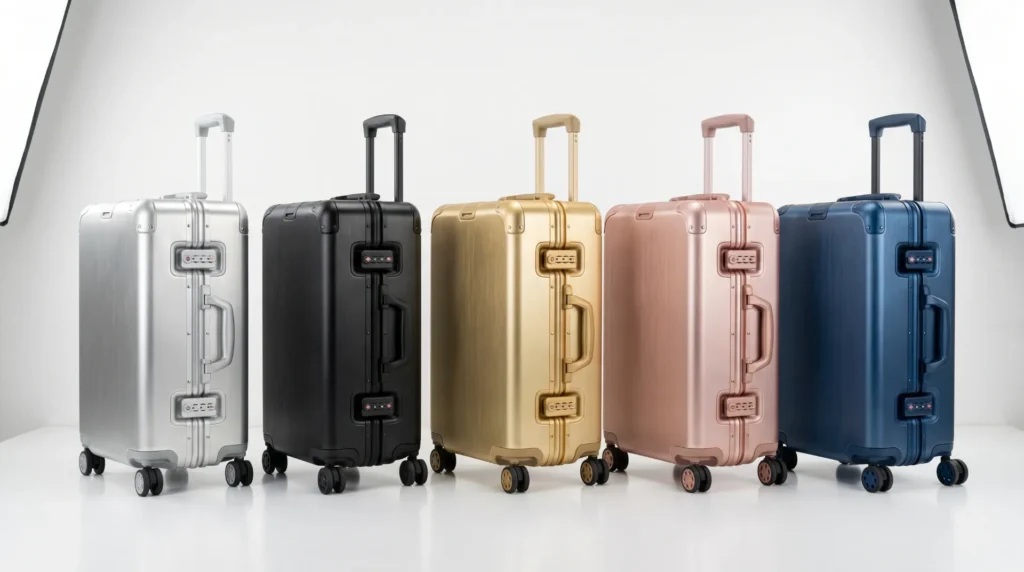
Aluvox supports multi-SKU order splitting: your 300-piece MOQ can be divided across colors within the same style. For example:
- Silver: 100 pieces
- Black: 100 pieces
- Champagne gold: 100 pieces
- Total: 300 pieces — MOQ met
This structure allows brands to test color performance in market before committing to single-color volume on a reorder.
4. Tooling Status
Whether you are using existing factory tooling or requiring new mold development changes both your MOQ and your lead time:
| Tooling scenario | MOQ impact | Sample lead time | Bulk lead time |
|---|---|---|---|
| Existing Aluvox tooling | 300 pcs, standard | 20 working days | 45 days |
| New mold development | Determined by project | 30–45 working days | 45 days from approval |
New mold development adds tooling cost and development time to the equation. For first-time buyers, using existing tooling to place an initial order — then investing in custom tooling on reorder — is a lower-risk path to market.
OEM vs ODM: How the Model Affects Your MOQ
The terms OEM and ODM are used interchangeably in many factory communications, but they represent different production models with different MOQ implications.
| Model | Definition | MOQ profile | Best for |
|---|---|---|---|
| ODM (existing design, your branding) | Factory’s existing shell, your logo, colors, hardware | Lowest — shared tooling amortized across clients | First orders, market testing, fast-to-market launches |
| OEM — color/logo modification | Existing structure, custom colorway or finish | Low to moderate — no new tooling | Brand differentiation without tooling investment |
| OEM — fully custom design | New shell geometry, proprietary mold | Higher — full tooling cost carried by buyer | Established brands with IP requirements |
For most brands placing their first luggage order, ODM is the more practical starting point. The tooling is already in place, the sample process is faster, and the MOQ threshold is at its lowest. Once you have validated demand and established a supplier relationship, investing in custom OEM tooling carries significantly less risk.
Aluvox’s private label luggage program is structured around this phased approach — start with an existing shell, build your brand identity, then develop proprietary designs when volume justifies the tooling investment.
Browse the Aluvox aluminum luggage collection to see available tooling for ODM orders →
How to Structure Your First Order Budget
MOQ determines the minimum quantity — but your first order budget involves several cost layers beyond the unit price.
Cost components for a first OEM/ODM luggage order:
- Unit price x MOQ: The base production cost. Varies by material, specification, and order volume.
- Tooling fee (if applicable): For new mold development only. Not applicable for ODM orders using existing tooling.
- Sample fee: Varies by project. Confirm with your factory whether sample costs are credited against the bulk order.
- Freight (FOB/CIF): From port of export to your destination. For Aluvox orders, export routes operate through Huangpu, Nansha, Shekou, and Yantian ports.
- Import duties: Determined by your destination country and HS code classification.
Multi-SKU splitting reduces cash flow risk:
A single-color order of 300 units ties up capital in one colorway. A three-color split of 100 units each tests three market positions simultaneously — with the same capital outlay and no MOQ penalty.
Standard payment structure:
The industry standard for a first order is 30% deposit against proforma invoice, with the remaining 70% payable against bill of lading. This structure protects both parties — the factory covers material procurement costs, and the buyer retains leverage for production quality compliance before final payment.
Factories requesting 100% prepayment on a first order without an established relationship should be asked to explain the deviation from industry standard.
Ready to calculate your first order? Contact an Aluvox engineer — submit your material preference, style reference, color count, and target quantity. We will respond with an itemized quote within 2 business days. Request a Quote
Five Questions to Ask Any Factory About MOQ
These questions should be part of every initial factory evaluation. The answers reveal more about a factory’s production model and flexibility than any marketing material.
Q1: Is the MOQ per SKU or per total order?
This is the most important MOQ question. A factory quoting 300 pieces MOQ per color requires 900 pieces for a three-color launch. A factory supporting total-order MOQ allows the same three-color launch at 300 pieces combined. Aluvox supports total-order MOQ with color splitting — 300 pieces divided across colors within the same style.
Q2: Does the reorder MOQ match the first order?
Most factories apply the same MOQ to reorders as to first orders. However, for established client relationships, flexibility on reorder quantities is often negotiable. Ask directly rather than assuming the first-order terms apply permanently.
Q3: Is there an option to order below MOQ, and at what cost?
Some factories will accept sub-MOQ orders with a small-batch surcharge that covers the fixed setup costs not covered by the reduced quantity. At Aluvox, below-MOQ requests are evaluated case by case — contact us directly to discuss your specific situation.
Q4: Who owns the tooling, and how does that affect future MOQs?
If the factory owns the mold, you are dependent on that factory for reorders. If you own the mold via a tooling buyout agreement, you have the option to move production without losing your design. Mold ownership terms should be confirmed in writing before any tooling deposit is paid.
Q5: Does sampling require MOQ commitment first?
Some factories require a deposit toward the full MOQ before initiating sample production. Others run samples independently. Aluvox produces samples from existing tooling within 20 working days, independent of bulk order commitment — allowing buyers to evaluate product quality before finalizing their order quantity.
For a broader framework on evaluating factory capabilities, see: How to Choose an OEM Luggage Manufacturer in China →
MOQ Is a Starting Point, Not a Barrier
The right MOQ for your brand is the one that lets you enter the market with manageable risk, validate demand, and build a reorder relationship on real performance data. That number is different for every brand — and any factory worth working with will help you find it rather than present it as a fixed wall.
The variables are knowable: your material choice, customization depth, SKU count, and tooling status all contribute to where your MOQ lands. The questions above will tell you whether a factory’s MOQ is structurally justified or commercially inflated.
If you are planning your first custom luggage order and want to understand what MOQ looks like for your specific requirements, Aluvox engineers are available to walk through your project and provide a realistic minimum quantity with full cost transparency.
Contact an Aluvox Engineer — submit your product specifications, target market, and estimated order volume. We will provide an initial MOQ assessment and indicative quote within 2 business days. Contact Engineering Team