

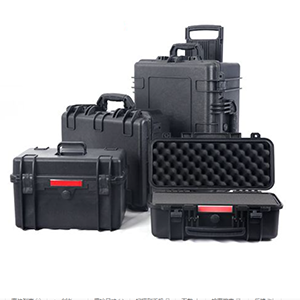
Aluminum Carrying Case Manufacturer: OEM Guide
A carrying case is judged on one thing: whether the gear inside arrives in the same condition it left. Search “aluminum carrying case manufacturer” and the page reflects that. At the top sit transport-grade specialists — German-engineered cases with ATA ratings and wheels, ATA shipping-case houses, and the Chinese factories that build custom carrying cases to order. The shopping row is full of rolling equipment cases, waterproof boxes, and OEM camera and tool cases.
If you are sourcing carrying cases to put your own gear, instruments, or products into — for a field team, a rental fleet, a sales force, or a resale line — the spec that matters is not just “aluminum.” It is how the case is carried, how it seals, and how the interior holds your gear through a drop, a downpour, and a cargo hold. This guide walks the procurement side of that decision.
What an aluminum carrying case actually has to survive
A storage box sits still; a carrying case gets handled, and that changes the spec sheet. The benchmark transport cases are built and certified for exactly this: ATA 300 approval for repeated air transport, MIL-STD-810 testing for shock and vibration, and IP65 to IP67 sealing against dust and water. The premium German cases that lead this search are rated to survive temperature swings from well below freezing to over 300°F and rough handling that would crack a plastic box — one overland reviewer’s case spent five hours being mauled by a black bear, lost a latch, and still kept its contents.
That is the bar your supplier should understand even if your application is gentler. A case bound for trade shows does not need bear-proofing, but it still faces baggage handlers, truck beds, and stacking in a warehouse. The people who move gear for a living talk about transport cases in those terms: an equipment manager for a pro sports club says they rely on aluminum cases to “move gear safely across the country,” and a working photographer credits one with protecting a camera kit through “rain, dust, and bumpy travel days.” Ask what the case is actually rated and tested for — drop, vibration, seal, and load — because “rugged” without a standard behind it is a marketing word, not a spec. ATA 300 covers repeated airline transit; MIL-STD-810 covers shock and vibration; an IP65 or IP67 figure covers dust and water. The right rating depends on your route, and a real manufacturer will help you pick it rather than slap “heavy duty” on everything.
Portability is the spec everyone underestimates
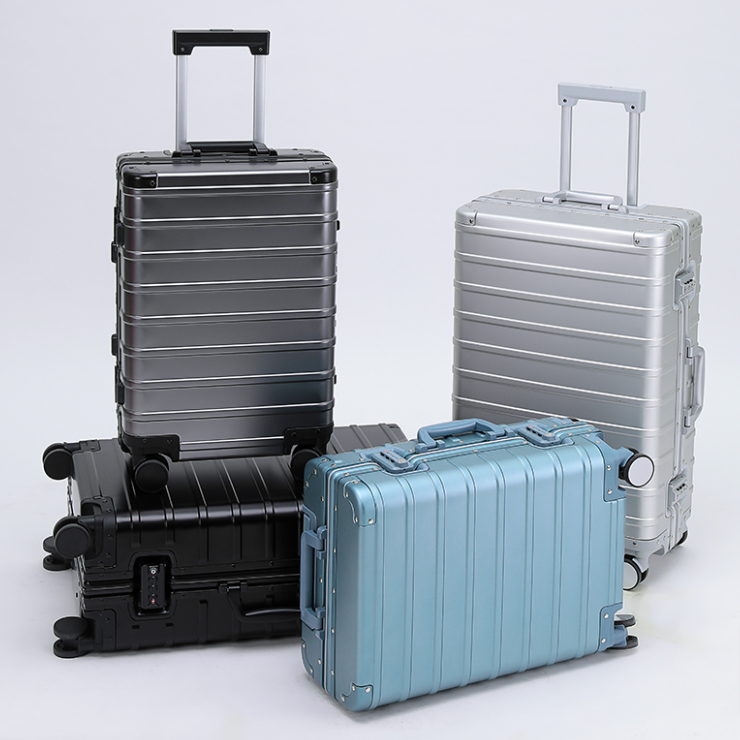
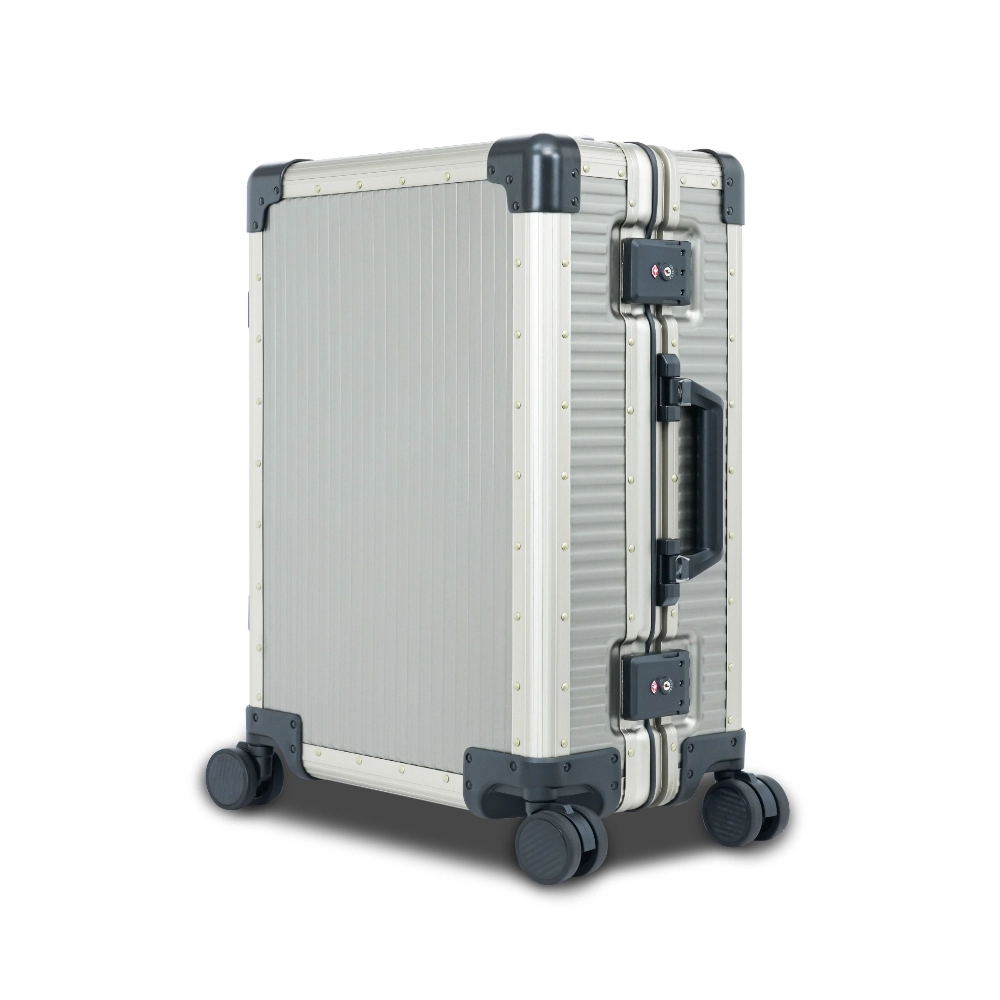
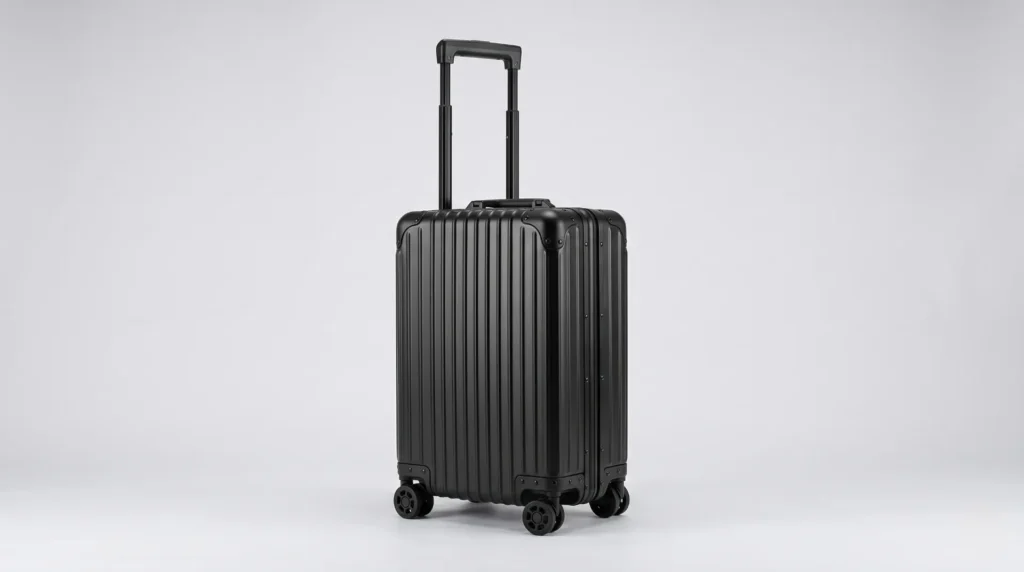
Buyers obsess over the shell and forget that a carrying case is defined by how it is carried. Three details decide whether a case is a pleasure or a liability in the field. Handles come first: ergonomic spring drop handles that fold flat, sit comfortably under load, and can be gripped with gloves are the difference between a case a technician will use and one they will curse. For anything heavy, wheels or castors turn a two-person lift into a one-person roll, and a retractable trolley handle makes it airport-friendly.
Then there is stacking. In logistics and warehousing, cast aluminum stacking corners let cases lock together for safe, stable transport on a pallet — a detail the best transport cases are built around and cheaper boxes ignore, leaving them to slide. Field users who have run both notice it directly: reviewers comparing aluminum carrying cases to popular molded-plastic ones report the aluminum is lighter for a similar size, holds as much or more thanks to straight sidewalls, and stacks securely where the plastic boxes tend to slip. Weight is the quiet advantage that compounds over a full kit. When you brief a supplier, treat handles, wheels, and stacking as first-class requirements, not afterthoughts — they are what your end user actually touches, every single trip.
The interior: custom foam that holds gear through the trip
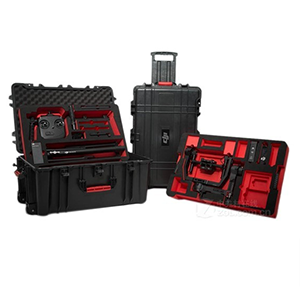
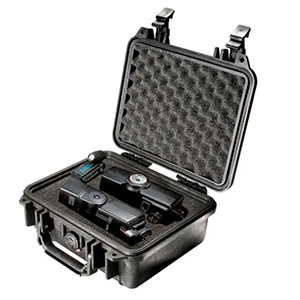
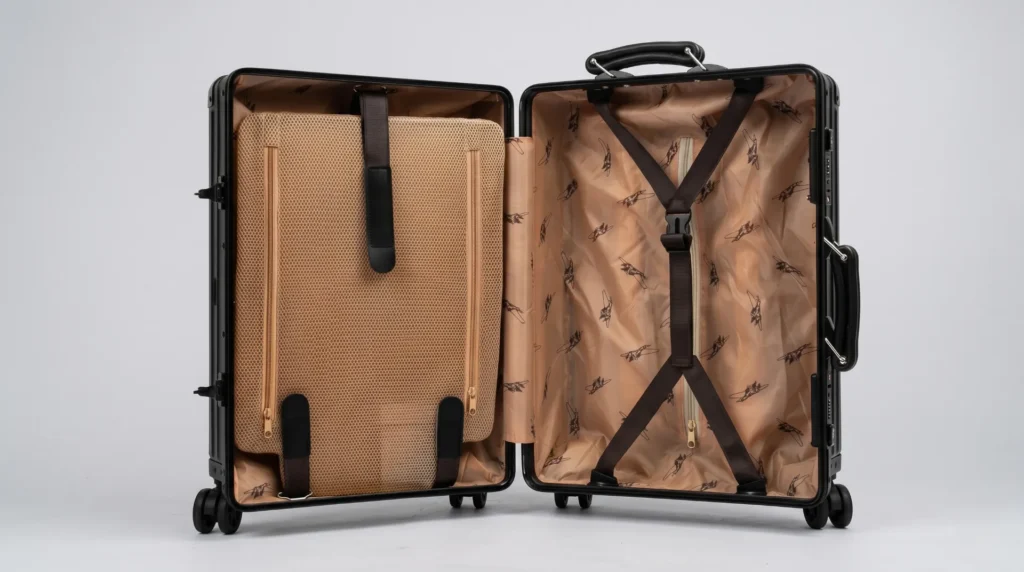
The shell gets the gear to the destination; the foam decides what condition it arrives in. Transit is a vibration problem as much as an impact one, so the interior has to immobilize the contents, not just cushion a single drop. The serious manufacturers fit custom foam to the contour of your specific gear — cameras and lenses, measuring and test instruments, drones, electronics, tools — using high-density foam for stable support, egg-crate (wave) foam in the lid to absorb vibration, and pick-and-pluck layouts for buyers who reconfigure often.
How it is cut matters: pluck-and-pull for flexibility, or laser-cut and CNC-machined for a precise, repeatable fit on a production run. For sensitive electronics and field instruments, ask about a sealed, gasketed lid so moisture never reaches the foam in the first place. A carrying case with a generic block of foam is a box; a carrying case with foam cut to your product is a transport solution you can put a logo on.
Sourcing aluminum carrying cases for your gear? Aluvox forms its own cases and cuts foam to your drawing — explore our aluminum cases and tell us what you need to move.
Aluminum vs. plastic: the carrying-case trade-off
The honest comparison for a carrying case is aluminum against a molded plastic case such as the ones field crews already know. Aluminum tends to win on three counts: it is usually lighter for the same internal volume, its straight walls and stacking corners pack and stack better than rounded plastic, and it shrugs off temperature extremes that make plastic brittle in winter cold. Reviewers who have carried both put quality aluminum cases in the “buy-once” category and note they are happy to pass them down rather than replace them.
Be straight about the trade-offs, because your buyers will be. Aluminum shows its life — catch a side edge or the face on a hard drop and it will likely scratch or dent, even if the welded profile keeps the case from breaking open. Owners tend to make peace with that: many describe the marks as a patina that tells the story of the trips, not a failure. The temperature angle is real too — aluminum stays dimensionally stable from deep cold to high heat where plastic can grow brittle, and a metal case is fully recyclable at the end of a long life. Seal design is worth scrutiny: a true rubber or silicone gasket outperforms simple foam weatherstripping, and field users notice the difference — one overlander switched brands specifically because he preferred a gasket seal to weatherstripping. If waterproofing matters, specify the seal rather than trusting the word “weatherproof.” None of this undercuts aluminum for transport — it just tells you which questions to ask.
How to evaluate an aluminum carrying case manufacturer
With the application clear, score every supplier against the same list:
- Alloy and construction. A named alloy and gauge — reinforced 5052 or 5005-class aluminum — with welded or fabricated profiles and reinforced corners, not a vague “aircraft-grade.”
- Seal and rating. The seal type (gasket vs. weatherstrip) and any IP65/IP67 or ATA/MIL-STD rating that the application requires.
- Carry hardware. Spring drop or ergonomic handles, wheel or trolley options for heavy loads, and stacking corners for logistics — confirmed, not assumed.
- Foam customization. Pluck-and-pull, laser-cut, or CNC foam cut to your gear, with the option to design the layout from your drawing.
- Testing. Drop, vibration, and salt-spray or seal testing — with results, not adjectives.
- MOQ, sampling, and branding. Minimum order, sample cost, lead time, and logo or private-label options. Many factories offer a free or low-cost sample; order one before you commit a run.
A supplier who can answer all six is building carrying cases; one who deflects to price is reselling them.
The tells are easy to spot once you know them. A quote that never asks what gear goes inside or where it travels, a “waterproof” claim with no seal type or IP figure, no sample on offer, or handles and wheels presented as fixed rather than chosen for your load — each says you are talking to a trader, not a factory. Ordering a single sample and putting it through a drop and a soak costs little next to a container of cases whose latches pop on the first freight run or whose foam never fit the gear.
Stock, custom, and where this case sits in your range
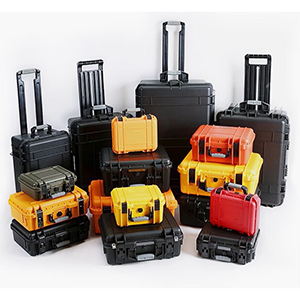
An aluminum carrying case rarely lives alone in a catalog. It sits alongside tool, instrument, flight, and equipment cases — the same forming capability, named for the job. The practical move is to source the whole family from one aluminum case manufacturer so your handles, seals, finishes, and branding stay consistent across the line, and so your foam tooling and customization run through a single partner.
For volume, match the build to the order: stock cases with a custom foam interior keep MOQ low and lead times short for a presentation or field-kit line, while fully custom dimensions and welded construction make sense once a product or program justifies the tooling. Minimums in this category run from a handful of units on stock-plus-foam builds to a few hundred on bespoke tooling, so decide where your order sits before you design. Either way, sample first — confirm the fit, the seal, and the carry before you scale.
Sourcing aluminum carrying cases with Aluvox
Aluvox has formed full-metal hard cases in Dongguan, China for more than twenty years, including dedicated work for the power-tool, surveying, and hardware trades — the carrying, tool, and instrument applications this category lives on. Cases are built from reinforced aluminum, fitted with the handles, wheels, latches, and seals the job needs, and lined with custom EVA, PE, or pick-and-pluck foam cut to your gear and finished with your color and logo.
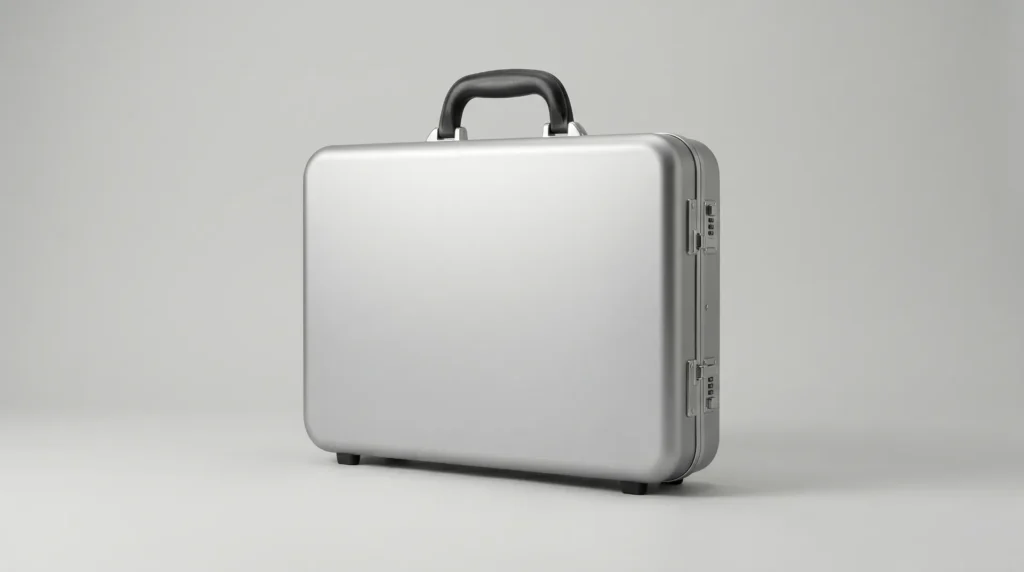
For brands and distributors that means low-MOQ OEM and private-label carrying cases, in-house testing, and build-to-drawing customization rather than a relabeled catalog box — and one partner who also covers the tool, flight, and instrument cases beside them. Real aluminum examples already sit in the range, from a silver aluminum briefcase to a 5-series aluminum-magnesium trolley case. Cases ship protected in bubble wrap inside corrugated cartons as standard, and samples are available before a bulk run so you can confirm fit, seal, and carry first-hand. If you are moving gear that has to arrive intact, start with the case and the spec, then bring your drawing and your volumes.
See the range and request a quote: Aluvox specialty aluminum cases.