






Luggage in the Digital Age: 5 Technologies Shaping the Future of Travel

Bill
The advisor of the product development
In the constantly evolving realm of travel, the expectations of globetrotters are continually on the rise. As a seasoned expert within the luggage industry, I have witnessed firsthand how technological innovations are not merely responding to these needs but are actively reshaping the landscape of travel luggage. Presently, we stand on the brink of a new era where our travel companions – our suitcases – are becoming more intelligent, robust, and equipped with groundbreaking features. In this comprehensive guide, we will delve into five key technological advancements that are redefining the luggage industry.
Are You Missing Out on Smart Luggage Trends? Stay Informed!
Innovative Materials: Innovations in luggage materials have given travelers more choices than ever before. Titanium and Magnesium alloys have emerged as standout materials, each offering distinct advantages. Titanium excels in strength, corrosion resistance, and flexibility, making it the ideal choice for those who need rugged luggage. Meanwhile, Magnesium alloys redefine lightweight luggage, ensuring you can pack more without exceeding weight restrictions, all while offering excellent impact resistance.
Foldable Suitcase: This travel essential seamlessly combines durability and convenience with its unique folding capability. When not in use, it effortlessly collapses to a compact size, saving valuable storage space. Its robust construction ensures the safety of your belongings during your journey. Bid farewell to bulky luggage and welcome the practicality and style of the Foldable Suitcase on your next adventure.
Luggage with Automatic Following Function: This cutting-edge technology harnesses the power of robotics and AI, promising unparalleled convenience and efficiency. Equipped with advanced sensors and AI algorithms, it navigates obstacles in real-time, staying closely connected to you. Say goodbye to the burden of dragging your luggage and let our smart companion follow you effortlessly, ensuring a stress-free journey.
Smart Riding Suitcases: These innovative luggage pieces not only store your belongings but also double as rideable scooters. Built for durability and comfort, they offer a smooth and enjoyable ride through airports or city streets. Say goodbye to long walks between terminals and embrace the practicality and excitement of Smart Riding Suitcases, turning travel into a fun experience.
Intelligent Technology Application: Smart suitcase technology is transforming the travel experience, offering enhanced security, convenience, and peace of mind. From biometric and Bluetooth locks to USB charging ports and GPS tracking, these innovative features cater to the needs of modern travelers. Smart locks enhance security with biometrics and Bluetooth for remote access. USB ports keep travelers connected, and GPS track luggage in real-time.
Section 1: Innovative Materials
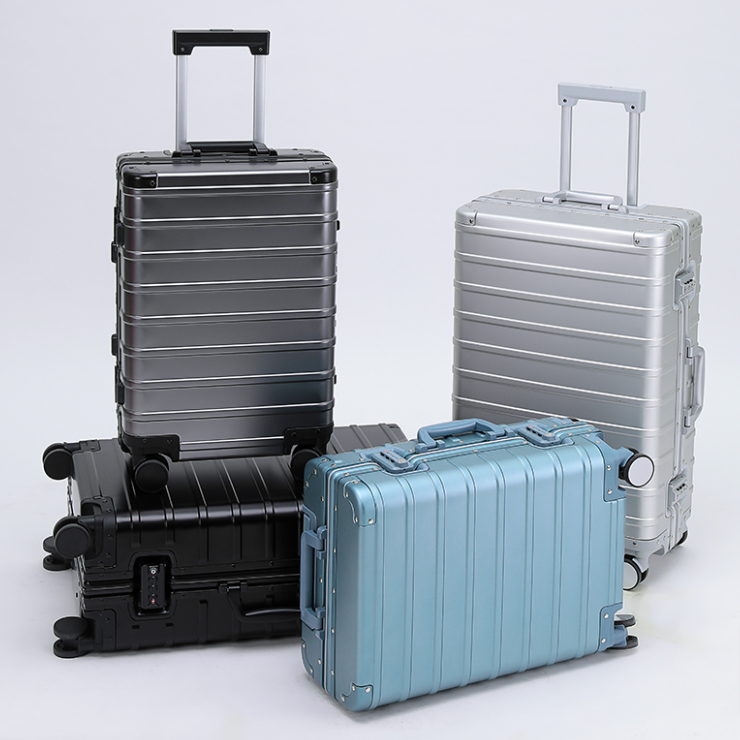
Titanium, magnesium, and aluminum alloys are all popular choices in the construction of high-quality luggage, each offering distinct advantages.Titanium for its unmatched strength and durability, magnesium for its exceptional lightness, and aluminum for its balance of strength, weight, and cost. The choice between them should be based on specific travel requirements, budget constraints, and personal preferences regarding weight, durability, and resistance to elements.
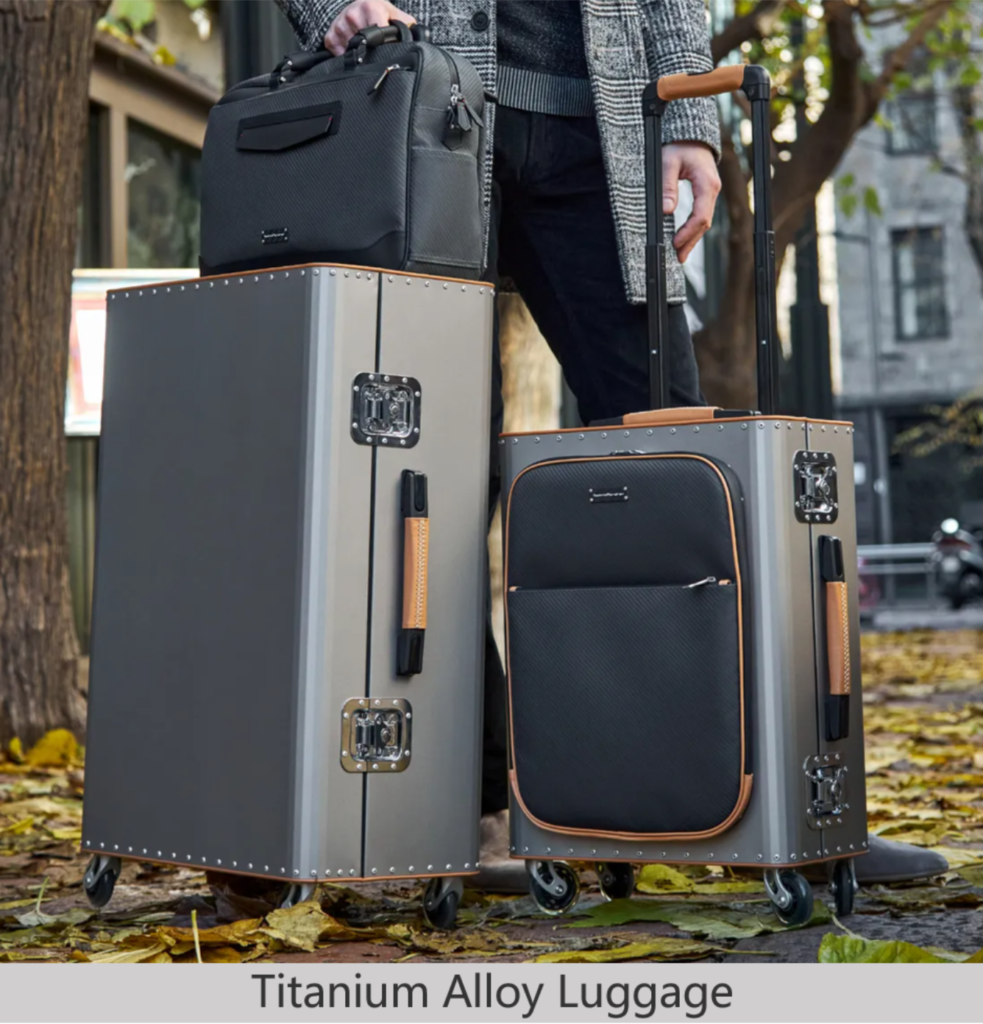
1.Titanium Alloy Luggage: Redefining Durability on the Go
Strength-to-Weight Ratio: Titanium alloy boasts one of the highest strength-to-weight ratios among metals, resulting in luggage that is both lighter and stronger than most aluminum alloy counterparts.
Corrosion Resistance: Titanium exhibits exceptional resistance to corrosion, surpassing aluminum. This makes titanium alloy luggage exceptionally durable in challenging environments, including exposure to saltwater and extreme weather conditions.
Flexibility and Dent Resistance: Titanium’s flexibility allows it to absorb impacts and regain its original shape, reducing the likelihood of permanent dents.
2.Magnesium Alloy Luggage: Pioneering Effortless Travel
Lightweight: Magnesium alloy is even lighter than both aluminum and titanium alloys, making it one of the lightest materials used for luggage, a crucial consideration for air travel.
Impact Resistance: Magnesium alloy boasts excellent impact resistance properties, ensuring effective protection for luggage contents against shocks and drops.
Thermal Conductivity: This property can be advantageous for storing temperature-sensitive items, as magnesium alloy can dissipate heat more efficiently than aluminum.
Attribute | Titanium | Magnesium | Aluminum |
Tensile Strength | 30,000 – 200,000 psi | 20,000 – 40,000 psi | 40,000 – 70,000 psi |
Density | ~4.51 g/cm³ | ~1.74 g/cm³ | ~2.7 g/cm³ |
Corrosion Resistance | Extremely high, resistant to saltwater and chlorine | Moderate, improved with coatings | Good, can be increased with anodizing |
Fire Resistance | High (melts above 3,000°F/1,650°C) | Lower (ignites at about 1,200°F/650°C, but modern alloys are treated for safety) | Moderate (melts at about 1,220°F/660°C) |
Flexibility/Dent Resistance | More flexible than aluminum, better dent resistance | Less flexible, higher risk of cracking on severe impact | Less flexible, prone to dents |
Weight | Lighter than steel, slightly heavier than aluminum | Lightest structural metal available | Lighter than steel, heavier than magnesium |
Cost | Generally more expensive than aluminum and magnesium | More expensive than aluminum, less than titanium | Generally less expensive than titanium and magnesium |
Typical Use | High-end, durable luggage for frequent and rugged use | Ultra-lightweight luggage for weight-sensitive travel | General travel, balance of durability and cost |
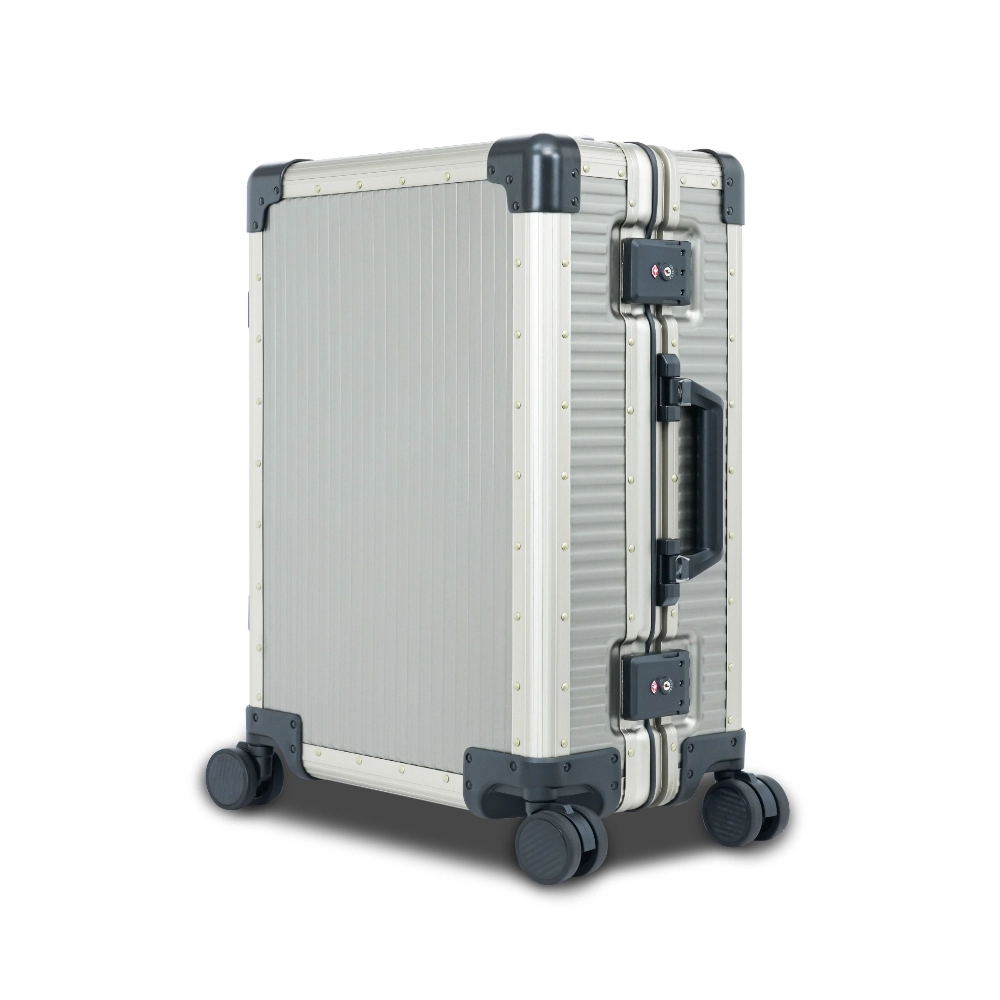
About the advantages of aluminum luggage, my other post has a detailed explanation. Please click here to view.https://aluvox.com/aluminum-vs-polycarbonate/
Section 2: Autonomous Movement in Luggage
The introduction of autonomous movement in luggage represents a significant technological leap, reshaping our interaction with travel gear. This feature, combining elements of robotics and AI, promises unparalleled convenience and efficiency, particularly appealing to tech-savvy travelers and those with mobility concerns.
Key Features of Autonomous Luggage
Advanced Sensor Array
AI-Powered Navigation
User Interaction and Connectivity
Anti-Theft Features
At the core of self-navigation lies a sophisticated sensor array, capable of continuously scanning the environment. These sensors, including ultrasonic, infrared, and optical types, excel at detecting and assessing obstacles with remarkable precision, allowing luggage to navigate effectively through complex environments.
AI algorithms play a pivotal role, interpreting sensor data to make real-time navigation decisions. This involves adjusting the luggage’s path, speed, and even halting when necessary to ensure precise tracking while avoiding collisions. These algorithms learn and adapt, enhancing navigation over time and across diverse environments.
Self-navigation involves seamless interaction between luggage and its owner. Through connectivity options like Bluetooth, luggage can maintain a safe and convenient distance from the user, freeing their hands for other tasks.
Autonomous suitcases incorporate multiple anti-theft features, including GPS tracking for remote monitoring, remote locking mechanisms for securing luggage contents, and proximity alerts to prevent theft or accidental loss in crowded areas.
The introduction of autonomous movement in luggage represents a significant technological leap, reshaping our interaction with travel gear. This feature, combining elements of robotics and AI, promises unparalleled convenience and efficiency, particularly appealing to tech-savvy travelers and those with mobility concerns.
Section 3: Smart Riding Suitcases
Intelligent control systems within smart riding suitcases represent a fusion of advanced technology and user-centric design, transforming them from mere storage devices into interactive, responsive tools that greatly enhance the travel experience.
1.Key Components of Intelligent Control Systems
Microprocessors and Sensors: These systems typically incorporate microprocessors and an array of sensors that monitor and control the suitcase’s functions. Sensors can detect motion, orientation, and even the weight of contents, enabling responsive and adaptive control.
- User Interface: A critical aspect is the user interface, designed for simplicity and ease of use. Interfaces can include buttons or touch panels on the suitcase itself or remote control via a smartphone app, allowing users to command functions like locking, unlocking, tracking, and motorized wheel control.
- Connectivity and Integration: Many intelligent control systems incorporate Bluetooth, Wi-Fi, or cellular connectivity, enabling communication with other devices. This integration allows for features like remote locking/unlocking, location tracking, and receiving real-time notifications about the suitcase’s status.
- Software and Customization: The system’s software often offers a high degree of customization, including setting speed limits for rideable suitcases, adjusting security settings, or tailoring notifications.
2.Advantages of Intelligent Control Systems
- Enhanced Security: Advanced locking mechanisms controlled by the system provide superior security compared to traditional suitcases. Features such as biometric locks or PIN codes add layers of protection against theft or unauthorized access.
- Convenience and Efficiency: With features like GPS tracking and automated movement, these systems simplify navigation in crowded environments. The rideable function, controlled by the intelligent system, allows travelers to move faster with less effort.
- Real-Time Monitoring and Alerts: Real-time tracking and alerts offer peace of mind to travelers by allowing them to monitor their suitcase’s status, including whether it has been opened or moved unexpectedly.
- Adaptability and Learning: Some intelligent systems can adapt and learn from user behavior, providing personalized experiences such as suggesting optimal packing methods or travel routes.
Section 4: Folding Luggage
Traditional luggage, characterized by its rigid structure and limited adaptability, often posed challenges for travelers. Bulky suitcases took up valuable space, especially when not in use, and navigating crowded airports or tight spaces was far from effortless. Recognizing these pain points, luggage manufacturers embarked on a journey to reimagine travel gear, giving birth to folding luggage with groundbreaking folding functions.
- Reducing Storage Space
- Collapsible Frames: Folding luggage is equipped with collapsible frames that allow it to shrink down to a fraction of its expanded size. When not in use, travelers can effortlessly fold their luggage, making it exceptionally easy to store in compact spaces like closets, under beds, or in overhead compartments.
- Compression Technology: Some folding luggage models incorporate compression technology, enabling travelers to remove excess air from their packed belongings. This not only minimizes the luggage’s footprint but also helps keep clothing and items neatly packed and wrinkle-free.
- Space Expansion on Demand
- Expandable Compartments: Many folding luggage designs feature expandable compartments that can be unzipped or extended to provide extra storage space. This flexibility allows travelers to adapt to changing packing needs and accommodates items acquired during their trip.
- Accordion-Style Extensions: Some models employ an accordion-style expansion mechanism, which can be effortlessly extended or retracted to adjust the luggage’s capacity. This innovation ensures travelers are well-prepared for various travel scenarios.
- Lightweight Materials
- The use of advanced materials plays a pivotal role in enhancing the storage capabilities of folding luggage. Manufacturers now employ materials such as carbon fiber, polycarbonate, and high-strength plastics, which are both durable and lightweight. These materials contribute to the reduction of the luggage’s overall weight, making it easier for travelers to adhere to airline baggage weight restrictions.
The introduction of autonomous movement in luggage represents a significant technological leap, reshaping our interaction with travel gear. This feature, combining elements of robotics and AI, promises unparalleled convenience and efficiency, particularly appealing to tech-savvy travelers and those with mobility concerns.
Section 5: Intelligent Technology Application
1.Smart Lock Systems: Enhancing Security with a Touch
In an era marked by increased and diverse travel, the security of one’s possessions has never been more crucial. Smart Lock Systems, a groundbreaking luggage technology, are leading the charge in this revolution, offering unparalleled security and convenience for travelers. These advanced locking mechanisms incorporate cutting-edge technology, transforming traditional luggage into a secure and intelligent travel partner.
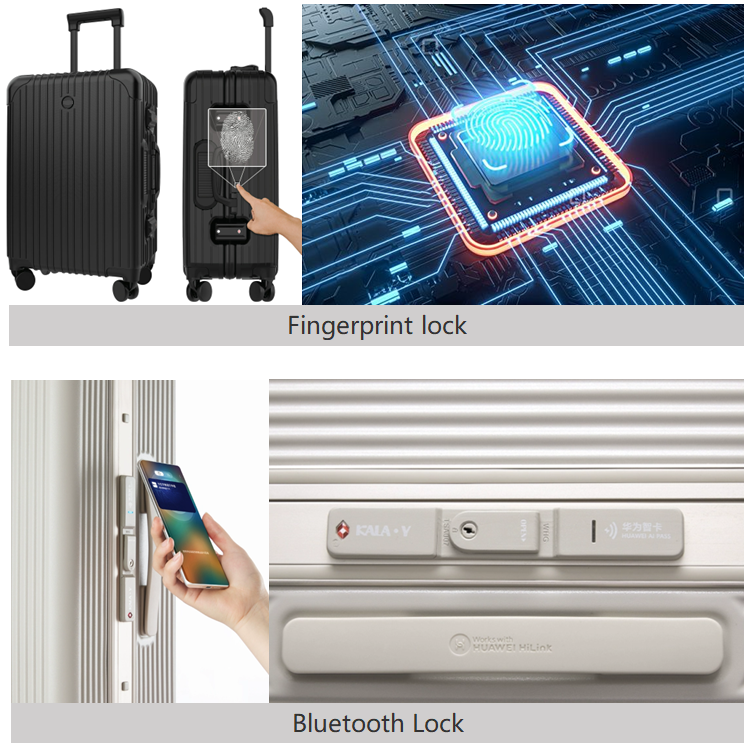
·Fingerprint lock
Biometric locks, the pinnacle of Smart Lock Systems, utilize unique personal attributes such as fingerprints to secure luggage. This technology, once exclusive to high-security facilities, is now accessible at your fingertips. The advantages of fingerprint locks are as follows:
Enhanced Security: Unlike traditional locks susceptible to picking or hacking, biometric locks employ intricate algorithms to match fingerprints, rendering them nearly impervious to conventional methods of tampering.
Ease of Use: With a simple touch, the suitcase locks or unlocks, eliminating the need to remember combinations or carry keys.
Quick Access: In time-sensitive scenarios like airport security checks, a swift fingerprint scan grants immediate access to your belongings.
· Bluetooth Locks
Bluetooth technology integrated into luggage locks offers a fusion of security and smart connectivity. By linking the lock to a smartphone, users gain enhanced control and monitoring capabilities, including:
Remote Access: Unlock or lock your luggage remotely using a smartphone app, a valuable feature in case you inadvertently leave your luggage unlocked.
Proximity Alerts: Receive notifications on your phone if your luggage strays beyond a predetermined distance, adding an extra layer of security against theft or loss.
2.USB Charging Ports: Stay Connected, No Matter Where You Are
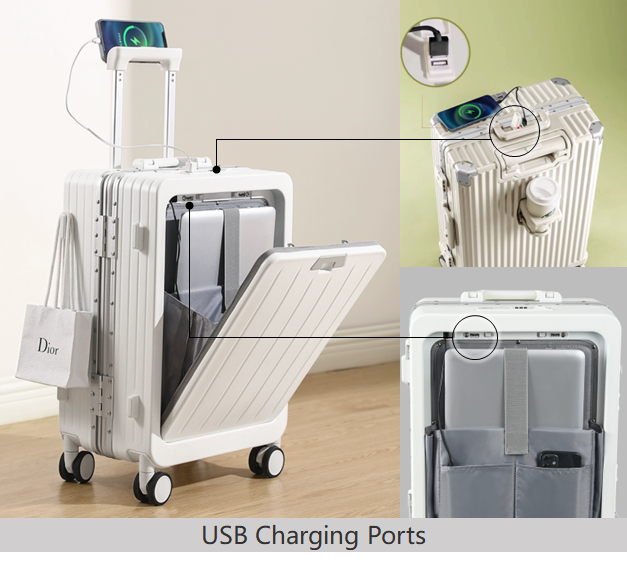
In our digitally-driven world, staying connected is crucial. Recognizing this need, the latest suitcases are equipped with built-in USB charging ports. This feature allows travelers to easily charge their devices on the go, ensuring they remain connected, whether for business or leisure.
- Seamless Design: The integration of USB ports in luggage is thoughtfully executed to maintain the sleek and elegant design of the suitcase. These ports are typically embedded in an unobtrusive manner, ensuring they do not detract from the luggage’s aesthetic appeal. On the same time,the placement of USB ports is carefully considered for easy accessibility. This ensures that travelers can charge their devices without the need to unpack or significantly rearrange their luggage contents.
- High-Efficiency Ports: The USB ports incorporated into luggage are designed for high efficiency and fast charging capabilities, catering to the needs of travelers who require quick charging times.
- Multiple Devices Management: Given the common scenario of traveling with several devices, the inclusion of multiple USB ports allows travelers to charge more than one device at a time, addressing the needs of the contemporary digital traveler.
3.Location Tracking and Anti-Loss Technology: Your Luggage, Always in Sight
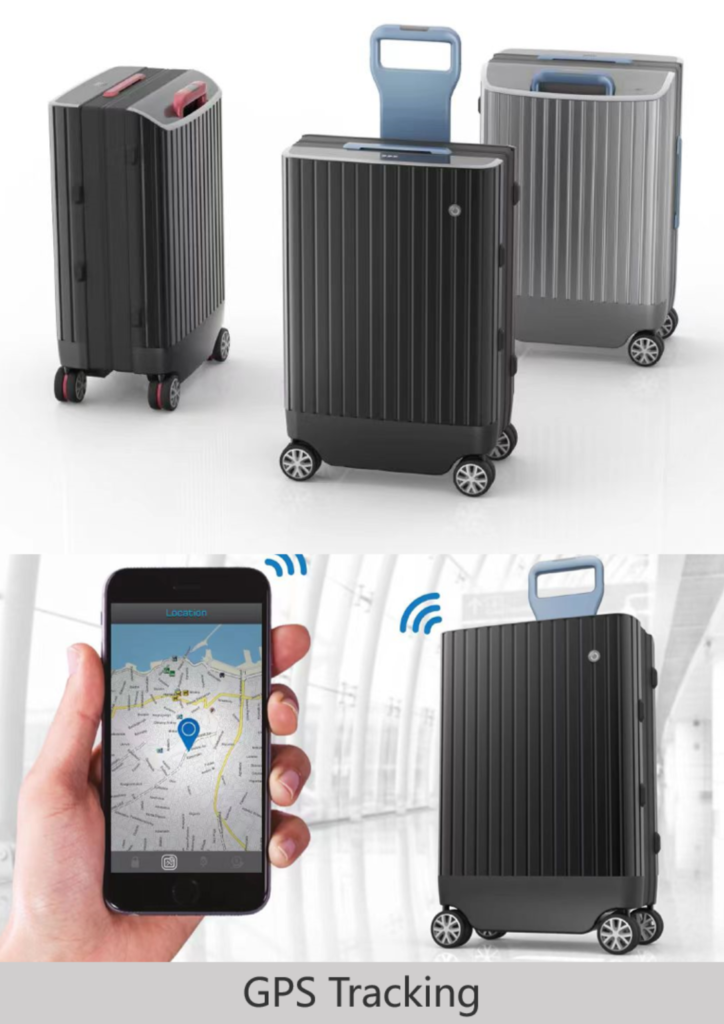
One of the most anxiety-inducing experiences for any traveler is the loss of their luggage. To combat this, the industry has introduced GPS and Bluetooth tracking technologies embedded in suitcases. These trackers enable travelers to monitor their luggage’s location in real-time through a smartphone app. This technology has revolutionized the way we travel, providing peace of mind and significantly reducing the instances of lost luggage.
· GPS Tracking:
GPS (Global Positioning System) tracking is a cornerstone of modern luggage technology, offering precise location monitoring of your suitcase:
Real-Time Location Updates: GPS-enabled luggage provides live tracking information accessible via a smartphone app, allowing travelers to monitor their luggage’s journey throughout their travel.
Geofencing Capabilities: Advanced GPS systems can notify users when their luggage enters or leaves a pre-defined geographical area, adding an extra layer of security.
Peace of Mind in Transit: For travelers concerned about lost or misrouted luggage, GPS tracking offers reassurance that their belongings are on the right path, or quick identification of their location if not.
· Bluetooth Proximity Tracking: Close-Range Monitoring
While GPS excels at global tracking, Bluetooth technology is ideal for close-range monitoring:
Immediate Proximity Alerts: Bluetooth trackers send alerts to a user’s phone when their luggage moves out of a pre-set range, ideal for crowded areas like airports or train stations.
Battery Efficiency: Bluetooth trackers generally consume less power than GPS, extending the battery life of the device and ensuring longer periods of uninterrupted use.
· Wi-Fi Tracking: Supplementing GPS and Bluetooth
Some high-end luggage models now incorporate Wi-Fi tracking, complementing GPS and Bluetooth capabilities.
Conclusion
The luggage industry is on the brink of a remarkable transformation, driven by cutting-edge technological advancements. Travelers now have access to smarter, more secure, and highly efficient luggage options that cater to their ever-evolving needs. These innovations, from intelligent lock systems to advanced materials and autonomous navigation, are reshaping how we perceive and interact with our travel companions.
As technology continues to evolve, we can anticipate even more sophisticated and seamless integration of these features into the fabric of modern travel. These advancements not only enhance the practical utility of luggage but also enrich the overall travel experience by reducing stress and increasing convenience. In this dynamic landscape, the future of luggage holds exciting possibilities, promising a smoother and more enjoyable journey for all travelers.
For more insights and to explore our range of aluminum luggage, visit us at Aluvox. Together, let’s redefine travel luxury.