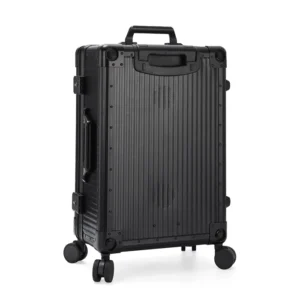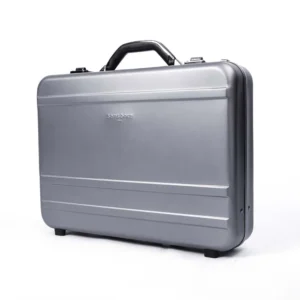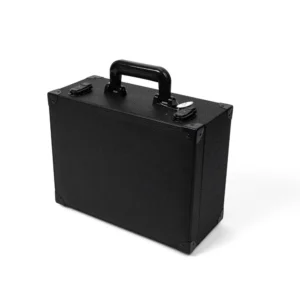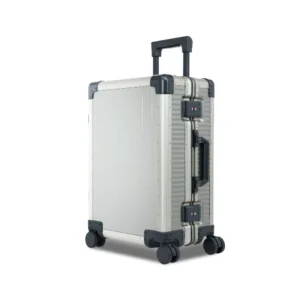

Sourcing a custom suitcase for your brand comes down to three questions that most buyers only learn to ask after their first order. What can you actually customize on a hard-shell suitcase? How does your order volume determine how deep that customization can go? And where does private-label customization end and custom OEM tooling begin?
Get these three right and you scope a project that fits your stage and budget. Get them wrong and you either pay for tooling you didn’t need, or discover that the customization you wanted required a volume you didn’t order. The factory that quotes you knows these mechanics cold; this guide puts them on your side of the table.
The guidance below is for sourcing a custom suitcase line to sell — not personalizing a single case with a printed photo, which is a different service entirely. At Aluvox, we manufacture custom hard-shell suitcases for brands from our Dongguan facility, across the full range from surface customization to fully tooled designs. The framework applies to evaluating any custom suitcase manufacturer, including us.
Personalizing One vs Sourcing a Line
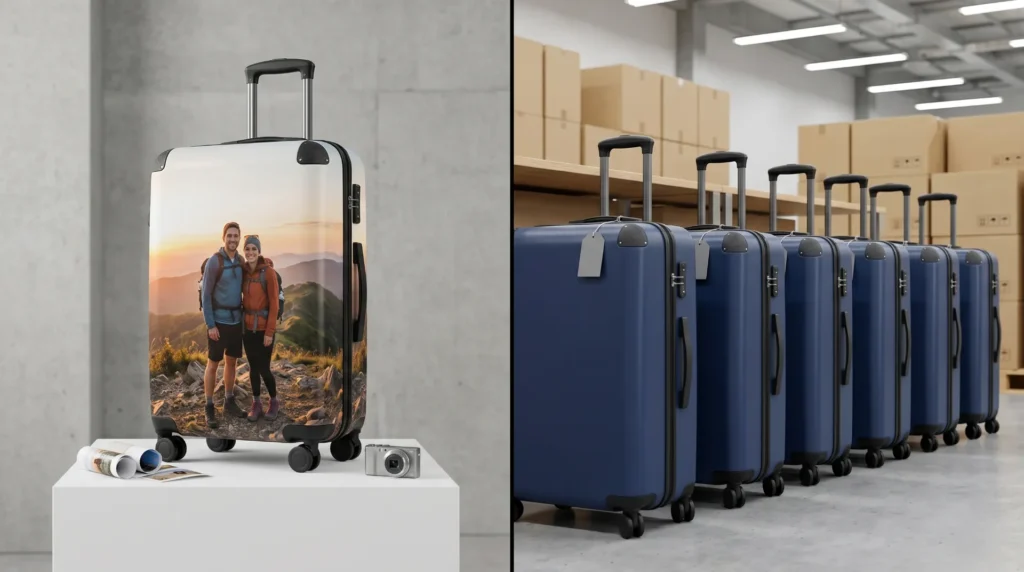
Two different needs hide behind “custom suitcase,” and they share no supply chain.
Personalizing one case. You add a printed design, monogram, or colored accents to a single suitcase — for yourself, a gift, or a team. Print-on-demand services handle this in 1–2 days with no minimum. If this is what you need, those services do it well, and the rest of this guide does not apply to you.
Sourcing a line to sell. You produce custom hard-shell suitcases to your specification — your colors, hardware, interior, and branding — in volume, to sell under your brand. This is a manufacturing project with an MOQ, a production timeline, and the customization decisions this guide covers.
Everything below is about the second: building a custom suitcase line, not personalizing one case to carry.
What You Can Customize on a Hard-Shell Suitcase
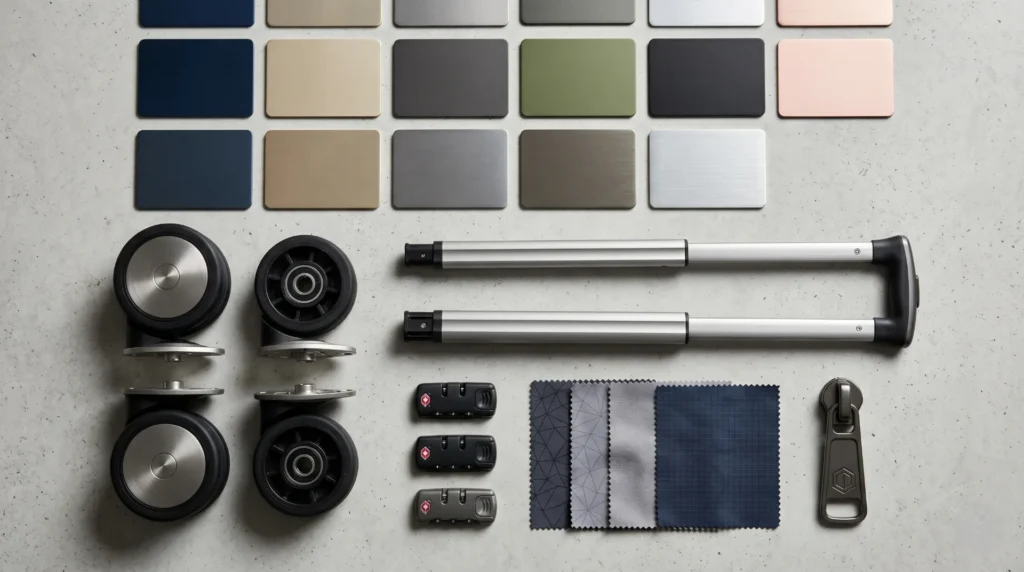
When you source a custom suitcase line, the customization scope is wider than most first-time buyers expect — but it has clear levels. At the baseline, working with a factory’s existing shell, you can customize every element that carries your brand without touching the structural tooling:
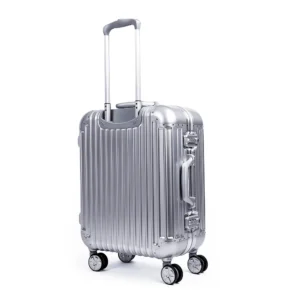
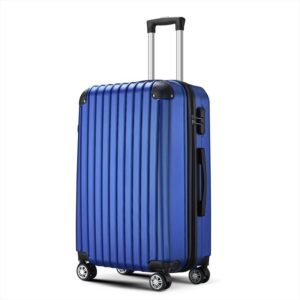
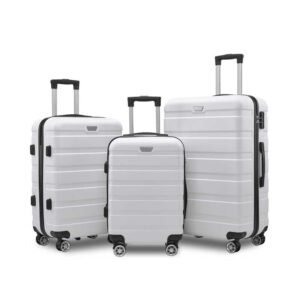
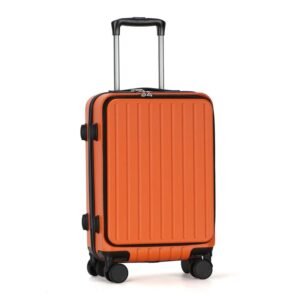
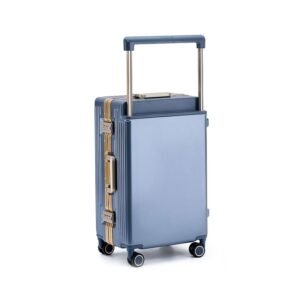
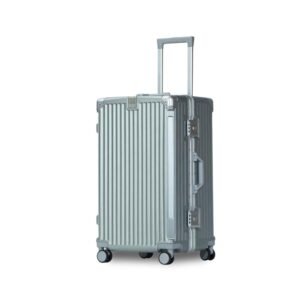
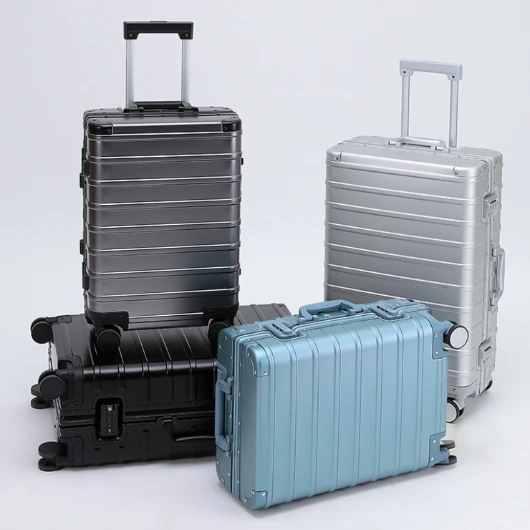
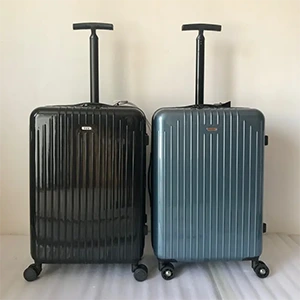
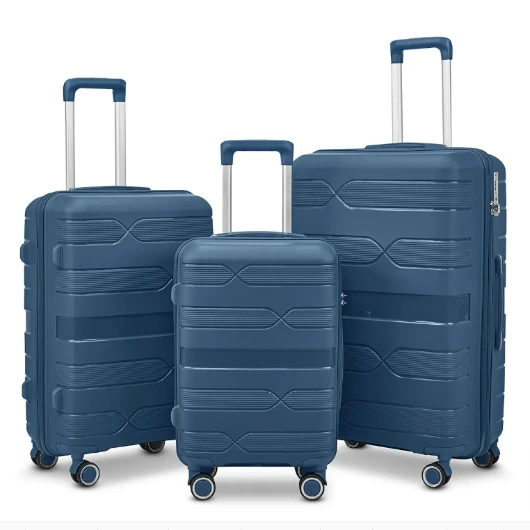
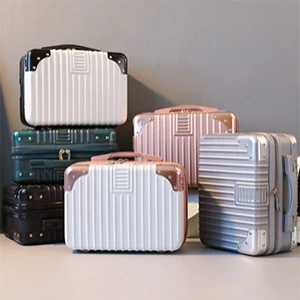
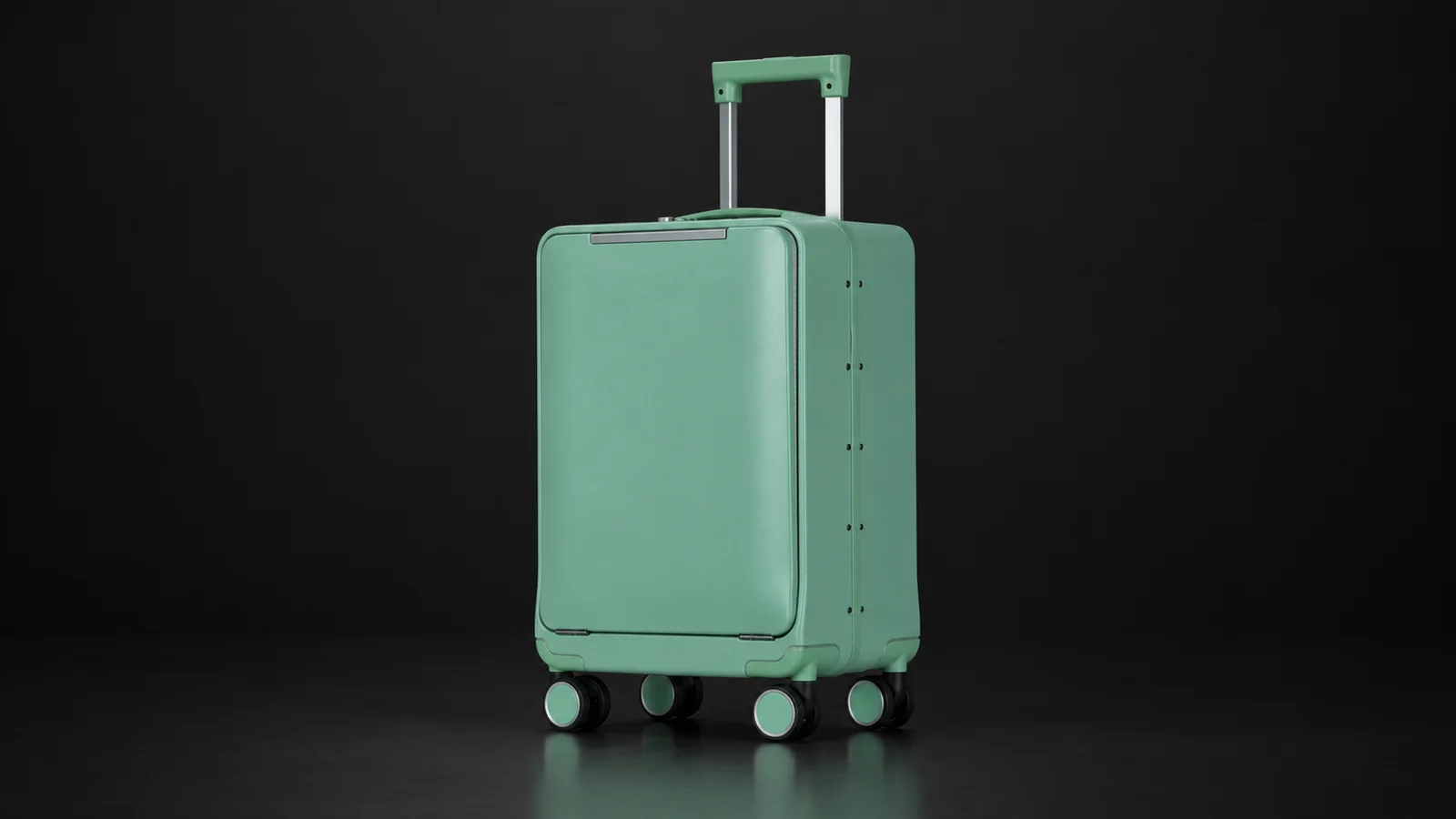
Shell color and finish. Your brand colors across the line, in your chosen finish — anodized colors and brushed, sandblasted, matte, or gloss surfaces for aluminum; Pantone-matched colors and textures for polycarbonate and ABS.
Our metal luggage range includes existing aluminum models that can serve as the starting point for your project.
Hardware color and style. Wheels, handles, zippers, and latches in colors and styles that match your positioning. Hardware is one of the most visible signals of quality and brand identity.
Interior lining and layout. Lining color and material, compartment configuration, compression straps, and pockets. The interior is where a suitcase differentiates on function, not just appearance.
Logo placement and branding. Shell embossing or debossing to carry your logo on the hard shell, woven or printed interior labels, custom zipper pulls bearing your brand, and branded packaging — dust bags, protective covers, gift boxes.
Outer packaging. Branded boxes and inserts that shape the unboxing experience — a meaningful touchpoint for direct-to-consumer brands.
With modest tooling investment beyond the baseline, you can go further — modify corner guards, add signature embossing, change handle grip materials, or introduce a custom interior print. The key principle: all of the above customizes a proven shell. The structural geometry of the suitcase stays in existing tooling, which keeps it accessible at standard volumes. For the full MOQ structure, see: Custom Luggage MOQ Guide →
How Order Volume Sets Customization Depth
There is a direct, predictable relationship between how many units you order and how deeply you can customize. Most first-time buyers do not anticipate it, and it shapes both cost and what is possible. The pattern across the industry looks like this:
Below standard MOQ (under ~300 pieces). You are generally limited to in-stock models with logo and pattern printing — custom parts, free samples, and new designs are typically not available, and the unit price carries a significant premium (often on the order of 80% higher than standard-MOQ pricing). This tier exists for buyers who need small quantities and accept the trade-offs of limited customization and higher unit cost.
At standard MOQ (~300 pieces per style). This is where genuine customization opens up: new designs, custom parts, color and finish customization, and sample service all become available at cost-effective per-unit pricing. For most brands, standard MOQ is the sweet spot — it unlocks real customization without the premium of sub-MOQ orders or the volume commitment of large runs.
Above ~1,000 pieces. Full customization is available, and the unit price drops meaningfully (often around 20% below standard-MOQ pricing) as fixed costs amortize across more units. This tier suits brands with proven demand scaling a committed line.
The practical takeaway: standard MOQ with color splitting — multiple colors within a single minimum — is the most efficient entry for a brand launching a custom suitcase line. It unlocks the real customization options at a manageable commitment, rather than paying the sub-MOQ premium or committing to a four-figure run before the market is proven.
For the broader business logic behind this, see: Custom Luggage Guide →
Where Private Label Becomes Custom OEM
The most important line to understand in custom suitcase sourcing is the one between private label and custom OEM, because crossing it changes your cost and timeline entirely.
Private label — customizing a proven shell. Everything covered above — color, finish, hardware, interior, logo, packaging — is private label customization. You are applying your brand to a shell whose structural geometry is already in production. The molds exist, the production parameters are established, and what you are buying is the manufacturing relationship and the ability to put your brand on a validated product. This is the most capital-efficient path to market, and it is how most successful luggage brands begin — at every price tier.
Custom OEM — new structural geometry. The moment you want to change the shell’s structural geometry — a new shape, new dimensions, a unique silhouette no existing mold produces — you move from private label into custom OEM. This requires new tooling, with the corresponding tooling cost and longer lead time. OEM delivers a shell no competitor can replicate, but it is an investment justified by volume and brand maturity, not a starting point for most brands.
Which one you need. If your differentiation comes from color, finish, hardware, interior, and brand — private label gives you a distinctive, branded product without tooling cost. If your differentiation requires a shell shape that does not yet exist, you are in OEM territory, and the tooling investment should be justified by your volume. The mistake is paying for OEM tooling when private-label customization would have delivered the brand you need.
For the full OEM cost mechanics, see: Custom Luggage Manufacturer Sourcing Guide →
Aluvox Custom Suitcase Program
Customization scope: Aluvox manufactures custom hard-shell suitcases across the full range — private-label surface customization (color, finish, hardware, interior, logo, packaging) on proven shells, and custom OEM with new tooling for brands wanting an exclusive shape. Materials span aluminum, PC, ABS, PP, and titanium.
Production parameters:
| Parameter | Specification |
|---|---|
| MOQ | 300 pcs / style |
| Color splitting | Supported — total order MOQ across colors |
| Customization | Color, finish, hardware, interior, logo, packaging, full tooling |
| Materials | Aluminum, PC, ABS, PP, titanium |
| Branding methods | Shell embossing/debossing, woven labels, custom zipper pulls, branded packaging |
| Sample lead time (existing tooling) | 20 working days |
| New mold development | 30–45 working days |
| Bulk production | 45 days from deposit |
| Payment terms | 30% deposit + 70% against B/L |
| Export ports | Huangpu, Nansha, Shekou, Yantian |
From private label to OEM under one roof: Aluvox supports a brand across its full lifecycle — launching with private-label customization at standard MOQ, then moving to custom OEM tooling when volume and brand maturity justify an exclusive shell. Pre-production samples are provided for sign-off before mass production, with photo or video confirmation of the finished sample, and QC including ISTA drop testing and third-party verification available.
Browse the Aluvox travel luggage collection →
Visit the Aluvox private label luggage manufacturer page →
Request a custom suitcase quote — tell us your customization scope, target volume, and materials, and we will provide indicative pricing and a project timeline within 2 business days. Request Quote
Matching Customization to Your Stage
The right customization depth depends on where your brand is. Three stages map to three approaches.
Validation — private label, surface customization. Launch with private-label customization on a proven shell: your color, finish, hardware, branded interior and packaging, at standard MOQ with color splitting. This produces a genuinely branded custom suitcase without tooling investment, letting you test the market efficiently. Most successful brands — including the direct-to-consumer names that later scaled — began exactly here, applying brand identity to validated shells rather than designing from scratch.
Building — deeper private label, selective tooling. With demand proven, deepen the customization — signature embossing, custom corner guards, distinctive interior, expanded sizes and colors — and consider selective OEM tooling for a hero product where an exclusive shape sharpens the brand. The line becomes distinctly yours while most of it stays capital-efficient.
Scale — custom OEM, exclusive shells. At scale, invest in OEM tooling for the products that define the brand. An exclusive shell geometry no competitor can replicate becomes a durable advantage, justified by volume and supporting premium positioning. This is the stage of brands that built a recognizable silhouette as part of their identity.
The trajectory is consistent: start with private-label customization to validate, deepen as demand proves out, and invest in OEM tooling when volume and brand identity justify it. Matching customization depth to stage is what keeps capital working on growth rather than locked in premature tooling.
Custom Suitcase Sourcing Is About Scope and Volume
Sourcing a custom suitcase line well comes down to understanding three things: what you can customize on a proven shell, how your volume sets how deep that customization goes, and where private label ends and OEM tooling begins. The buyers who get this right scope their project to their stage — private-label customization to launch and validate, OEM tooling when volume justifies an exclusive shell.
The wide customization available on a proven shell — color, finish, hardware, interior, branding — is enough to build a distinctive, genuinely branded suitcase line without tooling cost. Reserve OEM tooling for when an exclusive shape is what differentiates you, and your volume can carry the investment.
If you are scoping a custom suitcase line and want to match the customization depth to your volume and budget, Aluvox can walk you through the scope and provide an indicative quote and timeline.
Contact our Sales Team — tell us your customization scope and target volume. We will provide a custom suitcase quote and project timeline within 2 business days. Contact Sales Team