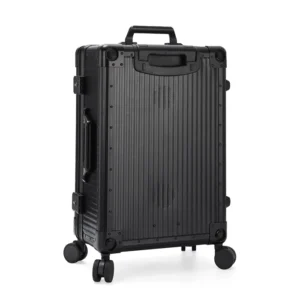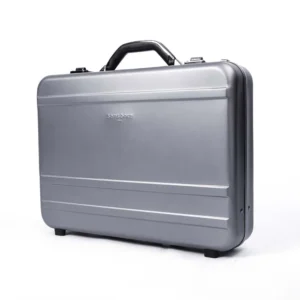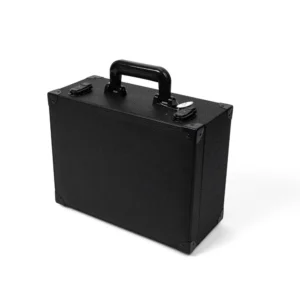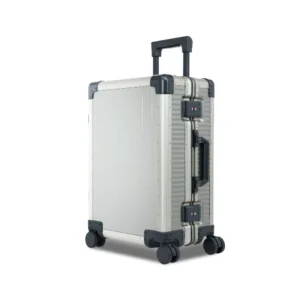

The zipper is the weakest component in a conventional hard-shell suitcase. It is the part most likely to fail under load, the part most commonly damaged in airline cargo handling, and — as security researchers have demonstrated repeatedly — the part that can be defeated in under three seconds with a ballpoint pen.
Zipperless luggage eliminates this weak point entirely. Instead of a fabric zipper track running the perimeter of the case, zipperless suitcases use rigid closure systems — frame latches, combination locks, or integrated locking mechanisms — that provide a structurally different approach to keeping the case closed and its contents secure.
This guide covers why zipper failure is an engineering problem rather than a quality problem, how different zipperless closure systems work, and what the options look like for brands considering a zipperless product line.
Why Zippers Fail: The Engineering Problem
A luggage zipper is a fabric-and-metal system designed to open and close a flexible gap. It works well under normal use conditions. It fails predictably under the conditions luggage actually encounters.
The three most common failure modes:
Structural overload. Most checked luggage is packed to its volumetric limit, which places continuous lateral tension on the zipper track. Over repeated use cycles, this tension causes the fabric teeth to deform, the slider to loosen, and eventually the track to separate under load — usually at the corner curves where stress concentrates. A zipper that fails at 30,000 feet or in an airport carousel cannot be temporarily fixed.
Handler damage. Airline cargo handling involves mechanical systems that apply significant force to luggage — conveyor impacts, bulk loading, compression under other bags. Zipper pulls and sliders are external protrusions that catch on handling equipment and other bags, and the zipper track itself is vulnerable to compression damage that renders it inoperable without physical repair.
Security vulnerability. A standard luggage zipper can be forced open using a pointed object inserted between the zipper teeth, then re-closed by running the slider back over the gap — leaving no visible evidence of entry. This is not a hypothetical threat: it has been documented, demonstrated, and published widely. TSA-approved zipper locks do not address this vulnerability because the lock secures the sliders together, not the zipper teeth themselves.
Zipperless designs address all three failure modes by replacing the zipper track with rigid closure systems that do not rely on fabric teeth, have no external protrusions to catch on handling equipment, and cannot be compromised by inserting an object between the closure elements.

How Zipperless Closure Works: Three System Types
Not all zipperless luggage uses the same closure mechanism. The three primary systems differ in material, security level, and price positioning.
Full Aluminum Frame with Butterfly Latches
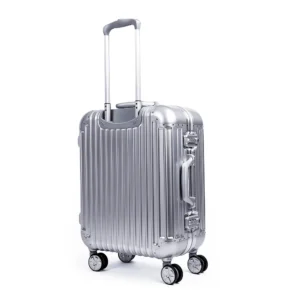
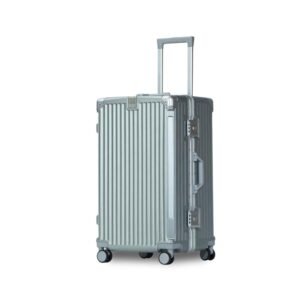
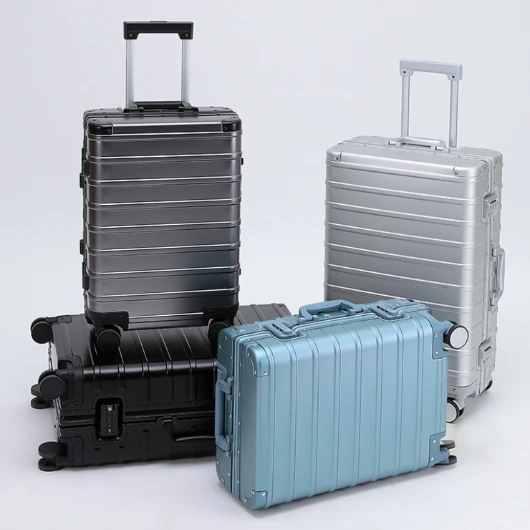
The original zipperless design. An aluminum perimeter frame runs around the case opening, and two or three butterfly latches — spring-loaded metal clasps — hold the frame halves together. This system is used in premium aluminum luggage from brands at the top of the hard-shell market.
Security level is high: the frame itself is rigid aluminum, the latches require deliberate mechanical operation to release, and TSA-approved combination locks can be integrated into the latch body. The tradeoff is weight — an aluminum frame adds meaningful mass to an already heavy shell material.
PC Shell with Frame and TSA Combination Lock
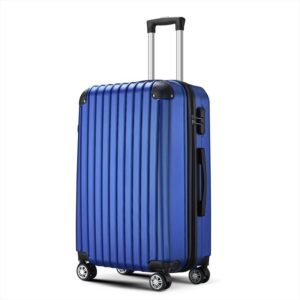
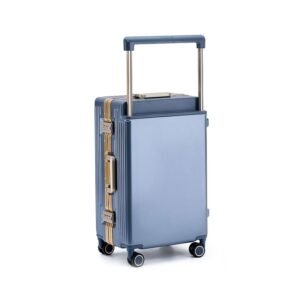
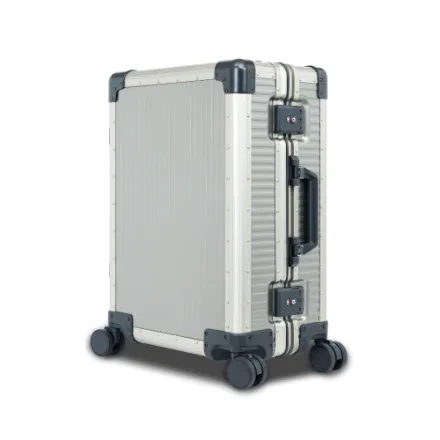
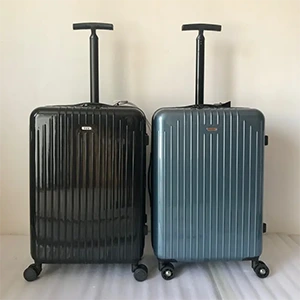
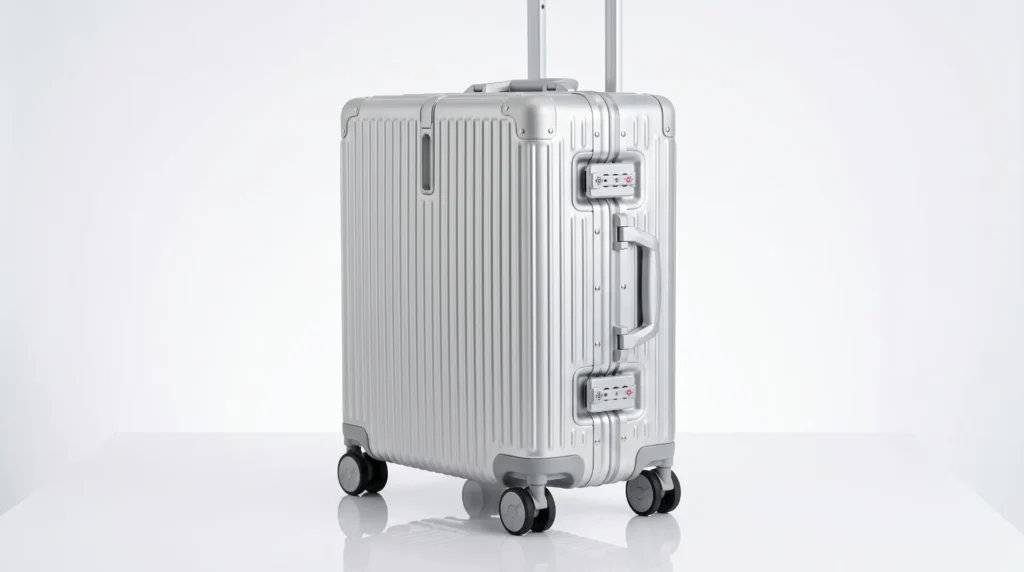
A polycarbonate shell with a rigid plastic or aluminum frame and integrated TSA combination locks. This is the configuration used in the Aluvox MB-018 — a four-wheel spinner carry-on with a PC shell, telescopic handle, polyester interior, and TSA combination lock closure.
This system provides the security advantages of a zipperless design at a lower weight and price point than full aluminum construction. The PC shell offers the elastic recovery that absorbs impact without permanent deformation, while the frame closure eliminates the zipper vulnerability entirely. TSA combination locks allow airport security access without compromising the closure mechanism.
Aluminum Frame with PC Shell (Hybrid)
A combination construction: PC shell panels mounted in an aluminum perimeter frame, with butterfly latches or combination locks. This hybrid approach provides a lighter overall weight than full aluminum construction while retaining the rigid frame closure system.
Closure type comparison:
| System | Shell material | Weight | Security level | Price tier |
|---|---|---|---|---|
| Aluminum frame + butterfly latch | Aluminum | Heaviest | Highest | Premium ($300+) |
| PC shell + frame + TSA lock | Polycarbonate | Medium | High | Mid-range ($100–$250) |
| Hybrid aluminum frame + PC shell | PC + Aluminum | Medium-light | High | Mid to premium ($150–$300) |
For a detailed comparison of aluminum versus polycarbonate shell construction from a manufacturing perspective, see: Aluminum vs Polycarbonate Luggage: OEM Material Selection Guide →
Security Comparison: Zipperless vs Zippered
The security difference between zipperless and zippered luggage is not marginal — it is structural. The zipper pen attack that compromises a conventional hard-shell case in seconds does not work on a frame closure system because there are no fabric teeth to separate.
What zipperless closure prevents:
Forced entry via the zipper track is the primary threat that zipperless design eliminates. Frame latches and combination locks require specific mechanical knowledge and tools to defeat — they cannot be compromised with improvised implements and re-closed without visible evidence.
What zipperless closure does not prevent:
A determined attacker with appropriate tools can defeat any lock given sufficient time and privacy. Zipperless design raises the barrier significantly and increases the probability of visible evidence — a bent latch, a forced frame — but does not provide absolute security in all circumstances.
TSA compliance:
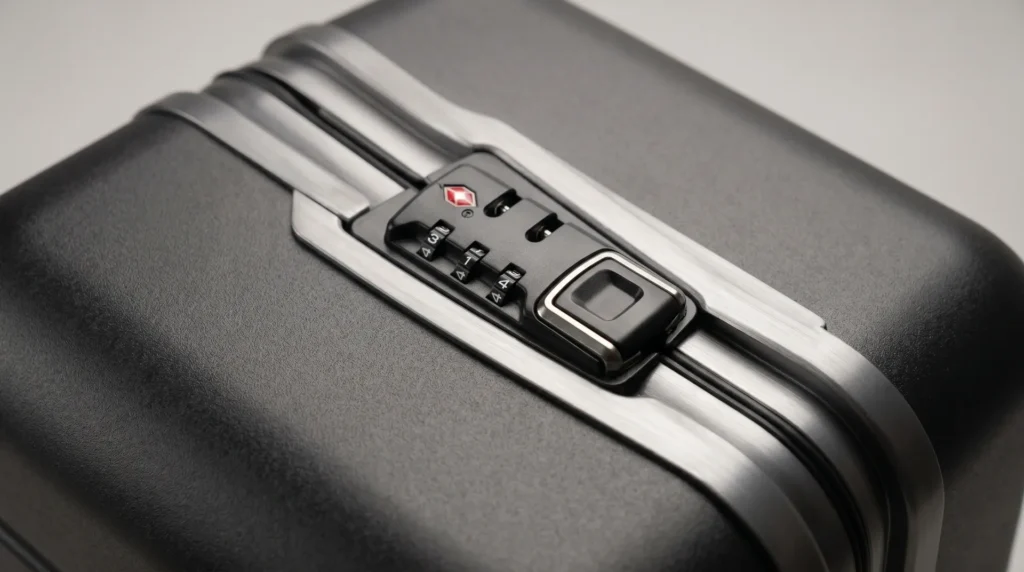
The TSA combination lock integrated into PC frame closure systems like the Aluvox MB-018 is TSA-approved, meaning airport security personnel can open the lock using a universal key for inspection without damaging the closure mechanism.
Who benefits most from zipperless design:
Frequent business travelers who check luggage regularly and experience high rates of conventional zipper failure over time. Travelers carrying high-value items — electronics, fragile goods, professional equipment — where contents security justifies the additional consideration. Brands positioning at the premium end of the hard-shell market where the zipperless design communicates a product standard above conventional construction.
Aluvox MB-018: No-Zipper Carry-On Luggage
The Aluvox MB-018 is a zipperless carry-on suitcase built for travelers who want the security advantages of a frame closure system at a practical weight and price point.
Product specifications:
| Feature | Specification |
|---|---|
| Shell | Polycarbonate (PC) |
| Frame | Plastic frame |
| Closure | Zipperless — frame closure system |
| Lock | TSA combination lock |
| Wheels | Four-wheel 360° spinner |
| Handle | Telescopic handle |
| Interior | Polyester inner compartment |
| Format | Carry-on |
The PC shell provides the elastic recovery properties that allow the case to absorb impact and return to shape — relevant for carry-on luggage that goes in and out of overhead compartments repeatedly. The frame closure eliminates the zipper failure modes that are the most common source of carry-on luggage complaints: structural separation under load, handler damage to external sliders, and the pen-attack security vulnerability.
The four-wheel 360° spinner configuration allows full directional mobility — the case rolls alongside rather than being dragged behind, which reduces the lateral load on the frame closure over time.
Browse the full Aluvox zipperless luggage collection →
For brands looking to add aluminum zipperless options to their product line, see the Aluvox aluminum luggage collection →
View the Aluvox no-zipper luggage range — available in multiple colors with TSA combination lock closure and 360° spinner wheels. View Collection
OEM Options for Brand Buyers
Zipperless luggage represents a differentiation opportunity for brands building hard-shell luggage lines. The category is growing — consumer awareness of zipper failure and security vulnerabilities is increasing — but most brands have not yet added a zipperless option to their range.
What can be customized in an OEM zipperless program:
Shell color and surface finish, hardware color and finish (lock body, frame elements, wheel housing), logo placement and application method, interior lining fabric and color, outer packaging. These customizations do not require new tooling investment and can be applied to existing closure system designs.
Production parameters:
| Parameter | Specification |
|---|---|
| MOQ | 300 pcs / style |
| Color splitting | Supported — total order MOQ across colors |
| Sample lead time (existing tooling) | 20 working days |
| Bulk production lead time | 45 days from deposit |
| Customization scope | Color, hardware, logo, lining, packaging |
| Export ports | Huangpu, Nansha, Shekou, Yantian |
Brand positioning fit:
Zipperless luggage works best as a differentiated SKU within a broader hard-shell range — a carry-on that signals security-conscious design thinking alongside a conventional zippered checked bag range. Brands launching a full range of zipperless product from the start are positioning strongly in a growing but still niche segment.
For brands considering a broader private label luggage program that includes zipperless options alongside conventional styles, see: Aluvox private label luggage program →
The Zipper Is a Design Compromise Worth Reconsidering
Zippers became the default luggage closure because they were the cheapest and most manufacturable option at scale in the mid-twentieth century. That manufacturing calculus has not changed significantly. What has changed is consumer awareness of zipper failure — and the availability of alternatives that do not require premium material investment to implement.
A PC frame closure system at the mid-range price tier eliminates the zipper’s primary failure modes without the weight penalty of full aluminum construction. For brands building a luggage line that wants to communicate considered product thinking, a zipperless option does more work per SKU than almost any other single product decision.
If you are evaluating zipperless luggage for your own use or for a brand product line, Aluvox engineers are available to discuss closure system options, customization scope, and production parameters.
Contact an Aluvox Engineer — submit your product requirements and target market. We will provide closure system recommendations and an indicative production quote within 2 business days. Contact Engineering Team