
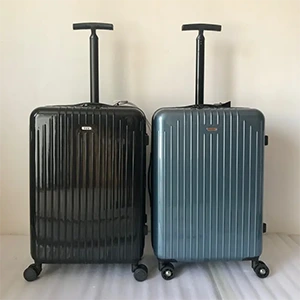
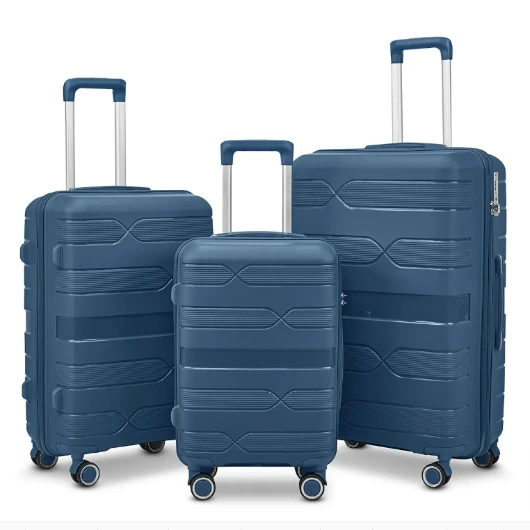
“PC luggage” almost always means polycarbonate luggage — the hardside suitcase material that bends under impact and springs back instead of cracking. (Occasionally someone means carrying a computer; this guide is about the suitcase.) Polycarbonate is the premium hardside plastic, and for good reason — but “PC” on a label guarantees very little on its own, because the gap between a great polycarbonate case and a brittle one is enormous and mostly invisible at the point of sale.
If you are a luggage brand, a distributor, or a private-label seller sourcing PC luggage, this guide walks the sourcing side: what polycarbonate actually delivers, the single quality fault line that decides whether your bags survive, how PC compares with ABS and PP, and how to evaluate a manufacturer so the case that looks good in a sample still performs in bulk.
What polycarbonate is, and why it leads
Polycarbonate is a high-performance thermoplastic, hot-formed from raw pellets into a shell, and it accounts for the largest share of the hardside market for a reason. Its defining trait is flex-and-recover: where a rigid plastic cracks on impact, polycarbonate absorbs the shock by bending and then returns to shape. That gives it the highest impact resistance of the common luggage plastics — well above ABS, with more than twice the impact strength — which is exactly what a checked bag needs when a handler throws it onto a belt. It is no accident that polycarbonate makes up the largest slice of the hardside market, well ahead of ABS; in the drop and tumble tests factories run, a good PC shell recovers its shape where a rigid plastic splits at the corners and zipper edges.
The rest of its profile reinforces the case. Polycarbonate resists UV, so it does not yellow and grow brittle in sunlight the way ABS does; it stays structurally stable across hot and cold, which matters in a cargo hold; and it is even self-extinguishing, stopping burning when the ignition source is removed. The trade-offs are honest: PC is denser, so a polycarbonate case is slightly heavier than ABS or polypropylene, and it costs more to manufacture, which shows in the retail price. For a buyer serving frequent flyers and checked-bag travelers, that premium is easy to justify — which is why Aluvox describes its own PC luggage as molded from polycarbonate for compression resistance, durability, and abrasion resistance.
The quality fault line: virgin vs. recycled polycarbonate
Here is the single most important thing to understand before you source PC luggage, because it decides everything: not all polycarbonate is the same, and the difference is virgin versus recycled. A shell molded from 100% virgin polycarbonate — premium grades like Covestro Makrolon — has the flexibility to bend on impact and snap back. A shell made from recycled, re-ground, or heavily blended pellets, or simply molded too thin, loses that flexibility and cracks under the same pressure.
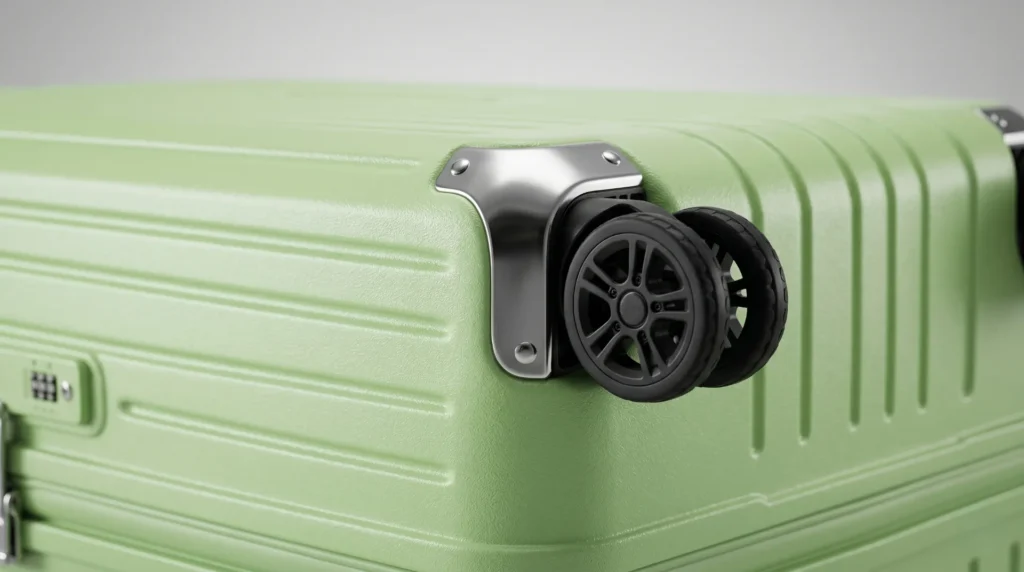
This is exactly why buyers see cheap PC luggage break: it is not that “PC” failed, it is that low-grade or recycled PC was used. The trap is that it is invisible at delivery — a recycled-blend shell looks identical to a virgin one in the box, then turns brittle in storage and shatters at a stress point on the first rough flight. Travelers say it plainly: cheaper polycarbonate cases break because they are made of lower-quality polycarbonate, which is why so many “PC” bags are actually ABS-PC blends. The gap shows up most violently in the cold: in a conditioned cold-drop test at roughly minus 12 to minus 20 degrees, a brittle shell cracks or shatters at the stress points on impact, while a virgin-PC shell bends and recovers without cracking. The same fault line appears at the wheels — under a loaded rolling test, a brittle shell lets the wheel bases crack and rip away from the body, because a hard, inflexible material concentrates stress around the housing and rivets instead of absorbing it. When you source, the material spec is not a checkbox — ask specifically whether the shell is 100% virgin PC, which grade, and how thick, and treat vague answers as a warning.
Sourcing PC luggage for your brand or private label? Aluvox molds polycarbonate hardside luggage in zipper and aluminum-frame builds — explore our PC luggage and tell us your spec and your market.
PC vs. ABS vs. PP: matching material to market
Polycarbonate is the premium choice, but it is not automatically the right one for every line — the smart move is to match the material to the buyer. ABS is the entry-level hardside plastic: rigid, scratch-resistant, and cheap, ideal for occasional travelers and budget ranges, but it cracks under hard impact instead of flexing and yellows under UV over time. Polypropylene is the lightest option, the pick for weight-sensitive carry-on flyers watching baggage fees, though it is less rigid and degrades faster under prolonged sun. Polycarbonate sits above both on impact resistance and longevity, the choice for frequent flyers and checked bags.
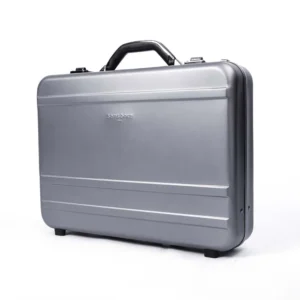
There is also a fourth option the comparison articles often miss: the ABS-PC blend. Blending the two — commonly in ratios from 70/30 to 50/50 — combines the rigidity of ABS with the impact resistance of PC at a price between them, which is why it is the wholesale sweet spot and why a large share of bags marketed simply as “hard-shell” are actually blends. For perspective, polycarbonate accounts for roughly 40% of hardside luggage and ABS for nearly 30%, with blends and polypropylene filling much of the rest — so the “ABS versus PC” question a buyer asks is often answered, in the real product, by a blend that sits between them. Above all of these sits aluminum, the most rugged and premium tier but the heaviest and costliest, a niche choice for the luxury end. Pick by your market and price point, not by a material-name hierarchy.
 TSA lock” width=”800″ height=”447″ />
Construction matters as much as the material
A point experienced manufacturers stress: the material name is only half the story, and shell thickness, molding control, and frame structure often matter more than the label. A well-engineered thinner PC shell can outperform a poorly molded thick one, and a thin “100% PC” shell with uneven corners can crack where a properly formed one would flex. This is also why relying on a material name alone misleads buyers: two cases can both say “polycarbonate” and behave completely differently once the shell geometry and molding quality differ. Polycarbonate has to be formed correctly — heated and drawn so the corners and edges hold their intended thickness rather than thinning out at the deep-draw points where stress concentrates.
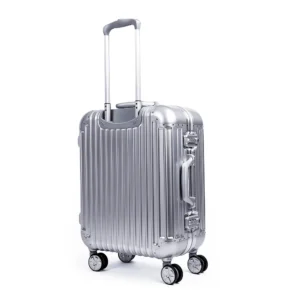
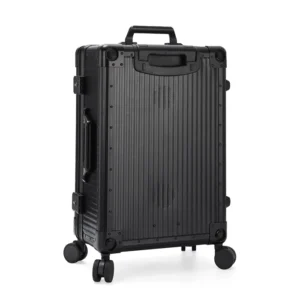
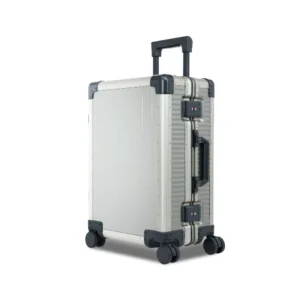
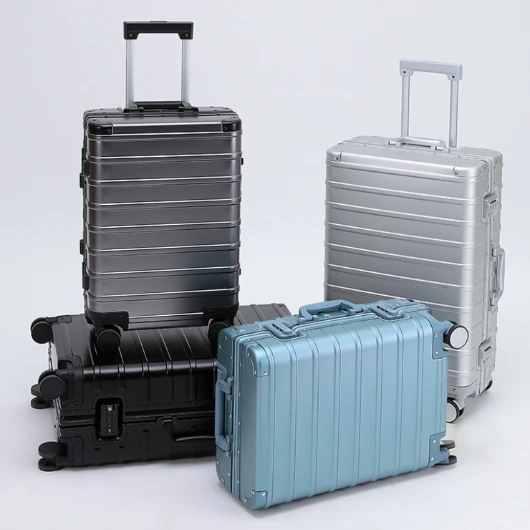
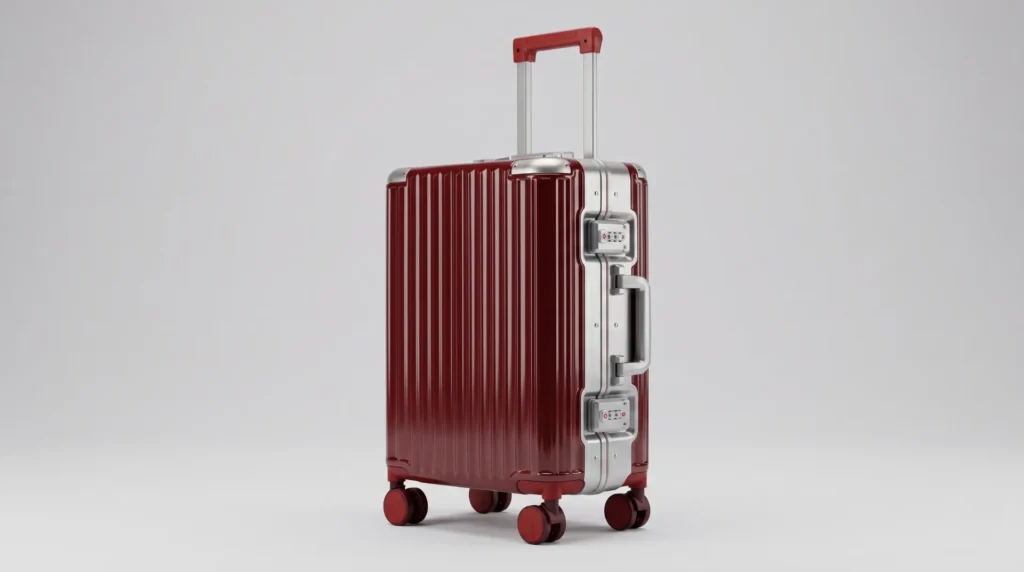
The hardware around the shell decides as much of the real-world experience. The frame is the first fork: a zippered PC case is lighter and cheaper, while an aluminum-frame, zipperless build adds rigidity, sealing, and a premium feel, and pairs especially well with polycarbonate. From there, look for a TSA-approved lock integrated into the design rather than a bolt-on padlock; smooth, burst-resistant zipper chains on zippered models; a sturdy telescopic handle on a proper trolley tube; quality spinner wheels with sealed bearings; and a real lining — a 210D polyester rather than the paper-thin fabric of low-cost goods. A trolley tube of adequate gauge — around 0.8mm of aluminum — carries a loaded case without flexing, and a factory that makes its own wheels and trolleys rather than assembling mismatched third-party parts tends to deliver a more consistent product. These details are where two cases with the same “PC” spec diverge in the field.
Evaluating a PC luggage manufacturer, and the MOQ reality
Because the important differences are invisible, score every candidate against the same checklist:
- Material proof. Confirmation of 100% virgin polycarbonate and the grade, not just the word “PC” — and an honest answer where the product is an ABS-PC blend.
- Shell engineering. Thickness and molding consistency, with even corners, since structure decides performance as much as material.
- Construction. Zipper or aluminum-frame build, integrated TSA lock, quality zippers, a sturdy trolley and sealed-bearing wheels, and a real lining.
- Batch consistency. Evidence that bulk production matches the sample — the most common sourcing failure is a great prototype and a weaker production run.
- Customization and branding. Color, finish, size range, frame type, and logo for an OEM or private-label line.
- MOQ, sampling, and QC. Confirm MOQ, sample cost and lead time, and the factory’s testing — drop, tumble, and wheel-wear checks separate a serious maker from an assembler.
A manufacturer that can prove the material and the consistency can carry your brand. One that only quotes a price, with no answer on grade or batch testing, is the reason “cheap PC” has a bad name.
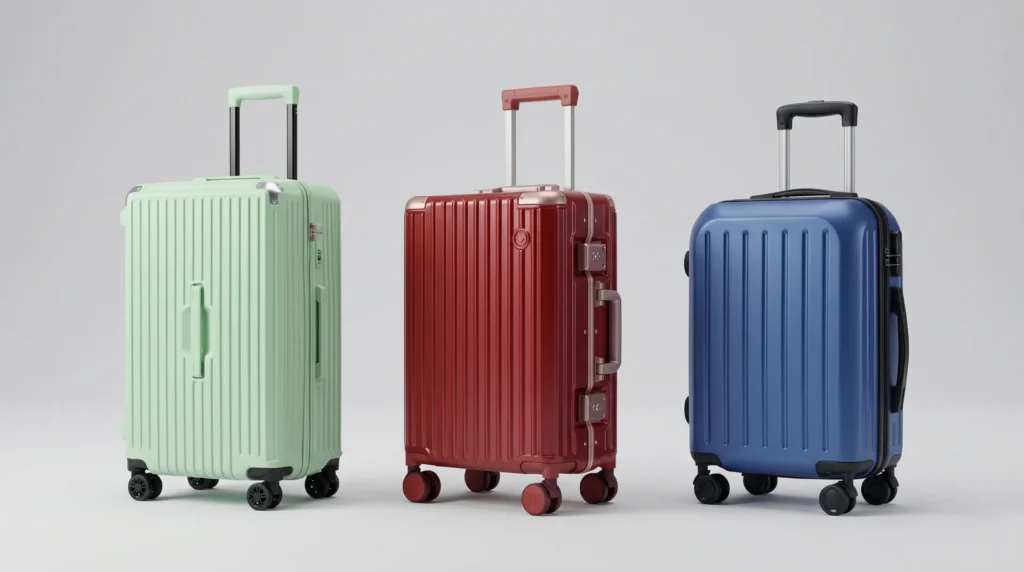
Match the build to the market and always sample before you scale — but do not stop at the sample. Because samples often outperform bulk, ask how the factory holds quality across a production run, and where you can, check a unit pulled from a real batch rather than a hand-finished prototype. On a hardside line, the shell that flexes in your hand has to flex the same way after a few thousand units, and that consistency is what protects your brand from a wave of cracked-corner returns.
Sourcing PC luggage with Aluvox
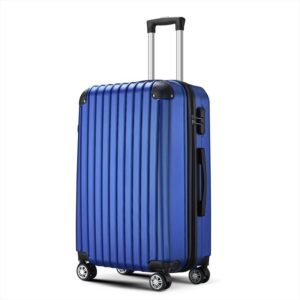
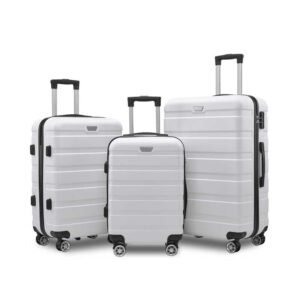
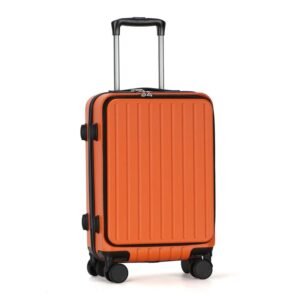
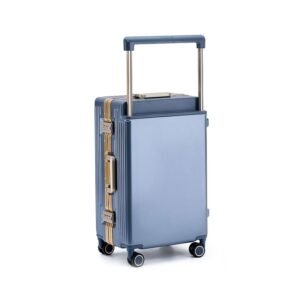
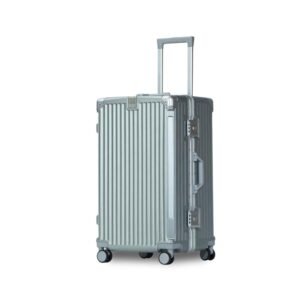
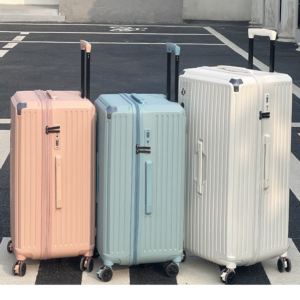
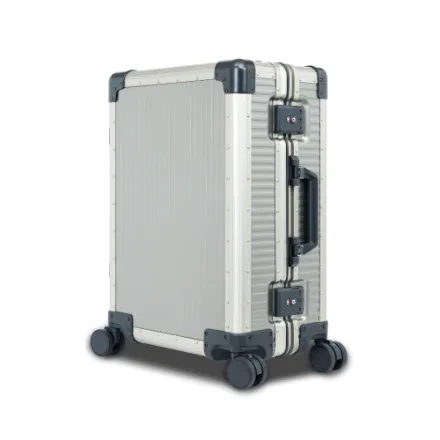
Aluvox molds polycarbonate hardside luggage and builds it to spec, using real products you can quote today. The MB-000 is a PC hardside spinner with a telescopic handle, a code lock, four spinner wheels, and a polyester lining — the core zippered PC carry-on. The HQ-009 pairs a polycarbonate shell with an aluminum frame, a TSA combination lock, and a zipperless closure for a more premium, better-sealed build. The RM-030 is a PC hardside spinner with a TSA lock for a straightforward checked or carry-on option. Each can be built in your colors, sizes, and branding.
For brands, distributors, and private-label sellers that means OEM and private-label PC luggage in zipper or aluminum-frame builds, with the material, thickness, hardware, and lining specified to your market — and samples before a bulk run so you can confirm the shell, the frame, and the wheels first-hand. If you are sourcing a polycarbonate line, start with the grade and the construction your market needs, then bring your colors, your sizes, and your volumes.
See the range and request a quote: Aluvox PC luggage.