


Best Aluminum Luggage: What Actually Makes It Best
Search “best aluminum luggage” and you get the same list, over and over: Rimowa, Tumi, Zero Halliburton, Away, with a newer name or two mixed in. What the lists rarely explain is why — what actually makes one aluminum case better than another, beyond the brand name and the price. Without that, you are trusting a reviewer’s ranking rather than judging quality yourself.
This guide takes the opposite approach. Instead of handing you another ranked list, it explains the qualities that separate the best aluminum luggage from the merely expensive: the alloy, the shell construction, the wheels and handle, the closure, and how those map to the price you pay. Understand these, and you can judge any aluminum case — including the ones not on a reviewer’s list — and know whether a premium is buying real quality or just a logo.
For brands, the same knowledge is the specification for sourcing aluminum luggage that earns a place on these lists. At Aluvox, we manufacture aluminum luggage for brands, in the same 5052-series aluminum-magnesium alloy the premium names use — so this guide explains both what makes aluminum luggage genuinely good and how a brand sources it.
What Actually Makes Aluminum Luggage “Best”
The qualities that define the best aluminum luggage are specific and assessable. Here is what separates a great aluminum case from an ordinary one — the criteria that matter more than the brand on the latch.
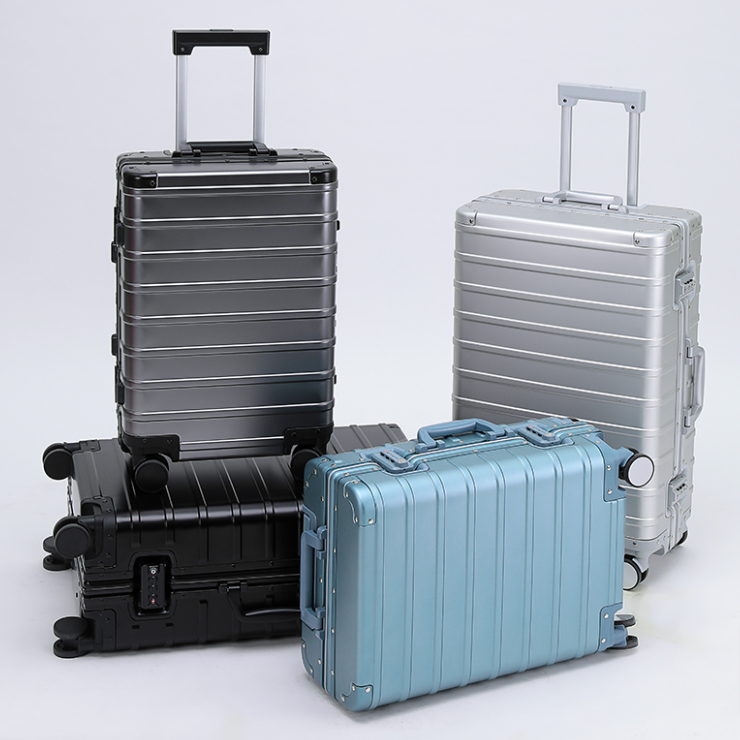
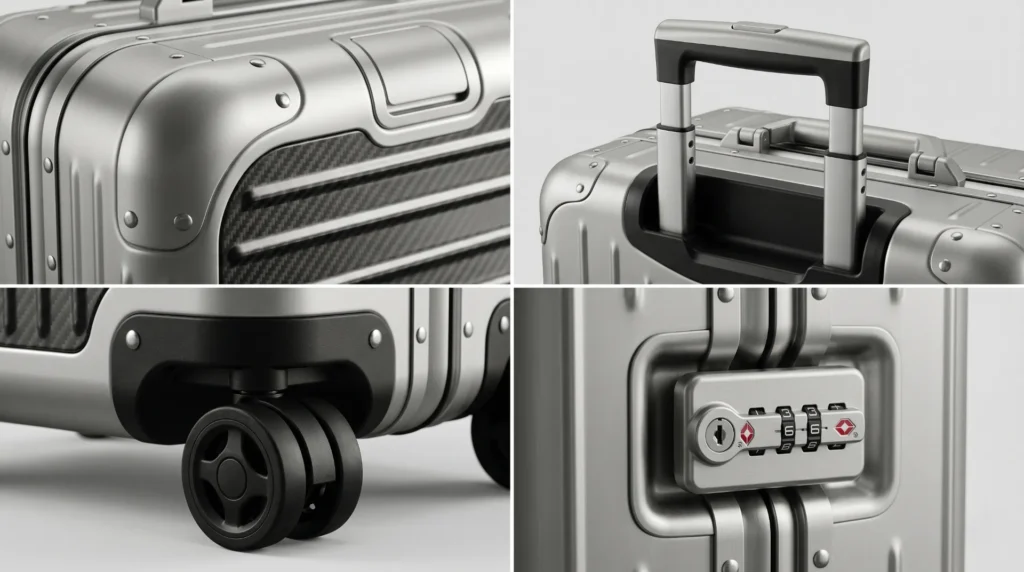
The alloy and shell construction. The best aluminum luggage uses aluminum-magnesium alloy — the 5000-series, typically 5052 — for its combination of strength, light weight, and corrosion resistance. The premium benchmark, Rimowa’s grooved shell, is celebrated not only for looks: the grooves help resist dents and distribute impact pressure across the case rather than concentrating it. When judging an aluminum case, the alloy grade and the structural design of the shell matter more than the finish. A shell that names its alloy and explains its dent-distribution design is a serious product; one that just says “aluminum” is not telling you enough.
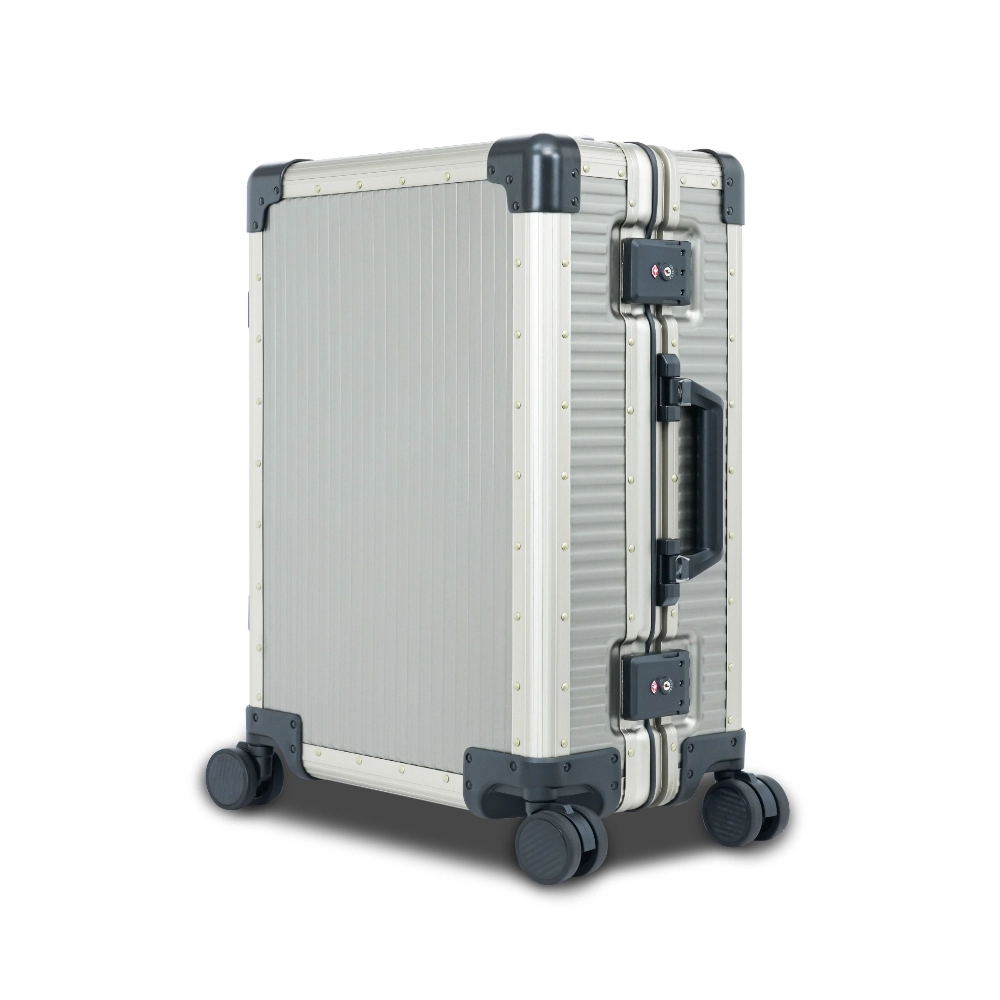
The hardware — wheels, handle, latches. On the best cases, the hardware is where the quality is felt. Reviewers and owners consistently single out smooth, near-silent spinner wheels and a telescopic handle with no wobble as the marks of a premium aluminum case — the difference described as the case gliding “like it’s floating.” Cheap hardware on an expensive-looking shell is the most common tell of a mediocre aluminum case. Assess the wheels and handle as closely as the shell.
The closure and locks. Aluminum luggage is frame-closure, not zippered, and the quality of that frame closure defines the experience. Owners describe the best closures as having soft, precise latches and “quiet locks” that are genuinely satisfying to operate — the tactile, engineered feel that a zipper cannot match. TSA-approved combination locks integrated cleanly into the frame are the standard. A loose or rattly closure is a sign of a lesser case.
Build quality and finish. The top cases are hand-assembled with high-precision parts and an anodized shell finish that resists corrosion and wear. The anodized finish is what lets an aluminum case “survive a warzone,” as one reviewer put it — it is functional, not just cosmetic. Interior finishing, lining quality, and the precision of the assembly separate the premium tier from the mid-tier even when the shells look similar.
These four areas — alloy and shell, hardware, closure, finish — are what you actually assess to judge aluminum luggage. For the deeper material engineering, see: Aluminum Carry-On Luggage Guide →
The Honest Trade-offs of Aluminum Luggage
Even the best aluminum luggage involves trade-offs, and the honest reviews acknowledge them. Knowing these prevents disappointment and helps you weigh whether aluminum is right for your travel.
It dents and scratches. This is the most consistently reported reality: aluminum dents and scratches, and even premium cases are “not very” scratch-resistant. The best brands and owners reframe this as character — each dent “tells a story, like passport stamps” — and a brushed or grooved finish hides marks better than a smooth polished one. But the honest truth is that an aluminum case will show its travels in a way polycarbonate does not. For some owners that patina is the appeal; for others it is a drawback. Know which you are before buying.
It is heavier than polycarbonate. Aluminum luggage is consistently heavier than polycarbonate — a point owners of even the best cases raise, noting that premium aluminum cases “are heavy.” For a traveler who packs to the airline weight limit, the shell weight is a real consideration. Aluminum’s durability and security come with a weight cost that lighter materials avoid.
It costs more. The best aluminum luggage is expensive — the premium tier sits well above polycarbonate, which is why “best aluminum luggage under $1000” and “best affordable aluminum luggage” are such common searches. The premium buys real quality, but the entry price is high, and the value question is genuine.
These trade-offs do not make aluminum luggage worse — they define who it is for. The best aluminum luggage is genuinely excellent for travelers who value durability, security, and the premium feel enough to accept the weight, the patina, and the price. For the full comparison against polycarbonate, see: Aluminum vs Polycarbonate Luggage →
Aluminum Luggage Across Price Tiers
The best aluminum luggage at one price tier is not the best at another. Understanding the tiers helps you find the best case for your budget rather than chasing a flagship you do not need.
Premium tier — the benchmark ($800+). This is Rimowa territory, with Tumi and Zero Halliburton alongside. The premium tier delivers the immaculate build, the hand-assembled precision, the silent wheels, and the status the price implies. Rimowa earns its near-universal top ranking on genuine build quality, not just brand — the grooved shell, the anodized finish, and the wheels are objectively excellent. If money is no object and you want the benchmark, this tier defines “best.”
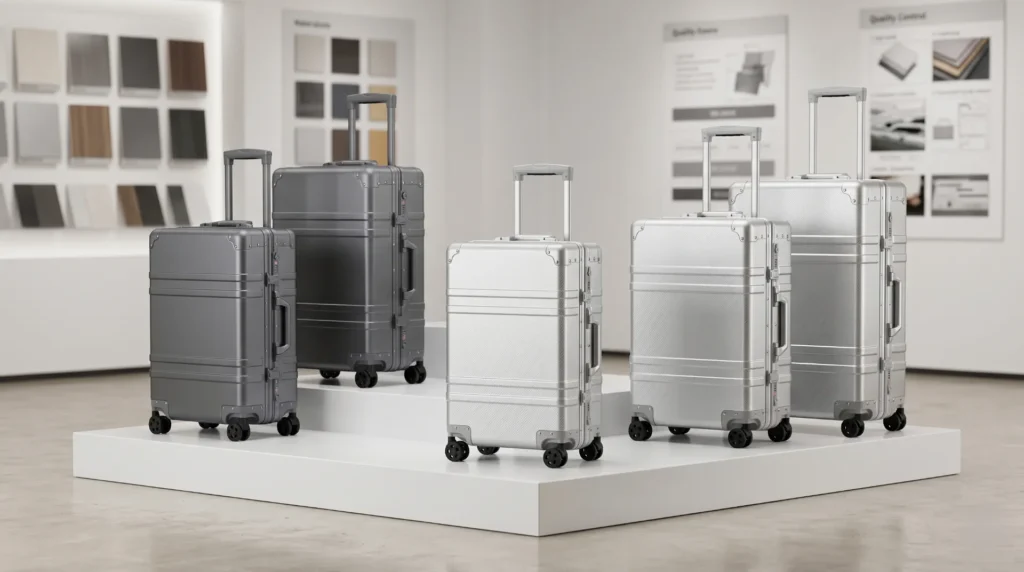
Mid tier — the value sweet spot ($400–$800). This tier delivers most of the premium experience at a meaningfully lower price. Newer brands positioned as the “budget Rimowa” have earned strong sentiment by delivering aluminum cases that owners are “overwhelmingly impressed with for the price” — with the honest caveat that interior materials and warranty clarity may not match the premium tier. For most buyers, the best value in aluminum luggage lives here.
Entry tier — first aluminum case (under $400). This tier serves first-time aluminum buyers who want the look and the frame-closure security without the premium spend. The build and finish will not match the benchmark, but a well-made entry aluminum case delivers the core aluminum experience. The key is to apply the quality criteria above — alloy, hardware, closure — to avoid a case that looks aluminum but is built poorly.
The lesson across tiers: “best” depends on budget, and the quality criteria — not the brand name — are how you find the best case at any price. A well-made mid-tier case can outperform a poorly chosen premium one on the things that matter. For the material and sourcing detail behind these tiers, see: Aluminum Luggage Manufacturer Guide →
For Brands: Sourcing Aluminum Luggage That Earns “Best”
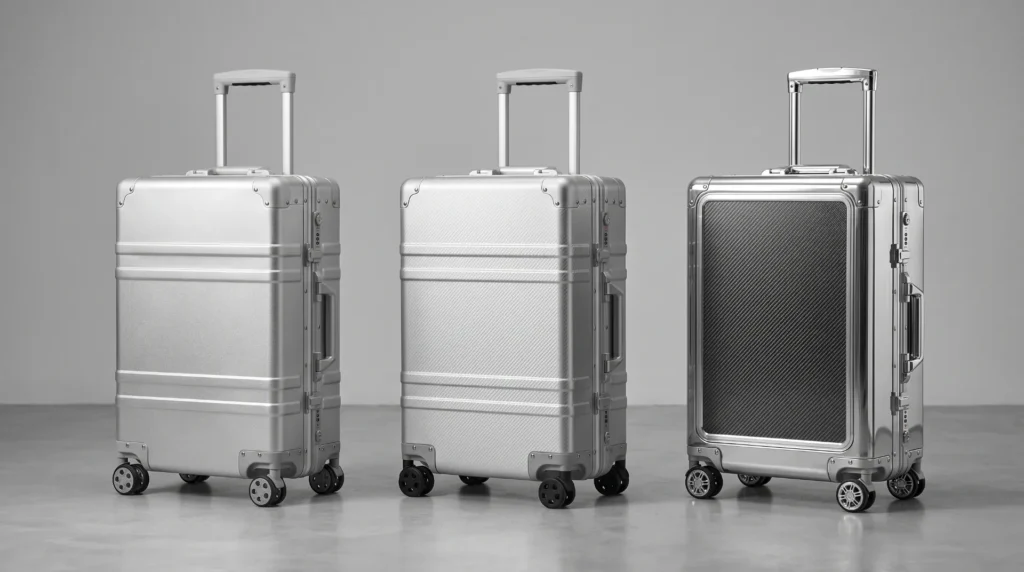
For a brand, the qualities that make the best aluminum luggage are a sourcing specification. Building an aluminum case that could earn a place on these lists means specifying the same things the premium names get right.
Specify the alloy. The best aluminum luggage uses 5052-H32 aluminum-magnesium alloy. Specify this grade and request the mill certificate confirming it. The alloy is the foundation of the quality the lists reward, and it is the first thing a serious aluminum brand gets right.
Invest in the hardware. Since wheels, handle, and closure are where owners feel the quality, these are where a brand should invest. Smooth silent spinner wheels, a wobble-free telescopic handle, and a precise frame latch with an integrated TSA lock are what separate a case that feels premium from one that merely looks it. Specifying quality hardware is the highest-leverage decision in sourcing aluminum luggage.
Get the finish right. An anodized finish — brushed or grooved to hide marks and resist corrosion — is both the functional and the aesthetic standard. The finish is what makes an aluminum case look and stay premium, and it is a specifiable choice.
Test and document. The best aluminum luggage is backed by testing: ISTA 2A drop testing, salt spray corrosion testing for the finish, and wheel and handle fatigue testing. A brand that tests and documents can stand behind a durability claim — the foundation of a premium aluminum positioning.
Sourcing aluminum luggage for your brand? Request a quote — we will specify alloy, hardware, and finish to your target tier and provide test documentation. Request Quote
Aluvox aluminum luggage specifications:
| Parameter | Specification |
|---|---|
| Shell alloy | 5052-H32 aluminum-magnesium alloy |
| Premium option | TC4 / Grade 5 titanium |
| Finish | Anodized — brushed, sandblasted, or grooved |
| Hardware | Silent spinner wheels, reinforced telescopic handle, TSA frame lock |
| MOQ | 300 pcs / style |
| Color splitting | Supported — total order MOQ across colors |
| Testing | ISTA 2A drop, 48-hour salt spray, wheel and handle fatigue |
| Sample lead time | 20 working days |
| Bulk production | 45 days from deposit |
| Export ports | Huangpu, Nansha, Shekou, Yantian |
Browse the Aluvox aluminum luggage collection →
Visit the Aluvox aluminum luggage manufacturer page →
Judge the Case, Not the List
The best aluminum luggage is not simply the brand at the top of a reviewer’s ranking — it is the case that gets the alloy, the shell construction, the hardware, the closure, and the finish right, at a price that matches your budget. Learn those criteria and you can judge any aluminum case, find the best value at your tier, and recognize when a premium is buying real quality rather than a logo. Rimowa earns its benchmark status on genuine build, but a well-chosen mid-tier case can be the best aluminum luggage for the buyer who applies the same criteria.
For brands, those criteria are the specification: 5052 alloy, quality hardware, anodized finish, and documented testing are what build an aluminum case capable of earning “best.” The premium names are not magic — they are disciplined execution of the things this guide describes, and a brand that specifies them well can compete on quality.
If you are sourcing aluminum luggage and want it built to the standard these lists reward, Aluvox can specify the alloy, hardware, and finish to your target tier and back it with test documentation.
Contact our Sales Team — tell us your target tier, volume, and positioning. We will specify an aluminum luggage build and provide an indicative quote within 2 business days. Contact Sales Team