




Search “aluminum instrument case manufacturer” and the results split three ways, because “instrument” means three different things. Some makers build cases for musical instruments; some build aluminum enclosures that house electronics; and some build foam-lined aluminum transport cases for precision, scientific, and medical instruments. For a B2B buyer, the first job is knowing which one you need — and most who reach this search are after the third: a case that gets a delicate, expensive instrument from A to B intact and calibrated.
If you make instruments, medical devices, or test equipment, or you distribute them, this guide walks the sourcing side of that third sense: the construction, the foam that does the real protecting, and how to evaluate a manufacturer so a fragile instrument survives transport, vibration, and handling.
What “instrument case” actually means
It pays to settle the term, because each sense points to a different supplier. The musical-instrument case — for violins, guitars, or brass — is the world of makers like Jan-Al, Calzone & Anvil, and BAM. The instrument enclosure — a metal box that houses desktop or portable electronics — is the world of METCASE, Bud Industries, and Takachi, and is a permanent housing, not a transport case. The precision-instrument transport case — a foam-lined aluminum case that carries calibration devices, test equipment, lab instruments, and medical electronics safely — is the one this guide is about, and the one Aluvox builds.
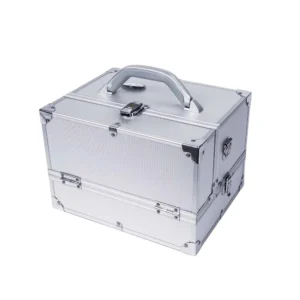
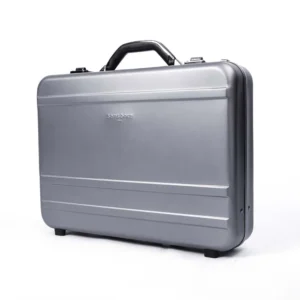
The honest construction sits where the other aluminum cases in this range do: an aluminum frame around panels — often a fireproof plywood or composite — or a welded full-aluminum shell for the most rugged duty. As one specialist puts it, an aluminum case offers a cost-effective, high-tech alternative when a molded plastic case simply will not do, and a custom foam interior is what turns that aluminum shell into an OEM instrument case. The shell matters, but on an instrument case the shell is the easy part. The foam is the product.
One more practical note on choosing the right supplier sense: an enclosure maker and a transport-case maker are not interchangeable, even though both say “instrument case.” An enclosure houses electronics permanently on a bench or in a rack; a transport case protects an instrument in motion. If your need is to move a device, a transport-case manufacturer with foam engineering is the right call, and the dedicated ones treat quality as the selling point — inspecting each case more than once and remaking any reject rather than shipping it, because a precision-instrument buyer remembers a failure far longer than a low price.
The foam is the whole product
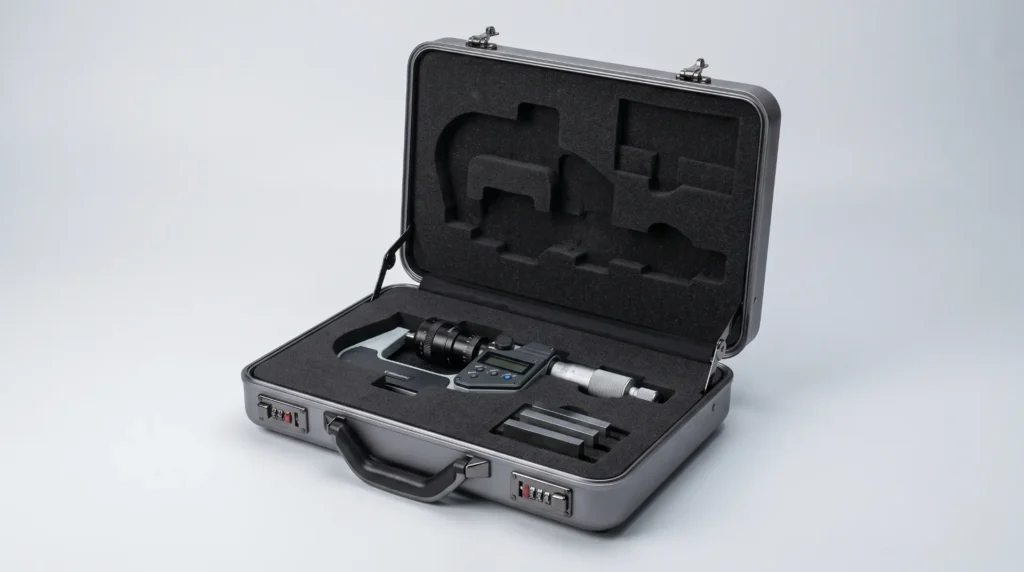
For a precision instrument, protection is not about the box surviving — it is about the instrument arriving unmoved, unshocked, and ready to work. That is entirely a function of the interior, and it is where instrument cases separate from every other case type. The base foam is cut precisely to the instrument’s dimensions so it cannot shift; the lid foam is set so it just meets the instrument’s surface when the case closes, holding it without crushing it. Get that geometry right and the instrument cannot move; get it wrong and vibration does the damage the drop never got to.
The foam material is its own decision, and precision work demands more than a generic block. Closed-cell polyethylene is the durable, medical-grade default, CNC-milled to the exact part. Beyond that, the formulation can be ESD-safe for static-sensitive electronics, antimicrobial and moisture-resistant for sterile medical contents, or chemical-resistant where the instrument demands it. The reason this specificity matters is concrete: for sensitive devices, vibration, static, or contamination in transit can force a recalibration, a failed inspection, or compromised performance — so the foam is not packaging, it is part of the instrument’s reliability. The list of what people ship this way makes the stakes clear — ultrasound units, ECG monitors, infusion pumps, control boards, imaging processors, even surgical robotic arms, all of which arrive useless if they arrive knocked out of true. Where the device is electromagnetically sensitive, the case itself can add EMI or RFI shielding; where it is temperature- or moisture-sensitive, the foam and seal are specified accordingly. Brief the interior as carefully as the instrument itself.
Sourcing aluminum instrument cases for precision or medical gear? Aluvox builds aluminum cases with CNC-cut foam interiors fitted to your instrument — explore our aluminum cases and tell us the device and its sensitivities.
The benchmark you are sourcing against
Know the bar before you brief a factory. On the China custom-case side, makers such as HQC build aluminum instrument cases as a core line, cutting base foam to the instrument and setting lid foam to meet its surface, for engineers, technicians, medical professionals, and field specialists carrying delicate calibration devices. On the medical-specialist side, firms like Cases By Source have solved instrument-case problems for Merck, Medtronic, and Johnson & Johnson, and build with ESD-safe, antimicrobial, and moisture-resistant foam to medical and ATA-300 standards. Lucky Case markets custom-foam-lined aluminum cases specifically for precision medical, electronic, and fragile-instrument transport, and German maker bwh Koffer covers premium full-aluminum, while enclosure specialists like METCASE serve the separate housing sense. The breadth tells you the category is real and specialized: the same foam-lined aluminum case protects a calibration tool for a field engineer, a diagnostic unit for a hospital, and a test rig for a manufacturer, each with a different foam and seal spec.
What the strong ones share tells you what to expect: genuine foam engineering, not a generic insert; honest construction you can specify; the ability to work to your standards; and OEM customization with branding. A manufacturer who talks only about the shell, and waves a hand at “foam,” is not equipped for a precision instrument.
How to evaluate an aluminum instrument case manufacturer
Score every candidate against the same checklist:
- Foam capability. CNC-cut closed-cell foam fitted to the instrument, with ESD-safe, antimicrobial, moisture-, or chemical-resistant formulations where the device needs them — not a one-size insert.
- Construction. Aluminum frame with fireproof plywood or composite panels, or welded full aluminum, with reinforced corners and the panel specs, not just a photo.
- Sealing and shielding. O-ring gaskets for dust and moisture where the route demands it, and EMI/RFI shielding for sensitive electronics where applicable.
- Design process. The ability to design from your CAD or a sample, so the foam fits the first time rather than after several rounds.
- Standards. ATA-300 where it applies, plus the medical or sector regulations your device must meet; ask what they actually verify.
- MOQ, sampling, and branding. Confirm MOQ, sample cost and lead time, logo method, and export packing, since an instrument case that arrives dented undercuts the entire promise.
A manufacturer that answers all six can protect a precision instrument. One that quotes a price without asking about the device and its sensitivities is selling a box.
Treat the conversation itself as a test. A capable instrument-case supplier asks what the device is, how it travels, what it is sensitive to, and whether it needs sealing or shielding before quoting; a weaker one quotes a size and a price. The questions are the qualification — the more a candidate wants to understand the instrument, the more likely the case will actually protect it.
Stock, custom, and the MOQ reality
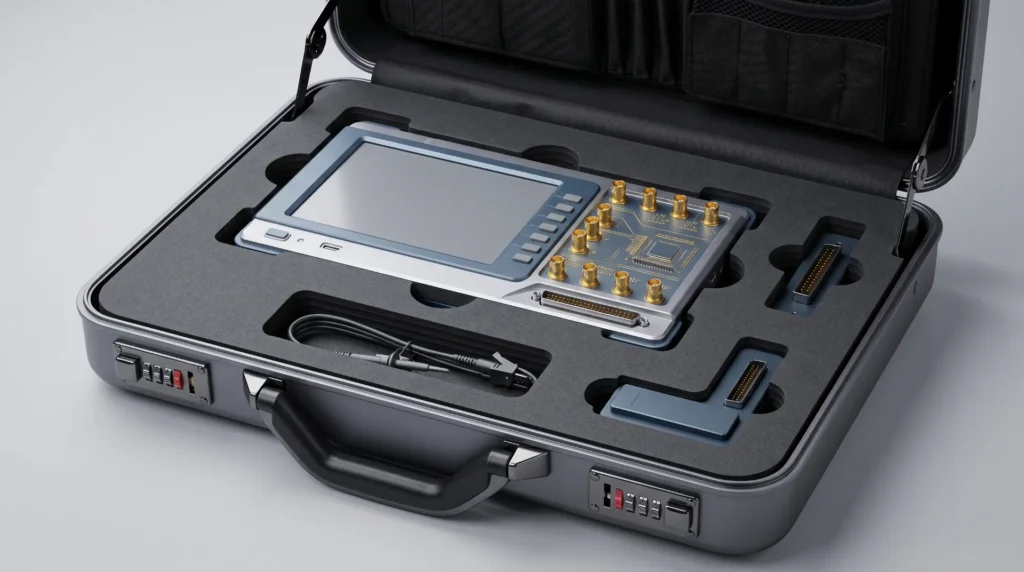
Instrument cases lean custom by nature, because the whole value is a fit to a specific device. Even so, you rarely start from zero: the leading makers work from proven shell sizes and standard hardware, so you pick a base case close to the instrument’s footprint, then engineer the foam, the sealing, and the branding around it. Some specialists can design the case and foam directly from a CAD blueprint, which means you do not have to ship a valuable or irreplaceable instrument just to get a sample made — a real advantage when the device is a prototype or in constant use.
That CAD-first process is worth seeking out, because it changes the economics of a custom instrument case. A manufacturer who can render a 3D model of the case and foam from your drawing, present it for approval, and only then cut foam and metal, removes the slowest and riskiest step — handling your actual device — and tightens the fit on the first sample rather than the third. For a buyer launching a device, that means the case is ready when the product is, not weeks behind it. Ask whether a candidate works from CAD, and how many revision rounds a typical foam fit takes, because that number is a good proxy for how well they engineer interiors.
Match the build to the device and sample with the real instrument, or a faithful dummy, where you can. With an instrument case the sample test is exacting: seat the instrument, close the case, and check that the lid foam holds it without pressure and that nothing shifts under a shake or a tilt. A case that lets a precision device move in your hands will let it move in a truck, so confirm the fit before a production run. Confirm MOQ, sample cost, and lead time early, since they vary between composite and full-aluminum builds and with foam complexity.
Sourcing aluminum instrument cases with Aluvox
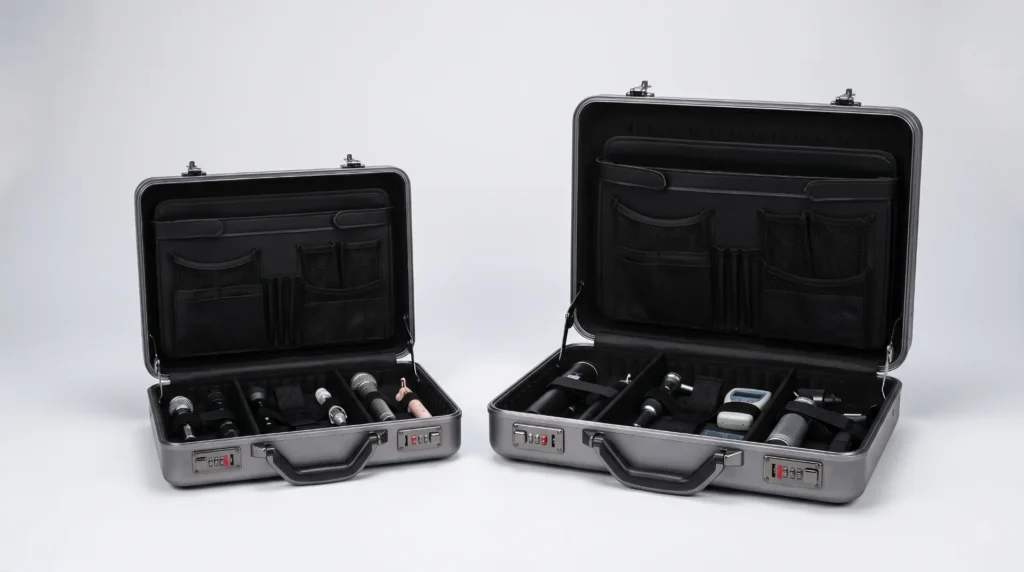
Aluvox is a full-metal aluminum case manufacturer, building aluminum cases to spec as an OEM/ODM partner rather than reselling a catalog box. For an instrument-case program that means an aluminum case with a CNC-cut foam interior fitted to your device — closed-cell, and ESD-safe or medical-grade where the instrument calls for it — with metal hardware, secure locks, sealing where the route needs it, and your logo. Instrument cases sit in the same aluminum case manufacturer program as the carrying, flight, and tool cases beside them, so one partner can cover a full range of equipment transport.
For instrument makers, medical-device companies, and test-equipment brands that means OEM and private-label aluminum instrument cases built to your device and its sensitivities, with samples available before a bulk run so you can seat the instrument and confirm the fit and the protection first-hand. If you are shipping something delicate, expensive, or calibration-critical, start with the device and how it travels, then bring your drawing, your foam spec, and your volumes.
See the range and request a quote: Aluvox aluminum cases.