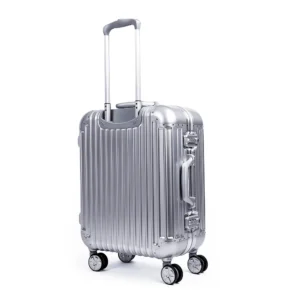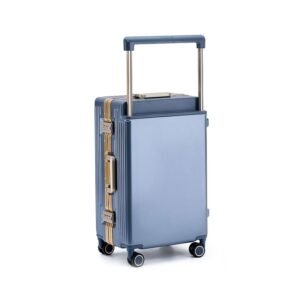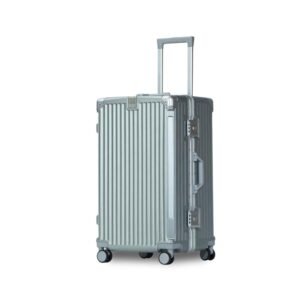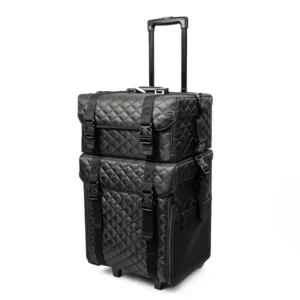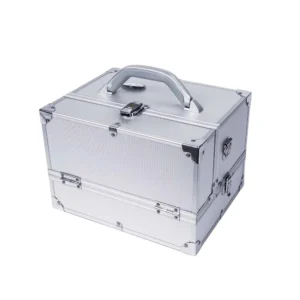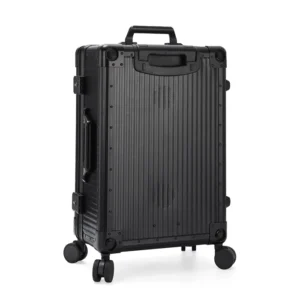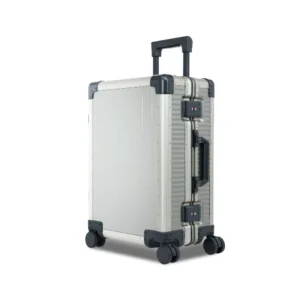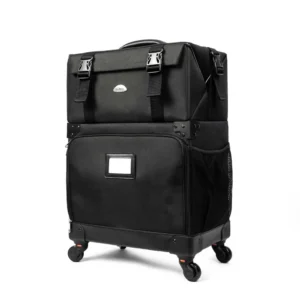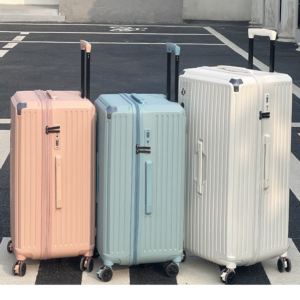

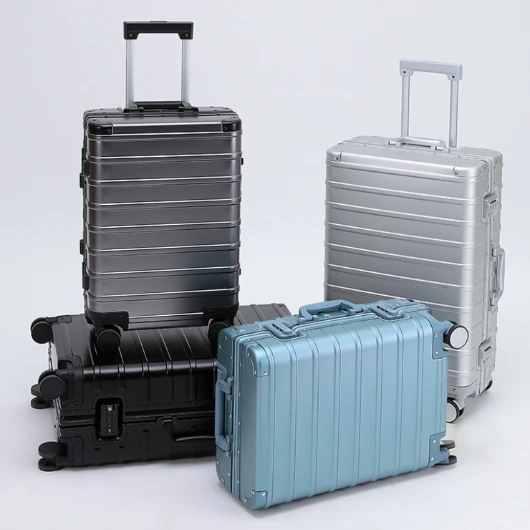
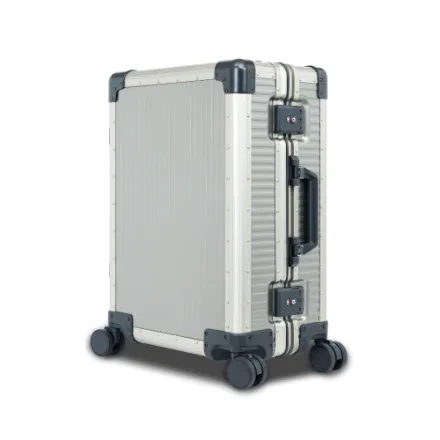
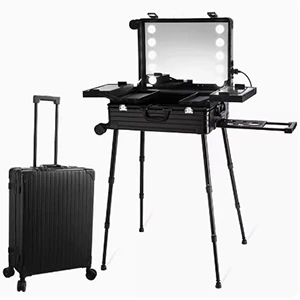
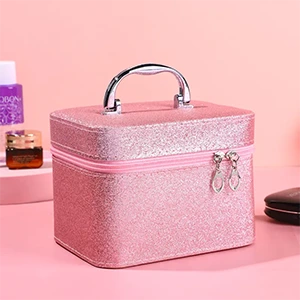
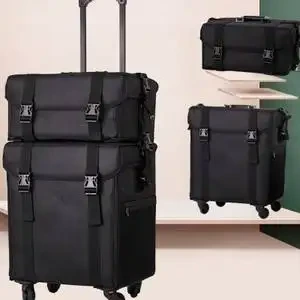
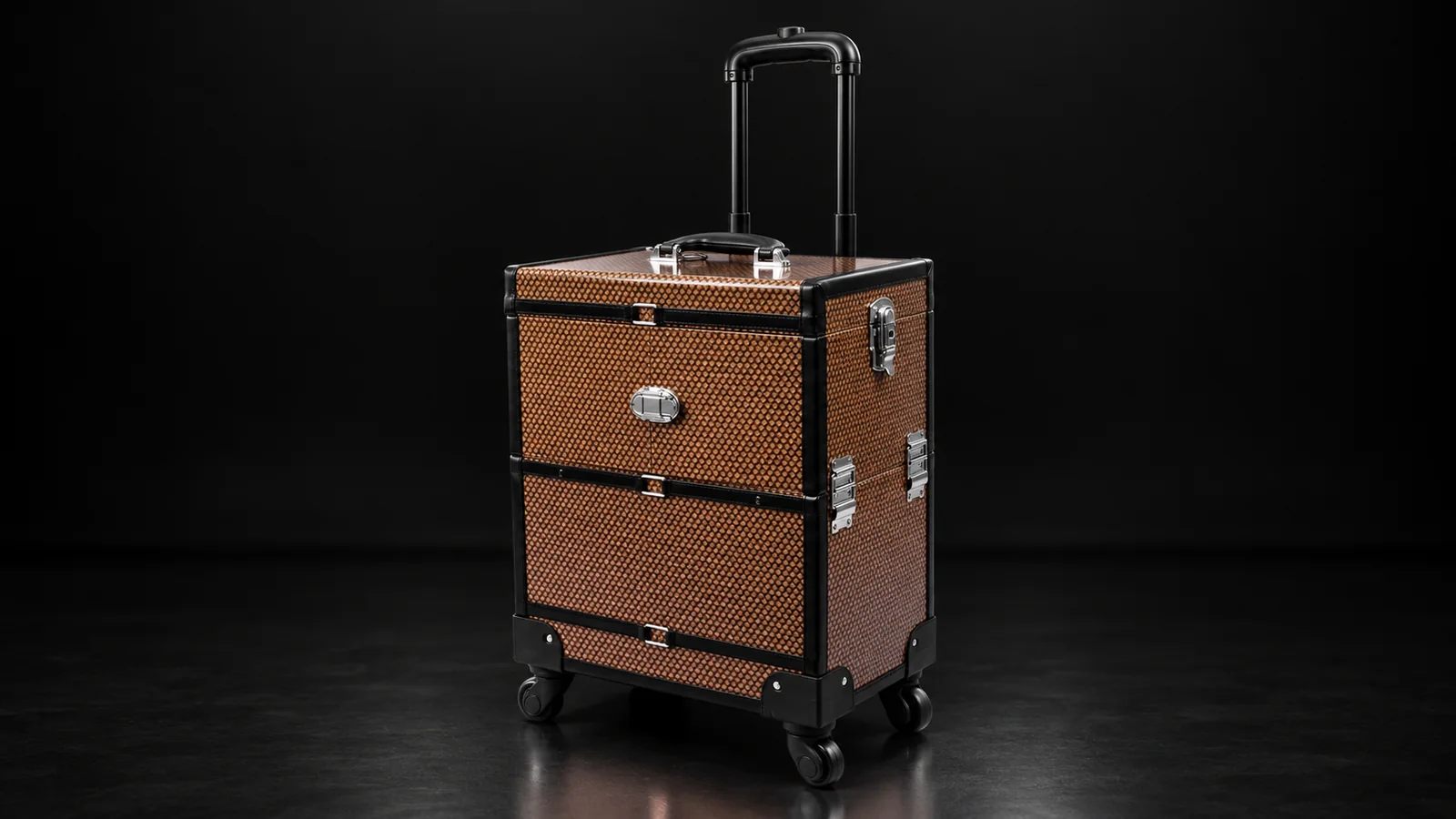
A makeup trolley is not the same product as a makeup case, and not the same product as makeup luggage. It is the professional working tool used by makeup artists, nail technicians, hairstylists, and cosmetology instructors — the multi-tier wheeled case that goes from studio to client location to backstage every working day.
The sourcing requirements for a professional makeup trolley are different from retail-focused cosmetic luggage. The use intensity is higher: a working makeup artist opens and closes their trolley dozens of times per day. The durability bar is higher: hardware that survives three years of professional daily use is the standard, not three years of consumer occasional use. The interior specifications are different: tray depth, tier configuration, and integrated lighting matter in ways that retail products do not need to consider.
This guide covers what defines a professional-grade makeup trolley, the five specifications that separate pro products from retail, and the three buyer channels that drive volume in this category.
At Aluvox, we manufacture makeup trolleys alongside our makeup case and makeup luggage product lines, with OEM and ODM programs starting from 300 pieces and sample lead times of 7–15 days for makeup category products. The framework below applies to evaluating any cosmetic trolley supplier, including us.
What Defines a Professional Makeup Trolley
The makeup trolley category subdivides from the broader cosmetic case market by four structural characteristics that together define the product format.
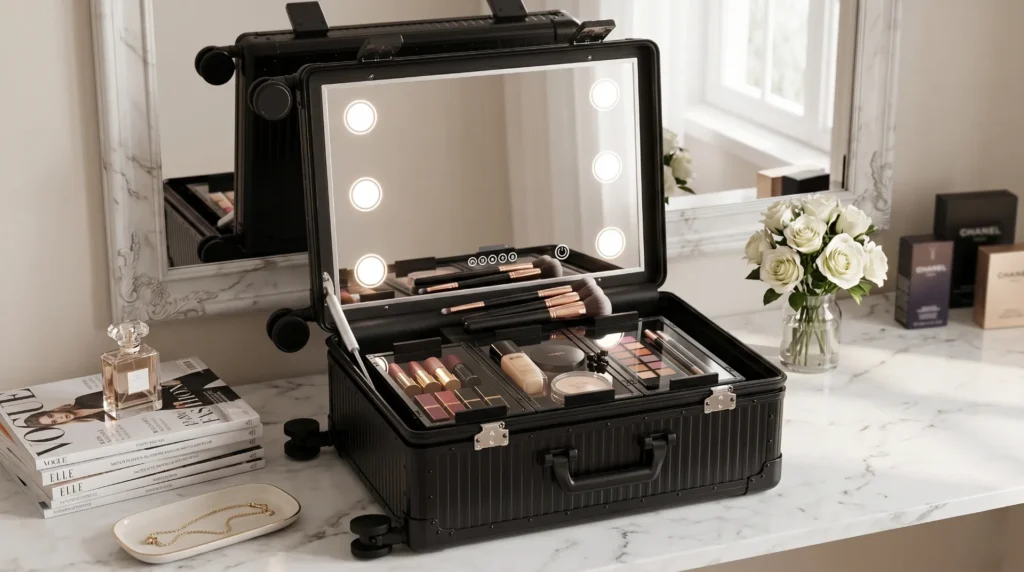
Multi-tier interior. Three to four stackable tiers is the professional standard. Each tier holds a specific tool category — bottom for products and bottles, middle for brushes and tools, top for color palettes and accessories. The tier system supports a working flow where a makeup artist accesses different categories at different stages of the application.
Pull-out or accordion tray mechanism. Tiers either pull out horizontally on rails (drawer-style) or extend in an accordion configuration that exposes all tiers simultaneously when the case is opened. Both mechanisms allow the trolley to function as a workstation rather than just a storage container.
Lockable construction. Professional cases contain valuable inventory — palettes can cost $50–$200 each, professional brushes range $30–$150, full kits represent thousands of dollars in product investment. Lockable closure (key or combination) is standard. Aluminum frame construction with butterfly latches is the dominant lockable format.
Telescopic handle and spinner wheels. Four-wheel 360° spinner wheels rated for the load. Telescopic handle with multiple height positions. The trolley must roll smoothly across studio floors, hotel carpets, and outdoor venues — bridal makeup artists in particular operate across varied surfaces in a single day.
How this differs from related categories:
For a comparison with stationary makeup cases (top-opening, no wheels), see: Makeup Case Manufacturer Guide →
For brand retail-focused wheeled cosmetic luggage, see: Makeup Luggage Guide →
Five Specifications That Separate Pro from Retail
Retail cosmetic luggage and professional makeup trolleys can look superficially similar — both wheeled, both multi-tier, both lockable. The performance difference shows up in five specifications.
1. Tier depth — 12cm professional standard. Professional makeup artists work with full-size product bottles (foundation, primer, setting spray), 22cm brushes stored angled, and large palettes. Tray depth of 12cm minimum is the professional standard — sufficient to hold these items without forcing the artist to repack between sessions.
Retail cosmetic luggage often specifies 6–8cm tray depth to maintain a slimmer product profile. This works for consumer storage of partial-use products but does not work for professional working inventory.
2. Hardware cycle rating — 5,000+ open-close cycles. A professional makeup artist opens and closes their trolley 20–40 times per working day. Over a three-year service life, that translates to approximately 15,000–30,000 use cycles. Hardware rated to 3,000 cycles (typical for retail luggage) fails within the first year of professional use.
Professional-grade trolleys should specify hardware cycle ratings at 5,000+ cycles minimum, with documented testing data available on request. Suppliers without this data have not tested to the professional standard.
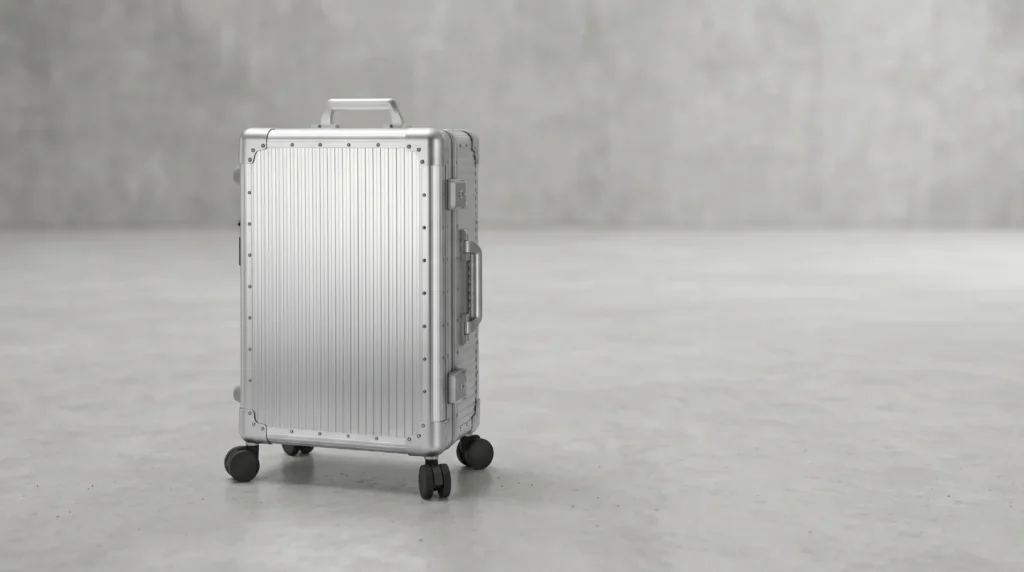
3. Aluminum frame vs soft fabric construction. The professional market splits between two construction approaches: full aluminum frame with hard panels (premium pro standard) or aluminum frame with reinforced soft fabric (mid-tier). Soft Oxford fabric without aluminum frame is acceptable for retail makeup artist starter cases but does not survive professional daily use.
For brands targeting the upper professional segment, aluminum frame construction is the format. For brands targeting the broader beauty school and entry-pro segment, aluminum frame plus reinforced fabric is the appropriate spec.
4. Integrated mirror with optional LED lighting. The makeup trolley functions as a working surface when opened. Lid-mounted mirror is standard — typically full-width, securely attached, with optional tilt-adjustment. LED lighting integration is the fastest-growing premium feature, providing consistent illumination in mixed-light venues (bridal venues, outdoor sets, hotel rooms with unpredictable lighting).
The LED integration requires waterproof wiring, battery housing, dimmer controls, and color temperature options (typically 3000K warm to 5500K cool). Suppliers offering LED options should document the wiring spec, battery life, and color temperature range.
5. Lockable system — key vs combination. Key locks are simpler and more reliable mechanically. Combination locks eliminate the lost-key risk. TSA-compatible combination locks are appropriate for trolleys destined for markets where the case travels through airline security (touring makeup artists, international productions). For domestic professional use only, standard combination locks are sufficient.
Three Professional Buyer Channels
The makeup trolley category sells through three distinct B2B channels, each with different sourcing priorities and order structures.
Channel A: Beauty schools and cosmetology programs
Beauty schools purchase trolleys in batches of 20–50 units for student kits, with the school’s brand or logo on each case. The unit price is moderate ($80–$150 wholesale), but volume per order is meaningful, and reorders follow each enrollment cycle.
Key sourcing requirements for this channel: consistent specification across units (every student receives an identical case), reliable timeline (kits must arrive before semester start), durable construction (cases used by students learning, dropped, mishandled), and institutional branding capability (school logo, color customization).
Channel B: Professional beauty supply distributors
Specialty distributors who sell to working makeup artists, salons, nail technicians, and cosmetology professionals. These distributors stock multiple trolley formats and configurations, supporting different professional specializations.
Key sourcing requirements: multiple SKU formats within a single supplier relationship (3-tier, 4-tier, modular, fabric vs aluminum), consistent quality across the range, reliable inventory replenishment, and distributor-friendly margins. Volume per individual SKU may be moderate, but total annual volume across SKUs is meaningful.
Channel C: Independent professional makeup artist brands
Specialty brands serving working professional makeup artists directly — through their own e-commerce, professional supply retailers, or branded retail concepts. These brands compete on professional-grade specification and brand alignment with the makeup artist community.
Key sourcing requirements: premium specification (5,000+ cycle hardware, full aluminum construction, integrated LED options), distinctive design aesthetic, and the ability to support smaller initial volumes that can scale with brand growth. Aluvox supports this channel with our 300-piece MOQ structure and color splitting that allows brands to launch with multiple SKUs at the validation stage.
Aluvox Cosmetic Trolley OEM Program
Production parameters:
| Parameter | Specification |
|---|---|
| MOQ | 300 pcs / style |
| Color splitting | Supported — total order MOQ across colors |
| Sample lead time (makeup category) | 7–15 working days |
| Bulk production | 45 days from deposit |
| Materials available | Aluminum, ABS, ABS/aluminum hybrid, reinforced Oxford |
| Tier configuration options | 3-tier, 4-tier, modular accordion, drawer-style |
| Customization scope | Color, tier depth, mirror, LED, hardware, logo, lining, lock type |
| Export ports | Huangpu, Nansha, Shekou, Yantian |
Featured production capabilities:
- Full aluminum frame construction with butterfly latches
- 12cm professional-standard tray depth available
- LED lid integration with dimmer and color temperature control
- TSA-compatible combination lock options
- Soft Oxford alternative for mid-tier price positioning
Browse the Aluvox makeup trolley collection →
For private label cosmetic trolley programs with full brand customization, see: Custom Private Label Makeup Case Manufacturer →
For complete MOQ structures across color splits and SKU configurations, see: Custom Luggage MOQ Guide →
Request an Aluvox cosmetic trolley sample — verify tier depth, hardware cycle rating, mirror and LED quality before committing to production. Request Sample
Four Red Flags When Sourcing Cosmetic Trolleys
Red Flag 1: Hardware not rated for daily professional use
A supplier quoting “premium” or “professional” trolleys should provide hardware cycle rating data on request. If the supplier cannot specify the rating, or quotes generic retail-luggage cycle ratings (1,000–3,000 cycles), the product will fail within the first year of professional daily use.
Request the cycle rating specification in writing. For makeup trolleys targeting professional channels, accept 5,000-cycle minimum.
Red Flag 2: Insufficient tray depth (below 10cm)
Some suppliers quote “professional” trolleys with tray depths of 6–8cm — a retail spec masquerading as professional. Professional makeup artists work with full-size product bottles and large palettes that do not fit shallow trays.
Measure tray depth on every sample. Reject samples with tray depth below 10cm if targeting the professional channel.
Red Flag 3: Interior lining material that degrades within months
Some trolleys use thin PU coatings on Oxford fabric that crack and peel within 4–6 months of professional use. Professional makeup artists touch the lining constantly during product retrieval — durable lining is not optional.
Request the lining material specification: thickness (gsm), abrasion resistance rating (Martindale test cycles), and warranty terms. Suppliers using durable PU should be able to specify Martindale ratings of 30,000+ cycles.
Red Flag 4: No documented cycle testing or QC data
Suppliers without documented cycle testing on their trolley hardware, lining abrasion testing, wheel drag testing, and pre-shipment QC are operating without engineering data. They cannot guarantee performance across production runs because they have not measured performance to begin with.
Standard documentation a professional supplier should provide on request: hardware cycle ratings, wheel drag specifications, lining abrasion test results, and pre-shipment QC inspection records.
A Professional Trolley Is a Working Tool
The brands and distributors that succeed in the professional makeup trolley category understand that they are not selling a retail product — they are selling a working tool that beauty professionals depend on for their daily income. A trolley that fails after six months damages the customer’s livelihood, not just their consumer experience. The professional channel is unforgiving of products built to retail specifications.
The five specifications above — 12cm tray depth, 5,000-cycle hardware, aluminum frame construction, integrated mirror with optional LED, lockable closure — are the baseline for products that serve this market. Suppliers who deliver to this baseline build long-term relationships with beauty schools, distributors, and professional brands. Suppliers who do not, do not get the reorder.
If you are evaluating a cosmetic trolley product line for the beauty school channel, the professional distributor channel, or a direct-to-professional brand, Aluvox engineers are available to review your channel, target specification, and production parameters.
Contact an Aluvox Engineer — submit your target channel, tier configuration, and estimated order volume. We will provide a professional trolley specification recommendation and indicative production quote within 2 business days. Contact Engineering Team