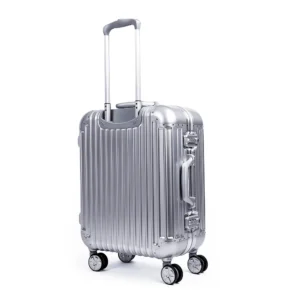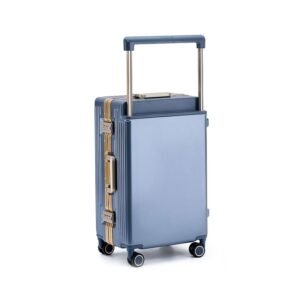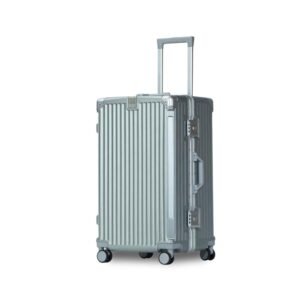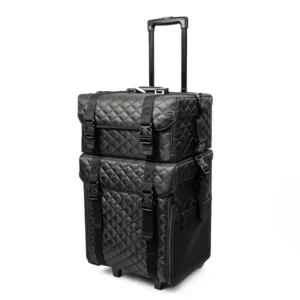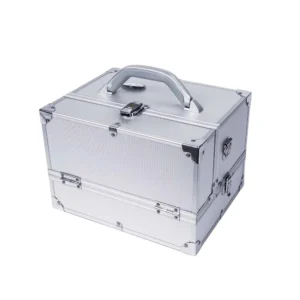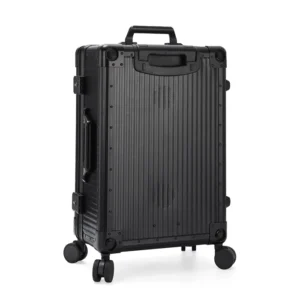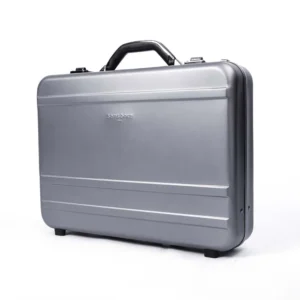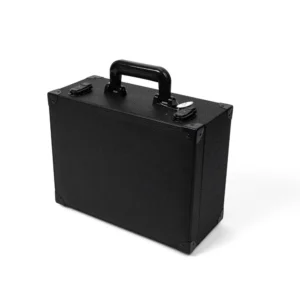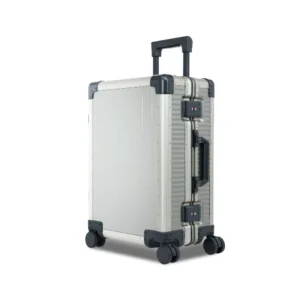

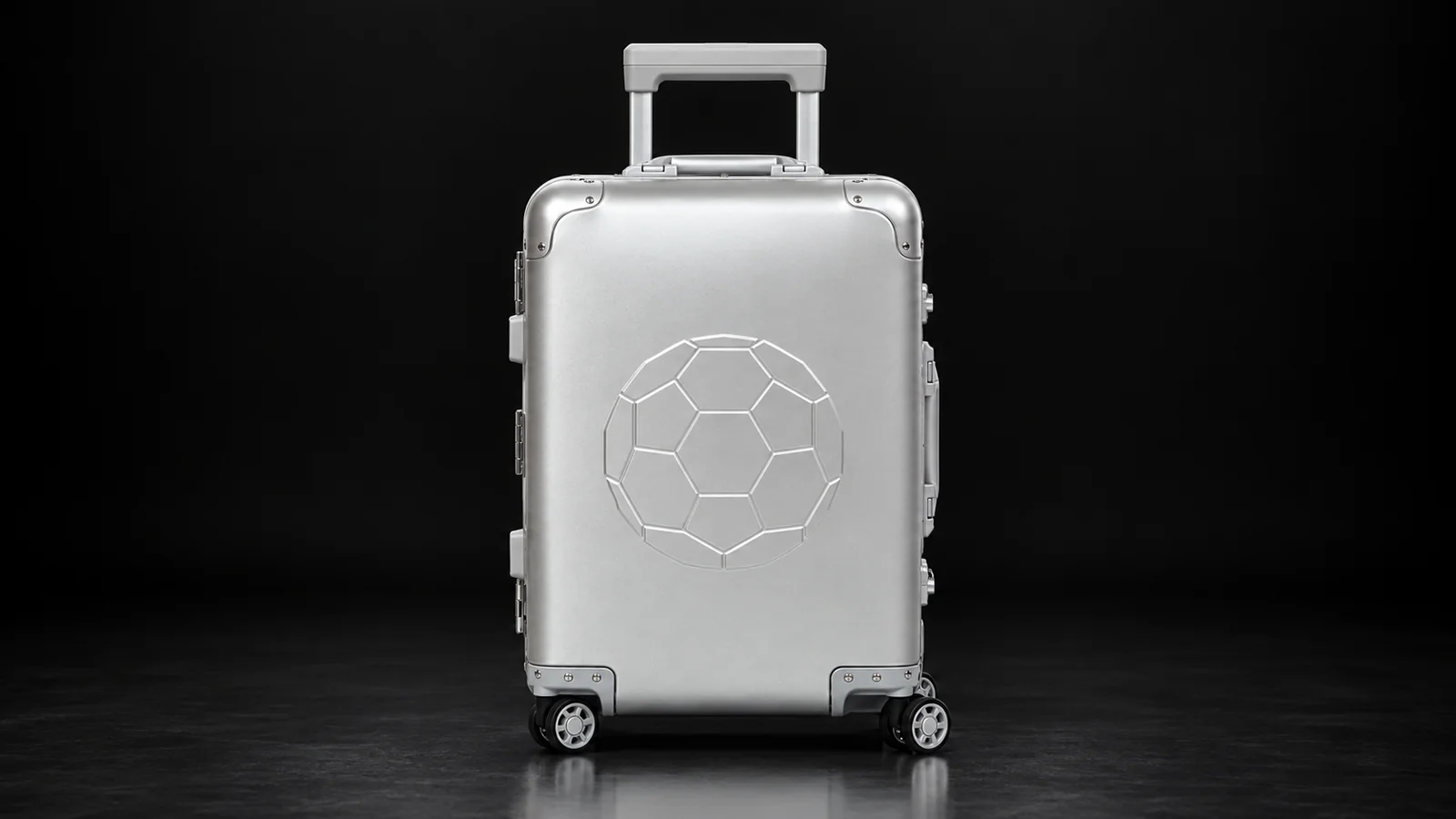
Buyers searching for a “stainless steel suitcase” expect one product. The industry delivers another. This gap is not a marketing deception — it is a physics problem that brand procurement managers need to understand before they place an OEM order, request a quote, or commit to a product positioning that the manufacturing reality cannot support.
Pure stainless steel suitcases do not exist at meaningful retail volume. Not because no factory has tried, but because the weight of a steel shell at industry-standard wall thickness exceeds what consumers can lift or airlines will accept. The “steel suitcase” market is, in practice, the aluminum shell with stainless steel hardware market — a hybrid construction that delivers the strength benefits of steel exactly where they matter most without the weight penalty steel would impose on the shell.
This guide explains why pure steel luggage isn’t manufactured, where stainless steel actually appears in premium suitcases, the genuine material trade-offs between steel and aluminum for different components, and what brand buyers should specify when sourcing metal luggage.
At Aluvox, we manufacture aluminum luggage with stainless steel hardware as our standard premium specification — Series 5 aluminum-magnesium shells with 304 stainless steel hinges, latches, and corner reinforcement. The framework below reflects what we have learned engineering metal luggage at OEM volumes since 1993.
Why Pure Steel Suitcases Don’t Exist
The reason is mathematical, not strategic.
Density comparison:
| Metal | Density |
|---|---|
| Stainless steel 304 | 7.85 g/cm³ |
| Aluminum 5052-H32 | 2.68 g/cm³ |
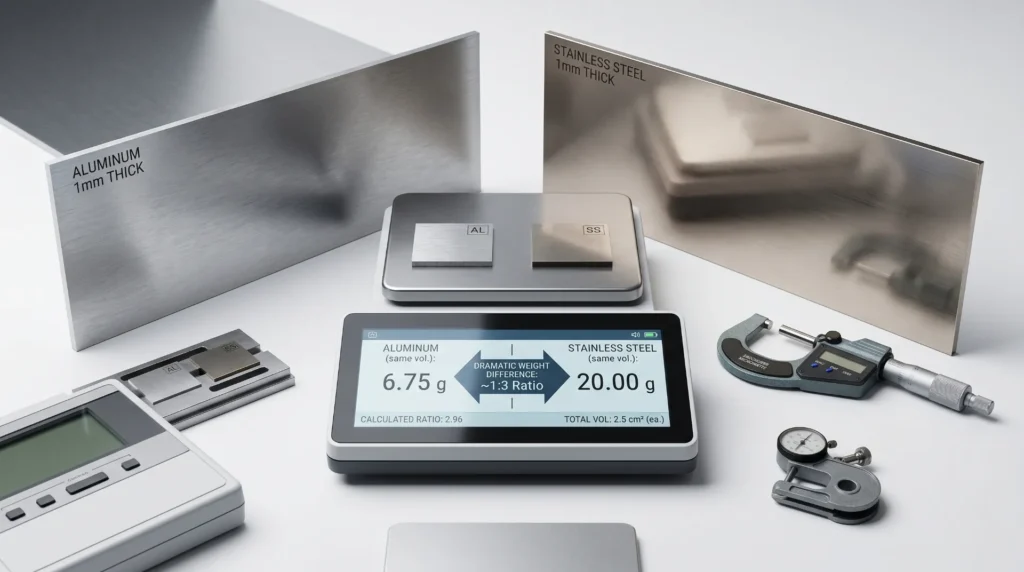
Stainless steel is approximately 2.93 times denser than aluminum. At identical wall thickness and geometry, a steel-shell suitcase weighs nearly 3x as much as the aluminum equivalent.
Practical example — a 22-inch carry-on suitcase:
- Aluminum shell, 1.0mm thickness: 7.5 lbs (3.4 kg) empty
- Stainless steel shell, 1.0mm thickness: 22 lbs (10 kg) empty
A 22-pound empty carry-on case is not airline-compliant on most European and Asian carriers (7-10kg total weight limits including contents). It is also not handleable by typical travelers — lifting a 22-pound case into an overhead bin while packing 30+ pounds of contents requires significant physical effort.
The math is the answer. Steel cannot be the shell material for travel-grade luggage.
Where the “steel suitcase” market actually exists:
The products consumers find when searching for “stainless steel suitcase” or “steel suitcase” are typically one of three things:
- Aluminum suitcases with stainless steel hardware (most common — premium aluminum luggage)
- Steel-reinforced aluminum frames with aluminum shell panels
- Marketing-labeled “stainless steel” products that are actually anodized aluminum or steel-coated polycarbonate
For a deeper look at metal luggage construction across material categories, see: Metal Suitcase Guide →
Where Stainless Steel Actually Appears in Premium Luggage
Pure steel cannot be the shell. But steel does meaningful work in premium luggage — in the components that absorb the most use cycles and determine the product’s long-term durability.
Hinges. The hinge sees more mechanical stress than any other component in a luggage product. A hinge that holds the lid open during packing, then closes for transit, then opens again — across thousands of cycles over years of use. Stainless steel hinges rated for 10,000+ cycle endurance are the premium standard. Aluminum hinges flex and warp at this cycle count; plastic hinges fail much earlier.
Latch pivot pins. Butterfly latches and TSA combination locks depend on small pivot pins that hold the closure system together. These pins are subjected to torsional force every time the latch engages. Stainless steel pivot pins are the only material that survives premium luggage cycle counts without elongating or shearing.
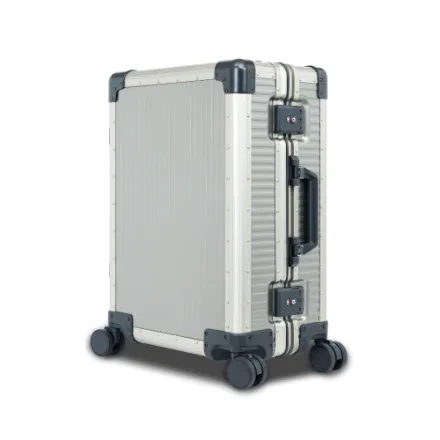
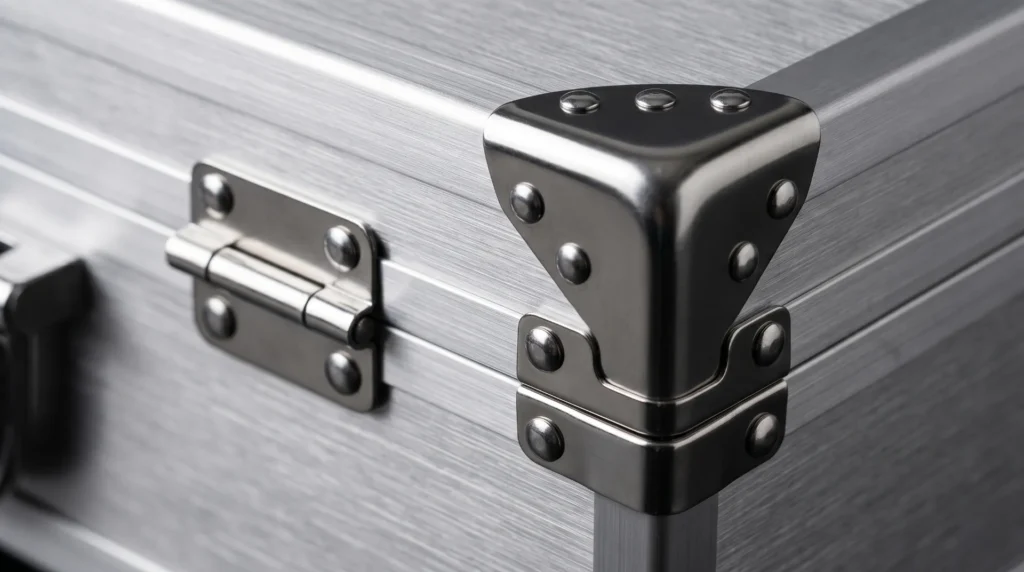
Corner reinforcement. Premium aluminum luggage uses stainless steel inserts in corner construction zones — where the shell experiences the highest impact stress during drops and handling. The aluminum shell absorbs impact through controlled deformation; the steel insert prevents catastrophic structural failure at the corner joint.
TSA lock internal mechanism. The combination wheels, internal locking pawls, and shackle of a TSA-approved combination lock are constructed from hardened stainless steel components. Locks built with cheaper alloy components fail through mechanism wear within 1-2 years of regular use.
The general principle: Steel goes where mechanical stress is concentrated. Aluminum goes where weight and formability matter. The premium luggage industry has converged on this division of materials because it represents the engineering optimum — neither pure aluminum nor pure steel matches the performance of the correctly-specified hybrid.
For supplier verification frameworks for metal luggage hardware specifications, see: How to Vet Industrial Luggage Suppliers →
Steel vs Aluminum: Complete Material Comparison
Understanding the trade-offs between the two metals informs the right component-level decisions.
| Property | Stainless Steel 304 | Aluminum 5052-H32 |
|---|---|---|
| Density | 7.85 g/cm³ | 2.68 g/cm³ |
| Tensile strength | 515 MPa | 228 MPa |
| Yield strength | 215 MPa | 193 MPa |
| Impact response | Plastic deformation under stress; resists tearing | Bends without cracking; absorbs energy |
| Corrosion resistance | Excellent (chromium oxide layer) | Excellent (magnesium content prevents pitting) |
| Surface treatment options | Polished, brushed (limited color range) | Brushed, sandblasted, anodized (full color range) |
| Manufacturing complexity | High — difficult to form into large panels | Medium — established deep-draw stamping process |
| Formability for shell panels | Poor | Excellent |
| Tooling cost for shell production | Very high | Moderate |
| Cost per kg of finished product | Higher | Lower |
| Recycling efficiency | Good | Excellent (lowest energy cost to recycle) |
Component-level verdicts:
- Shell panels: Aluminum wins decisively. Lower weight, better formability, lower tooling cost, full color and texture range.
- Hinges, latches, internal hardware: Stainless steel wins decisively. Higher fatigue strength, better cycle endurance, dimensional stability under stress.
- Corner reinforcement inserts: Stainless steel for impact-critical zones; aluminum for non-critical corners.
- External branding components (e.g., logo plates): Either acceptable — typically aluminum to match shell aesthetic, sometimes stainless for visual contrast.
For more on aluminum alloy specification and surface treatment options, see: Aluminum Luggage Manufacturer Guide →
For comparison with polycarbonate as a non-metal alternative, see: Aluminum vs Polycarbonate Luggage →
What “Stainless Steel Suitcase” Actually Means in Market Listings
Across e-commerce platforms and brand marketing, the term “stainless steel suitcase” appears in three distinct product realities. Understanding which reality a listing represents is essential for accurate procurement.
Reality 1: Aluminum shell with prominent stainless steel hardware. The most common — and accurate — usage. Premium aluminum luggage with visible stainless steel hinges, latches, and reinforcement is marketed as featuring “stainless steel construction” or “stainless steel hardware.” This is legitimate descriptive language.
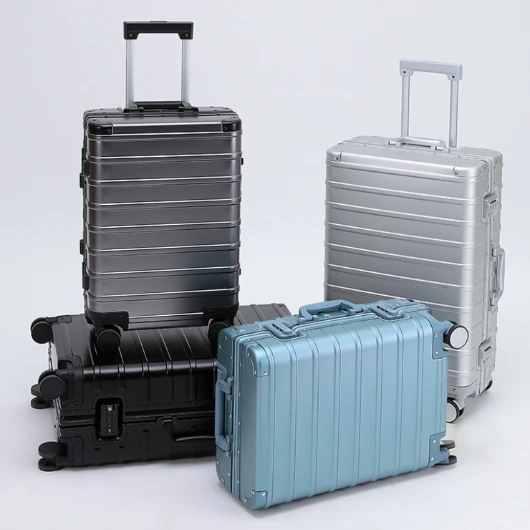
Reality 2: Brushed aluminum shell that visually resembles steel. Some marketing copy describes brushed aluminum products as “stainless steel finish” or “steel-look.” This is aesthetic descriptive language about the surface treatment, not material composition. Buyers should request material specification documentation to confirm what they are actually purchasing.
Reality 3: Misleading “stainless steel” claims on aluminum or steel-coated polycarbonate products. Some listings claim “100% stainless steel” construction on products that are actually aluminum or polycarbonate with thin steel coating. This is non-compliant with material disclosure standards in most markets and represents a procurement risk for brand buyers — both as a quality issue and as a regulatory exposure (US Prop 65, EU REACH).
What brand buyers should specify:
- Shell material specification — alloy grade with mill certificate (e.g., aluminum 5052-H32 or stainless steel 304 if genuinely steel)
- Hardware material specification — separately for hinges, latches, pivot pins, and TSA lock components
- Surface treatment specification — brushed/sandblasted/anodized for aluminum; polished/brushed for steel
- Weight verification — actual measured weight against material density expectation (a “stainless steel” 22-inch case weighing 8 lbs is not steel)
A material disclosure that doesn’t break down by component is incomplete. Premium suppliers provide component-level material specification as standard practice.
Aluvox Aluminum + Stainless Steel Hardware OEM Program
Featured specification: Premium aluminum luggage with stainless steel hardware — Aluvox’s flagship metal luggage configuration.
Material breakdown:
| Component | Material |
|---|---|
| Shell panels | Series 5 aluminum-magnesium alloy (5052-H32), 1.0mm thickness |
| Hinges | 304 stainless steel, rated 10,000+ cycles |
| Latches | 304 stainless steel pivot pins with hardened aluminum body |
| Corner reinforcement | 304 stainless steel inserts at impact zones |
| TSA lock | TSA-approved combination lock with stainless steel internal mechanism |
| Telescopic handle | High-grade aluminum tube with steel-reinforced lock mechanism |
Production parameters:
| Parameter | Specification |
|---|---|
| MOQ | 300 pcs / style |
| Color splitting | Supported — total order MOQ across colors |
| Sample lead time (existing tooling) | 20 working days |
| Bulk production | 45 days from deposit |
| Surface finish options | Brushed / Sandblasted / Anodized |
| Customization | Color, hardware finish, logo, lining, lock type |
| Export ports | Huangpu, Nansha, Shekou, Yantian |
Material documentation provided on request:
- Aluminum mill certificate (alloy grade, temper, mechanical properties)
- Stainless steel grade certificate (304/316 specification per component)
- ISTA 2A loaded drop test results
- 48-hour neutral salt spray corrosion test certification
Browse the Aluvox aluminum luggage collection →
Visit the Aluvox aluminum luggage manufacturer page →
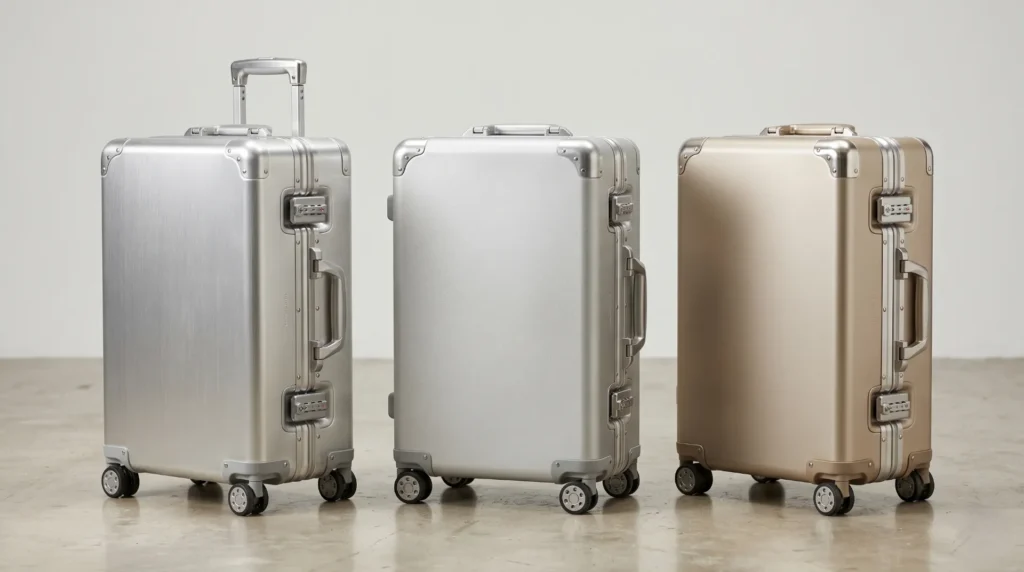
Request an Aluvox aluminum + stainless steel sample — verify shell alloy specification, hardware quality, and corner reinforcement before committing to production. Request Sample
Three Brand Procurement Decisions Where Material Matters Most
Decision 1: High-end retail luggage positioning ($400–$800)
For brands targeting the premium retail tier, the correct specification is aluminum shell + visible stainless steel hardware + anodized or polished finish. The stainless steel hardware is the visible signal of engineering investment that supports the premium price point. Brands at this tier should explicitly market the component-level material specification — “5052-H32 aluminum shell with 304 stainless steel hinges and corner reinforcement” — because the audience will recognize and value the specificity.
Decision 2: Industrial cases and B2B applications
For industrial luggage destined for medical, drone, electronics, or precision instrument transport, the specification expands: aluminum shell + stainless steel hardware + additional steel reinforcement at structural zones. The 6000-series aluminum alloy (6061) is typically substituted for the 5000-series for higher load capacity. Steel inserts at hinge mounts, latch positions, and corner zones extend service life under demanding use conditions.
Decision 3: Brand differentiation through surface finish
For brands competing in the broader aluminum luggage market, the visible differentiation point is surface treatment. Three primary options:
- Brushed finish — directional grain, industrial aesthetic, most scratch-tolerant
- Sandblasted finish — matte uniform texture, understated premium positioning
- Anodized finish — color-integral surface, supports brand color schemes from rose gold to black
Each finish supports different brand positioning. The aluminum substrate is identical; the surface treatment determines the visual identity.
The Right Question Isn’t Steel or Aluminum
The right question for brand procurement is: which materials at which components. The “steel vs aluminum” framing assumes one of the two will dominate the product. The engineering reality is that premium metal luggage uses both, deployed where each material’s properties are optimized.
Pure steel does not work as a shell because of weight. Pure aluminum without steel hardware does not survive the cycle counts of premium luggage use. The hybrid construction — aluminum where formability and weight matter, stainless steel where cycle endurance and impact reinforcement matter — is the engineering convergence that the premium industry has standardized on.
If you are evaluating a metal luggage product line and need clarity on the right material specification for your channel, price tier, and brand positioning, Aluvox engineers can help you build the specification that matches your project parameters.
Contact an Aluvox Engineer — submit your target retail price, channel, and order volume. We will provide a metal luggage specification recommendation and indicative production quote within 2 business days. Contact Engineering Team