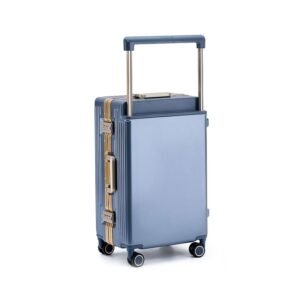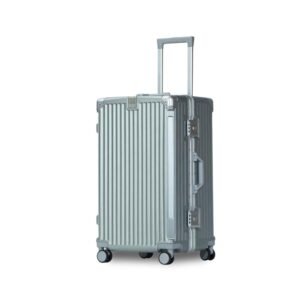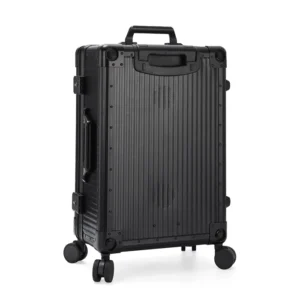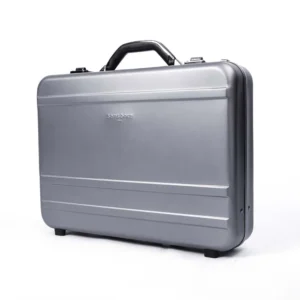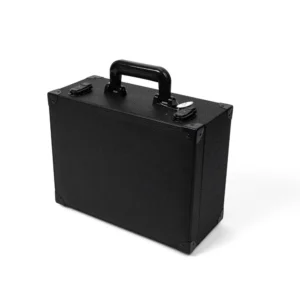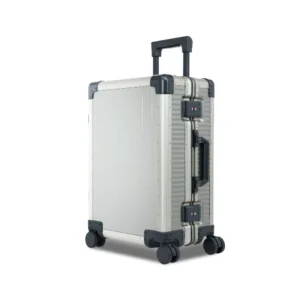

When buyers search for a metal suitcase, they typically see consumer recommendation lists — ten products ranked by reviewers who have never visited a factory. For brand buyers evaluating whether to add a metal luggage line to their range, those lists answer none of the questions that actually matter: which metal, what alloy grade, what manufacturing process, and which factories can produce metal luggage to specification at OEM volumes.
Metal luggage represents the premium tier of the hard-shell market. It commands higher retail prices, generates stronger perceived durability, and supports design aesthetics that plastic alternatives cannot replicate. It also requires manufacturing capability that most luggage factories have not invested in — which makes supplier evaluation more critical in this category than in PC or ABS sourcing.
This guide covers the material options within the metal luggage category, how metal suitcases are actually manufactured, and what factory capability checks apply specifically to metal shell production.
At Aluvox, we have manufactured aluminum luggage from our Dongguan, Guangdong facility since 1993 and added titanium production capability as demand for ultra-premium metal luggage has grown. The framework below reflects what we know from producing metal shells — and what buyers should verify before committing to any metal luggage OEM partner.
What Makes a Suitcase “Metal”: Three Material Options
Not all metal luggage is the same material. The term “metal suitcase” in consumer search covers three distinct alloy categories — each with different manufacturing requirements, cost structures, and brand positioning implications.
Aluminum (Series 5 Alloy)
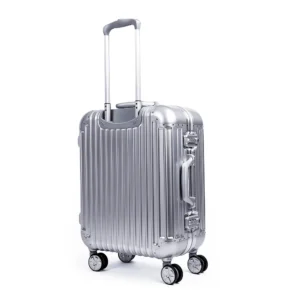
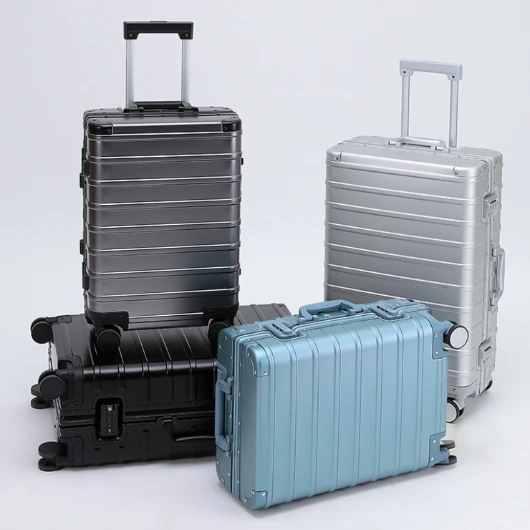
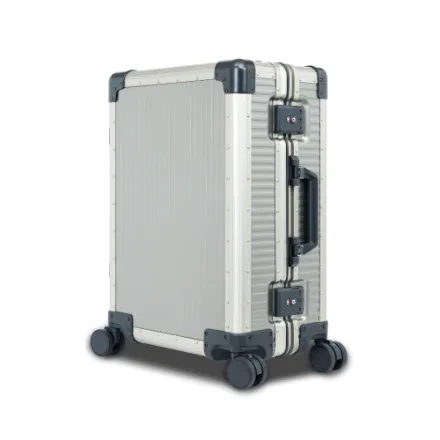
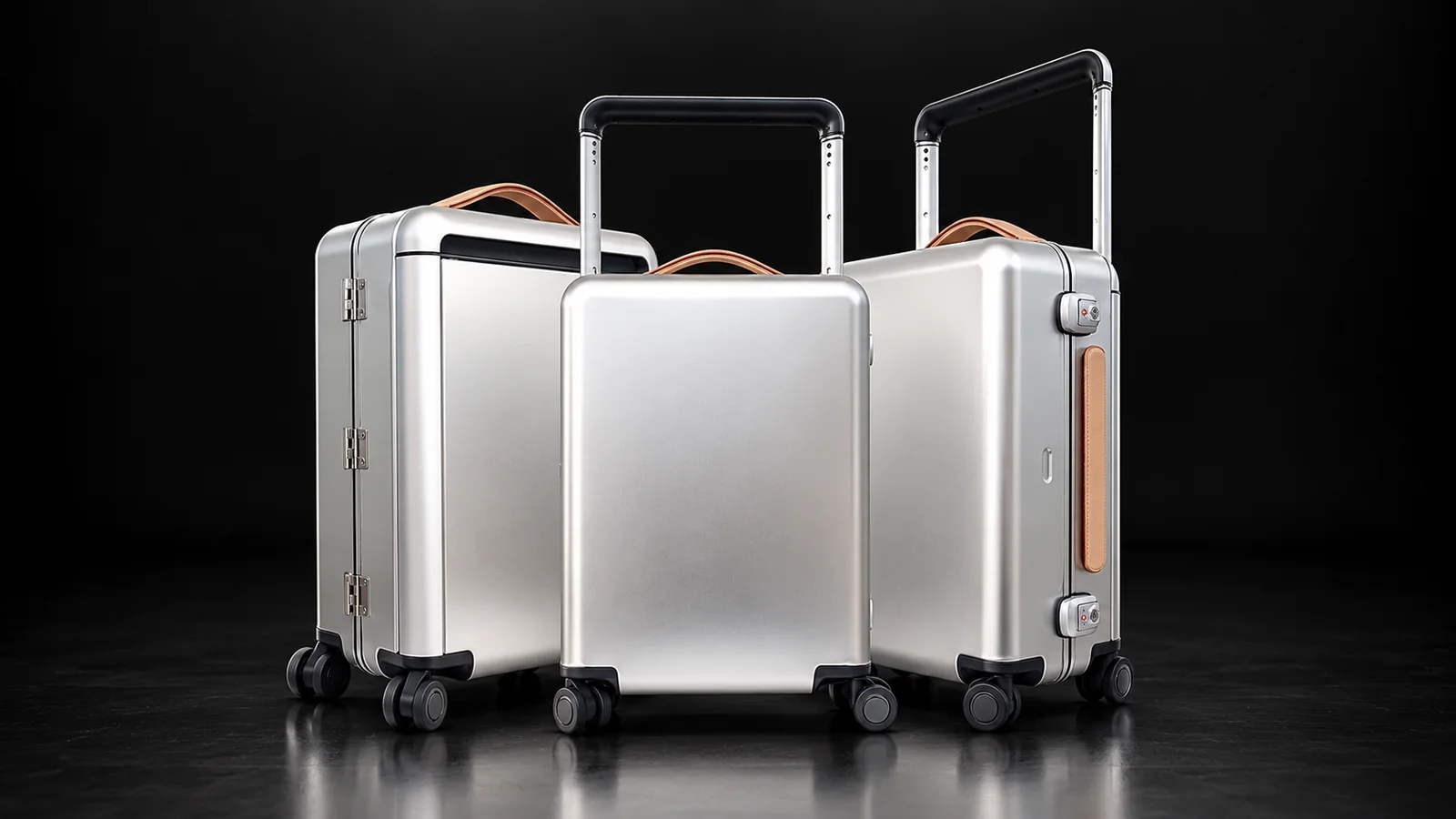
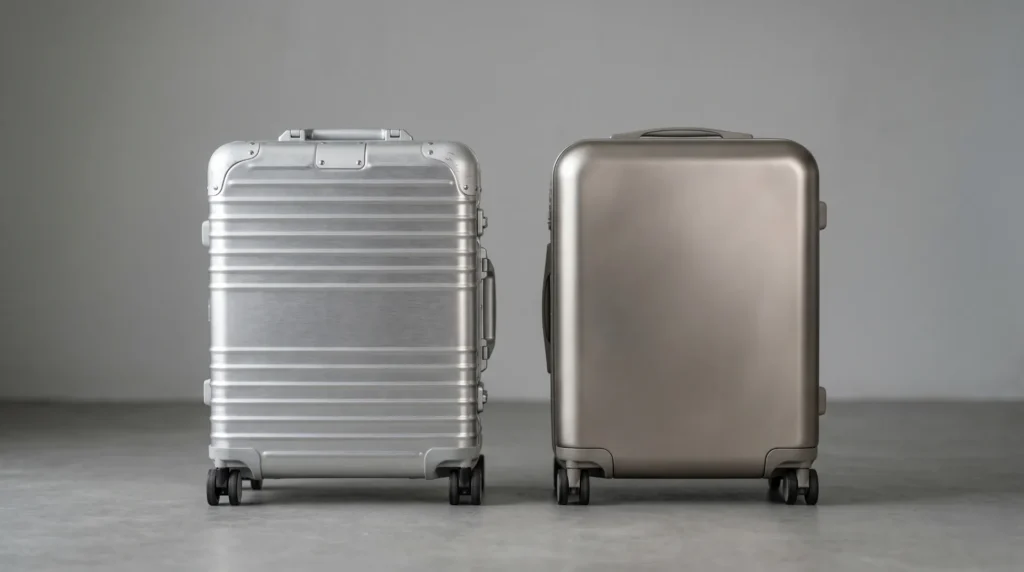
Aluminum accounts for approximately 95% of metal luggage production globally. The industry standard is aerospace-grade Series 5 aluminum-magnesium alloy (5052-H32), which provides the combination of corrosion resistance, structural integrity, and formability required for luggage-grade shells. Shell thickness is typically 1.0mm. Surface treatment options include brushed, sandblasted, and anodized finishes.
Aluminum is the practical choice for metal luggage at volume — the manufacturing process is established, the supply chain is mature, and the retail price point ($200–$500) is accessible to premium brands without requiring ultra-luxury positioning.
Titanium
Titanium luggage occupies the ultra-premium tier — lighter than aluminum, stronger than steel, with a distinctive surface character that cannot be replicated with surface treatment on other materials. Retail pricing starts at $400 and typically exceeds $600 for carry-on formats.
Titanium manufacturing requires specialist forming equipment that most aluminum luggage factories do not have. The raw material cost is significantly higher, production cycles are longer, and the supply chain is more constrained. For most brands, titanium works as a hero SKU or limited edition — not as a volume product.
For a detailed guide on titanium luggage sourcing, see: Titanium Luggage Manufacturer Guide →
View the Aluvox TT-001 titanium luggage →
Magnesium
Magnesium alloy produces the lightest possible metal luggage shell — lighter than both aluminum and titanium. However, magnesium presents significant manufacturing challenges: it is highly flammable during machining, requires specialized surface treatment to prevent corrosion, and the available supply chain for luggage-grade magnesium alloy is extremely limited.
Magnesium luggage is a niche product for brands with specific ultra-lightweight positioning requirements and the engineering resources to manage the material’s constraints. For most metal luggage sourcing decisions, the choice is between aluminum and titanium.
| Material | Retail range | Weight | Manufacturing complexity | Market share |
|---|---|---|---|---|
| Aluminum (Series 5) | $200–$500 | Medium | Established | ~95% |
| Titanium | $400–$800+ | Lightest metal | Specialist | ~4% |
| Magnesium | $500+ | Lightest overall | Highly specialist | <1% |
Metal vs Plastic: Why Brands Choose Metal
The decision to produce metal luggage rather than PC or ABS is a brand positioning decision as much as a material specification decision. Metal does specific things that plastic cannot.
Structural rigidity. A metal shell does not flex under impact. Where a PC shell absorbs energy by deforming elastically and returning to shape, an aluminum shell maintains rigid geometry — the contents inside experience less movement and less compression. For brands targeting consumers who carry fragile or high-value items, this rigidity is a functional selling point.
Perceived durability. Consumer research consistently shows that metal luggage is perceived as more durable than plastic luggage — even when the measured impact resistance of premium PC exceeds aluminum in certain test categories. Perception drives purchasing. Metal reads as permanent. Plastic reads as disposable, regardless of its actual performance characteristics.
Zipperless closure. Metal frames naturally support latched or combination lock closure systems rather than zippers. This eliminates the security vulnerability of zipper pen attacks and the structural failure mode of zipper separation under load. For brands positioning on security and build quality, the zipperless closure that metal frames enable is a significant differentiator.
Price point support. Metal material cost and manufacturing complexity justify retail prices that plastic shells cannot credibly support. A brand selling a $350 carry-on needs the material and construction to match the price point — aluminum delivers that credibility in a way that PC at the same price does not.
For a detailed comparison of aluminum and polycarbonate from a manufacturing perspective, see: Aluminum vs Polycarbonate Luggage →
How Metal Suitcases Are Manufactured
Understanding the manufacturing process for metal luggage explains why factory capability evaluation is more critical for metal than for plastic — and why not every factory that quotes metal production can deliver it to specification.
Step 1 — Alloy sheet preparation Raw aluminum alloy sheet (Series 5, 5052-H32) is sourced in coil form from verified suppliers with mill certificates documenting alloy composition and mechanical properties. The sheet is cut to panel size for stamping.
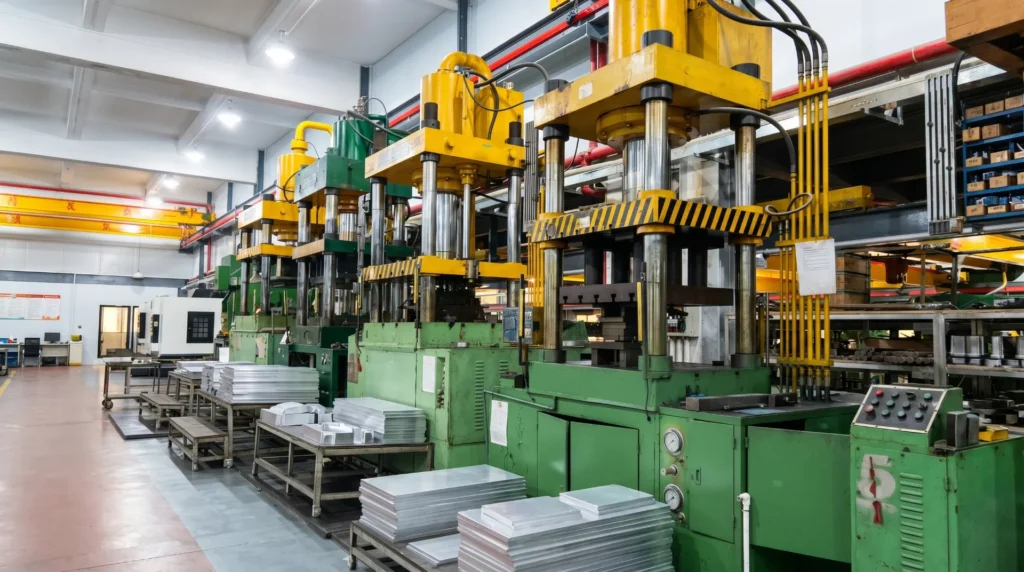
Step 2 — Shell stamping Each shell panel is formed using precision steel stamping dies under hydraulic press. A typical suitcase requires four to six stamped panels. The die controls shell geometry, wall thickness, and surface integrity simultaneously. Die condition directly affects production quality — worn dies produce dimensional variance and surface defects.
Step 3 — Surface treatment Stamped panels undergo surface treatment: brushed (mechanical abrasion), sandblasted (abrasive blast), or anodized (electrochemical oxide layer). Each treatment produces a distinct visual character. Anodized color is integral to the material surface — it cannot be scratched off like paint.
Step 4 — Hardware assembly Latches, locks, hinges, handles, and wheel assemblies are installed. For metal luggage, hardware integration is more demanding than for plastic — metal frames require precision-machined mounting points rather than molded attachment features.
Step 5 — Quality control Pre-shipment testing covers corner drop testing (ISTA 2A / ASTM D5276), compression at 100kg static load, handle fatigue (3,000+ cycles), wheel drag testing, and surface finish consistency verification.
The critical point for buyers: Steps 1 through 3 — alloy sourcing, stamping, and surface treatment — must be verified as in-house operations. A factory outsourcing any of these three steps has limited control over the quality variables that define your product.
At Aluvox, aluminum stamping, surface treatment, and hardware assembly are all completed in-house at our Dongguan facility. Raw material is sourced with mill certificates for every production batch.
Factory Evaluation for Metal Luggage
1. In-House Stamping Verification
The single most important capability check. Ask to see the hydraulic stamping presses during a site visit — equipment model, rated tonnage, and active die sets for current production styles. Verify the equipment is operational and that production staff can speak to the die maintenance schedule.
A factory outsourcing stamping to a subcontractor cannot guarantee shell geometry and wall thickness consistency between your sample and your bulk order.
2. Alloy Mill Certificate
Request the alloy mill certificate for the aluminum sheet used in production. This document verifies alloy series (must be Series 5 for luggage-grade), temper designation (H32), and mechanical properties. A factory that cannot produce mill certificates on request is sourcing from unverified channels — which means the alloy specification of your finished product cannot be independently verified.
3. In-House Surface Treatment
Confirm whether anodizing, brushing, and sandblasting are completed in-house or outsourced. In-house surface treatment keeps color consistency and finish quality under the factory’s direct control. Outsourced surface treatment — particularly anodizing — produces color consistency problems at production scale.
4. Corner Construction Method
Corners are the highest-stress structural element in metal luggage. Ask the factory to explain their corner joining method — welded, riveted, or adhesive bonded — and provide QC data on corner failure rates. Corner drop test results referencing ISTA 2A or ASTM D5276 should be available on request.
5. Drop Test Documentation
Request corner drop test results specifically — not just flat-face drop data. Corner drops are where metal luggage passes or fails structural integrity requirements. Results should reference ISTA 2A or ASTM D5276 and be issued by a qualified testing source.
Aluvox Metal Luggage OEM Program
Aluminum program:
| Parameter | Specification |
|---|---|
| Material | Aerospace-grade Series 5 aluminum-magnesium alloy (5052-H32) |
| Shell thickness | 1.0 mm |
| MOQ | 300 pcs / style |
| Color splitting | Supported — total order MOQ across colors |
| Sample lead time | 20 working days (existing tooling) |
| Bulk production | 45 days from deposit |
| Surface finish | Brushed / Sandblasted / Anodized |
| Customization | Shell color, finish, hardware, logo, lining |
Titanium program:
| Parameter | Specification |
|---|---|
| Material | Aerospace-grade titanium alloy |
| MOQ | 300–500 pcs / style |
| Sample lead time | 20 working days (existing tooling) |
| Bulk production | Project-dependent |
| Surface finish | Material-native titanium finish |
Facility: 49,600 m² production facility in Dongguan, Guangdong. In-house stamping, surface treatment, hardware assembly, and QC laboratory. ISO 10012 measurement management system certification. Multiple utility model and design patents.
Browse the Aluvox aluminum luggage collection →
Request an Aluvox metal luggage sample — verify alloy specification, surface finish quality, and corner construction before committing to bulk production. Request Sample
Four Red Flags When Sourcing Metal Luggage
Cannot provide alloy mill certificates
No mill certificate means no verified alloy specification. The mechanical properties of your finished shells — corrosion resistance, structural integrity, formability — cannot be independently verified. This is a disqualifying condition for any serious OEM relationship.
Stamping is outsourced but not disclosed
A factory showing a stamping press during a site visit does not prove they use it for your order. Ask directly: will my shells be stamped on this press, or outsourced? Request the production line assignment in writing.
Surface treatment is external with no audit trail
Outsourced anodizing without a documented subcontractor relationship produces color consistency problems that only become visible across a full production run — not at the sample stage. Require subcontractor documentation before approving production.
Titanium quoted at aluminum price levels
Titanium raw material carries a significant cost premium over aluminum. A titanium luggage quote priced comparably to aluminum production is almost certainly not titanium — it is aluminum with a surface treatment designed to approximate the appearance. Request an unfinished shell sample and compare the surface character under different lighting angles.
For a comprehensive supplier evaluation framework, see: How to Vet Industrial Luggage Suppliers →
Metal Luggage Is a Brand Statement
Choosing metal over plastic is not a material upgrade — it is a brand positioning decision that communicates permanence, engineering investment, and a quality standard above the mass market. The retail price, the surface character, the latch closure, the structural rigidity — every element works together to support a brand narrative that plastic alternatives cannot replicate.
The manufacturing behind that narrative needs to be equally considered. A metal suitcase produced from unverified alloy, stamped by an unaudited subcontractor, and finished with inconsistent surface treatment does not deliver on the brand promise the material is supposed to communicate.
If you are evaluating metal luggage for an upcoming product line, Aluvox engineers are available to discuss alloy selection, surface treatment options, and production parameters for both aluminum and titanium.
Contact an Aluvox Engineer — submit your brand positioning, target retail price, and estimated order volume. We will provide a metal luggage production assessment and indicative quote within 2 business days. Contact Engineering Team