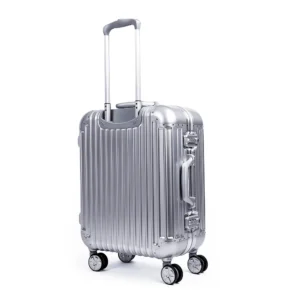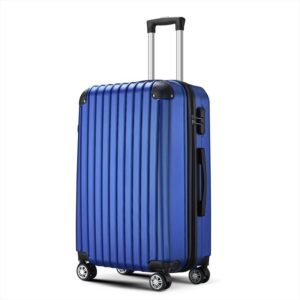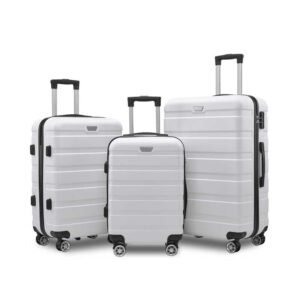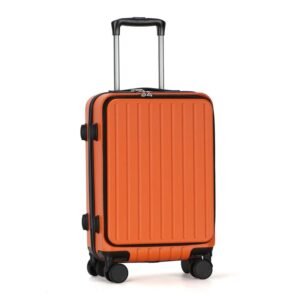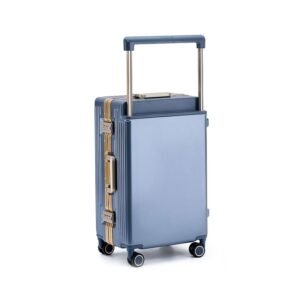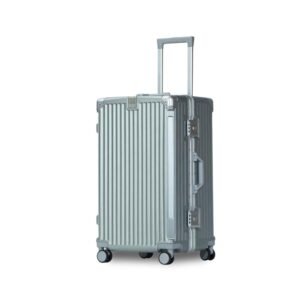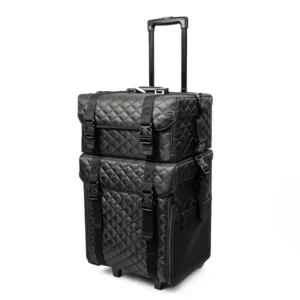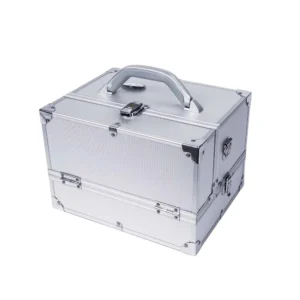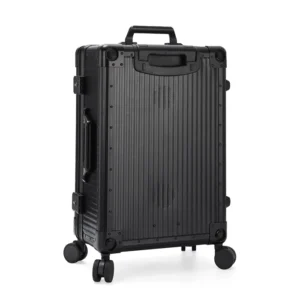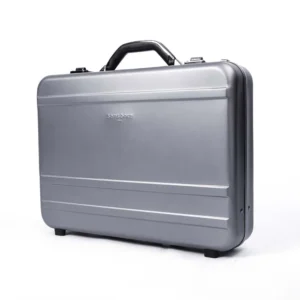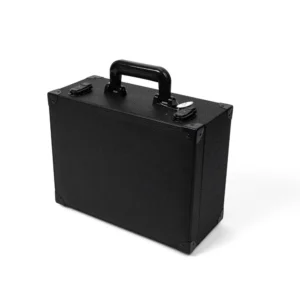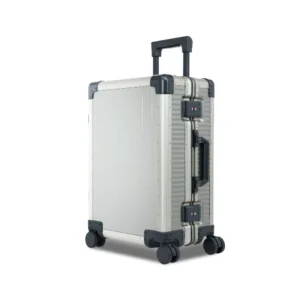

When transporting precision instruments, medical equipment, or high-value brand inventory across global supply chains, the cost of choosing the wrong supplier compounds quickly. A single shipment of equipment damaged in transit can exceed the entire margin of an order. A brand luggage line built on inconsistent quality can damage retail relationships that took years to build.
The procurement mistake most buyers make is evaluating luggage suppliers the way they evaluate consumer product factories — looking at unit price, sample appearance, and the sales team’s responsiveness. Industrial-grade luggage manufacturing and brand OEM production both require a different evaluation framework, one that verifies engineering specifications, testing infrastructure, and supply chain transparency before any deposit is paid.
This guide provides the framework Aluvox engineers use when discussing capabilities with brand buyers and procurement managers — and the same framework buyers can use to audit any potential supplier, including us.
Core Technical Specifications: Materials and Hardware
When auditing a factory, never accept vague marketing claims of “premium materials.” Verify the exact engineering parameters before the conversation moves to price.
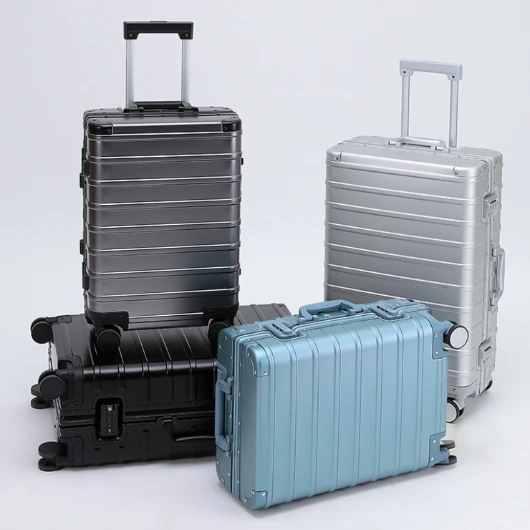
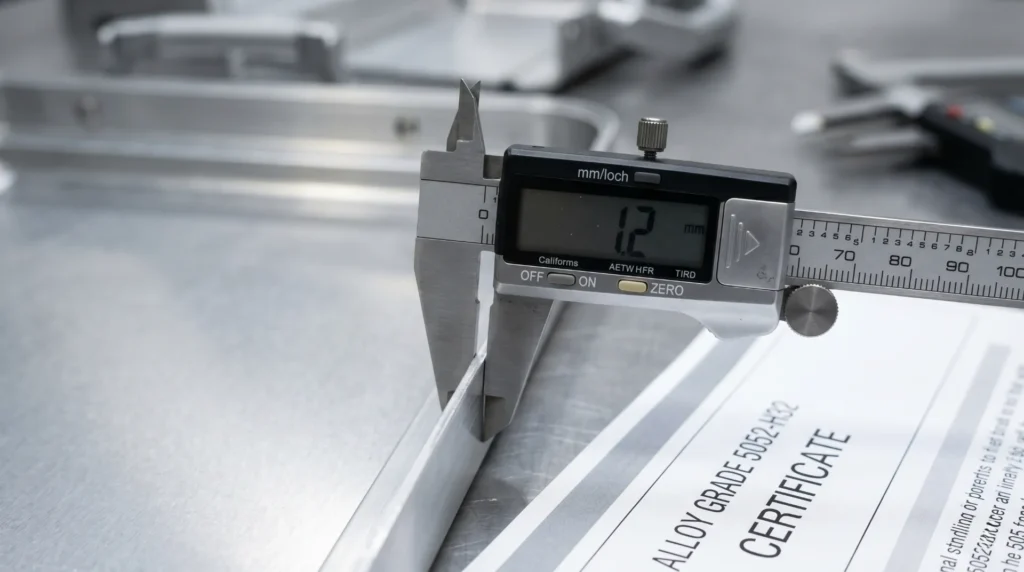
Aluminum alloy grade and wall thickness. Standard consumer aluminum luggage typically uses 0.8mm commercial-grade aluminum — insufficient for industrial payloads or repeated airline handling. For industrial cases and premium brand OEM production, qualified suppliers use aviation-grade alloys: 5000-series (5052 corrosion-resistant aluminum-magnesium) for general luggage applications, and 6000-series (6061 high-strength aluminum) for industrial cases carrying heavier payloads.
Wall thickness must measure between 1.0mm and 1.5mm. This is the critical threshold that prevents structural deformation under forklift handling, warehouse stacking, or aggressive airline cargo handling. For a deeper breakdown of alloy selection by product category, see: Aluminum Luggage Manufacturer Guide →
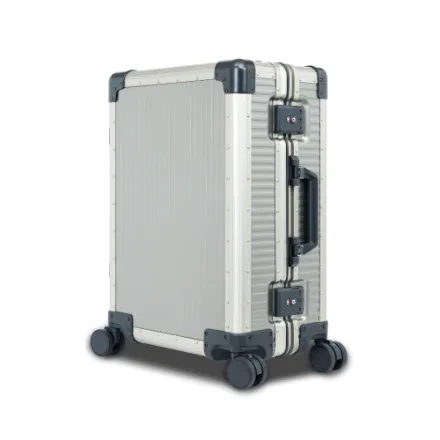
Hardware fatigue standards. Industrial cases and premium brand luggage rarely fail at the aluminum panels. They fail at the hinges, latches, and rivets — the components that absorb every open-and-close cycle. Request mechanical fatigue testing data from your supplier for stainless steel hinges, stamped corner guards, and latching mechanisms.
Qualified hardware should be tested to a minimum of 10,000 open-close cycles without structural misalignment, loosening, or visible deformation. Suppliers without this data are not testing to a defined standard.
Material comparison: aviation aluminum vs standard PC/ABS for industrial use:
| Specification | 5000/6000 Series Aviation Aluminum | Standard PC/ABS (Consumer Grade) | Procurement Verdict |
|---|---|---|---|
| Wall thickness & load capacity | 1.0–1.5mm / withstands heavy forklift stacking | 0.8–1.0mm / cracks under heavy compression | Aluminum wins for payloads over 20kg |
| Drop test performance | Passes ISTA loaded drop; absorbs impact through controlled deformation | High risk of shell shattering on corner impact | Aluminum wins for transit safety |
| Customization precision | Allows CNC modification without new molds | Requires expensive injection molding for size changes | Aluminum wins for flexible OEM |
| Hardware integration | Riveted stainless steel hinges and latches | Glued or light-stitched hardware that fails under tension | Aluminum wins for long-term fatigue resistance |
Internal Protection: CNC-Routed Foam and ESD Considerations
For industrial cases housing medical devices, drone equipment, sensitive electronics, or precision instruments, the exterior shell is only half the engineering challenge. Internal shock absorption determines the actual survival rate of the contents.
Standard die-cut foam vs CNC-routed EVA foam. Standard die-cut foam — used by low-cost suppliers — produces uneven edges and gaps that allow high-frequency vibration to reach the contents. For precision instruments, this vibration can destroy calibration during transit. The result is equipment that arrives intact in appearance but fails on first use.
Professional industrial luggage suppliers offer CNC-routed EVA foam customization. The CNC process carves exact equipment contours into high-density foam with millimeter-level tolerance between the instrument edges and the foam interior. The contents do not move during transit. Vibration is absorbed at the foam-to-instrument interface rather than transmitted through it.
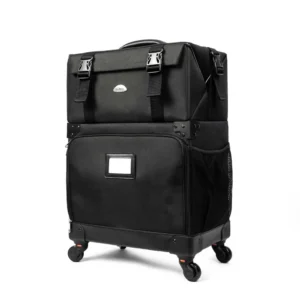
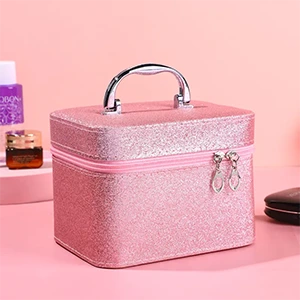
This same precision applies to brand OEM applications — high-end makeup case interiors, custom luggage with embedded organizational systems, and any product requiring contents to be held in precise positions during use.
ESD protection for sensitive electronics. For cases transporting sensitive electronic components, transit friction generates static electricity that can damage circuit boards and components before the case is even opened. Industrial suppliers should offer anti-static ESD foam options with documented surface resistance specifications of 10⁶ to 10⁹ ohms — the range that neutralizes static discharge without becoming conductive.
A supplier that offers ESD foam without specifying the resistance range is using marketing language rather than engineering specification.
Mandatory Durability Testing Standards
Before placing a bulk order and paying any tooling deposit, bypass the sales pitch and request verified testing reports from the manufacturer’s QC department.
Loaded drop testing per ISTA standards. Testing an empty case is meaningless for industrial applications or premium brand luggage. A 200-gram empty case behaves differently from a 25-kilogram loaded case when impacted at a corner. The relevant test is loaded drop testing per ISTA 2A or ASTM D5276 protocols — case fully loaded with intended payload weight, dropped from specified heights onto concrete corners.
The pass criteria for industrial cases: heavy-duty latches do not spring open under impact, aluminum frame remains intact, contents experience no measurable damage. For brand luggage, the criteria adjust to the use case — but the testing protocol is identical.
48-hour neutral salt spray testing (NSS). For ocean freight exports, high-humidity environments, or any market requiring long-term corrosion resistance, external metal corner guards, rivets, and hinges must pass a rigorous 48-hour neutral salt spray test before assembly. Aluvox conducts this testing on all external metal hardware as standard practice.
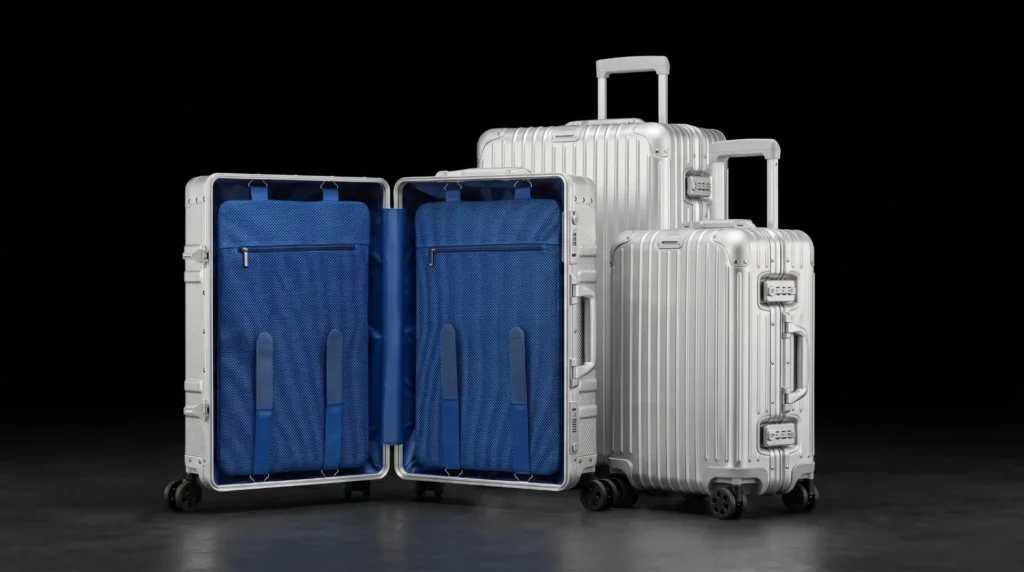
IP rating and weather resistance. Continuous high-density rubber sealing gaskets along the aluminum frame closure determine the case’s protection rating. A minimum of IP54 (dust and splash resistant) should be standard for industrial cases and premium luggage. For extreme outdoor environments — marine operations, military applications, field survey work — engineering should be upgradable to IP65 waterproofing standards.
For a complete framework for evaluating manufacturers across material categories, see: How to Choose an OEM Luggage Manufacturer in China →
Commercial Procurement Review: MOQ, Lead Times, and QC
Beyond engineering capability, a factory’s supply chain transparency determines whether your project stays on schedule and within budget.
Industrial customization MOQ. True industrial customization involves 3D engineering, tooling development, and CNC modifications. To support this engineering depth, Aluvox sets MOQ at 300 pieces per design for custom industrial cases. This threshold filters out low-volume retail experiments and ensures production lines are dedicated to professional B2B projects.
For a full explanation of how MOQ structures work across order types and color splits, see: Custom Luggage MOQ Guide →
Sample and mass production lead times. A professional OEM partner operates with predictable timelines. For existing tooling at Aluvox, samples are produced in 20 working days. For new mold development with custom industrial specifications, sample lead time extends to 30–45 working days depending on engineering complexity.
After sample approval, bulk production runs to a consistent 45-day lead time from deposit receipt — supporting predictable supply chain planning.
Quality control systems. Aluvox operates under ISO 10012 measurement management system certification, with documented AQL inspection standards applied to incoming materials, in-process production, and pre-shipment inspection. Multiple utility model and design patents support our engineering credibility.
Quality control documentation — material certificates, test reports, AQL records — is available on request for any production order. Third-party inspection by SGS, Bureau Veritas, or Intertek is supported for buyers who require independent verification.
Real Client Outcomes: Three Brand Partnerships
The framework above is not theoretical. The following three client partnerships illustrate how the engineering and procurement principles translate into measurable business outcomes.
MAPPA (Mexico — Retail) MAPPA partnered with Aluvox to scale their retail luggage line in the Mexican market. Through engineering optimization and consolidated production, MAPPA reduced product development costs from 25% of revenue to 10% — a 60% reduction in development overhead — while increasing market share by 220% over the partnership period.
Aucentic (Japan — Online Department Store) Aucentic launched with significant investment in their aluminum alloy luggage line but struggled with persistent supplier issues — unstable trolley handles, inadequate wheel smoothness, suppliers unwilling to disclose manufacturing processes. These are precisely the supplier vetting failures this guide is designed to prevent.
After partnering with Aluvox, Aucentic’s annual sales exceeded 20,000 units. Revenue grew 180% from their first launch. Aluvox supports Aucentic with rigorous quality control across incoming materials, pre-packaging finished product inspection, and post-packaging sampling — plus warehousing services in China to reduce Aucentic’s logistics costs. The result: Aucentic established a significant position in the Japanese online market with a foundation for global expansion.
Italic (Worldwide — Retail) Italic’s brand thesis — that luxury should be defined by product quality rather than logo and price tag — required manufacturing partners willing to operate at lower MOQ thresholds than typical premium factories accept. Most factories that supplied major luxury brands refused to work with emerging brands at this MOQ level.
Aluvox reduced MOQ to half the typical premium-factory threshold for Italic, with pricing 10% below major brand factory rates, and supported the partnership with consignment terms that eased cash flow pressure during scaling. Result: Italic’s luggage products consistently maintain ratings above 4.9 stars on their platform, revenue increased 80%, and five-star ratings increased 50%. All initial inventory sold out within days of launch.
For brands building a private label luggage program with similar scaling challenges, see: Private Label Luggage Manufacturer →
Frequently Asked Questions
Q1: What is the standard MOQ for custom industrial equipment cases? For true custom manufacturing including 3D engineering and CNC routing, the standard MOQ at Aluvox is 300 pieces per design. This threshold ensures engineering resources are dedicated to professional B2B output without the compromises of low-volume retail orders.
Q2: How long does sample development and production take? For existing tooling, samples are produced in 20 working days. For new mold development with custom industrial engineering, sample lead time is 30–45 working days. Bulk production runs to a 45-day lead time from deposit receipt.
Q3: How do you customize EVA foam for precision instruments? We use CNC-routed EVA foam carved to the exact geometric contours of your equipment with millimeter-level tolerance — not die-cut foam, which leaves gaps that allow damaging vibration. For sensitive electronics, anti-static ESD foam (10⁶ to 10⁹ ohms surface resistance) is available to prevent electrostatic discharge during transit.
Q4: Are your aluminum industrial cases waterproof and dustproof? Standard industrial cases achieve IP54 protection (dust and splash resistant) through high-density rubber sealing gaskets along the aluminum frame closure. For extreme environments, the engineering design upgrades to IP65 waterproofing standards.
Q5: What quality certifications and testing should buyers verify? Verify ISO 10012 measurement management system certification or equivalent. Request loaded drop test results per ISTA 2A or ASTM D5276 protocols. Confirm 48-hour neutral salt spray test results on all external metal hardware. Material mill certificates should be available for every production batch.
Partner With a Manufacturer That Improves Your Margin
Expensive industrial equipment and premium brand inventory should never be placed at risk through compromised packaging. When evaluating suppliers, look past the marketing language and audit the engineering: aluminum alloy grade and thickness, ISTA loaded drop test documentation, salt spray certification, IP rating verification, and lead time reliability.
The right OEM factory is not just a vendor for durable aluminum cases or premium luggage — it is a supply chain partner that affects your project’s economics across every order cycle. The MAPPA, Aucentic, and Italic partnerships demonstrate the measurable margin improvement that engineering-led manufacturing relationships deliver.
If you are evaluating an industrial case or brand OEM project, Aluvox engineers are available to review your specifications and provide a structured production assessment.
Contact an Aluvox Engineer — submit your equipment dimensions, target market, and order volume. We will provide a detailed bulk quote and material recommendation within 2 business days. Contact Engineering Team