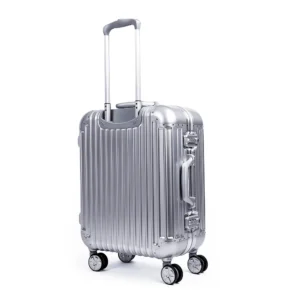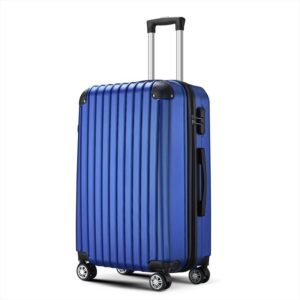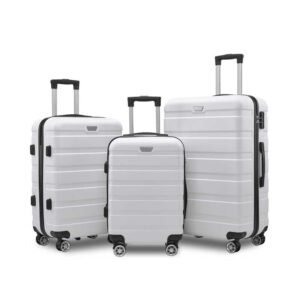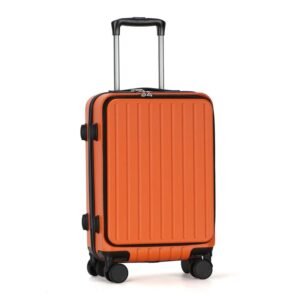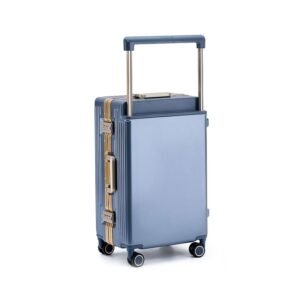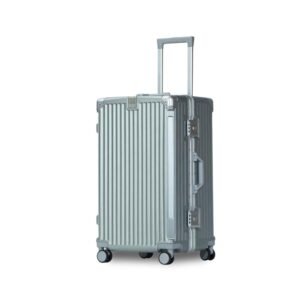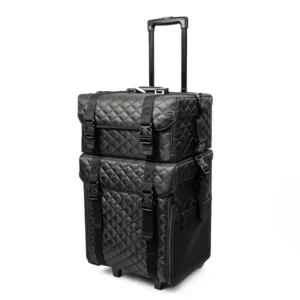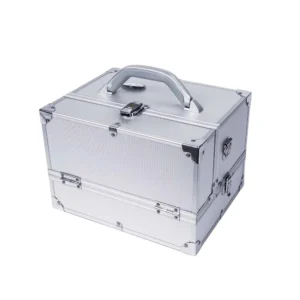

Polypropylene is how a brand builds the economy tier of a hardside line without building a returns problem. PP luggage is the lightest of the common hard-shell materials and the cheapest to produce — a 20-inch PP carry-on commonly wholesales between $35 and $50 on the major B2B platforms — which makes it the natural pick for value ranges, promotional programs, and weight-sensitive carry-on lines. It is also the material where cutting corners shows up fastest: a shell moulded from recycled pellets or left structurally flat turns brittle, cracks at the corners, and hands a brand a wave of one-star reviews on its cheapest, highest-volume SKU.
If you are a brand, distributor, or private-label seller sourcing PP luggage, this guide covers the sourcing side: where PP genuinely wins in the material matrix, the two decisions that separate a solid PP case from a brittle one, the benchmark suppliers you are quoting against, and the checklist that qualifies a manufacturer before you commit an order.
Where PP sits in the hardside material matrix
Polypropylene competes on two numbers: weight and unit cost. Among the hardside materials, PP is the lightest — lighter than ABS and polycarbonate, and far lighter than aluminum — which matters directly on carriers that cap carry-ons at 10 kg, where every 100 g of empty shell is 100 g of packing allowance returned to the traveler. It is also resilient in a way rigid plastics are not: a PP shell flexes under impact and springs back to shape, a “memory” behaviour that lets a well-made case shrug off drops that would crack a cheap ABS shell.
The honest trade-offs decide where PP belongs in a line. PP is less rigid than polycarbonate, so an unsupported flat PP panel deforms under stacked load, and prolonged UV exposure degrades polypropylene faster than PC — a real consideration for cases that live on airport tarmacs. That is why PP owns the value and lightweight tiers while PC holds the mainstream and aluminum the flagship: see our aluminum vs. polycarbonate comparison for those two materials, and the PC luggage and aluminum luggage guides for the tiers above. Match the material to the tier, and PP is a margin engine; mismatch it, and it is a returns engine.
The two decisions that separate solid PP from brittle PP
The first decision is the resin. Like polycarbonate, polypropylene splits into 100% virgin material and recycled or heavily re-ground blends — and the split decides how the shell fails. Virgin PP keeps the flex-and-recover behaviour that is the material’s entire selling point; recycled and re-ground pellets lose elasticity batch by batch, so the shell looks identical at delivery, then turns brittle in storage and cracks at a corner on the first cold-weather flight. Cold is the stress test: brittleness that is invisible at room temperature shows up at cargo-hold temperatures, which is why serious factories run conditioned drop tests (ASTM D5276, ASTM International) rather than judging a shell warm. When you source, ask the resin question directly: is the shell 100% virgin PP, from which supplier, and will the factory state it on the spec sheet?
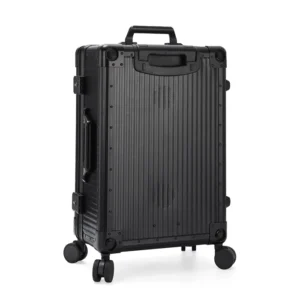
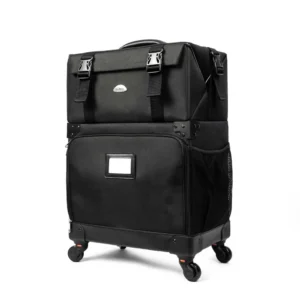
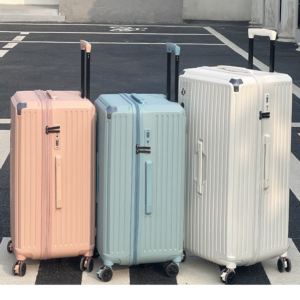
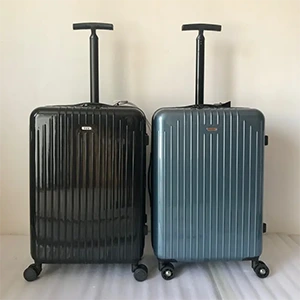
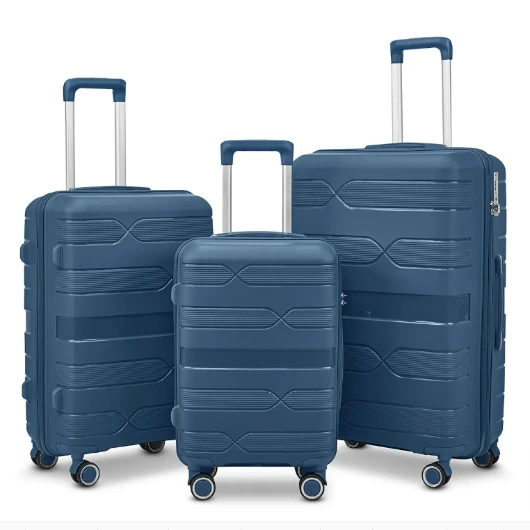
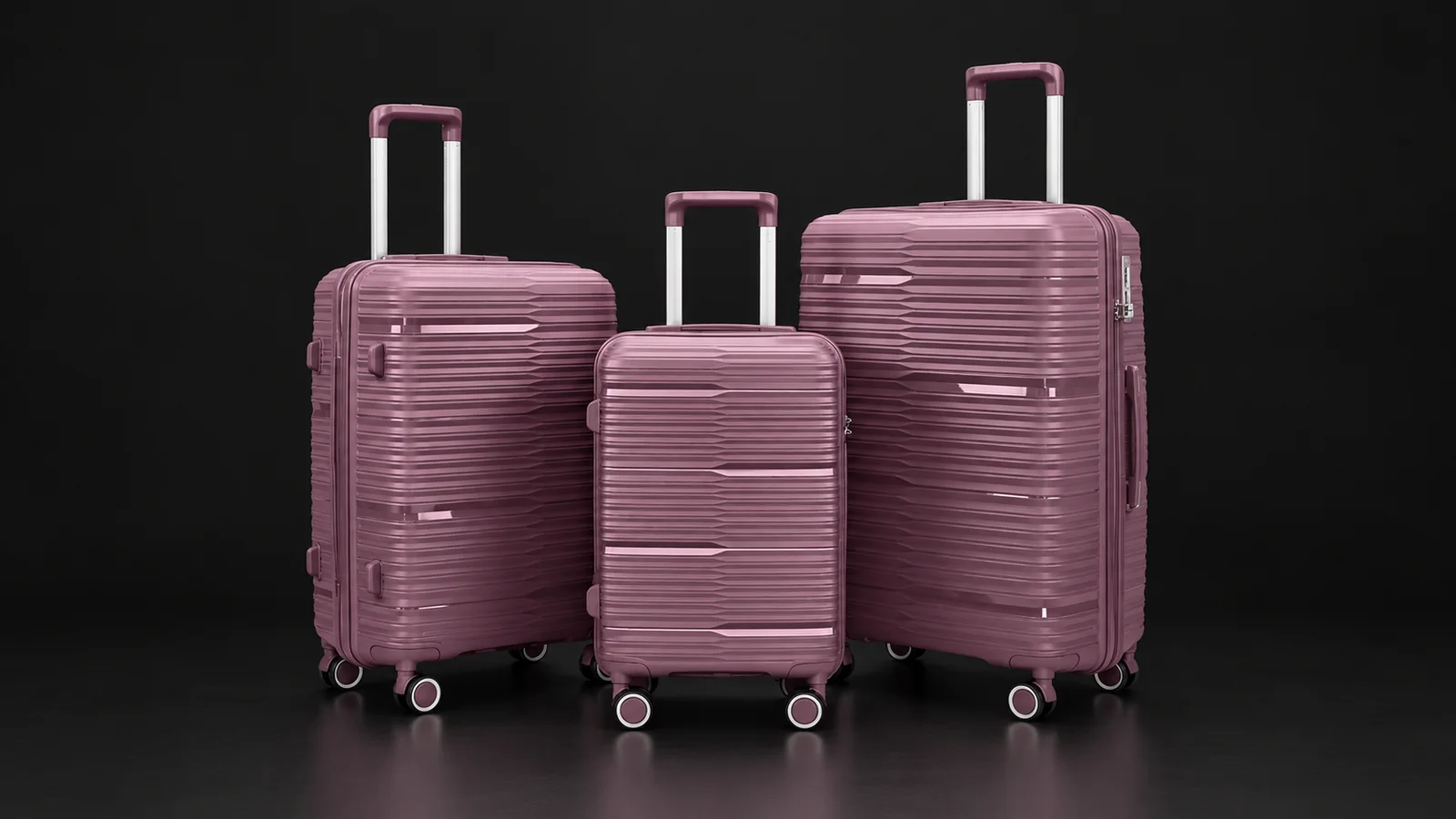
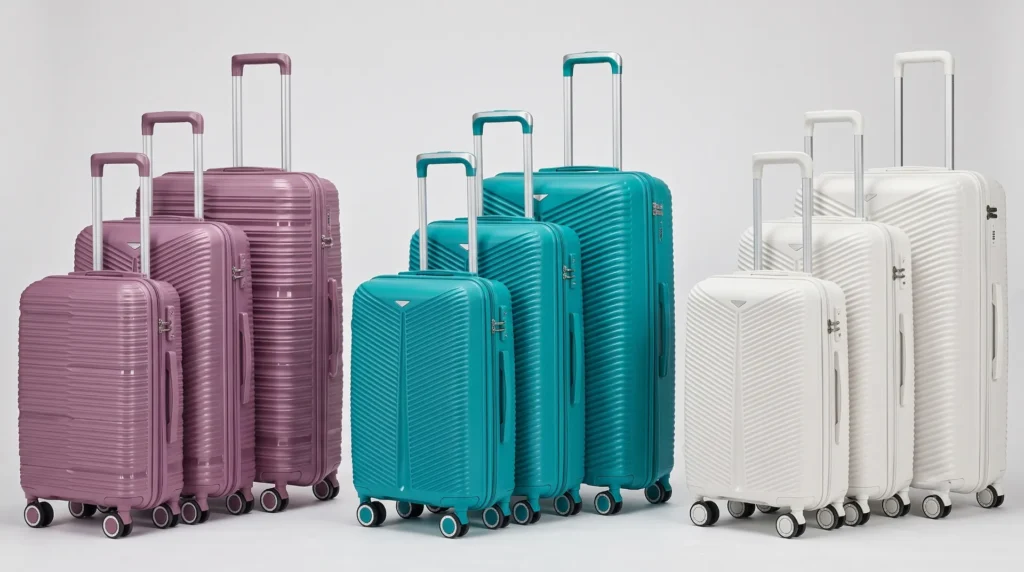
The second decision is structure, because PP’s lower rigidity is a design problem with a design solution. A quality PP case compensates with geometry: ribbed or corrugated shell surfaces that stiffen the panel the way corrugation stiffens cardboard, reinforced corner zones where impacts concentrate, and multi-layer shell construction that adds stiffness without the weight penalty of a thicker single wall. This is exactly the engineering behind Aluvox’s PP range — multi-layer polypropylene built for impact protection and shock absorption — and it is why two PP cases of identical weight can behave completely differently under a drop. A flat, undecorated PP shell at a suspiciously low price has usually skipped this engineering; the ribs are not styling, they are the structure.
The benchmark you are quoting against
Know the field before you brief a factory. The dedicated PP specialists include Victorlite, which builds ultra-lightweight, scratch-resistant polypropylene cases with TSA-approved locks and custom branding, and OMASKA, which runs both ready-made wholesale stock and full OEM/ODM development for brand owners. Broad-line factories such as Fusheng, GrandTravel, and Lianjia offer PP alongside ABS and PC. At the brand level, Samsonite has proven the material’s ceiling: its best-known PP ranges pair the polypropylene shell with a sealed three-point frame closure instead of a zipper, showing that PP can carry a mainstream global product when the structure is engineered properly — and giving a private-label buyer a concrete reference for what a well-executed PP case looks and feels like at retail.
The commercial intelligence matters as much as the names. Typical MOQs in this category run from 100 to 500 pieces per design, and the commonly quoted wholesale band for a standard 20-inch PP carry-on is $35 to $50 on the major sourcing platforms. Use those numbers as your baseline: a quote far above it needs a technical justification, and a quote far below it is usually recycled resin or skipped structure — the two corners that turn into cracked shells.
How to qualify a PP luggage manufacturer
Score every candidate against the same six checks, and keep the answers in writing for the purchase contract:
- Resin proof. Written confirmation of 100% virgin polypropylene and the resin source on the spec sheet — and a straight answer when a budget line uses a blend, so you can price the risk instead of discovering it.
- Structural engineering. Ribbed or multi-layer shell construction with reinforced corners, not a flat panel — ask what the factory does to offset PP’s lower rigidity, and reject a candidate with no answer.
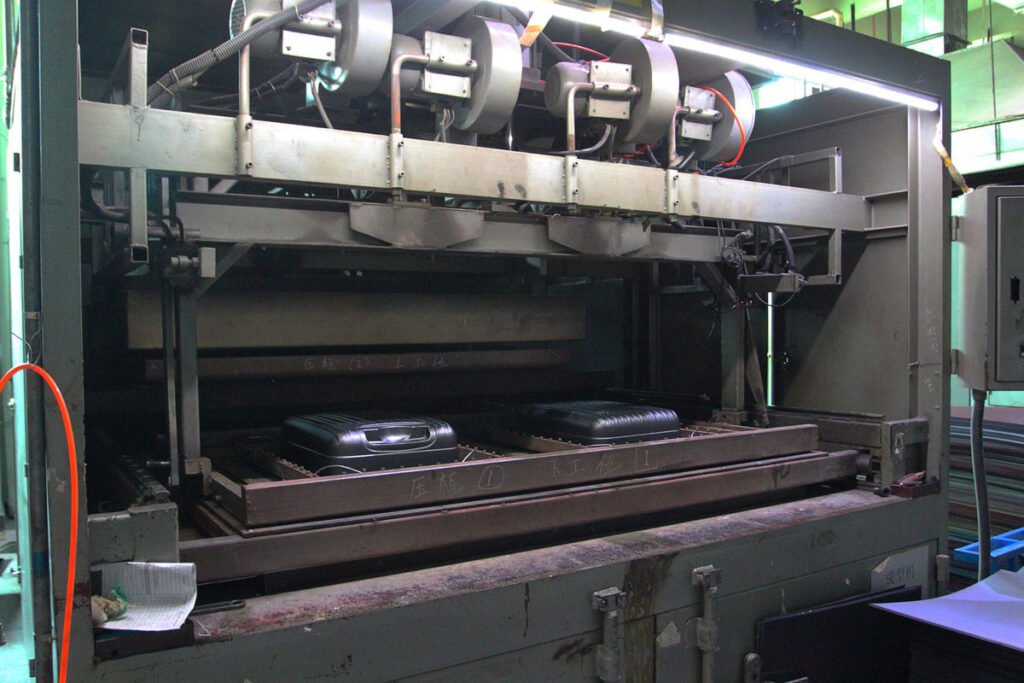
- Moulding control. Even wall thickness across the shell and corners, since thin-drawn corners are where PP cracks first; ask how thickness is checked in production.
- Hardware. A TSA-approved lock integrated into the case, a telescopic trolley that holds a loaded case without flex, spinner wheels with wear testing, and a real lining — on the MB-016, for example, that is a TSA lock, telescopic handle, zipper closure, and a nylon-and-polyester interior.
- Testing and QC. Conditioned drop testing (ASTM D5276), tumble and wheel-drag tests, and load testing on the handle — with reports per production run, not a one-time certificate. For EU-bound programs, REACH compliance documentation.
- Batch consistency. Evidence that bulk matches the sample; on a high-volume economy SKU, a quality drift of even a few percent becomes a visible returns rate.
Three mistakes account for most failed PP programs, and all three are avoidable at the briefing stage. The first is buying on price alone: because PP is the cheapest hardside material, buyers treat quotes as interchangeable and award the order to the lowest number — which is precisely how recycled resin enters a supply chain, since resin grade is the easiest cost to cut invisibly. The second is judging the sample warm: a hand-finished sample tested in an office at 25°C will not show the brittleness that appears in a cargo hold, so a sample that has not been cold-drop tested has not really been tested. The third is skipping the structure question entirely — accepting “it’s PP, it flexes” as the durability story, when the flex only protects a shell whose geometry and corners were engineered to use it.
Sourcing a PP line for your brand? Aluvox builds multi-layer polypropylene luggage with TSA locks and spinner wheels — explore our PP luggage and send your target spec and volumes.
MOQ and the price reality
PP rewards volume more visibly than any other hardside material, and the tiers are worth planning around. Aluvox publishes its PP pricing openly: on the MB-016 lightweight PP trolley case, 300–500 pieces price at $26 per unit, 500–1,000 pieces at $22, and 1,000-plus at $20 — under the $35–50 band commonly quoted for comparable 20-inch builds, with the multi-layer shell and TSA hardware specified above. Samples from existing tooling ship in 20 working days, and bulk production runs 45 days from deposit, with export through Huangpu, Nansha, Shekou, and Yantian on FOB, EXW, or CIF terms.
The planning implication is straightforward: a PP program hits its margin at the 1,000-piece tier, so structure the first order to reach it — one shell, several colours — rather than fragmenting across designs. Colour changes on PP are a moulding-batch change, not new tooling, which is why a single-design multi-colour order is the cheapest way to launch an economy range.
Logistics is the other half of PP’s cost story, and it favours sets. Because sea freight is billed by container space rather than weight, the shipping cost of a luggage program is decided by how many cases fit a 40-foot container — and nested sets, where a carry-on rides inside a medium inside a large, cut the freight cost per unit dramatically compared with shipping the same three sizes boxed separately. The MB-015 and MB-016 are built as nesting sets for exactly this reason. Confirm the export carton specification and the units-per-container figure in the quote, not after it, because two factories quoting the same unit price can land at very different costs per case once the container math is done. Sample first, put the sample through a cold-weather drop and a loaded roll, and confirm the factory’s per-run test reports before scaling; on the volumes PP is bought in, the sample is the last cheap decision you make.
Sourcing PP luggage with Aluvox
Aluvox has manufactured luggage since 1993 at its 49,600 m² Dongguan facility, and builds polypropylene luggage as an OEM/ODM partner with the shell forming, assembly, and pre-shipment testing run in-house across 10 production lines. The PP range is built on real products you can quote today: the MB-016 lightweight PP trolley case with a TSA lock, telescopic handle, and nylon-and-polyester lining; the MB-015 lightweight carry-on PP set; and the MB-13 cabin case on spinner wheels. Each is built to order in your colours and branding, with the multi-layer shell construction the range is known for.
For brands, distributors, and private-label sellers that means an economy hardside tier with the resin, structure, and hardware specified in writing — and published price tiers from $26 down to $20 at volume, samples in 20 working days, and bulk in 45. If PP is the value engine of your line, start with the resin and the structure it needs, then bring your colours, your target retail price, and your volumes.
Request a quote or a sample: Aluvox PP luggage.