

18 Inch Carry-On Luggage: Compact Suitcase Buyer’s Guide
The 18 inch carry-on is no longer a niche category. It has become the fastest-growing compact luggage format in the global travel market — driven by budget airlines tightening enforcement, the rise of personal-item-only travel to avoid carry-on fees, and a generation of business travelers prioritizing lighter, faster mobility over packing capacity.
For consumers, the 18-inch format solves a specific airline compliance problem. For brands sourcing OEM luggage, it represents a product category that demands different design discipline than standard 20-22 inch carry-ons — tighter weight targets, underseat dimension compliance, removable hardware in some cases, and packing-density-focused interior design.
This guide covers what “18 inch” actually means at the airline gate, why brands are adding this format to their lines, and what specifications matter when sourcing compact carry-on luggage for retail or B2B channels.
At Aluvox, our MB-018 zipperless 18-inch carry-on is one of our most-requested products, with over 100 airline compatibilities verified for the standard 18×14×8 inch personal item format. The framework below reflects what we have learned producing this category at OEM volumes.
What “18 Inch” Actually Means
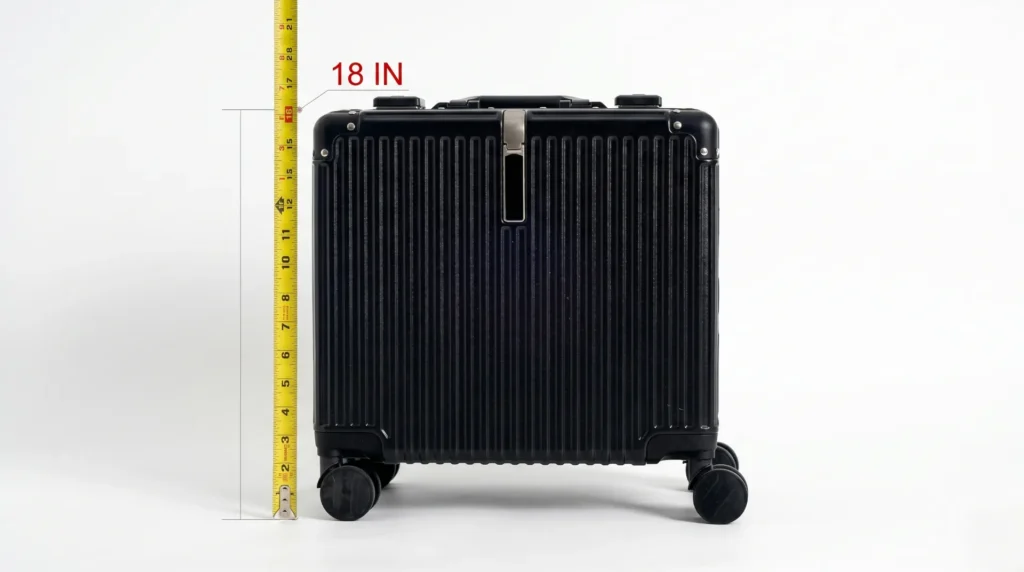
In the luggage industry, “18 inch” refers to the longest external dimension of the case — typically the height when standing upright. The industry-standard 18-inch carry-on specification is 18 × 14 × 8 inches (45 × 36 × 20 cm), measured including wheels, handles, and any external hardware.
| Specification | Standard 18-inch carry-on |
|---|---|
| External dimensions | 18 × 14 × 8 in (45 × 36 × 20 cm) |
| Interior capacity | ~25 liters |
| Empty weight | 4.0 – 4.85 lbs (1.8 – 2.2 kg) |
| Wheel configuration | 4-wheel 360° spinner (most common) |
| Closure | Zipperless frame or zippered shell |
| Lock | TSA combination lock |
Why 18×14×8 specifically?
This is the personal item dimension limit for most US major airlines (American, Delta, United) — which means an 18-inch carry-on built to this specification qualifies as a free personal item rather than a paid carry-on. For travelers, this is a significant cost saving on every flight. For brands, it is a marketing-relevant compliance number that should appear in product specifications.
Airline Compatibility: Why 18 Inch Matters
The 18-inch carry-on serves a specific airline compliance role that the standard 20-22 inch carry-on does not.
US major carriers (American, Delta, United): 18×14×8 inches falls within the personal item limit — free, no compartment competition. A standard 22-inch carry-on counts as a paid carry-on or requires a higher-tier ticket on basic economy fares.
US budget carriers (Spirit, Frontier, Allegiant): Spirit and Frontier charge separately for carry-on luggage. A true 18-inch case qualifies for free underseat storage. Some 18-inch designs include removable wheels to maximize internal capacity within the underseat dimension limit — a feature increasingly demanded by travelers on these carriers.
European budget carriers (Ryanair, Wizz Air, easyJet): Basic fare passengers on Ryanair are limited to a small personal item only. An 18-inch case at 40×20×25 cm (or 18×14×8 inches) is the largest size that fits the basic fare allowance without paying for priority boarding or checked baggage.
Asian budget carriers (AirAsia, Cebu Pacific, Scoot): Strict size enforcement at the gate. The 18-inch format fits comfortably within carry-on size restrictions on virtually every Asian carrier.
Coverage summary: A correctly designed 18-inch carry-on is compliant on 100+ airlines globally as either personal item, underseat, or carry-on — depending on the carrier. This compatibility breadth is the format’s primary commercial advantage.
For brands building a broader aluminum carry-on line, see: Aluminum Carry-On Luggage Guide →
Why Brands Are Adding 18-Inch to Their Product Lines
Three commercial trends are driving brand interest in the 18-inch format.
Budget travel market growth. The global budget airline segment has grown faster than full-service carriers for the past decade. Travelers on Spirit, Frontier, Ryanair, AirAsia, and similar carriers prioritize fare savings — and avoiding checked baggage fees is a meaningful part of that calculation. An 18-inch carry-on that qualifies as a free personal item is a high-utility product for this traveler segment.
Personal-item-only travel. A travel culture of packing minimally to avoid all baggage fees has grown into a mainstream travel strategy. Personal-item-only travelers actively seek the largest case that qualifies as a personal item under their airline’s rules — which is typically an 18-inch hard-shell suitcase.
Female business traveler segment. Research consistently shows that female business travelers prefer lighter, more maneuverable luggage. A 4-pound 18-inch case fits this preference profile better than a 7-pound 22-inch carry-on. Brands targeting this segment with smaller, lighter, well-designed compact luggage have grown faster than competing brands selling standard carry-on dimensions.
Pilot and crew applications. Airline crew and pilots use compact rolling cases that fit within strict cockpit and crew rest area dimensions. The 18-inch format with reinforced construction serves this professional market.
Material Selection for 18-Inch Luggage
Weight matters more in the 18-inch format than in any other carry-on size. A 22-inch case at 7 pounds is acceptable. An 18-inch case at the same 7 pounds defeats the format’s purpose — too heavy for personal item handling, too constraining within strict weight limits on budget carriers.
| Material | Empty weight (18-inch) | Durability | Cost | Recommended for |
|---|---|---|---|---|
| Polycarbonate (PC) | 4.0 – 4.5 lbs | High | Medium | Mainstream retail, premium positioning |
| ABS | 4.5 – 5.0 lbs | Medium | Low | Entry-level retail, promotional |
| ABS/PC blend | 4.5 – 5.5 lbs | Medium-High | Medium-Low | Value-tier with branded positioning |
| Aluminum | 5.5 – 6.5 lbs | Highest | High | Premium business, weight-tolerant segments |
Polycarbonate is the dominant material for 18-inch carry-ons because the format’s weight target is best met with PC’s structural-to-weight ratio. For brands targeting the personal-item market specifically, every additional pound of empty weight reduces the brand’s competitive position.
For detailed PC sourcing considerations, see: PC Luggage Manufacturer Guide →
Design Considerations Unique to the 18-Inch Format
Standard carry-on design principles do not fully apply to the 18-inch format. Three design considerations are specific to this category.
Underseat compliance. For Spirit, Frontier, and other carriers where 18-inch luggage targets underseat storage, the case must fit dimensions that vary by aircraft type but typically require 18×14×8 inches maximum including all external hardware. Wheel housings that protrude beyond the 8-inch depth — common in standard carry-on design — disqualify the case from underseat use.
Some 18-inch designs offer removable wheels specifically to address this — wheels click off for underseat storage, click back on for rolling mobility. This is a meaningful feature for Spirit/Frontier-focused product lines.
Compressed packing volume. The 18-inch format reduces interior capacity by approximately 40% compared to a 22-inch carry-on (25 liters vs 40 liters). This makes interior organization design more important than in larger sizes — compression straps, divider panels, expandable sections, and mesh storage pockets that maximize packing density.
Hardware proportional to format. Standard carry-on wheels and handles are sized for cases weighing 8-10 pounds loaded. An 18-inch case weighing 6 pounds loaded does not need the same hardware mass. Optimizing hardware weight contributes meaningfully to the empty weight target.
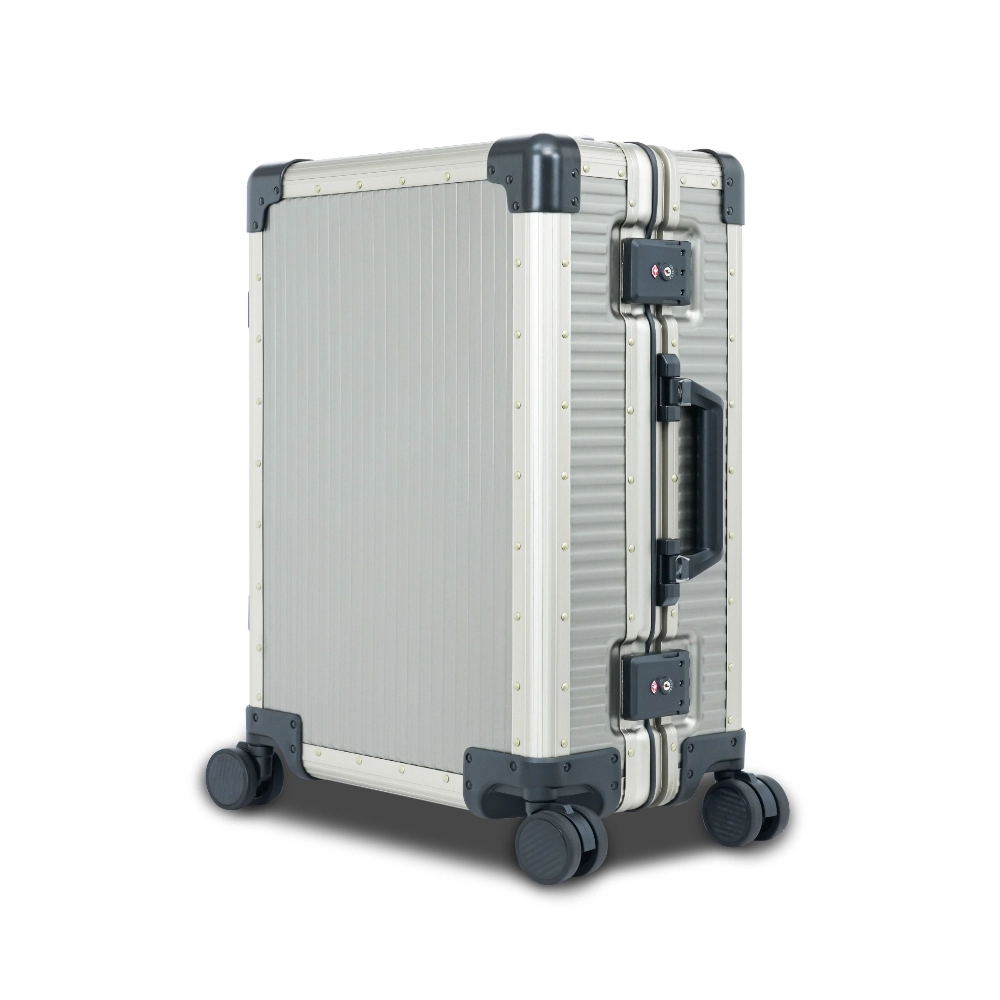
Frame closure considerations. The Aluvox MB-018 uses a PC shell with plastic frame and TSA combination lock — a zipperless construction that adds security benefits without significantly increasing weight over a zippered alternative. For brands prioritizing security positioning, the frame closure structure adapts well to the 18-inch format.
For a comprehensive look at zipperless construction, see: No Zipper Luggage Guide →
Why Zipperless Construction Suits the 18-Inch Format
The 18-inch format and zipperless construction are a natural fit — more so than for any other carry-on size. Four reasons brands building 18-inch product lines are increasingly specifying zipperless closure:
1. Security matters more in close-proximity travel. The 18-inch case lives at the traveler’s feet during underseat storage on Spirit and Frontier, in front of them on Ryanair, and within reach of other passengers throughout the cabin. Zippers can be opened with a pen attack in under 10 seconds and re-closed without visible evidence. Frame closure with TSA combination lock eliminates this attack vector entirely — which is meaningful for travelers using compact luggage in densely packed cabins.
2. Frequent use means zipper failure compounds faster. An 18-inch personal item is opened and closed more frequently per trip than a 22-inch carry-on — to access laptops, documents, snacks, and travel items during the flight itself rather than only at the destination. Zipper failure is a function of cycles. The 18-inch use pattern accelerates zipper wear, while frame closure systems have no equivalent failure mode.
3. Weight optimization works in favor of frame closure. Frame closure systems for 18-inch cases are weight-comparable to zipper systems at this size. The added security and durability come without the weight penalty that frame construction carries at larger sizes — a meaningful design advantage at the 18-inch weight-sensitive target.
4. Premium positioning compatibility. For brands building $150–$300 18-inch products (Profile B in the brand fit section below), zipperless construction signals engineering investment that supports premium pricing. The visual distinction between a frame-latched 18-inch case and a zippered one is immediately apparent to consumers comparing products on retail shelves or e-commerce listings.
Browse the Aluvox zipperless luggage collection →
Featured Product: MB-018 Zipperless 18-Inch Carry-On
The Aluvox flagship 18-inch product
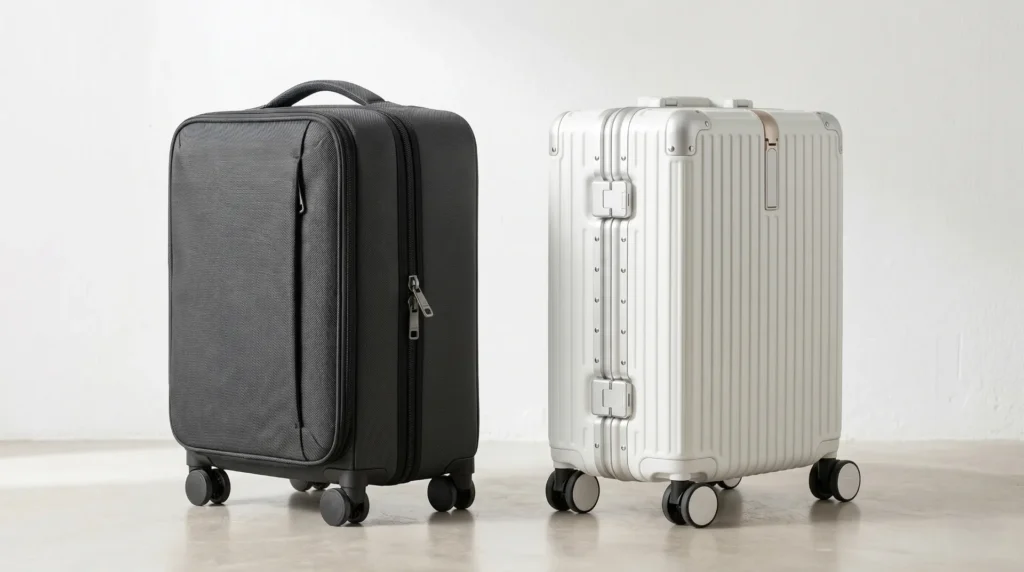
The Aluvox MB-018 is a PC shell zipperless 18-inch carry-on with plastic frame closure and TSA combination lock. It is the format Aluvox most frequently produces for brands entering the 18-inch market, available for both ODM private label and full OEM customization.
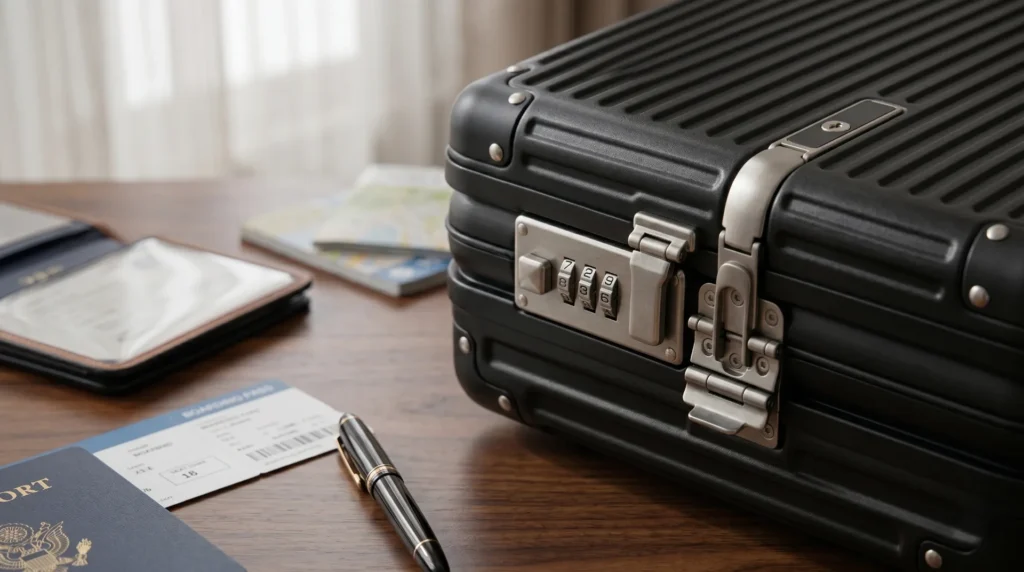
Production parameters:
| Parameter | Specification |
|---|---|
| MOQ | 300 pcs / style |
| Color splitting | Supported — total order MOQ across colors |
| Sample lead time | 20 working days (existing tooling) |
| Bulk production | 45 days from deposit |
| Materials available | PC (recommended), ABS, ABS/PC blend |
| Customization scope | Shell color, hardware, logo, lining, packaging |
| Export ports | Huangpu, Nansha, Shekou, Yantian |
Browse the Aluvox zipperless luggage collection →
For MOQ details and color splitting structure, see: Custom Luggage MOQ Guide →
Request an Aluvox 18-inch carry-on sample — verify shell weight, underseat compliance dimensions, and frame closure quality before committing to production. Request Sample
Three Brand Profiles Where 18-Inch Wins
The 18-inch format does not work for every brand. It works exceptionally well for three specific brand profiles.
Profile A: Spirit/Frontier-focused budget travel brands These brands position around fare-conscious travelers who fly budget carriers in the US market. Product positioning emphasizes free personal item compliance, underseat dimensions, and total trip cost savings. Removable wheels are often a featured spec. Retail price typically $80–$150.
Profile B: Personal-item-only premium brands These brands sell into the “travel light, travel smart” market — typically Away-style premium positioning where the 18-inch format is presented as the optimal luggage for one-bag travelers. Product positioning emphasizes design, materials, and the lifestyle of minimalist travel. Retail price typically $150–$300.
Profile C: Female business traveler brands These brands target the women’s business travel market with explicitly designed compact, light, maneuverable luggage. The 18-inch format aligns with this segment’s documented preferences for smaller, lighter products. Retail price typically $120–$250.
The 18-Inch Format Is a Strategic Product Decision
Adding an 18-inch carry-on to your product line is not a size variation — it is a strategic decision about which traveler segment your brand serves. The 18-inch buyer is not the same person as the 22-inch carry-on buyer. They fly different airlines, prioritize different features, and respond to different marketing positioning.
The brands that succeed with 18-inch products are explicit about who the product is for: budget airline travelers, personal-item-only minimalists, female business travelers, or pilot/crew professionals. The brands that struggle are those that add an 18-inch SKU as a “smaller size option” without positioning it for the specific buyer profile the format serves.
If you are evaluating an 18-inch carry-on for an upcoming product line, Aluvox engineers are available to discuss target buyer profile, weight targets, and airline-specific compliance requirements.
Contact an Aluvox Engineer — submit your target buyer profile, retail price point, and estimated order volume. We will provide an 18-inch specification recommendation and indicative production quote within 2 business days. Contact Engineering Team