

Aluminum Luggage Set Sourcing Guide: 2-Piece & 3-Piece OEM
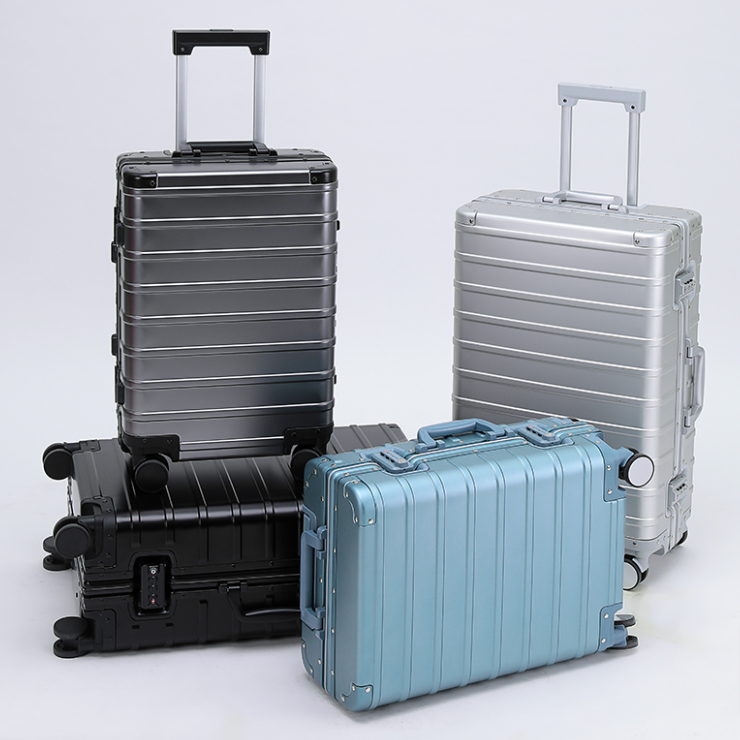
A luggage set is not three individual SKUs sold together. It is a coordinated product line where every piece visually and functionally matches every other piece — same color (measured to delta-E tolerance), same hardware (sourced from the same suppliers), same surface treatment (executed in the same production batch). For brand buyers, this is what separates a real luggage set product from a bundle of mismatched individual cases packaged together.
The sourcing requirements for set production are different from individual SKU production. Three separate sizes mean three separate molds — or three separate positions in a factory’s tooling rotation. Color consistency across three production runs is more difficult than within one. Hardware uniformity across the set is the difference between a coordinated product and an obvious mismatch.
This guide covers standard set configurations across price tiers, the three critical specifications unique to set production, and what brand buyers should understand about tooling and MOQ structures before committing to a set product line.
At Aluvox, we manufacture aluminum luggage sets across 2-piece, 3-piece, and 5-piece configurations from our Dongguan facility — with Series 5 aluminum-magnesium alloy shells, color consistency managed to delta-E ≤ 1.5, and same-batch production for matched sets. The framework below applies to evaluating any aluminum luggage set supplier, including us.
Standard Set Configurations Across Price Tiers
The luggage industry has standardized around three primary set configurations, each targeting different consumer segments and price positioning.
2-piece set (carry-on + check-in)
| Standard sizing | Use case | Retail tier |
|---|---|---|
| 20″ + 28″ | Short trips + full check-in | Mainstream retail |
| 21″ + 30″ | Premium carry-on + extended trips | Premium retail |
The 2-piece set is the entry point for set merchandising. It targets the consumer who wants matched luggage but doesn’t need three sizes — typically business travelers and couples without children. The 2-piece set is also the most cash-efficient set format for brands testing market response to a set product line.
3-piece set (standard configuration)
| Standard sizing | Use case | Retail tier |
|---|---|---|
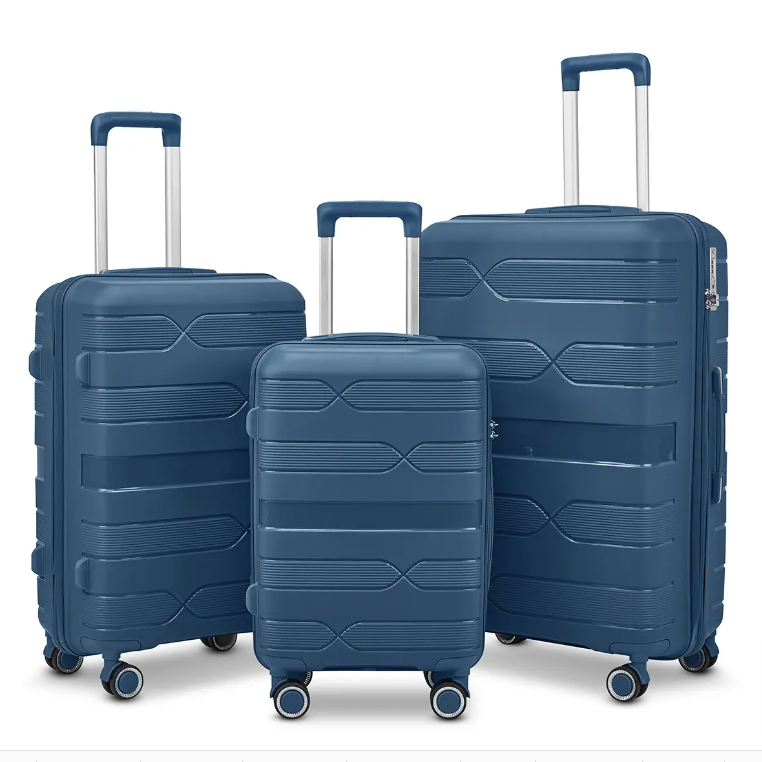
| 20″ + 24″ + 28″ | Most common — covers carry-on, weekend, full trip | Mainstream to mid-premium |
| 21″ + 26″ + 30″ | Premium configuration | Premium retail ($700–$1,200) |
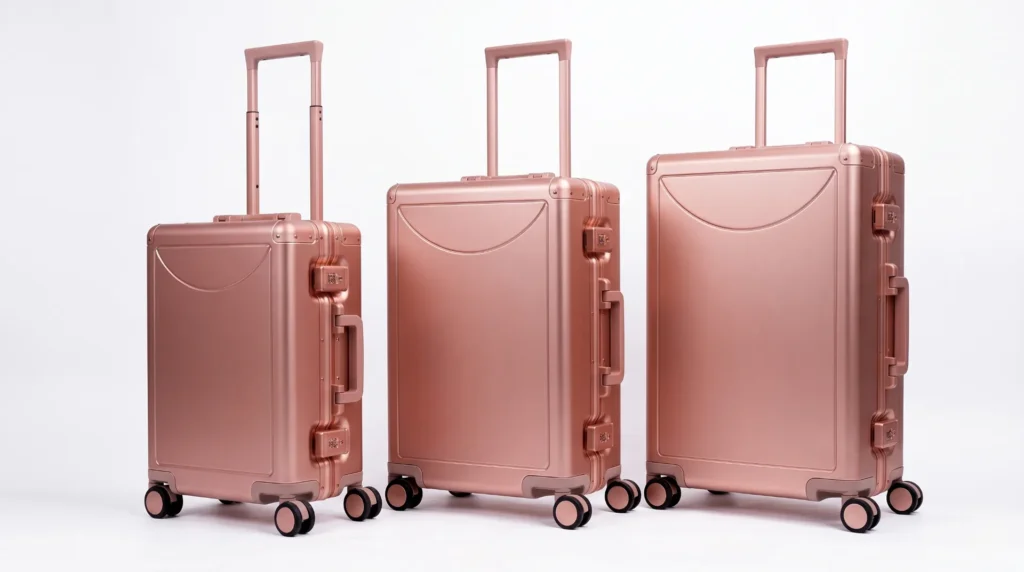
The 3-piece set is the industry standard for premium aluminum luggage merchandising. It supports the full range of travel scenarios — carry-on for weekend trips, medium for week-long travel, large for extended or family travel. Premium brands like Champs, Heys, and Rimowa structure their primary set offerings around this configuration.
5-piece set (family / heavy traveler positioning)
| Standard sizing | Use case | Retail tier |
|---|---|---|
| 16″ + 20″ + 24″ + 28″ + 32″ | Family travel, multiple use cases | Value to mid-tier |
5-piece sets are less common in premium aluminum but standard in value-tier ABS markets. For aluminum brands, 5-piece configurations are typically reserved for family travel positioning or as comprehensive collection launches.
Nesting capability: Quality luggage sets are designed so that smaller pieces fit (nest) inside the largest piece for compact storage when the full set is not in use. This nesting capability is a standard expectation for premium sets and should be specified to the manufacturer during the design phase.
For the carry-on dimensions specifically, see: Aluminum Carry-On Luggage Guide →
Why Brands Sell Aluminum Luggage as Sets
The decision to merchandise aluminum luggage as a set rather than as individual SKUs is a strategic decision that affects revenue, brand presentation, and operational efficiency.
Higher average order value. A premium aluminum 3-piece set retails for $700–$1,200. The same three pieces sold individually would generate $900–$1,500 in nominal value but at significantly lower conversion rate — consumers buying multiple cases individually typically buy over months or years, not in a single transaction. The set format compresses three purchase decisions into one, increasing immediate revenue per customer.
Coordinated brand presentation. A set displayed together in retail or in e-commerce imagery creates a stronger brand identity statement than three individual SKUs. The visual consistency across three sizes reinforces the brand’s design discipline and signals premium positioning that individual SKUs cannot establish alone.
Cross-sell and gift positioning. Luggage sets perform exceptionally well in two specific channels: gift purchases (wedding registries, graduation, retirement) and family travel (parents buying for multiple family members simultaneously). Both channels are difficult to capture with individual SKU positioning but are natural fits for set merchandising.
Inventory efficiency. A 300-unit production run of a 3-piece set creates 300 set SKUs in inventory rather than 900 individual SKUs spread across three sizes. The SKU consolidation simplifies warehouse management, retail presentation, and marketing communications.
For brand strategy considerations across the broader product portfolio, see: Private Label Luggage Brand Guide →
Three Critical Specifications Unique to Set Production
Sets introduce three quality challenges that individual SKU production does not encounter. Each requires explicit specification in the OEM order.
1. Color consistency across pieces — delta-E ≤ 1.5 standard.
When three sizes of luggage are produced in separate production runs, the color of each batch can drift slightly — different paint lot, different anodizing bath, different ambient conditions. The human eye perceives color difference at delta-E values above approximately 2.0, which means uncoordinated production produces sets where consumers notice color mismatch between pieces.
Premium set production requires delta-E ≤ 1.5 tolerance across all pieces — managed by producing all three sizes in the same batch with the same paint or anodizing chemistry. Suppliers without documented delta-E management produce sets where the carry-on is visibly different in color from the check-in within months of exposure to light.
This specification is most critical for anodized colors (rose gold, champagne, dark color anodizing) and for matte sandblasted finishes. Brushed silver and natural aluminum finishes are more forgiving of batch variation.
For deeper material specification details, see: Aluminum Luggage Manufacturer Guide →
2. Hardware uniformity across the set.
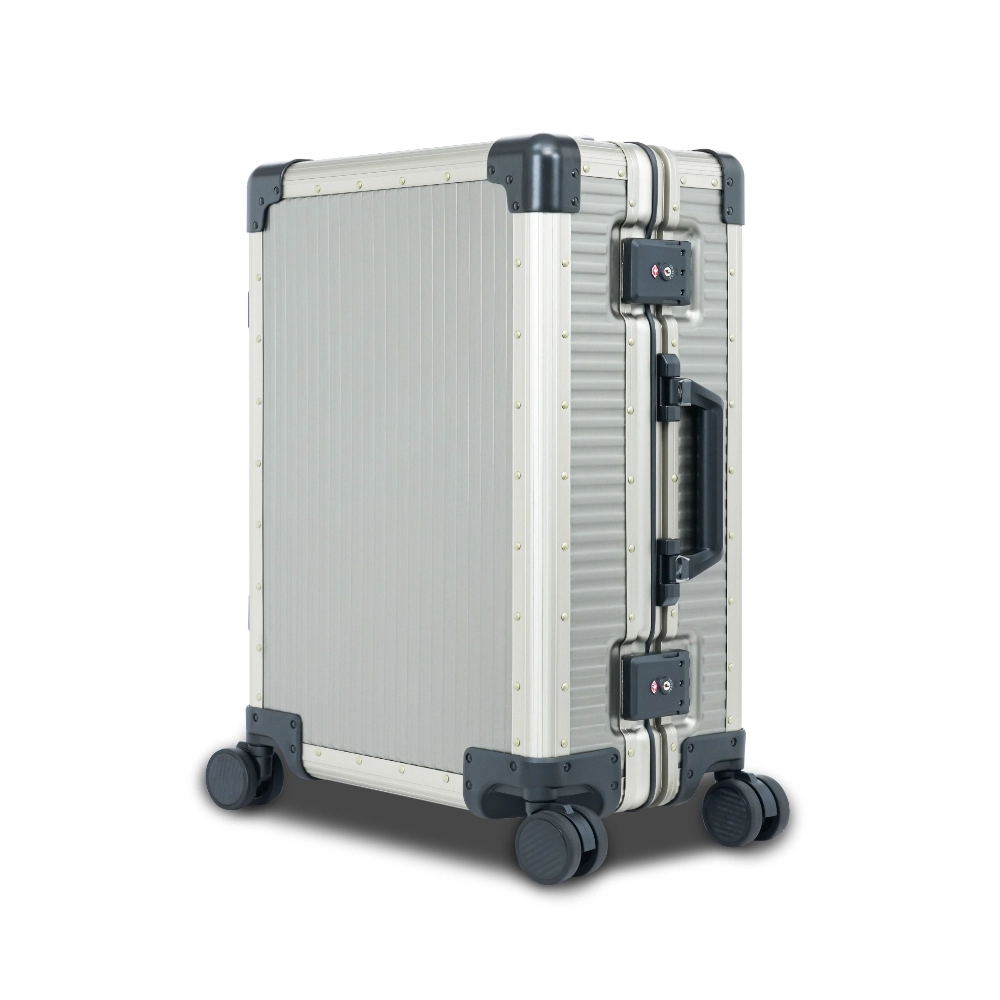
Every piece in a set should share identical hardware — same spinner wheels, same latches, same TSA combination lock, same telescopic handle (in different lengths matched to size). Mixed hardware across sizes is the most common visual inconsistency in poorly-coordinated set production.
The risk: factories sometimes source different wheel suppliers for different sizes based on availability or cost optimization. The result is a set where the carry-on rolls smoothly but the check-in rolls roughly, or where the latches on different sizes engage with different force.
Specify hardware suppliers in writing for all pieces of the set. The factory should confirm same-supplier sourcing across the set.
3. Surface treatment consistency across sizes.
If the set uses brushed finish, the brush direction and intensity must match across all three sizes — surface treatment is applied separately to each shell during production, and inconsistent application produces visible difference. If anodized, the anodizing bath conditions must be controlled across all pieces. If sandblasted, the abrasive grit size and pressure must match.
The simplest method to ensure consistency: same-day production of all set pieces, or sequential production within a controlled timeline (typically 7-10 days maximum between first and last piece).
Tooling and MOQ Considerations for Sets
Sets multiply the tooling and MOQ commitments compared to single SKU production. Brand buyers should understand these structures before committing to a set product line.
Tooling positions: Each size in a set requires separate stamping tooling. A 3-piece set uses three distinct molds — one for each size. For existing tooling at Aluvox, this means three tooling positions in the production schedule. For new mold development, this means three separate mold development cycles (30–45 working days each, sometimes parallel).
MOQ implications: At Aluvox’s standard 300-piece MOQ per style, a 3-piece set commits the brand to 900 total units across three sizes. For some brands this is appropriate. For brands at validation stage, this may be more inventory than the market opportunity supports.
Balanced quantity approach: Some brands structure set production with unbalanced quantities matched to expected sell-through — for example, 300 carry-ons + 200 medium + 100 large, recognizing that smaller sizes typically sell faster than larger ones. This requires negotiated MOQ flexibility from the factory.
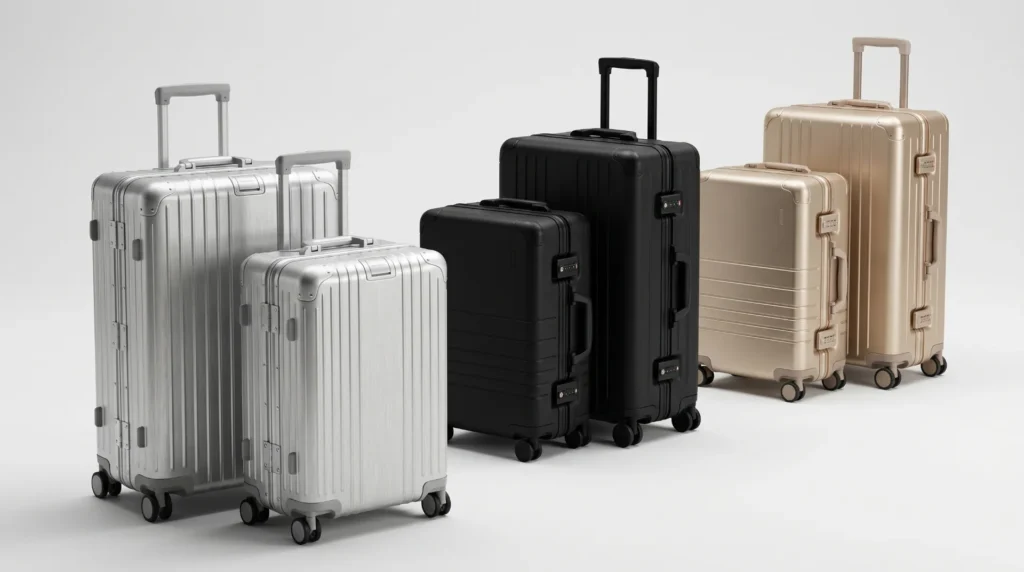
Aluvox’s color splitting structure: For brands wanting set production with multiple color variants, Aluvox’s color splitting policy applies — total order MOQ across colors and sizes. A brand can structure: 100 silver carry-on + 100 black carry-on + 100 champagne carry-on = 300 carry-on units across colors, and similar for medium and large pieces. This allows comprehensive set + color line launches within manageable total commitments.
For full MOQ structure details, see: Custom Luggage MOQ Guide →
Aluvox Aluminum Luggage Set OEM Program
Material specification: Series 5 aluminum-magnesium alloy (5052-H32), 1.0mm shell thickness, consistent across all set pieces. Stainless steel hardware (304 grade) across all sizes — hinges, latches, corner reinforcement, TSA lock internal mechanism.
Standard set configurations available:
| Configuration | Sizes | Tooling status |
|---|---|---|
| 2-piece standard | 20″ + 28″ | Existing tooling |
| 3-piece standard | 20″ + 24″ + 28″ | Existing tooling |
| 3-piece premium | 21″ + 26″ + 30″ | Existing tooling |
| Custom configuration | Brand-specific sizes | New tooling: 30–45 days |
Production parameters:
| Parameter | Specification |
|---|---|
| MOQ | 300 pcs / style (size) |
| Color splitting | Supported — total order MOQ across colors |
| Sample lead time (existing tooling) | 20 working days |
| Bulk production | 45 days from deposit |
| Color consistency | Delta-E ≤ 1.5 across set |
| Same-batch production | Standard for sets to ensure matching |
| Surface finish options | Brushed / Sandblasted / Anodized |
| Customization | Color, hardware finish, logo, lining, lock type |
| Export ports | Huangpu, Nansha, Shekou, Yantian |
Set-specific production discipline:
- All pieces in a set are scheduled in the same production batch
- Anodizing or surface treatment applied in coordinated sequence
- Hardware sourced from same suppliers across all sizes
- Pre-shipment QC verifies color matching across pieces
Browse the Aluvox aluminum luggage collection →
Visit the Aluvox aluminum luggage manufacturer page →
Request an Aluvox aluminum set sample — verify color consistency across pieces, hardware uniformity, and nesting fit before committing to production. Request Sample
Three Set Merchandising Strategies
Different brand positioning calls for different set merchandising approaches. Three strategies cover most successful aluminum set product lines.
Strategy A: Value 2-piece set positioning ($300–$500 retail)
Target audience: mainstream consumers wanting matched aluminum luggage without premium price commitment. Configuration: 20″ + 28″ 2-piece. Material: aluminum shell with standard hardware. Surface finish: brushed silver (most cost-efficient). Positioning: “premium materials, accessible price.” This is the entry tier into aluminum set merchandising.
Strategy B: Premium 3-piece coordinated set ($700–$1,200 retail)
Target audience: premium consumers seeking coordinated travel collection. Configuration: 20″ + 24″ + 28″ or 21″ + 26″ + 30″. Material: aluminum shell with stainless steel hardware visible. Surface finish: anodized color (rose gold, champagne, gunmetal) or sandblasted matte. Positioning: “engineering investment, coordinated design.” This is the mainstream premium set positioning that Heys, Champs, and similar brands occupy.
Strategy C: Collection brand 5-piece launch (varies by tier)
Target audience: family travelers, heavy travelers, or brands launching a complete collection identity. Configuration: 16″ + 20″ + 24″ + 28″ + 32″. Material specification can vary — aluminum for premium positioning, ABS or PC for value positioning. The 5-piece launch is a brand statement: this is not a luggage product, this is a luggage collection.
A Set Is a Brand Commitment
The brands that succeed with luggage set merchandising understand that set production is more demanding than individual SKU production. Color consistency, hardware uniformity, and tooling coordination are all higher-stakes for sets — a single inconsistency across three pieces destroys the perceived quality the set format is meant to communicate.
The brands that struggle are those that source three individual sizes from a factory without specifying set-level coordination requirements — and then receive three boxes of luggage that look adjacent but not matched. The set’s value proposition is in the matching. Without it, the brand has paid set premium prices for individual SKU quality.
If you are evaluating an aluminum luggage set for an upcoming product launch, Aluvox engineers can help you build the specification framework that ensures set-level coordination across color, hardware, and surface finish.
Contact an Aluvox Engineer — submit your target set configuration, retail price tier, and estimated order volume. We will provide a coordinated set production assessment and indicative quote within 2 business days. Contact Engineering Team