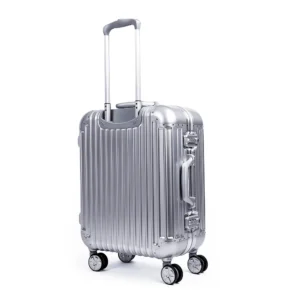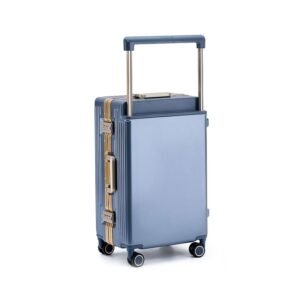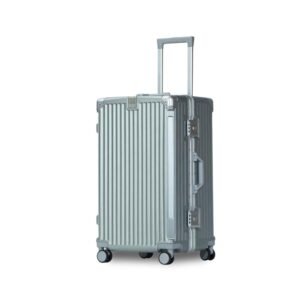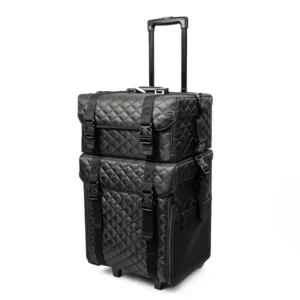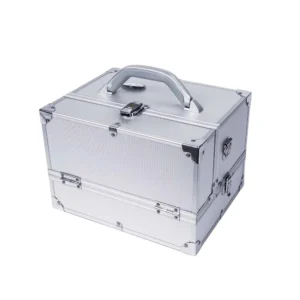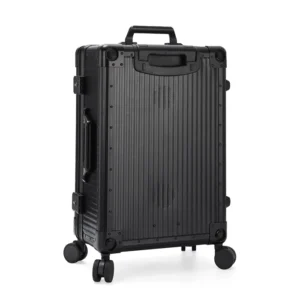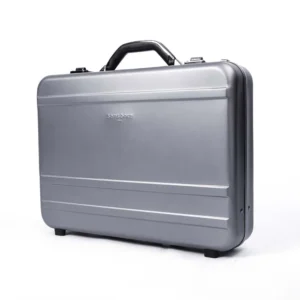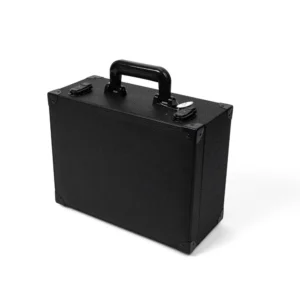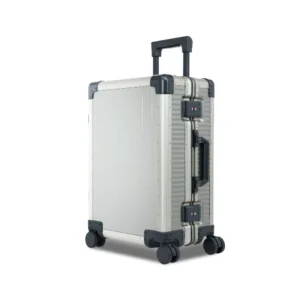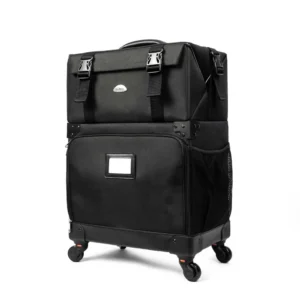

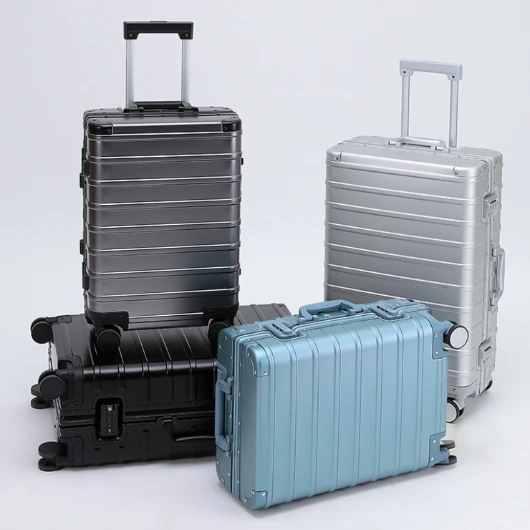
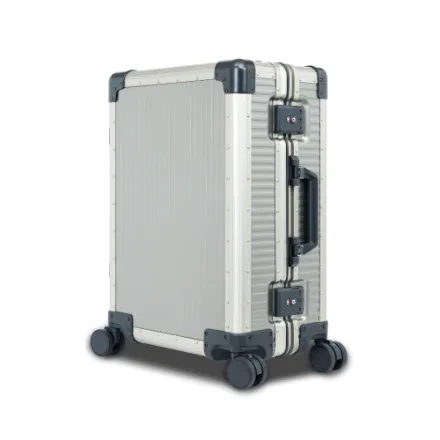
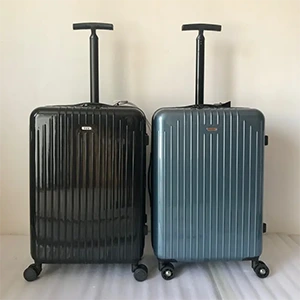

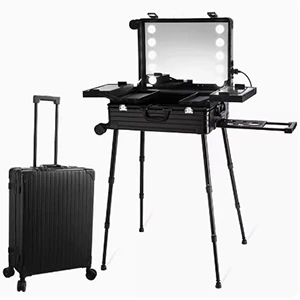
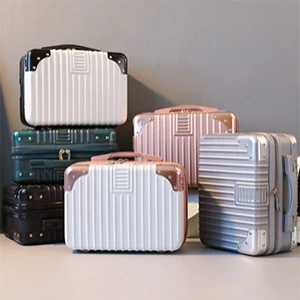
A buyer sends a photo of a case she likes. The note says: same case, but move the lock down 20 mm so our logo plate fits above it. On a soft-sided bag that is a pattern change and it costs nothing. On an aluminum frame case it is a tooling change, and tooling changes have a price and a date attached to them.
This confuses people, and it should. Nothing on the drawing looks hard. The reason sits inside the machine that makes the frame.
What is actually holding the case together
An aluminum frame case is two molded shells, usually polycarbonate or an ABS and polycarbonate blend, joined at the opening by an aluminum extrusion running the full perimeter. The lock, the hinges, the telescopic handle base and the wheel plates all bolt or rivet through that extrusion, or through the shell right beside it. The frame is the structure. The shells are the skin.
This is a different product from a full aluminum case, where the body itself is formed aluminum sheet. The two are not interchangeable and the tooling logic is not the same either. Everything below is about the frame case.
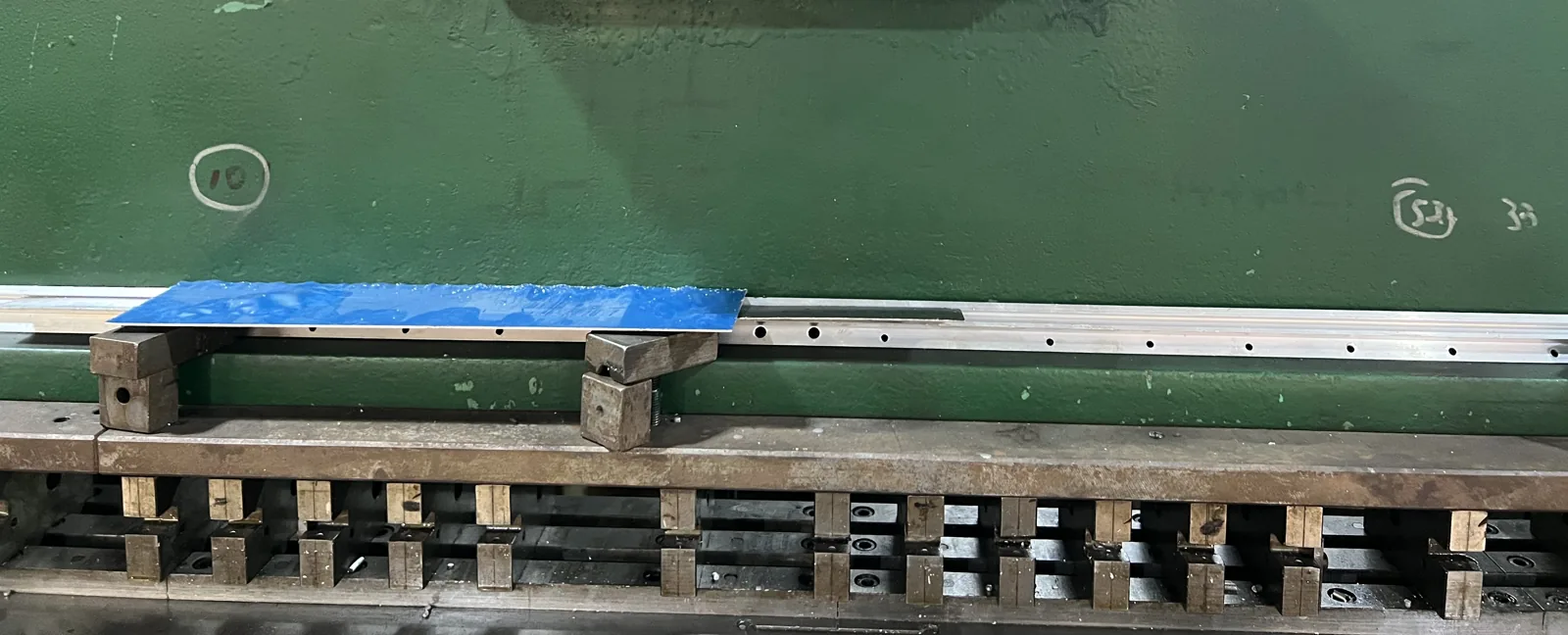
The holes are punched, not drilled
Here is the part that decides the cost. The hardware holes in a luggage frame are not drilled one at a time by an operator following a dimension. They are punched.
The extrusion is loaded onto the bed of a double-sided hydraulic single-stroke punch. Fixed die blocks sit along that bed, one for each hole or slot. The machine comes down once. Every hole in that length of frame appears in the same instant, in the position the die blocks were set to. Then the next piece goes on and gets exactly the same holes, because the die blocks did not move.
That repeatability is the whole point. It is also why the design is locked. The trade is that the hole pattern lives in steel, not in software. Nobody types 20 mm into a screen. Somebody makes a new die block, pulls the old one, sets the new one, and proves it on a sample. That is a real job with a real cost, and it is honest to say so before the order rather than after.
Which changes are free and which are not
The clean way to think about it is to ask whether the change touches steel.
Changes that usually cost no tooling: the anodizing color of the frame, the lining fabric, the zipper color and puller, a printed or embossed logo, the shell surface texture if it comes off a mold we already have, and a logo plate that mounts on a screw pattern that already exists.
Changes that need tooling: moving the lock, adding or relocating a USB port cutout, shifting hinge centers, changing the wheel bolt pattern, changing the corner radius of the frame, and going outside the depth range the current extrusion supports. Shell geometry has its own limits, which we cover in what a shell shape can and cannot do.
There is a middle case worth knowing. Adding a hole is sometimes cheaper than moving one, because a new die block can drop into an empty station without disturbing anything already set. If your design has room to add rather than shift, say so at quotation stage.
What the tool room can and cannot do
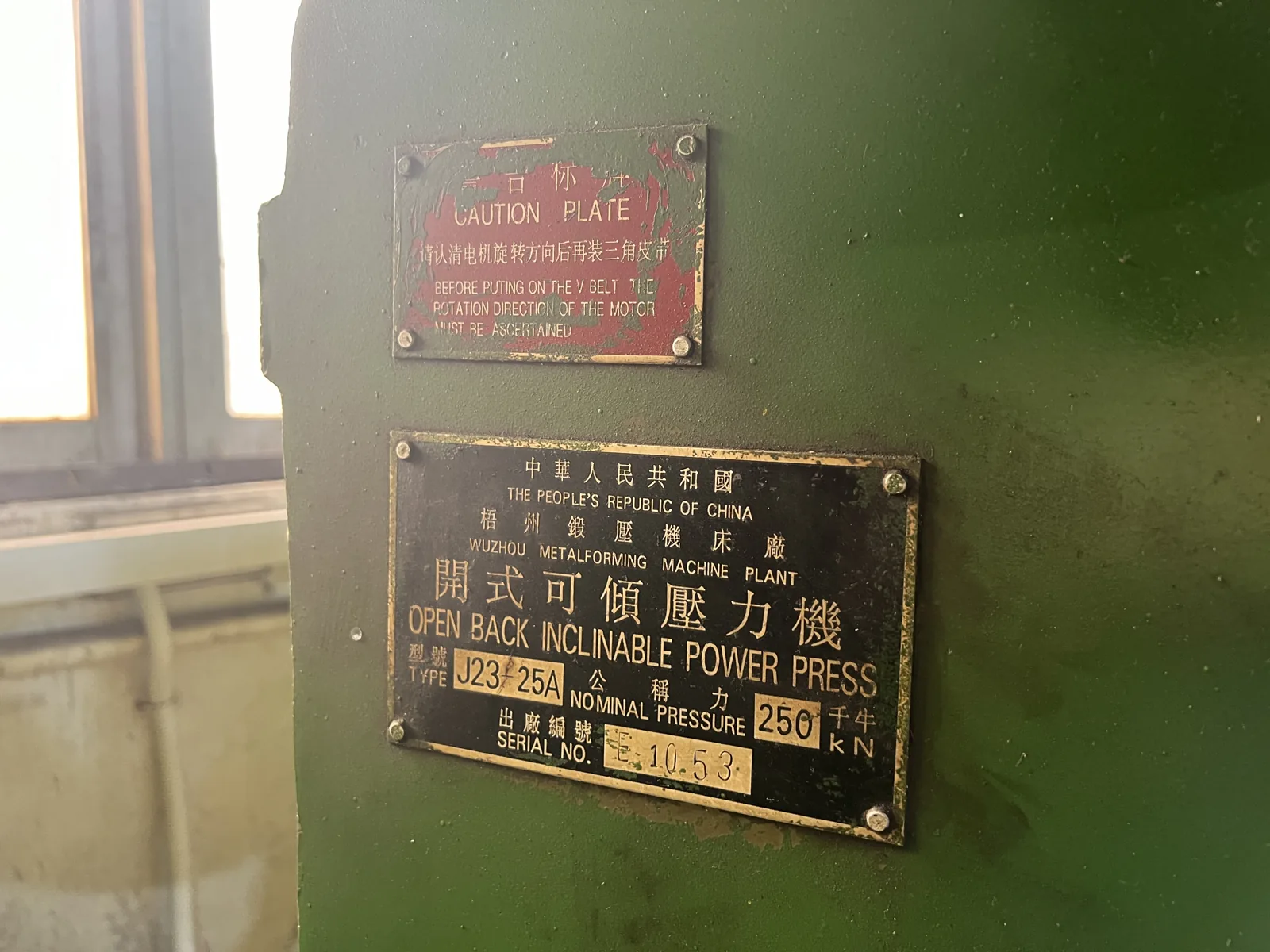
Die blocks come out of our own tool room rather than off a catalog. The room runs a Z3040 radial drill, a sinker electrical discharge machine, and two vertical machining centers. Pressing is done on open back inclinable power presses rated at 250 kN nominal pressure, alongside a larger four-column hydraulic press for the heavier forming.
The electrical discharge machine matters more than it sounds. A rotating cutter always leaves a radius in an internal corner, because a cutter is round. If a die feature needs a square internal corner, milling cannot produce it and the shape has to be burned in. That is a slower operation, and a design that quietly demands several of them will read as more expensive than the drawing looks.
What the room cannot do is make geometry appear that the press cannot reach. Every press has a fixed throat depth and a fixed die height. A feature sitting further in from the edge than the throat allows is not a pricing problem, it is a no. Better to find that out on a drawing than on a sample.
What we do and what we do not
We do cut and modify die blocks in house, which means a hardware move is scheduled against our own tool room rather than queued at a third party. We do quote the tooling change as a separate line before you commit, so you can decide whether the change is worth it. We do keep the die blocks for a running program.
We do not sell spare parts. We do not hold third-party test reports on file, so if your buyer needs one, that is a lab booking and it belongs in the schedule from the start. We do not quote a fixed tooling figure before seeing the drawing, because a frame with two moved holes and a frame with a new corner radius are not the same job. Our terms are set per program rather than from a rate card.
Getting this settled before it costs you a month
Three habits save the most time. Put hardware positions on the drawing as dimensions from a named datum, not as arrows on a photo, which is what a tech pack is for. Ask for the tooling line to be itemized rather than folded into the unit price, and if you want to know how that is normally structured, we walk through it in what belongs on a tooling list and in how mold cost is quoted. Then approve the first article against the drawing, not against the photo you started from, because the sample round is the last cheap place to find a wrong hole.
Questions buyers send us
Can you match the lock position on the sample I am sending you?
Usually yes. Send the physical sample rather than only photos, because we can measure a sample and we cannot measure a photo. If the position falls on a pattern we already have tooled, there is no tooling cost at all. If it does not, you get the figure before anything is cut.
Do I own the tooling after I have paid for it?
Get this in writing before you pay, and get it in the quotation rather than in an email thread. The honest answer is that it is negotiated rather than fixed, and it varies with order volume and with how program-specific the tools are. The questions worth asking are named in who owns the mold. A supplier who will not put an answer in writing has told you the answer.
How much does a tooling change add to the lead time?
Cutting the block is often the shorter half. What moves the date is the sample round that follows, because the change has to be proved on a real part and then approved by you, and approval time sits on your side of the table. Ask for the tooling date and the sample date as two separate lines. Merged into one number, that number is guesswork.
On an aluminum frame case the hardware positions are not settings. They are steel. None of that makes a change impossible. It only means the change has a price and a date, and you are better off seeing both at quotation stage than halfway through a production run. If you have a drawing and you are not sure which of your changes touch steel, send it over. Telling you which ones are free costs us nothing.
Written by James
James works at aluvox.com in Houjie, Dongguan. Equipment details in this article were read from the nameplates on the machines described.