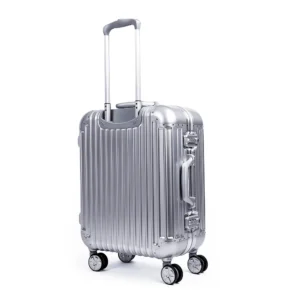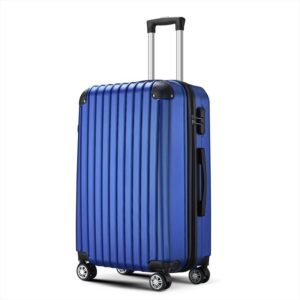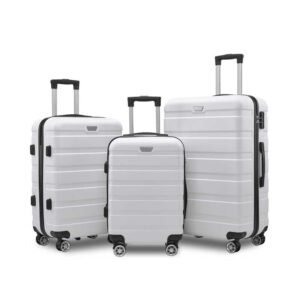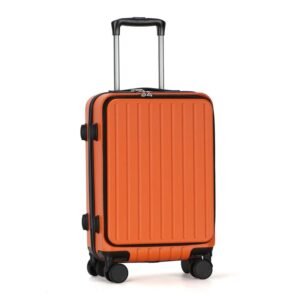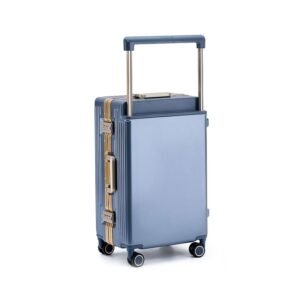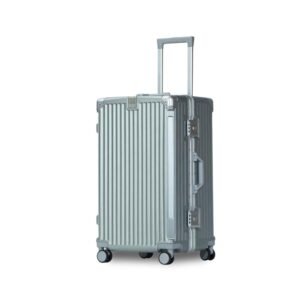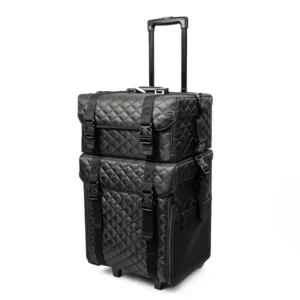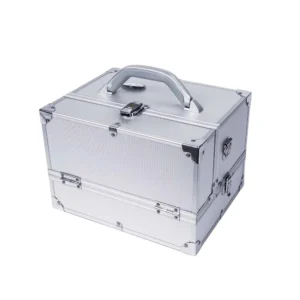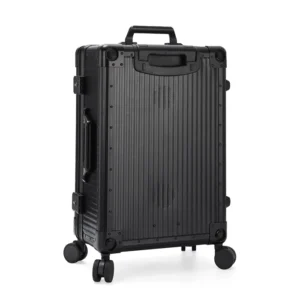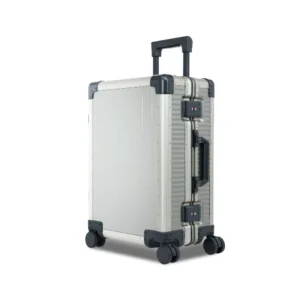


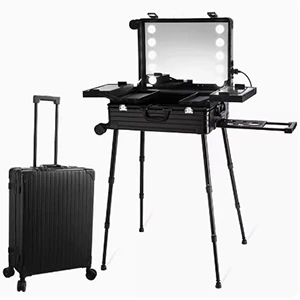


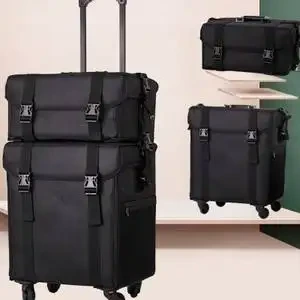
After price, the most common spec question we get is a version of this. What does your 24 inch case weigh?
It is a fair question and the answer is nearly useless, because the case you are asking about is not the case you are going to build. The useful version runs the other way. Here is my weight target, what can you change to hit it.
Where the weight actually sits
There is no single heavy part. The weight is distributed, which is why there is no single fix.
The shell. Material and thickness together, and this is the largest single block of the budget on any construction.
The frame and latches. Extruded profile around the opening, corner pieces, the lock body.
The wheels and the handle. Buyers underestimate this one consistently. A four stage telescopic handle and a set of double spinner wheels are a serious fraction of an empty case, which is part of why handle selection deserves its own conversation, covered in how telescopic handles get sourced.
The interior. Lining, dividers, compression straps, and whether the interior is fixed or removable.
Two levers move it, and both cost something else
Everything else is rounding.
Sheet or shell thickness. Take material out and the case gets lighter immediately. It also gets less stiff, and on a metal panel it dents at a lower impact. Where that line sits is the subject of what a sheet aluminum shell can be shaped into, because thickness and formable radius are the same conversation.
Hardware level. Lighter wheels and a lighter handle are available and they will save you real weight. They are also the two components that generate the most warranty traffic in this category. Buying weight here means buying returns later, and that trade should be made deliberately rather than discovered.
The third option people reach for is a smaller case, which works but changes what you are selling.
Full aluminum is heavier and cannot stop being
Worth saying plainly, because it surprises brands moving from plastic.
Aluminum is denser than the plastics used for shells. On a full aluminum case the panel is the product, so the material you would remove to save weight is the same material doing the structural work. There is a floor, and it is higher than a molded shell of the same size.
An aluminum frame case sits differently, because the metal is only at the opening and the body is plastic. If your target is aggressive and your customer wants the metal look, that difference is the whole decision, and it is set out in aluminum frame case vs full aluminum case.
The number you should actually specify
Most weight disputes are not disputes about weight. They are two people measuring different things.
Say which weight you mean. Empty case as sold, with all hardware fitted, is the normal one. Some brands quote it without the removable interior, some with. Some are thinking of the carton weight because that is what the freight quote used.
Then give a tolerance rather than a point number. A case is an assembly of bought components, and components vary within their own tolerances. A single figure with no band attached is a number somebody will fail against eventually.
Then agree how it is measured and on what. Same scale, same state, same point in the process. That belongs in the sample approval rather than in an argument after shipment, which is why it sits inside the sampling process.
What a target does to the rest of the quote
A weight target is a specification input like any other, and it moves the price in both directions.
Thinner material is cheaper per unit and may need a different forming approach. Lighter hardware can be cheaper or more expensive depending on whether you are downgrading or buying an engineered lightweight component. A target that forces a construction change moves the tooling line entirely.
This is one of the seven things that make a quote possible rather than a guess, listed in why a factory cannot send you a price list. If you would rather not pick a thickness yourself, give us the weight target and let the thickness fall out of it. That is a normal way to start and it belongs in the package described in what a luggage tech pack has to contain.
What we do and what we do not
We will tell you before sampling whether your target is reachable in the construction you asked for, and if it is not, what the nearest reachable version weighs and what it costs.
Our minimum is 300 units per design, and smaller test batches are negotiable rather than refused. Sampling runs 7 to 15 days per round and bulk is 45 days from a confirmed sample. A weight target that forces a construction change resets the tooling conversation rather than adjusting it.
We do not quote a weight for a case that does not exist yet. Once the specification is fixed we weigh the sample, we tell you what it actually is, and that measured figure becomes the reference with a tolerance attached to it.
Frequently asked questions
How much does a 24 inch aluminum suitcase weigh?
There is no single answer, and a factory that gives you one is quoting a case it already makes rather than the one you are describing. Weight moves with construction, shell material and thickness, hardware level and interior. Send a target instead of asking for a figure, and the useful conversation starts immediately.
Can you make it lighter without changing anything else?
Only within a narrow band. The two levers that move weight meaningfully are shell thickness and hardware level, and both have consequences. Thinner material dents at a lower impact, and lighter wheels and handles are the components most likely to come back as warranty claims. Weight is bought from somewhere, so decide which account it comes out of.
Why is full aluminum heavier than a frame case of the same size?
Because the metal is doing different work. On a full aluminum case the panels are the structure, so aluminum makes up the body of the product. On a frame case the aluminum is only the extruded profile at the opening and the shells are molded plastic. That is a construction difference rather than a quality difference, and it sets a floor on how light a full aluminum case can be.
Written by James
James works at aluvox.com in Houjie, Dongguan. The weight behavior described here is what we see across our own shell, frame and hardware suppliers.