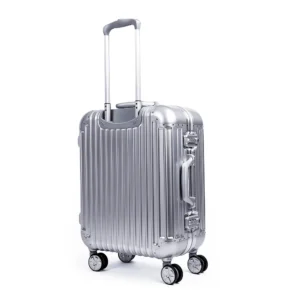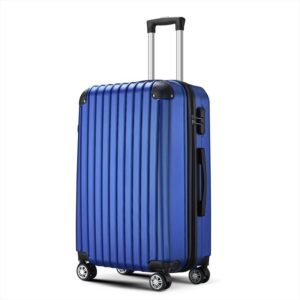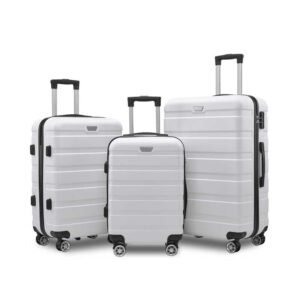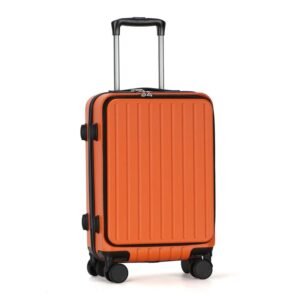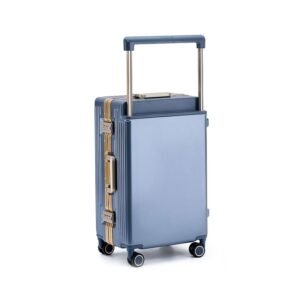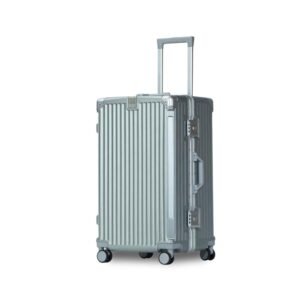

Most luggage “manufacturers” you find online are one of three things: a factory, a trading company, or a factory with its own export office. All three can be good suppliers. The problem is that the price, the lead time, who owns your mold and who fixes a bad batch are different in each case, and the website rarely tells you which one you are looking at. These five questions do, usually within one email.
The three kinds of supplier you will meet
A factory owns the presses, the molds and the assembly line. It quotes from its own cost, sets its own minimum, and is the one that has to fix a problem. It is also usually narrower: an aluminum luggage factory makes aluminum luggage, and perhaps polycarbonate cases on the same assembly line, but not backpacks and wallets as well.
A trading company buys from several factories and sells to you. It can put a whole range together from different sources, handle small mixed orders and speak your language well. Its price is the factory’s price plus its margin, its lead time is the factory’s lead time plus its coordination, and when something goes wrong it is negotiating with the factory on your behalf rather than walking onto the floor.
A factory with an export desk is what most established Chinese luggage factories are today, including us. The people you email sit in the factory, but they are sales staff, not the people on the press. That is fine; it just means the questions below still apply, because a well-run export desk answers them easily and a trading company pretending to be a factory does not.
Question 1: Whose name is on the mold?
Ask: “If we open a new shell size, who owns the tooling, and where is it stored?”
A factory answers with a place: the tooling is in its own press shop, and it will tell you whether the mold is yours (you paid for it), theirs (you use an existing shell) or shared. A trading company has to ask, and often answers vaguely because the mold sits in a factory it does not control. This matters more for aluminum than for most products: an aluminum shell is stamped on a steel mold, and that mold is the single most expensive thing in the project. You want to know who holds it before you pay for it.
Question 2: Which steps happen in your building?
Ask: “Of shell forming, machining, surface finishing and assembly, which do you do in-house, and which do you subcontract?”
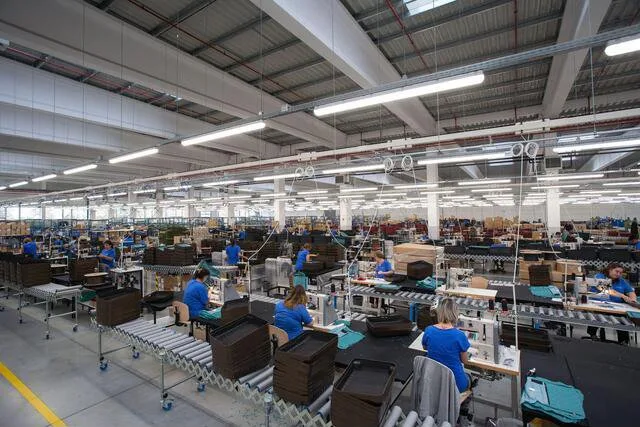
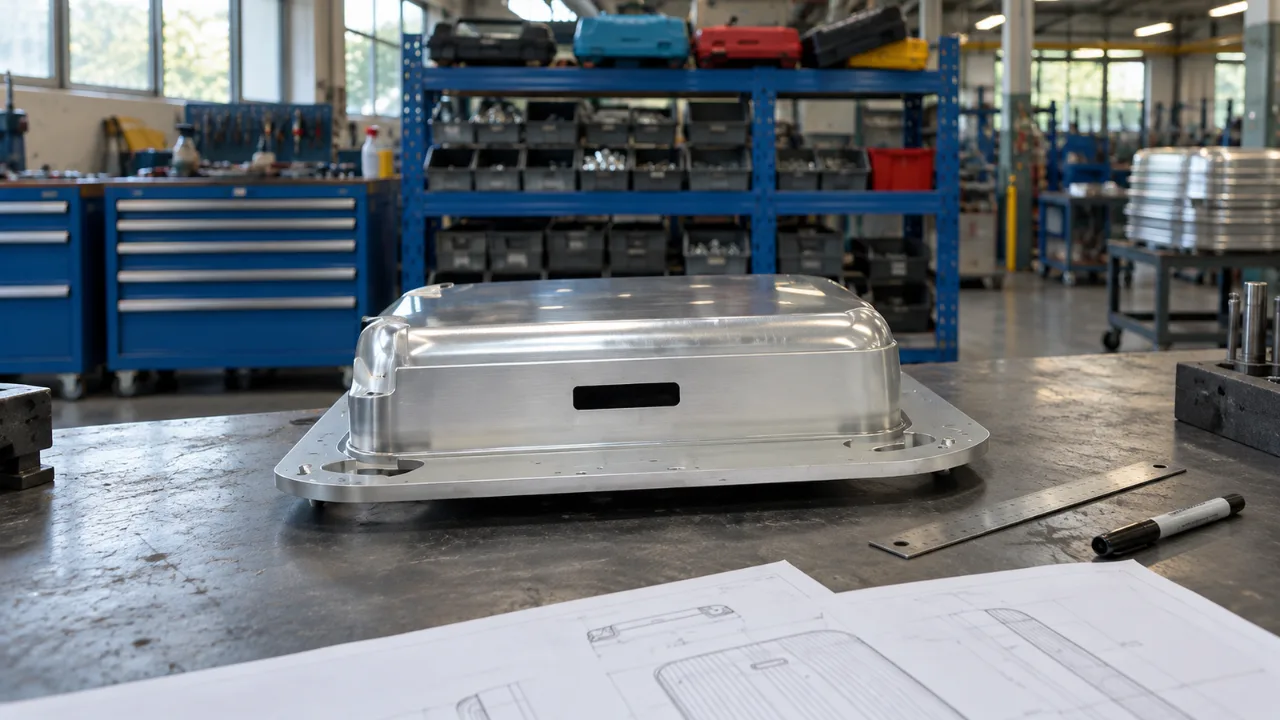
Nobody makes everything. Wheels, telescopic handles and locks are bought in by every luggage factory in the world, and a supplier who claims to make its own wheels is a warning sign, not a good one. The honest answer names the steps that are inside and the ones that are not. For an aluminum case the steps that matter are forming (the press), machining (the cut-outs and the frame groove) and assembly; if those three are under one roof, the supplier controls the tolerance that decides whether the case closes square. Ask for a short phone video of the press running, taken that day. A factory can send one within an hour. A trading company has to ask a factory for one, which takes a day or two and usually arrives without a date on it.
Question 3: Who makes the sample, and where?
Ask: “Is the sample made on your production line or by a sample room elsewhere, and how many days?”
A sample that comes off the same line as the production run tells you what you will actually receive. A sample made in a separate workshop, or bought from a third factory to win the order, does not. The answer should include a number of days and a place. Ours is about 20 days, made here in Houjie.
Question 4: Whose name is on the audit report?
Ask: “Send me the front page of your most recent factory audit.”
You do not need to read the whole report. The front page has a company name and an address. If they match the name on the quotation and the address on the website, you are talking to the factory. If the audit is in one company’s name and the quote is in another’s, you are talking to a trader or an agent, whatever the website says. This is the fastest single check on the list and the one most buyers skip.
Question 5: What sets your minimum order?
Ask: “What drives your MOQ: the press, the finishing batch, the components, or something else?”
A factory can tell you which step sets the minimum, because it is a real constraint in its building. For an aluminum case the answer is usually one of the finishing batch, the component order or the press, and a factory will say which. A trading company’s minimum is the factory’s minimum passed through, and if you ask what drives it you will hear “the factory requires it” rather than a process. The answer also tells you how flexible the number really is: a minimum tied to a finishing batch can sometimes be worked around by using a stock colour; a minimum tied to a mold cannot.
What the answer changes for you
Once you know which of the three you have, four things in your plan change. This is the short version:
| Factory | Factory with export desk | Trading company | |
|---|---|---|---|
| Who owns and stores your mold | The factory; written on the quote | The factory; written on the quote | A factory you may never be told the name of |
| What the price contains | Factory cost + factory margin | Factory cost + factory margin | Factory price + trader margin |
| Who fixes a bad batch | The people who made it | The people who made it | The trader negotiates with the factory for you |
| Where the sample is made | Production line | Production line | Wherever the factory chooses; sometimes a third party |
| Small mixed orders across categories | Usually no | Usually no | Yes, this is the trader’s job |
| Where you inspect before shipping | At the factory | At the factory | At a factory the trader names; put the name in the contract |
A sixth check that costs nothing: the business licence
Every Chinese company has a business licence with a scope of business written on it. A factory’s scope includes the words for manufacturing or processing; a trading company’s is limited to sales, trading and import-export. Ask for a copy, or look the company up by name on the National Enterprise Credit Information Publicity System, which is public and free. You do not need to read Chinese to do this: the scope is a short paragraph, and any translation tool will show you whether manufacturing is in it. A trading company with a manufacturing licence is unusual; a “factory” whose licence only mentions trading is telling you what it is.
Send the questions as one email
The five questions work best sent together, in this order, to every supplier on your shortlist at the same time. You can copy this:
We are comparing suppliers for a private label aluminum luggage programme and have five questions before we ask for a quotation.
1. If we open a new shell size, who owns the tooling and where is it stored?
2. Of shell forming, machining, surface finishing and assembly, which do you do in-house and which do you subcontract? Could you send a short video of your press running, taken today?
3. Is the sample made on your production line or in a separate sample room, and how many days does it take?
4. Could you send the front page of your most recent factory audit?
5. What drives your minimum order quantity: the press, the finishing batch, the components, or something else?A copy of your business licence would also be helpful.
Give everyone the same deadline. The suppliers who answer all five with specifics, inside the deadline, are the ones to quote with. The ones who answer with a catalogue and a price list have told you something too.
What to do with the answers
Put them in a table with one column per supplier. Three patterns come up again and again. The first is a supplier who answers questions 1, 2 and 3 with places and days but goes quiet on question 4: usually a real factory that has not been audited, which is common for smaller plants and is not disqualifying, but it means your own inspection has to do the audit’s job. The second is a supplier who answers everything fluently but whose audit, licence and quotation carry three different company names: a trader, and possibly a good one, but plan for it as one. The third is a supplier whose answers to question 5 are a number with no process behind it; ask again, because a minimum with no reason is a minimum that will move.
Signs that prove nothing either way
A “Verified Manufacturer” badge on a marketplace listing is bought, not earned by making anything. A catalogue that runs from aluminum suitcases to backpacks, wallets and pet carriers under one company name is nearly always a trader, because those are four different kinds of factory. Stock photography of a generic production line, a “since 19xx” line with no address, and a Certifications page with logos but no report numbers are all neutral: they neither confirm nor rule out a factory. Only the five questions above do.
When a trading company is the right choice
If you are buying a small mixed order across several product categories, if you need one contact to consolidate goods from three factories into one container, or if your quantities are below every factory’s minimum, a good trading company earns its margin. The point of this article is not that traders are bad. It is that you should know which one you have, because you will plan tooling, lead time and quality control differently.
How we answer the five questions
For the record, since we are asking you to ask them: shell forming, machining, laser engraving and surface finishing happen in our own building in Houjie, Dongguan, on two 500-ton presses and a metal stamping line; wheels, handles and locks are bought in from established component suppliers; tooling for our own shells is ours and stored here, and ownership of tooling you pay for is written on the quotation; samples are made on the production line in about 20 days; the company name on our quotation is the same name as on the factory gate; the minimum on an existing shell is 300 pieces, and we will tell you which step sets it for your order. Production on a confirmed order takes about 45 days. Visits are welcome, and we reply to enquiries within 24 hours.
If you already have a shortlist, send the same five questions to each supplier on it and put the answers side by side. The differences are usually obvious by question three. The private label luggage page covers what happens after that.
Questions we get asked
Is a factory always cheaper than a trading company? On a single-category order at or above the factory’s minimum, yes, because there is no second margin. On a small mixed order, a trader’s consolidation can cost less than three separate small shipments.
Can I ask to visit? Yes, and you should. A factory will give you an address and a date. A trading company will offer to arrange a visit to “our factory”, which is a factory, not theirs; go anyway, and ask the people on the floor whose company it is.
Is a factory with an export desk really a factory? Yes, if the desk sits inside the plant and the five answers come back with places, days and the same company name. Most established Chinese luggage factories work this way; the export desk is who you will deal with either way.
Can a trading company own molds? It can pay for a mold and have it made at a factory, and some do. Ask where the mold is stored and whether you can see it; if the answer is a factory the trader will not name, treat the mold as outside your control.
What if the supplier will not send the audit front page? Treat it as an answer. A factory has no reason to withhold its own name and address.