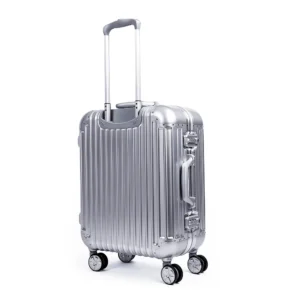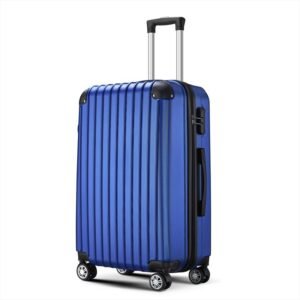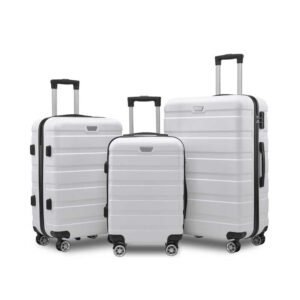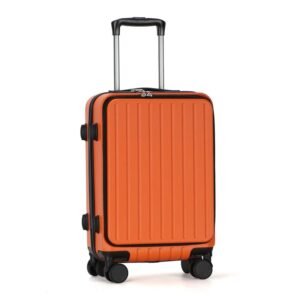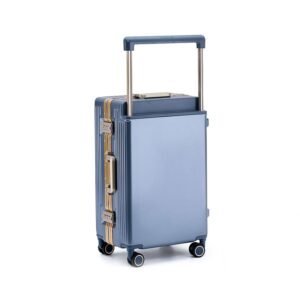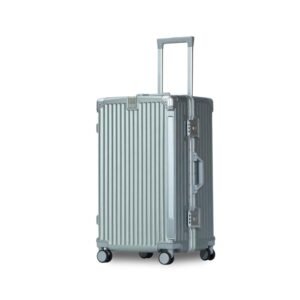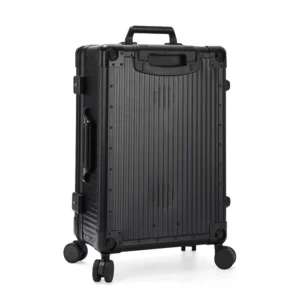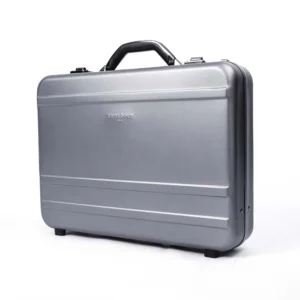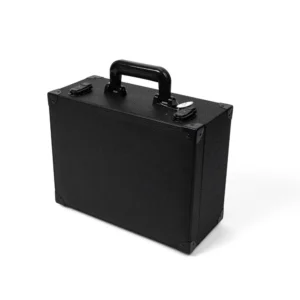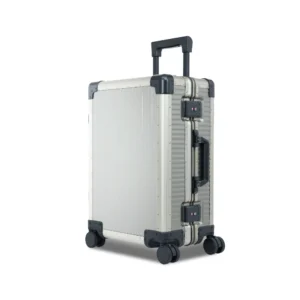

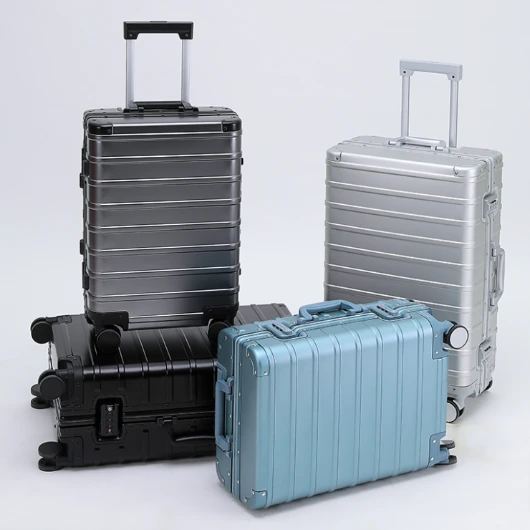

If you want your aluminum luggage to show distinct metallic grain, start with a brushed finish. If you prefer a more even texture with softer reflections, start with a fine sandblasted finish. Silver, black or rose gold can then be considered alongside the appropriate anodizing process.
Brushing, sandblasting and anodizing can be combined. The first two mainly change the metal’s surface texture; anodizing forms an oxide layer on the aluminum. For a luggage brand, the choice is a complete combination of texture, color and gloss.
Aluvox can develop these surface options around an existing aluminum suitcase model and coordinate the frame, latches, handles and branding as one complete design.
1. Brushed or sandblasted: which appearance fits your range?
A brushed finish suits products that emphasize the metal’s linear grain. The texture has a clear direction, with highlights changing as you turn the case. Even within a silver finish, a fine grain and a more pronounced brushed texture create different appearances.
Sandblasting suits products with a more uniform texture and less directional grain. Blasting media create small surface features that scatter reflections. Their coarseness and the subsequent treatment affect the result, so sandblasting does not describe just one appearance.
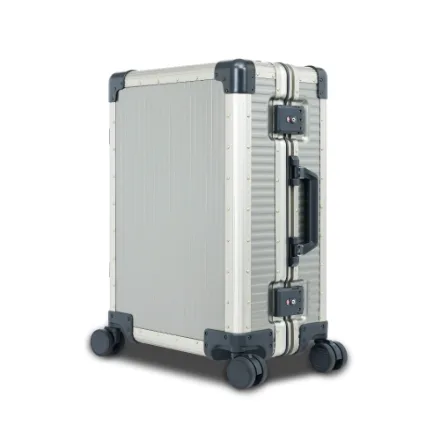
For example, a silver business luggage range can retain the shell’s formed grooves while using fine brushing for its surface character. The three-dimensional grooves belong to the shell’s shape; the fine lines belong to its finish. They can be designed together, but they are different features.
“Fine brushing” can be specified more closely. The grain may run vertically or in another agreed direction. It may be fine enough to read as a soft silver surface from a distance, or remain clearly visible farther away. A corresponding finish sample establishes the direction and grain that the complete case will follow.
If the brand wants to emphasize metallic lines, compare brushed options first. For a softer-looking surface without prominent directional grain, start with fine sandblasted options. We can keep the same case model and main components so the comparison focuses on the finish.
2. What does anodizing do, and why can the same color look glossy or matte?
Anodizing is an electrochemical treatment that forms an oxide layer integrated with the aluminum surface. It provides surface protection and can be combined with coloring. It does not cover the underlying texture like a thick coat of paint, so prior brushing or sandblasting still influences the finished appearance.
Color and gloss are separate choices. Silver can produce pronounced reflections or a softer appearance. Black is not limited to matte finishes either.
Surface preparation helps create that difference. A smoother, brightened surface tends to produce more concentrated reflections, while small surface features scatter light in different directions. Brushing adds a directional effect, so highlights change with the viewing angle. Subsequent processing also influences the result: the word “anodized” alone does not tell you whether a finish is glossy or matte.
| Finish combination | Appearance direction |
|---|---|
| Brushing + silver anodizing | Visible, directional metallic grain |
| Fine sandblasting + silver anodizing | A more even silver surface with softer reflections |
| Fine sandblasting + black anodizing | Fine texture combined with a dark appearance |
If you want to retain brushed lines while reducing strong reflections, we can refine the texture and gloss around that target. This gives the project a clear appearance brief beyond a single word such as “silver” or “matte.”
3. Which finish resists scratches better?
Anodizing can improve the aluminum surface’s resistance to wear and corrosion, but its protective performance also depends on processing conditions and oxide-layer quality. Brushed and sandblasted describe textures; those names alone do not establish a scratch-resistance ranking for a finished suitcase.
Two questions are often confused: whether the surface is damaged, and how noticeable the damage looks.
The original texture, color and gloss all affect how marks appear. If damage to a dark finish exposes lighter metal underneath, the contrast can make it more visible. Silver surfaces can also show scratches, but they present differently. A less noticeable mark does not automatically mean better abrasion resistance.
When comparing options, first separate the questions being evaluated:
- Appearance: compare color, texture, gloss and the contrast between existing marks and the surrounding surface.
- Abrasion resistance: compare changes after repeated rubbing under the same contact material, load and motion conditions.
- Scratch resistance: evaluate damage under the relevant scratching action; abrasion-cycle counts are not a substitute for that assessment.
The result needs a clear definition too. A change in gloss, visible scuffing and wear that exposes the base metal are different outcomes. If one test stops at a slight gloss change and another stops when the base metal is exposed, their cycle counts cannot be ranked directly.
We can address the brand’s appearance target and project performance requirements separately during sample confirmation. That makes visual differences clear and ties performance comparisons to defined conditions. Larger impacts also involve the shell and construction, which are another part of whole-case performance.
4. Coordinate the shell, frame and logo as a complete product
Once the shell finish is selected, we can coordinate the frame, corner guards, latches, handles and logo. The complete case can use closely related colors or deliberate contrast.
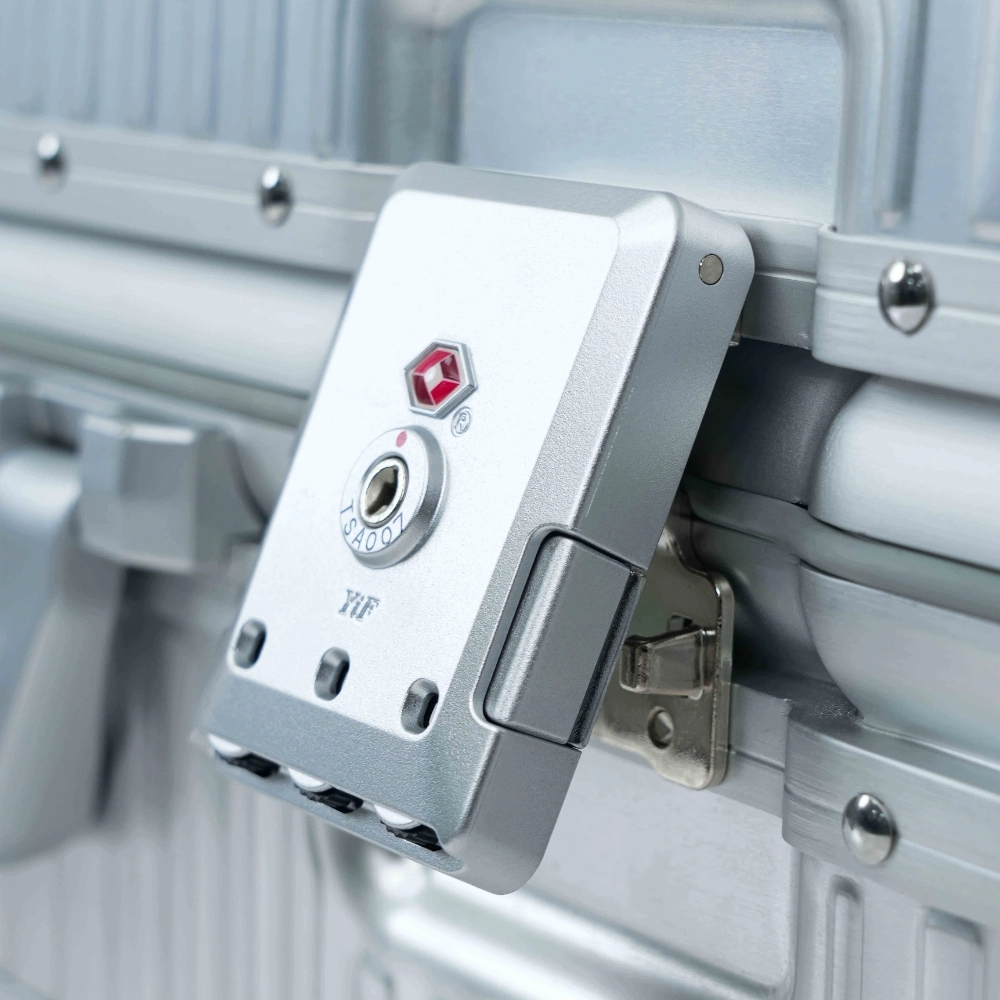
For example, a silver brushed shell can pair with a silver frame and dark handle grips to emphasize the metal body. A matte black shell can use hardware in the same color family, or a metal nameplate can create a distinct visual focal point.
These components do not necessarily use the same materials or processes. Two parts described as “silver” can reflect light differently if one has visible grain and the other is smoother. Coordination means considering color, texture and gloss together, rather than assigning the same color name to every component.
For a closely matched range, we can develop the frame and hardware around the shell’s appearance. For a contrasting range, we can concentrate the contrast on selected parts such as the grips, latches or nameplate. Both approaches can create a coherent design; the important choice is which parts should match closely and which should remain distinct.
The logo is part of that combination. Laser marking can appear directly on the metal surface, while a metal nameplate adds a separate material and layer. Its size and position are considered with the background texture, then its visibility is checked on the complete sample.
5. Does changing the color or texture require a new shell mold?
Changing the color, brushing or sandblasting on an existing shell can generally retain the existing case shape. Changing the body’s outline or three-dimensional form is a different development task.
For example, changing an existing silver shell to a black sandblasted appearance mainly changes its surface treatment. Changing the shell shape or redesigning its formed grooves also brings shell tooling into the project.
For Aluvox aluminum luggage, adding a logo to an existing model starts from 50 pieces. Custom colors, textures or full-shell graphics on an existing shell start from 300 pieces. A new case shape requiring a new mold starts from 1,000 pieces. The tooling scope is confirmed for the new shape, and combinations across different materials are confirmed separately.
For style, size and color combinations within a regular same-material order, see our custom luggage MOQ guide. Surface customization and new-shape development have separate scopes so you can compare the costs attached to each proposal.
6. Turn the chosen appearance into a sample you can approve and refer back to
If you have reference images, we can separate the color, texture and gloss you want, then apply that direction to the selected aluminum suitcase model. Images communicate the direction; physical samples confirm the actual result.
For example, “a silver brushed aluminum suitcase” can become the following brief:
| Item | Example specification |
|---|---|
| Case model | Selected existing model, retaining its formed grooves |
| Shell texture | Fine brushing running vertically; grain matched to the selected finish sample |
| Color and gloss | Silver with visible metallic grain; gloss corresponding to the selected sample |
| Frame and grips | Silver frame with dark handle grips |
| Branding | Metal nameplate, with position and dimensions confirmed on the complete sample |
A finish sample helps compare color, texture and gloss first. The complete suitcase then answers further questions: does the finish work across the full shell? How do grooves and corners reflect light? Do the frame, latches and nameplate look coordinated?
Place comparison samples under the same light and view them from similar angles, then rotate them together. This reduces misleading differences caused by one sample facing the light while another faces away. Large surfaces show the overall effect; grooves, corners and component junctions show the details. Both need to follow the selected design direction.
After approval, the sample identifier, relevant components and selected specification can be retained together. Production and reorder discussions can then refer to the same appearance reference. If a color or texture changes later, the revision can identify exactly what is changing from the original proposal.
Start with an existing aluminum luggage model and share the shape you want to retain and your appearance references. We can turn the color, texture, hardware and branding into a specific customization proposal.