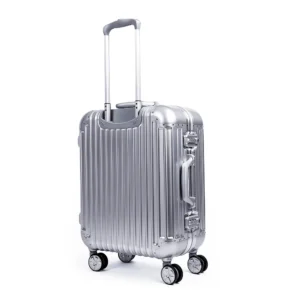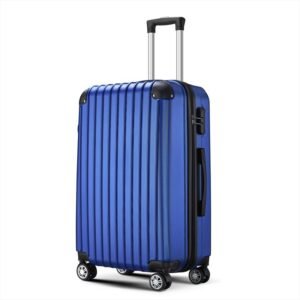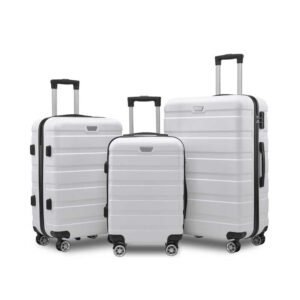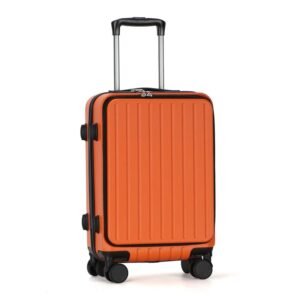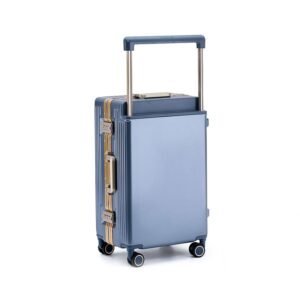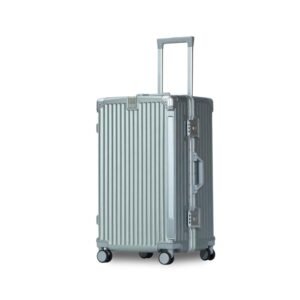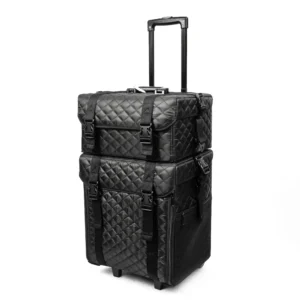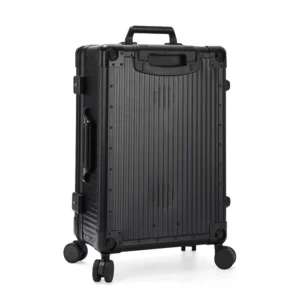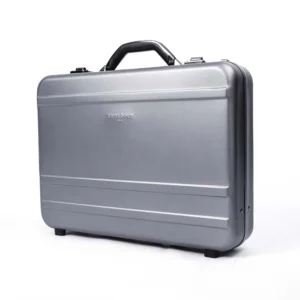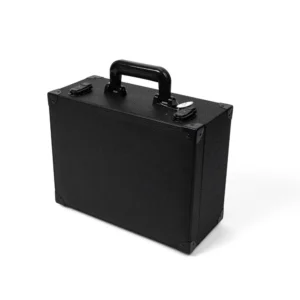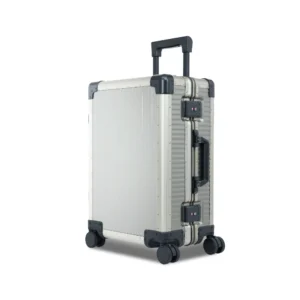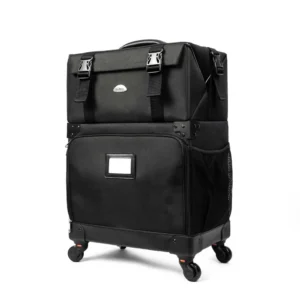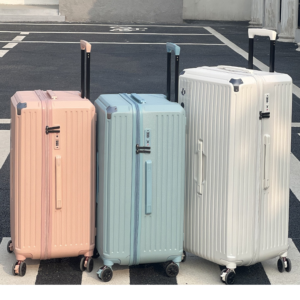

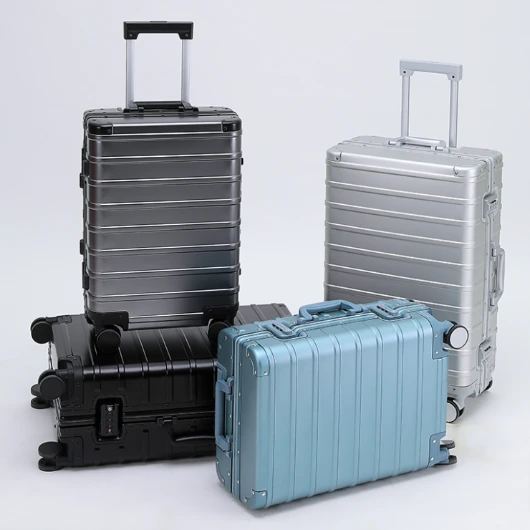
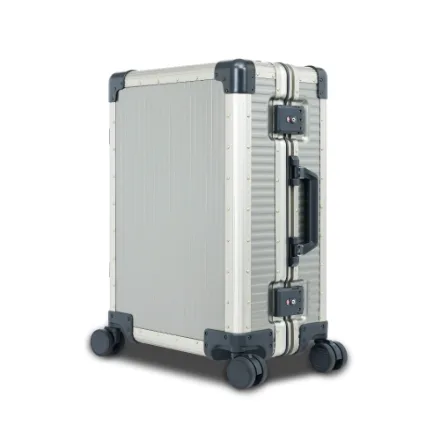
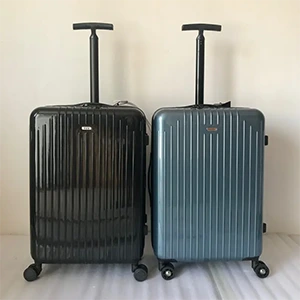
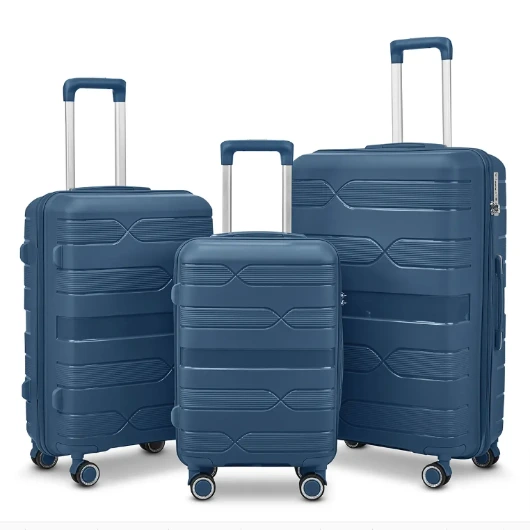
If your first priority is a lighter carry-on, start by comparing a polypropylene (PP) sample. The resin generally has a lower density, giving the design more room to cut weight. For checked luggage, start with a sample already verified at the size and packed load you need. If that sample uses polycarbonate (PC), compare the PP candidate under the same conditions and check whether it still closes, rolls, and can be lifted after the agreed handling tests. Once both candidates meet the functional requirements, compare weight, finish, and cost.
Identify the shell construction on each sample first. A multilayer ABS and PC sheet, a PC shell, and a reinforced woven PP shell are different builds. Make sure the material description, size, and hardware on the quote match the sample you will evaluate.
Compare PP and PC luggage against the same brief
Set the outside dimensions, intended contents, and required features before you compare the cases. Two models can both be called 20-inch carry-ons even though one has a front compartment and an expansion section and the other has a simpler interior. Those features affect both empty weight and price. Start with similar specifications to see where differences come from. Then allow each design to use the shell and reinforcement it needs to meet the same product brief.
| Set this requirement | Record it for both samples | Use the result to decide |
|---|---|---|
| Empty weight, outside dimensions, and packing space | Weigh the complete empty case with its wheels, handle, lock, and lining installed. Pack both samples with the same items. | Revise any design that is over the weight limit or cannot fit the load. If both fit, consider whether the remaining weight difference matters to the customer. |
| Function after loading and handling | Use the same load and distribution. Under the agreed conditions, record changes at the corners, wheel mounts, and opening. Check closing, rolling, and lifting afterward. | Locate the problem before deciding whether to change the shell, local support, mounting, or hardware. |
| Appearance and finish | Review the assembled cases under the same light. Check gloss, texture, hardware color, and how visible marks are. | If marks show more on one case, compare another texture or color before changing the shell material. |
| Launch budget and reorders | Itemize changes to an existing model, one-time development, and the unit quote for a case with the required functions. | Compare first-run costs for designs that meet the brief. Estimate how many units would offset extra development costs through a lower unit price. |
If you are still choosing among several hard-shell materials, see how sheet forming, reinforcement, and shell construction affect that decision in our luggage materials guide.
Is PP luggage lighter? Start with the shell and weigh the complete case
Shell weight depends on resin density and the volume of material in the finished shell. Representative grades have densities of about 0.90 g/cm³ for PP and 1.20 g/cm³ for PC. At the same material volume, a 1.00 kg PC shell would weigh about 0.75 kg in that PP grade. If the other components weigh 2.00 kg in both cases, the complete case would go from 3.00 kg to 2.75 kg. In this example, shell weight falls by about 25%, while the complete case is about 8% lighter.
The two designs may need different amounts of material. A panel may need a different contour or wall thickness to feel firm. The opening may need more support to keep the halves aligned when packed, and the wheel mounting area may need reinforcement for the intended load. If the PP design in this example adds 150 g of shell material or support, its finished advantage drops to about 100 g. A lighter wheel assembly on the PC design could narrow it further.
Weigh the assembled case, then pack it with the intended contents. If a carry-on is meant to fit a particular packing cube and a shoe pouch, repeat the packing check after changing the lining or dividers to meet the weight limit. That tells you whether the lighter configuration still gives the customer the space they need.
Which is more durable? Look at the part that failed and what still works

Pressing an empty panel tells you how that panel deflects under your hand. Corner impacts, loading at the wheel mounts, and changes in the opening when the case is packed involve different parts. Cases that feel similar when pressed can behave differently at those locations.
Compare both samples with the same weight and distribution of contents under the conditions agreed for the project. If a panel scuffs and the case still opens and rolls normally, judge the scuff against the appearance standard. If a corner deforms and the case becomes hard to close, check how far the deformation extends toward the opening. If the shell looks intact but a wheel tilts or wobbles, start with the wheel, mount, and attachment. These findings point to different changes.
If the brief includes impact performance at low temperatures, agree on the conditions to use. Resin data helps narrow the selection. The decision rests on the sample with the intended size, load, shell, and components. If a larger size or a different component changes how forces reach the area that needs to hold up, review whether the earlier result still applies. Identify the sample, conditions, and acceptance criteria before testing. See our guide to luggage test methods and reports.
Review finish separately. For a dark gloss finish, look at both assembled cases under the same light and include the appearance the buyer expects at delivery. If a surface shows scuffs too readily, compare revised colors and textures before changing materials. A cosmetic mark and a closure that no longer works call for different decisions.
Compare launch and reorder costs for the intended configuration
Find out which candidate can use existing tooling. If the PP design needs a new mold and a PC model already meets the brief, the PP design can have a lower unit quote and still cost more to launch. The direction can reverse when an existing PP model already fits and a PC shell needs new development.
Separate one-time development from the recurring cost of a finished case. When both designs meet the brief and the new one has a lower unit price, divide the extra development cost by the savings per unit. That estimates how many units you would need to buy for the savings to cover the extra investment. Check that both quotes include the required wheels, lining, and packaging. A small first order and uncertain reorders make it harder to recover tooling costs.
Compare closure and access features alongside the quote. A zipper, a frame and latch, and a separate front opening each bring different parts and assembly steps. If you are trying to understand the effect of shell material, align those features as closely as possible. If you are deciding which model to launch, compare the full cost and functions of the cases you would actually order.
How to choose PP or PC for three luggage programs
A lightweight carry-on
Set the outside dimensions, including wheels and handles, the maximum empty weight, and what the suitcase must hold. If the PP sample is lighter, fits the intended load, and keeps the required handle and wheel functions, it has a clear advantage. If it achieves that weight by dropping a compartment your customers need, and the PC sample keeps that compartment within the limit, choose the PC build. When both pass, consider whether the remaining weight difference is enough to matter in use.
A large checked case
Decide what must still work after handling with the case loaded. Include closing, lifting, rolling, and wheel alignment. A PC case with a comparable size and verified configuration can provide the reference. If the PP sample meets the same requirements and offers a better weight or cost fit, it belongs on the shortlist. If a case binds at the opening or shifts at the wheel mount after impact, check where the damage began before revising the design or moving to another model.
A first private label range
If your design chiefly depends on color, branding, and the interior, look for an existing model that meets the size, weight, and use requirements. Review the finish and logo on an assembled sample. Confirm which components are covered by the quote and can be specified again on reorders. If a distinctive shell shape, opening, or weight target is essential, define which parts need to change before committing to tooling.
Start with candidates that serve a similar purpose and have comparable dimensions and closures. Treat a front compartment, expansion, or latches as a requirement if the range calls for it, then compare how each material fits that configuration. Browse our PP luggage collection and PC luggage collection to shortlist existing models.
When you are ready to choose a configuration, send us the candidate models, target sizes, empty-weight limit, and the features you want to keep. We can help identify which existing designs meet the brief, which changes to include in a sample, and where new development would add cost. Learn more about Aluvox’s private label luggage service.