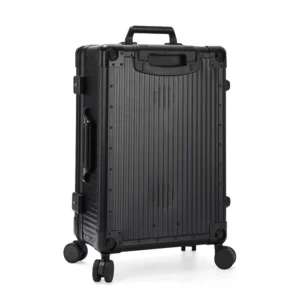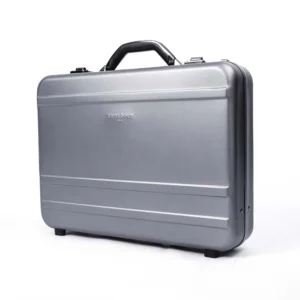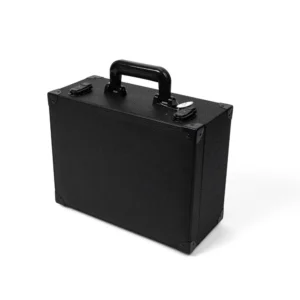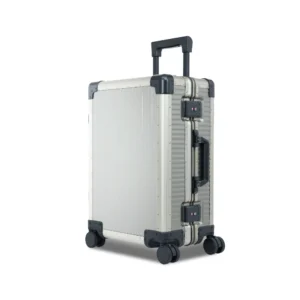

Customizing an aluminum suitcase with a front pocket starts with what travelers carry. Where they keep their laptop, documents, and charger—and how they reach those items—helps shape the pocket’s materials, dimensions, and internal layout.
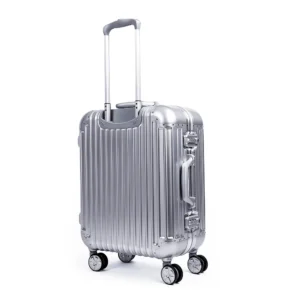
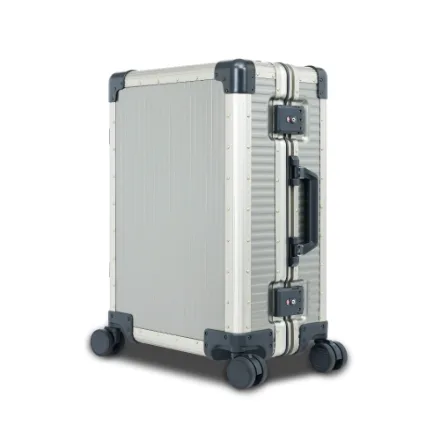
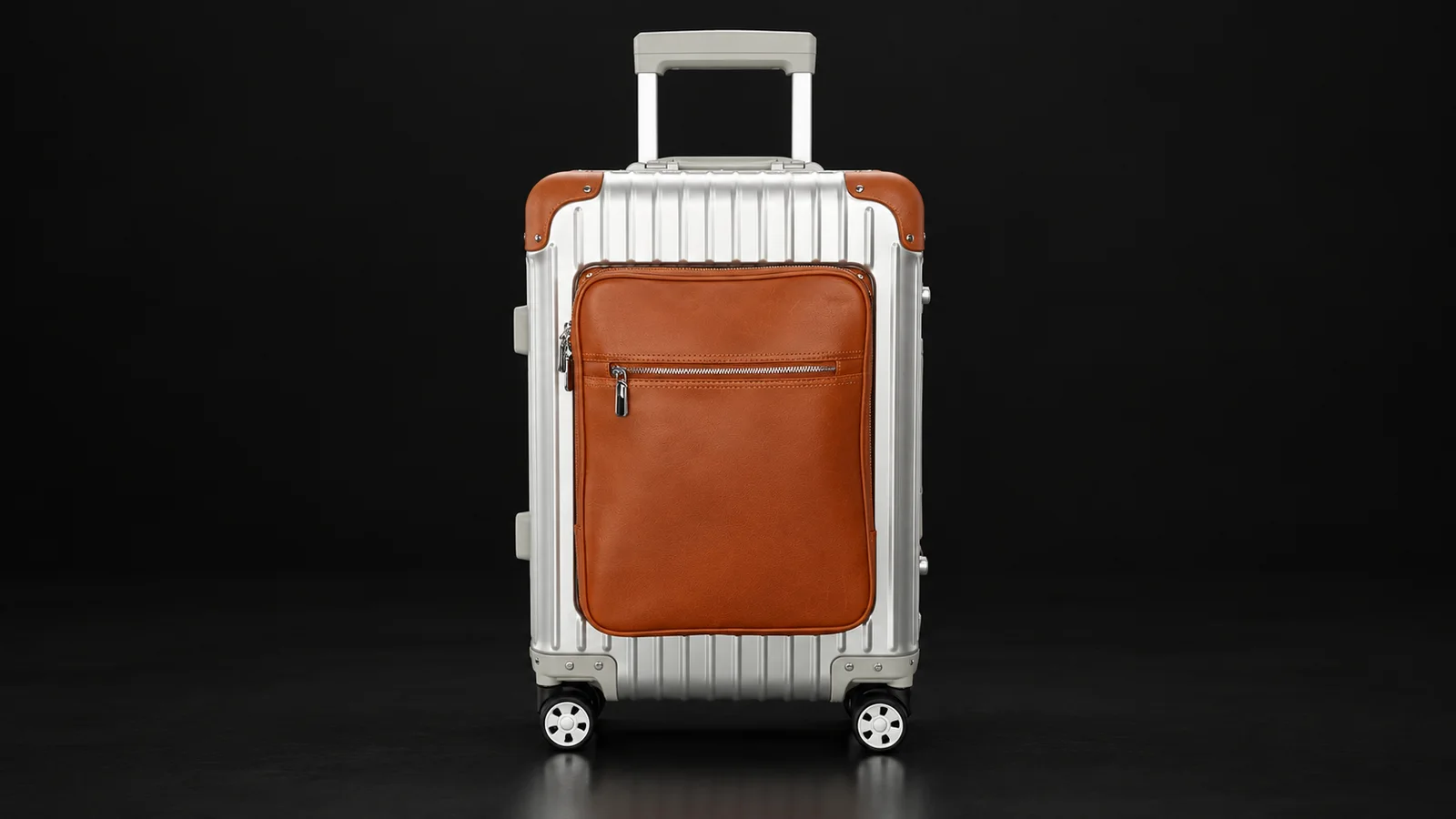
The Aluvox TS-003 combines an aluminum case body with a leather front pocket. Brands and wholesale buyers can use this model as a starting point, adjusting the pocket’s color, material, dividers, dimensions, and attachment arrangement to suit their product line.
What Can You Access Without Opening the Main Compartment?
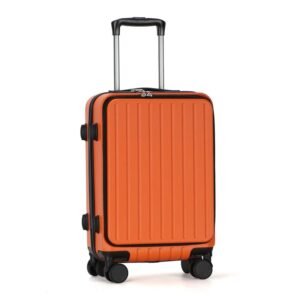
The TS-003 has a zippered front pocket that is separate from the main compartment by default. Depending on the selected layout, it can hold a laptop, documents, and frequently used items while clothing stays in the main case.
For example, a traveler arriving at a client’s office can take out their work essentials while leaving the clothing compartment closed. A smaller horizontal zippered pocket on the outside provides another place to organize smaller items separately.
This arrangement gives work and travel belongings their own spaces. During customization, the layout can follow how often each item is used, with frequently needed items placed where they are easiest to reach.
The TS-003 front pocket is an independent storage area. It provides access to its own contents, while the main compartment keeps its separate opening.

How Can You Customize the Front Pocket Layout and Laptop Space?
The layout can follow your preferences or those of the people who will use the suitcase. Some travelers like a dedicated place for every item. Others use their own laptop sleeves and accessory pouches and prefer a more open space.
These approaches can be combined. A project might pair a dedicated laptop area with an open accessory section, or add a document divider while leaving the remaining space flexible.
The TS-003 front pocket can be adapted to accommodate a laptop with an approximately 15.6-inch screen. The dimensions of the actual device and its sleeve guide the design, along with room to grip and remove it. The laptop area and pocket opening are planned together.
What Materials Can You Choose Besides Leather?
The current TS-003 design uses a leather front pocket. For a custom project, synthetic leather, coated woven fabrics, and laminated materials are among the material directions to compare, with the final selection based on the desired appearance, use environment, and pocket construction.
| Design direction | What to focus on |
|---|---|
| Leather-look finish | For a leather-look finish, the design can focus on texture, color, and the pocket’s shape. |
| Woven or technical appearance | For a woven texture or a more technical appearance, fabric options offer another direction. |
Material selection also relates to the pocket’s shape. A slim, relatively flat pocket and a deeper organizer pocket will give the same material a different appearance. Its feel, shape, and appearance when packed all belong in the selection process.
For products intended for frequent outdoor use, rain protection can be part of the design brief. Fabric coatings or laminations, zipper selection, opening coverage, and seam construction should work toward the same protection goal.
For example, a project focused on reducing rain entry can begin with suitable material treatments and closure options, followed by seam and opening details that suit the pocket’s construction. The selected design can then be evaluated on a sample under the agreed use conditions.
How Can You Balance Padding, Storage Space, and Pocket Depth?
For a front pocket intended to carry a laptop, lining, cushioning, and device retention can be included in the development brief.
If users normally carry a laptop sleeve, the storage area can be sized around the sleeved device. For a built-in laptop section, the design can address dividers, padding, and retention. Projects that prioritize impact protection can also set more specific requirements for the sides, base, and front of the device area.
These choices affect the space inside the pocket. Within the same outer dimensions, thicker padding and additional dividers take up some of the available room. Establishing the main purpose first helps determine how that space should be used.
A pocket for a laptop and a few documents can follow a slimmer direction. A design that also holds a charger, mouse, or accessory pouch needs depth for those items. Reducing unnecessary small pockets and fixed dividers can leave more flexible storage space.
The packed appearance matters, too. The pocket’s shape when empty and its profile with a laptop and accessories inside are both part of the design. Pocket dimensions, internal organization, and attachment to the case should be considered together.
How Can You Make the Front Pocket Easy to Access and Close?
Access depends on where items sit, how far the pocket opens, and how the zipper operates.
Opening and access
For a layout built around frequent laptop access, the opening and removal direction can be designed together, leaving room to grip and lift out the device. A pocket mainly used for documents or smaller items can be arranged around those retrieval movements.
Zipper and pulls
Zipper pulls are another detail to consider. Their size, position, and resting point when closed affect how easily users can find and grip them. Zipper selection should also suit the pocket’s material, shape, and opening path.
If the project calls for a separately lockable front pocket, development can start with a compatible zipper and lock combination, including the locking position and access opening. The main-case closure and front-pocket closure can each have their own specifications.
When the pocket’s dimensions or attachment arrangement change, its opening and connection to the case are considered together, keeping appearance and operation coordinated.
Create a Branded Suitcase with Colors and Your Logo

Front-pocket customization can carry your brand’s look through the case body, pocket, and interior.
For example, a silver case with a dark front pocket can emphasize the combination of metal and leather. Similar tones can create a more uniform appearance. A brand color on the pocket can also give the suitcase a recognizable place within a wider collection.
For logos or small graphics on the case body, laser engraving, UV printing, and screen printing are available approaches, selected to suit the material and desired finish. Front-pocket materials, lining colors, and zipper-pull styles can be coordinated with the overall design. Where the project includes custom packaging, that can follow the same visual direction. More information is available through our private-label luggage customization service.
For brands with an existing aluminum luggage range, the TS-003 provides a starting point for a front-pocket version. Models within the same collection can share colors and styling while offering different internal layouts for their intended users.
A reference image or a short description can help communicate the direction:
“The front pocket should hold a laptop in its sleeve, with documents beside it. The charger will stay in the main case. We would like a dark pocket, a silver case body, and a simple logo.”
Together with device dimensions, material preferences, and expected order quantity, this provides a basis for developing the pocket configuration. Projects involving a new opening in the case body or a rigid front lid are handled according to their structural development requirements.
Start with the TS-003 product page and tell us which features you would like to keep, how you want to organize the pocket, and what the intended users will carry.