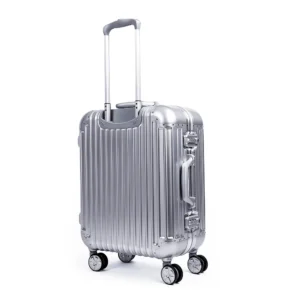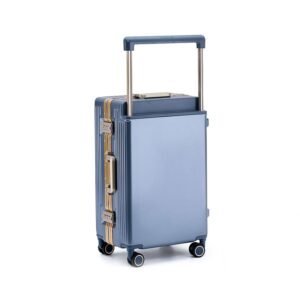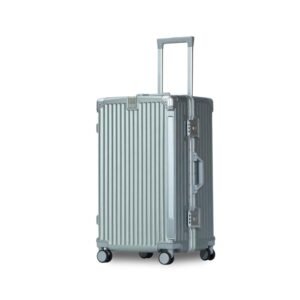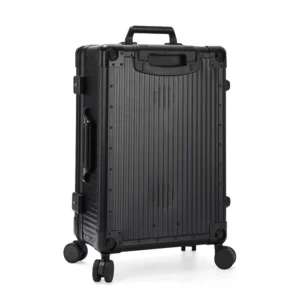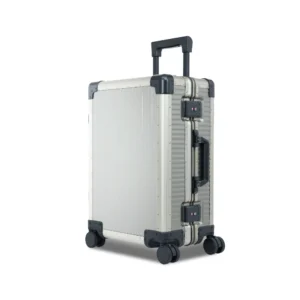

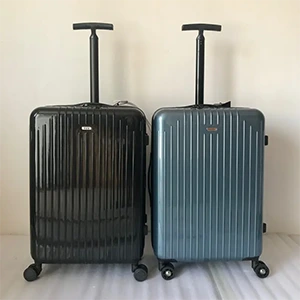
When developing aluminum luggage for your brand, we start with two questions: is the case intended for short business trips or longer journeys with more luggage, and what do you want to improve? Quieter rolling, easier movement when packed and a brake call for different wheel options. Your answers help us narrow down the choice.
Hinomoto and LiJun are among Aluvox’s wheel suppliers. If you want Hinomoto luggage wheels, we can discuss suitable assemblies, any changes needed to fit them and which samples to prepare, based on your case and its intended use. A “wheel assembly” means the wheel together with the housing that attaches to the suitcase corner.
Choosing Wheels for Different Travel Needs
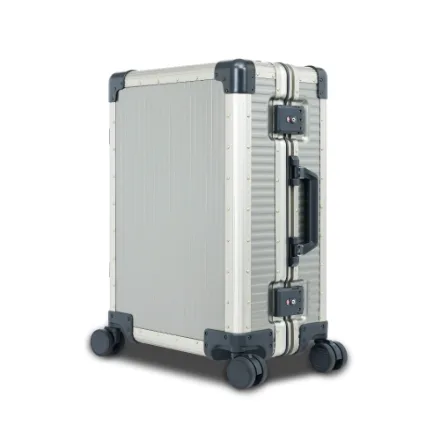
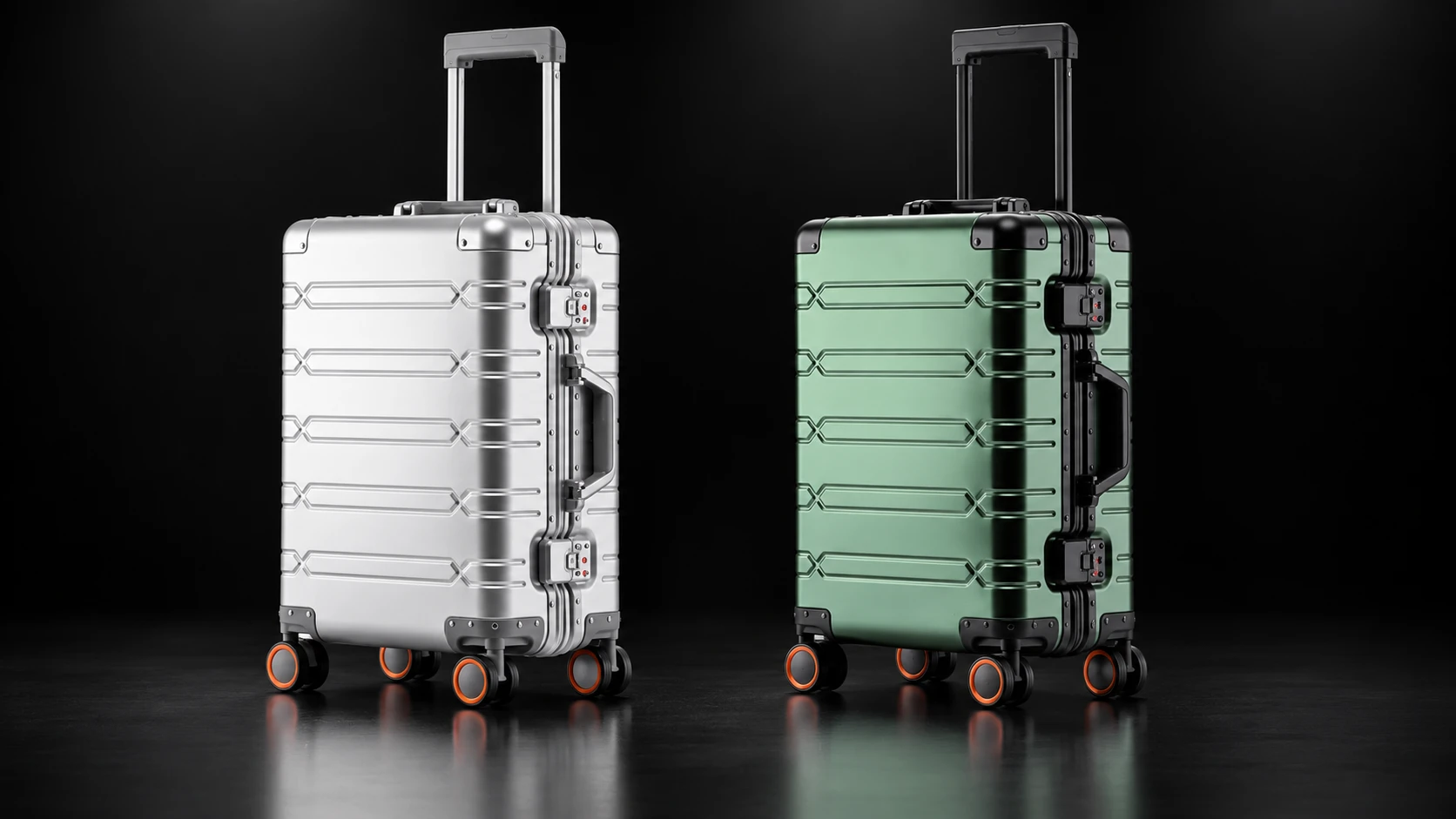
Our TS-006 has an aluminum shell and frame and is listed in 20-, 24- and 28-inch sizes. A collection can keep a coordinated appearance while using different wheel assemblies to suit each size’s packed weight and mounting space.
For example, you might develop a TS-006-based collection with a smaller case for short business trips and larger cases for longer vacations. Quiet rolling through hotel corridors may matter most for the smaller case, while the larger cases also need to move easily when packed. Start by identifying the main need for each product in the table below.
| What your customer needs | Where to start | What to check on the sample |
|---|---|---|
| Quieter airport and hotel use | A SILENT RUN assembly that fits the case | Compare noise and pushing effort on hard floors and carpet with the same load. |
| A packed, larger case that is easy to move | An assembly suitable for the load and mounting space | Check loaded starts and turns, housing contact and movement at the mounting. |
| Wheels that lock when the traveler stops | A brake-equipped assembly and its control | Check holding and free rolling after release, within the permitted weight and slope. |
| New wheels with minimal case changes | An assembly matching the fixing points and corner space | Check fit, turning clearance and changes to finished case height. |
Tell us if your specification already calls for Hinomoto. If you have not decided, compare the current wheels with the proposed Hinomoto option on both price and sample performance. The aim is to choose a suitable assembly for your case, rather than change the component brand alone.
Choosing Quiet Wheels for Airports and Hotels
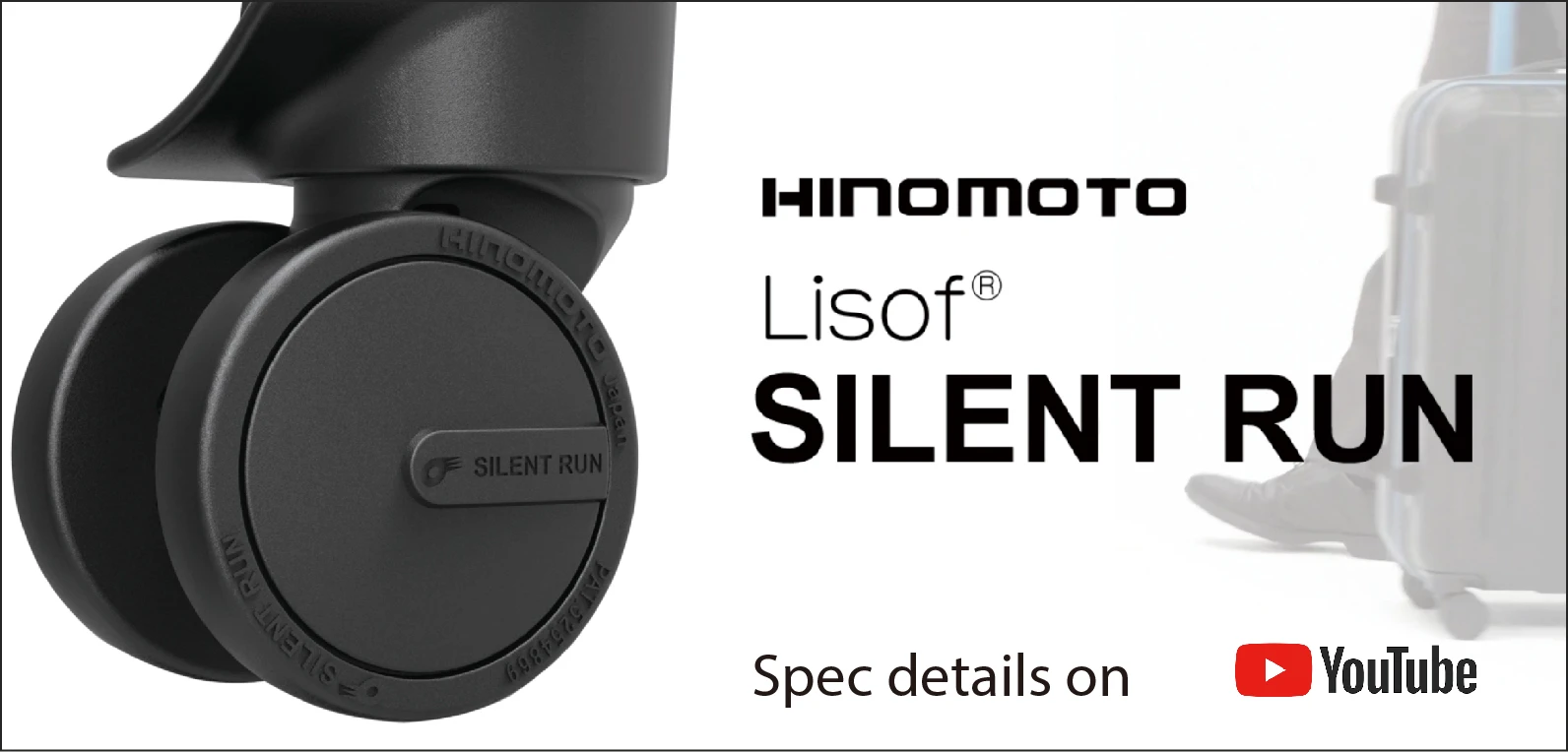
For a business-travel case used mainly in airports and hotels, we recommend starting the search with Hinomoto SILENT RUN. The reason is specific: according to Hinomoto, this range uses LISOF® material developed with Mitsubishi Chemical and offers quiet running, durability and resistance to hydrolysis. Quiet running directly addresses the rolling noise you want to improve. The next step is to select a specific assembly that fits the case.
After identifying a quiet-wheel range, consider how easily it rolls on different floors. Blickle’s caster technical guide identifies wheel diameter, tread, bearings and floor surface as factors in starting and rolling resistance. The tread is the part that touches the floor. During sampling, we recommend fitting the current and candidate assemblies to matching cases, adding the same load and comparing both noise and pushing effort on smooth floors, joints and carpet.
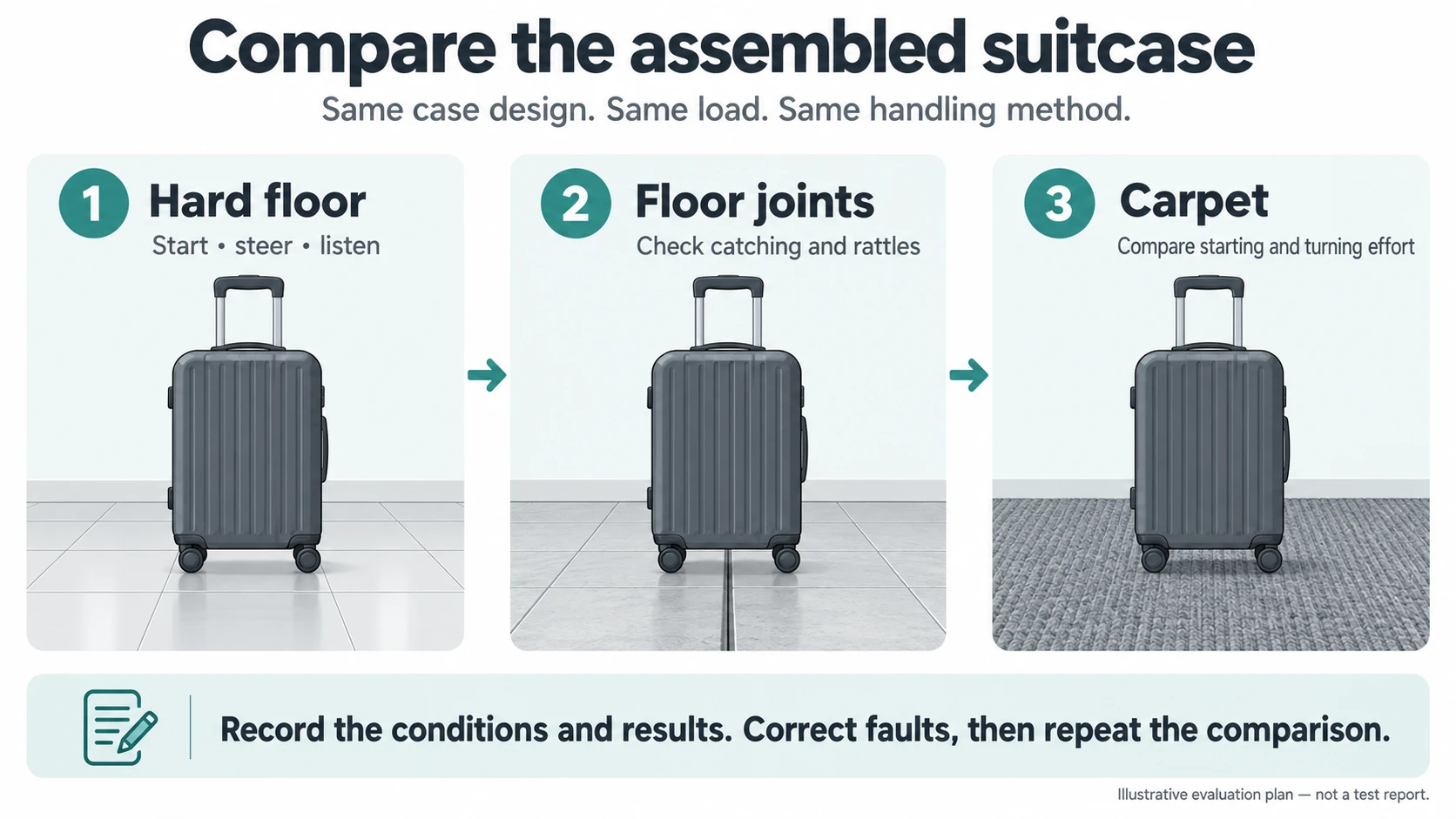
That comparison shows whether the quiet-wheel option suits your product. For example, it may be quieter on tile but noticeably harder to push on carpet. If your customers regularly stay in hotels, compare other assemblies that fit. Choosing a larger diameter also requires checking corner space and finished case height, as explained in the mounting section below.
A rattle over a joint needs a separate inspection for movement at the housing, contact with the shell or trapped debris. Identify the cause, correct it and repeat the same route. The sound alone is not a reason to blame the tread material.
Choosing Wheels for Checked Luggage
For larger checked luggage, start with packed weight. Tell us the expected total weight for each size, including the suitcase itself, so it can be checked against the wheel manufacturer’s rated load and operating conditions. Rated load is the weight a component is allowed to carry under specified conditions. An assembly that fits still needs to suit the intended load.
Here, focus on starting, turning and sustained rolling with the case packed. If the empty case moves easily but the loaded case takes noticeably more effort, compare other suitable assemblies with the same load on the same floor. If the housing also moves or its screws loosen, inspect the attachment before concluding that the wheel cannot carry the weight.
Durability testing can be discussed separately when the project needs an assessment of wear from continued rolling. For example, SATRA TM248, May 2021 uses a rolling-road machine to assess loaded luggage for abrasion and structural damage. Agree the method, duration and pass criteria for the project before testing.
If you want one assembly across 20-, 24- and 28-inch cases, include loaded checks for every size in the sample plan. Sharing a part can reduce purchasing and spare-part items. But if the larger case is hard to push when packed, it needs a different suitable assembly. The final quotation and order details should identify the wheel model for each size so you can approve the specifications and cost of the full collection.
If you are still comparing single wheels, double wheels or materials, see our suitcase wheel guide. Once you have chosen the general layout, use the checks here to narrow down specific Hinomoto assemblies.
When to Choose Luggage Wheels with Brakes
If you want travelers to lock the wheels while retrieving documents at hotel reception, specify a brake as a separate feature. Hinomoto’s June 19, 2025 announcement describes a luggage caster with a one-touch locking function, making this a direction to explore for that need.
Raise the brake requirement when discussing the case design. In addition to the wheels, the design must accommodate the control and any connecting mechanism. The sample should show whether the control is easy to operate and how the user recognizes the locked and released states. Whether the existing case can be retained depends on the selected mechanism’s mounting requirements.
Check the selected model’s permitted load and slopes. Within those conditions, the sample should hold when locked and roll normally after release. If a wheel still drags after release, resolve the mechanism or installation problem before approving the feature.
Decide whether a brake belongs in your product. If it does, agree on the brake parts, case changes and spare-part costs in the quotation. If quieter rolling is the only priority, you can keep the budget focused on the wheel assembly itself.
Checking Wheel Fit and Mounting
For an existing case, check four things: does the housing fit into the corner, do the fixing holes align, can it swivel without hitting the shell, and how much height does it add? Two assemblies with the same wheel diameter can still have different housings and fixing points, so diameter alone is not enough to choose a replacement.
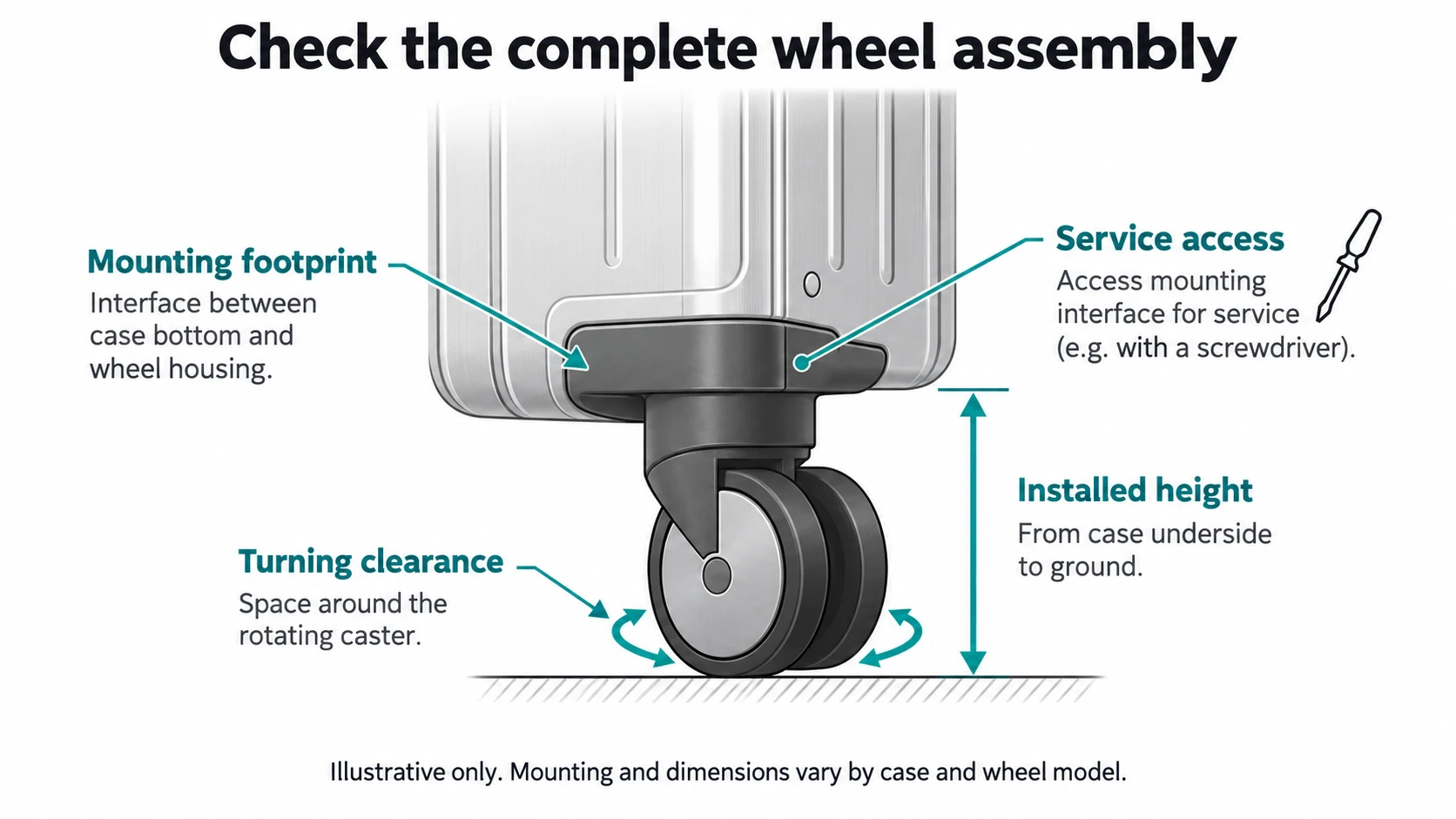
If the assembly fits and has enough turning space, it can proceed to an assembled sample. If it does not fit, first consider a model suited to the existing corner. If a specified wheel is essential, we can discuss the required corner or fixing-point changes, any tooling involved and the cost with you. Once you approve those changes, the revised design can proceed to sampling.
Measure the finished case again after changing wheels. Even when the screw holes align, a different housing height can change the overall height and the gap between the case bottom and the floor. Stand the sample on the floor, check that it sits steadily and confirm its dimensions. For a new case design, selecting the assembly earlier lets you plan the corner space around it.
Replacement should be considered during development, before the finished luggage goes on sale. For the selected case structure, check where the wheel screws are reached, whether there is room to remove them, and whether replacement means a single wheel or the complete assembly. This lets us discuss the right spare-part codes and replacement arrangements with you when preparing the order.
Approving Wheel Samples and Planning Spare Parts
Once you have selected the sample, record the exact wheel assembly in the order. “Hinomoto wheels” alone is not enough. For example, Hinomoto’s HWSN504-L/R-P01 catalog entry gives a complete part code, PP core and TPE tire. Recording the selected model and materials gives component purchasing, production and inspection the same specification to check.
At sample approval, record the following details together:
- Case model, size and the complete wheel code for each mounting position.
- Core and tread materials, and whether a brake is included.
- The approved sample version, including changes to fixing points, corners or finished dimensions.
- Sample load, floor surfaces, checks performed and recorded results.
- Spare-part codes, matching case models and mounting positions, quantities and delivery arrangements, plus approval requirements for any later wheel-model change.
Before placing the production order, also agree on the required inspections, whether they are sampled or periodic, and which records or reports are needed.
When you place an order, we agree on spare parts with you: which wheel assemblies to prepare, the case models and mounting positions they fit, quantities, and whether to ship them with the luggage. This helps your brand handle replacement requests after the sale. Sizes that use the same assembly can share a stock of spares. Where part codes or mounting positions differ, list them separately so your team has the right part for each case.
To discuss Hinomoto wheels for your Aluvox aluminum luggage, send us the case model or reference image, sizes, expected packed weights and order quantity. Tell us what you most want to improve: quieter rolling, less effort when packed, or a brake. Include a specific Hinomoto code if you have one. If you have not chosen a model, start with how your customer will use the case.
Discuss your aluminum luggage project with Aluvox. Through our private label luggage service, we can discuss wheel options and samples for your product.