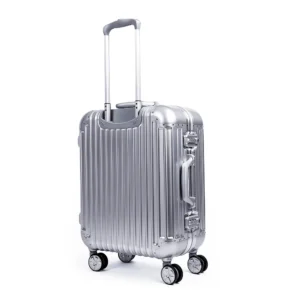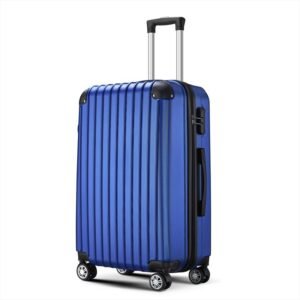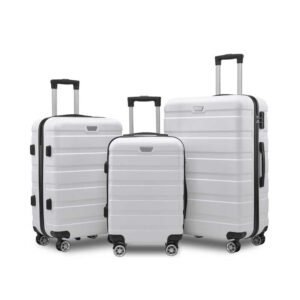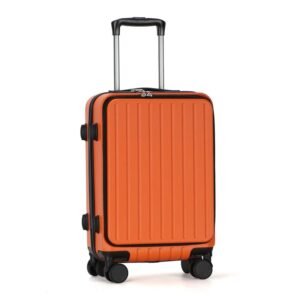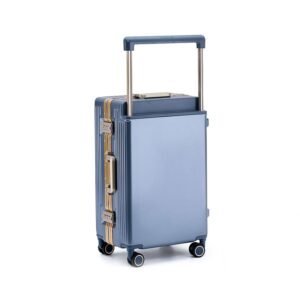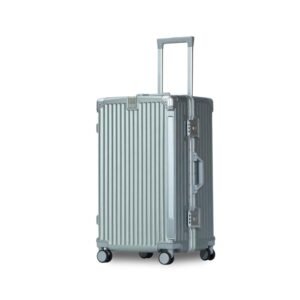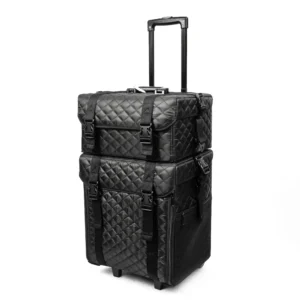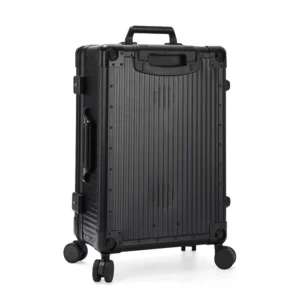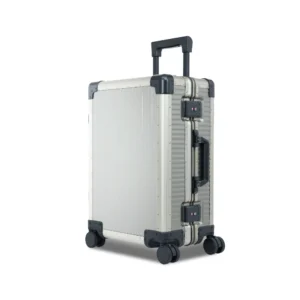


Expandable luggage is worth making when customers usually need a slim case, occasionally need room for one more item, and can use a deeper case on those occasions. If customers would pack to the expanded depth on most trips and can use that depth every day, sample a fixed-depth case at the same size. An expansion panel that stays open most of the time may be making up for a base case that is too shallow.
A common zippered expansion system uses a foldable fabric band, or gusset, around the main compartment. Unzipping the expander releases the gusset and lets the case grow deeper. When zipped back in, the gusset folds into the join. For a luggage brand, what matters is how much space is available with that fabric tucked away and what extra item fits when it opens.
When to choose an expandable case or a fixed-depth case
Suppose you are developing a small suitcase. It has to stay within 22 cm (8.7 in) in depth when packed for everyday use, with up to 25 cm (9.8 in) allowed for occasional extra packing. The item you want to add is a bulky jacket. These dimensions are the limits for this example.
Start with two samples designed for the same 22 cm packed limit: a fixed-depth case and an expandable case with the gusset zipped in. Put the same clothes, shoes, and toiletry bag in the same places. Fasten the straps, close the dividers, and close the main compartment as a customer would. Pay attention to where the gusset folds. If that fold takes up space around the opening and forces the toiletry bag to sit on edge or lifts the divider, customers will encounter it every time they pack the case. If both samples take the everyday load comfortably and expansion makes room for the jacket, the feature solves a specific problem.
If 22 cm is the limit in every use case, apply it to both configurations. Try adjusting the interior first. Moving a divider or changing the pocket layout may free a continuous space for the item you need to fit. If 25 cm is allowed every day and the jacket will almost always go in, compare a fixed 25 cm case. Omitting the expansion zipper, gusset, and related seams simplifies the build. Compare the actual empty weights and usable space of the two samples to see what that simpler build gains.
Make the decision separately for each size. For a smaller case, the feature depends on how often customers can use the extra depth. For a checked case, consider which limit they reach first: room in the case or total packed weight. A bulky sweater can use a surprising amount of room for its weight. Several books can use up the remaining weight allowance while leaving space in the case. Identify what customers need to carry in each size before specifying expansion across the whole range.
Measure packed depth and usable space separately

Record three things separately: the maximum outside depth of the packed case, how far the expansion section is designed to open, and the space that can actually be used inside the main compartment. The outside dimension tells you whether the case fits a designated space. The expansion travel describes the mechanism. The shape of the space inside tells you whether the jacket can lie flat.
If an unobstructed area inside the case measures 35 × 45 cm and the full area gains 3 cm evenly, the added geometric volume is about 4.7 liters. On a real sample, the added depth can vary around the gusset. Rounded corners reduce the width available near the edges. Linings, dividers, and the trolley handle housing can take up space inside. Several small gaps may add up to useful volume for socks while leaving too little continuous space for a jacket. Use liters to compare specifications measured the same way, then pack the target item to check the shape of the space.
Agree on how to measure the outside dimensions. Pack and close the case in the specified configuration, set it in the same orientation for each reading, and measure across the outermost points without pressing the case inward. Include anything that sets the maximum depth, such as a loaded front pocket or a section of gusset that bulges out. If the drawing puts the expanded case exactly at the 25 cm limit, allow for changes under load and production variation when setting the nominal dimension.
If the design has a front compartment, load it as specified during the same check. A front compartment that fits a laptop on its own can push into the main compartment when both sections are packed. Check that both can close with the items the design is supposed to carry.
Compare quotes on the same base case
If the construction already exists, start with a sample. Look at where the gusset folds, how the zipper feels around a corner, and whether the lining moves into the slider’s path. Once you can pack and operate that sample, you can judge whether the project needs a different depth, a change to the interior, or simply an existing expandable model. Explore Aluvox expandable luggage models.
If you are adding expansion to a fixed-depth case, ask where the gusset will attach, where it will fold, and which lining and divider parts can carry over. The extra fabric and seams change how the assembly fits around the opening. A zipper that moves freely along a straight side may bind at a tight corner if the gusset bunches or the lining sits too close to the teeth. A revised fold or seam may keep the change within the sewn components. If the join must move or the shell needs a different shape, itemize the additional sampling or development work.
To compare prices, keep the shell material, wheels, trolley handle, and baseline interior as close as possible. For each size, record the unit price difference, empty weight, one-time development costs, and packed carton dimensions. If the gusset folds within the original outside profile, the existing carton and protective inserts may still fit. A new protrusion can change that packaging. Pricing both options on the same basis lets you see what the additional spend buys.
Check the everyday load, then add the extra item
First, use the same everyday load. Pack both samples with the same items in the same positions. Check that the divider sits flat, the case closes normally, and the maximum packed depth meets the 22 cm limit. Then open the expandable case’s gusset with the same items and weight inside. Observe how cleanly the slider goes around the corners, whether the gusset opens fully, and how the outside profile changes. Keeping the load consistent makes it easier to see what changed when the expansion section opened.
Next, add the jacket. Pack it as the customer would and close the main compartment normally. Measure the deepest point, then lift the case, stand it upright, and roll it through a turn under the agreed conditions. If the jacket fits and the sample measures 25.4 cm (10.0 in), it exceeds this project’s 25 cm limit. If the dimensions are within the limit and the lining repeatedly catches at the same corner, send it back for revision. Record the load, the location, and the action that reproduces the problem so the next sample can be checked the same way.
When the case catches at the same corner empty or with its everyday load, begin by looking at the gusset fold, lining position, and zipper path. If it happens only after the jacket goes in, repeat the pack and look for a localized bulge. If the item is piled too high in one spot, an interior layout change may solve it. If the items sit as intended and there is still too little clearance to close, revisit the expansion geometry or adjust the product brief.
When you approve the sample, record its version, the dimension limits and measuring method for each state, the contents and their weight, and the conditions it passed. For durability testing, agree on which configurations to test, the load, the method, and the acceptance criteria for the zipper, carry handles, or rolling case. A packing trial shows how the sample performs during the specified actions. A repeat-cycle test shows how it holds up when those actions recur. See what to check in a luggage test report.
If you’re planning a private label range, bring a reference model, your maximum packed outside dimensions for everyday use, and the item you want the expanded case to fit. That gives us a starting point for comparing existing builds and deciding which sizes are worth making expandable. Discuss your project with Aluvox’s private label luggage team.