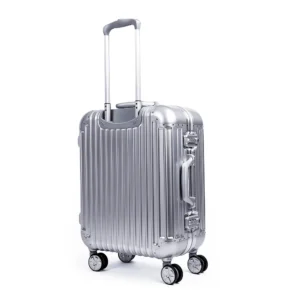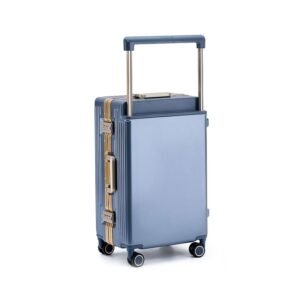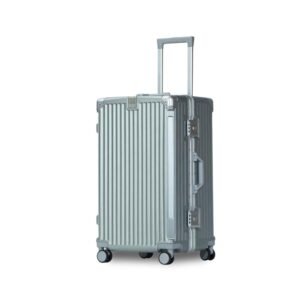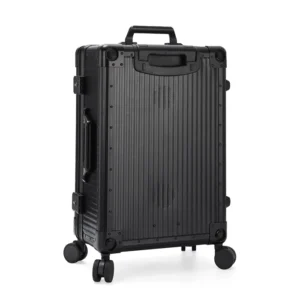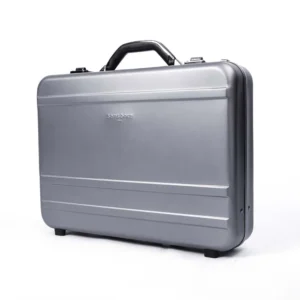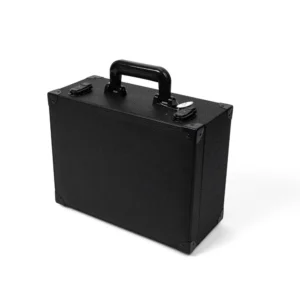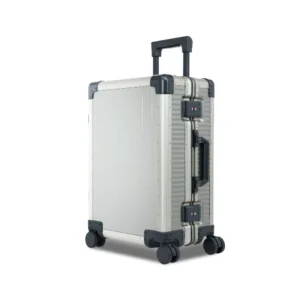

Search for a “metal suitcase” and almost every result is aluminum. Not steel, not titanium at the consumer tier — aluminum. The two words function as synonyms in the market, and for a brand sourcing a product line, that simplifies the material question and immediately opens a different, more important one: full aluminum, or an aluminum frame with a polycarbonate shell?
This fork is the decision that most metal suitcase sourcing actually turns on. Get it right and you land on the weight, price, and positioning your channel needs. Get it wrong and you either ship a case too heavy and too expensive for your market, or you market “metal” and deliver something that doesn’t feel like the premium product the word promises.
This guide covers the sourcing decision behind that fork, how to handle the dent question that worries every metal luggage buyer, what to specify with a manufacturer, and how to match construction to your brand position. It is written from the buyer’s side of the table — not how factories produce metal suitcases, but how brands should decide what to source.
At Aluvox, we manufacture both full aluminum and aluminum-frame metal suitcases from our Dongguan facility, with flexible configuration to match a brand’s weight target, price tier, and positioning. The framework below applies to evaluating any metal suitcase supplier, including us.
“Metal Suitcase” Means Aluminum — And One Key Fork
In practical sourcing terms, “metal suitcase” means aluminum. Steel is too heavy to be viable as a shell (roughly three times the density of aluminum), and titanium sits in a separate premium niche at much higher cost. When a retail buyer or end consumer searches “metal suitcase,” the market returns aluminum — which is why your sourcing conversation starts there.
The fork that matters is between two aluminum constructions, and buyers routinely confuse them:
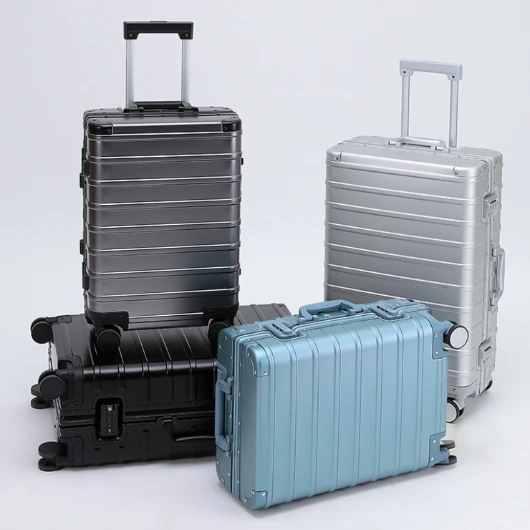
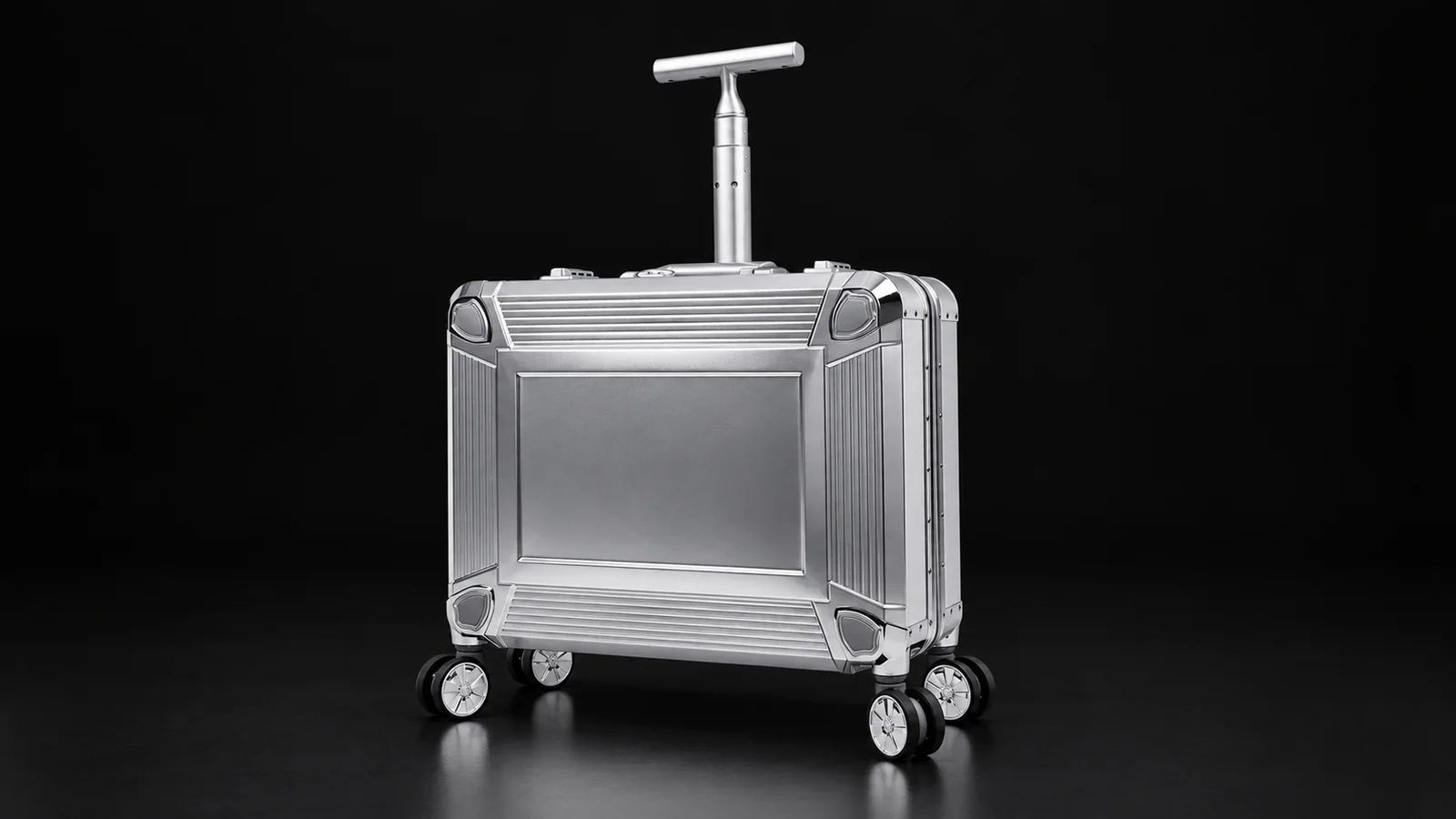
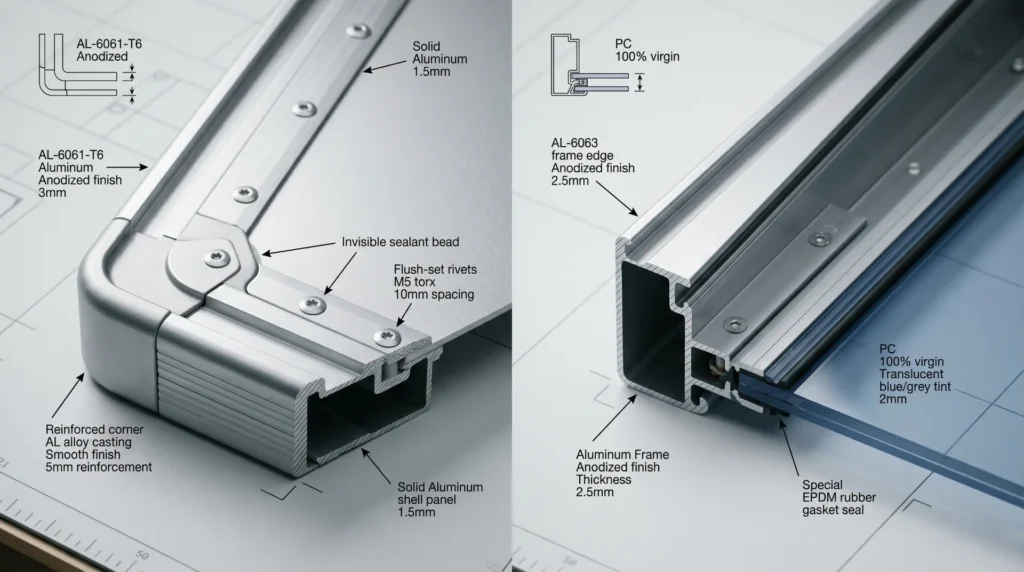
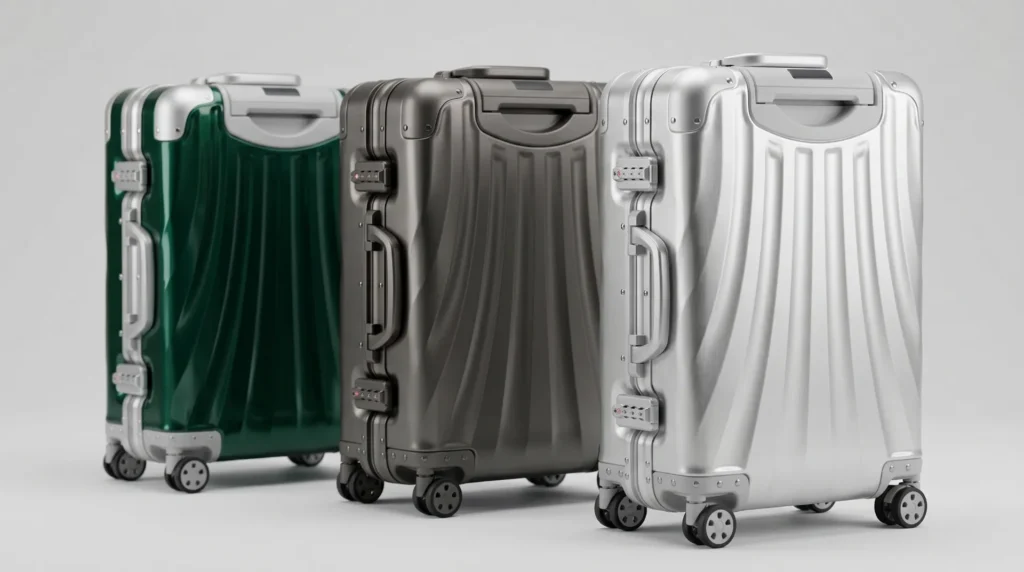
Full aluminum — the shell panels and frame are all aluminum (typically 5000-series aluminum-magnesium alloy). This is the premium, rigid, Rimowa-style construction with the highest price and the heaviest weight.
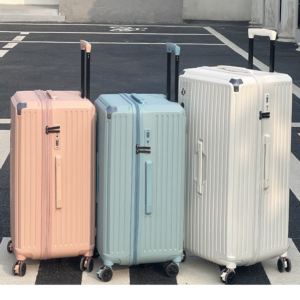
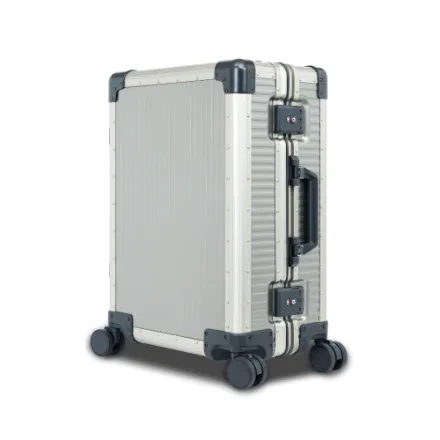
Aluminum frame with polycarbonate shell — a rigid aluminum frame handles the closure and structure while polycarbonate panels form the body. Lighter, less expensive, and still delivering the “no zipper, full frame” structure, but not a full-metal product.
Both are legitimately marketed as “metal” or “aluminum frame” luggage, and both are correct choices for different positions. The confusion arises when a buyer specifies “aluminum” expecting full metal and receives a frame-and-PC hybrid, or pays for full aluminum when a hybrid would have served the price point better. Knowing which one your project needs is the first sourcing decision.
For the broader material science behind metal luggage — including titanium and magnesium options — see: Metal Suitcase Manufacturer OEM Guide →
Full Aluminum vs Aluminum Frame: The Sourcing Decision
The choice between full aluminum and aluminum-frame-with-PC is a decision about weight, cost, and positioning. Here is how the two compare on the factors that drive a sourcing decision.
| Factor | Full aluminum | Aluminum frame + PC shell |
|---|---|---|
| Shell material | 5052-H32 aluminum-magnesium alloy | Aluminum frame + polycarbonate panels |
| Weight (carry-on) | Heavier (9–12 lbs) | Lighter (closes the gap significantly) |
| Premium feel | Maximum — solid metal | Strong — frame visible, PC body |
| Price tier | Highest | Moderate |
| Impact response | Absorbs and spreads impact across panel | PC flexes, frame holds structure |
| Dent behavior | Surface dents visible | PC resists denting, recovers shape |
| Airline weight compliance | Tighter margin | Easier to hit carry-on limits |
| Best brand position | Top-tier premium / status | Premium-but-accessible |
The weight reality. Full aluminum carry-ons run 9–12 pounds empty. For a brand selling to frequent flyers who pack to the airline limit, that empty weight eats into the usable allowance — a genuine consideration. The aluminum-frame-with-PC construction closes much of that gap, which is why it dominates the premium-but-accessible segment.
The premium-feel reality. Full aluminum delivers a solid-metal feel that PC cannot fully replicate. For a brand whose entire positioning rests on the aluminum aesthetic and status signal, full aluminum is the construction that sustains the price. For a brand that wants the zipperless frame security at an accessible weight and price, the hybrid is the better commercial fit.
For the material trade-offs against pure polycarbonate, see: Aluminum vs Polycarbonate Luggage →
For the security advantages of frame closure over zippers, see: Zipperless Luggage Sourcing Guide →
Addressing the Dent Question — A Brand’s Hidden Advantage
Every metal suitcase buyer encounters the same concern, and it appears in nearly every consumer review of aluminum luggage: metal dents and scratches at the surface. Travel press states it plainly — aluminum is structurally sturdy but does dent and scratch easily at the surface level. Consumer reviews echo it: the biggest gripe about metal luggage is that it picks up dents and dings through baggage handling.
For a brand, this is not a reason to avoid metal — it is a positioning opportunity that the strongest brands have already turned to their advantage.
Reframe dents as character, not damage. The premium aluminum brands — Rimowa, Away — have built marketing narratives that turn surface marks into a feature. The dents and scratches become “a record of your travels,” a patina, a sign of a well-used premium object rather than a flaw. One widely-read review described coming to see the first dents on an $1,800 case as “cool tattoos and scars” rather than damage. A brand sourcing metal luggage can adopt this narrative deliberately — position the surface wear as authenticity, not defect, and the most common objection becomes part of the brand story.
Reduce visible denting through surface treatment. Surface finish materially affects how visible dents and scratches are. A textured or brushed finish hides surface marks far better than a smooth polished surface — a point even consumer testers note, observing that a textured exterior means a dent “won’t be as noticeable.” For a brand, specifying a brushed or textured anodized finish is a concrete way to reduce the visible-damage objection at the product level.
Use the hybrid where dent-resistance matters most. If a brand’s customer is particularly dent-averse, the aluminum-frame-with-PC construction is the answer — the polycarbonate shell flexes and recovers shape where solid aluminum would hold a dent. This is a legitimate reason to choose the hybrid over full aluminum for certain customer segments.
The dent question is real, but it is manageable — through narrative, through finish, and through construction choice. Brands that handle it well turn the category’s most common objection into part of their positioning.

What to Specify When Sourcing Metal Suitcases
The difference between a premium metal suitcase and one that merely looks metallic is in specifications most buyers never request. Confirm these in writing before production.
Alloy grade and mill certificate. Specify the aluminum alloy — 5052-H32 aluminum-magnesium alloy is the quality standard for full aluminum shells and frames. Request the mill certificate confirming alloy grade, temper, and mechanical properties. A factory that cannot supply a mill certificate cannot prove what metal it is selling you. Be alert to products marketed as “aluminum” that are actually plastic mimicking a metallic look — a documented practice at the low end.
Shell or frame wall thickness. Specify the thickness. For full aluminum, shell thickness drives both durability and weight; for frames, thickness drives closure rigidity. Under-specified metal flexes and dents more readily.
Corner reinforcement construction. Metal suitcases concentrate impact at the corners. Specify aluminum-magnesium alloy corner guards or reinforcement. Quality products use reinforced corners rated to resist warping under impact — some manufacturers cite load tolerances up to 200kg for the body structure.
Lock and closure specification. Confirm genuinely TSA-approved combination locks, and for frame constructions, the latch cycle endurance (10,000+ cycles is the quality standard).
Drop and impact test documentation. Request ISTA 2A loaded drop test results, ideally with third-party verification from SGS, Bureau Veritas, or Intertek. This is the protocol that proves the case survives real handling rather than just looking solid.
A specification that doesn’t cover alloy grade, thickness, corner construction, and drop testing is incomplete. For the full supplier evaluation framework, see: How to Vet Industrial Luggage Suppliers →
Aluvox Metal Suitcase OEM Program
Construction options: Aluvox manufactures both full aluminum and aluminum-frame metal suitcases. Full aluminum uses 5052-H32 aluminum-magnesium alloy shell and frame; the aluminum-frame option pairs a rigid aluminum frame with polycarbonate panels for a lighter, more accessible product. Configuration is flexible to match your weight target, price tier, and positioning.
Production parameters:
| Parameter | Specification |
|---|---|
| MOQ | 300 pcs / style |
| Color splitting | Supported — total order MOQ across colors |
| Shell material | 5052-H32 aluminum-magnesium alloy (full aluminum) |
| Corner construction | Aluminum-magnesium alloy reinforced corner guards |
| Lock | TSA-approved combination lock |
| Sample lead time (existing tooling) | 20 working days |
| New mold development | 30–45 working days |
| Bulk production | 45 days from deposit |
| Surface finish options | Brushed / Sandblasted / Anodized |
| Customization | Color, finish, logo, lining, lock type |
| Export ports | Huangpu, Nansha, Shekou, Yantian |
Addressing the MOQ concern directly. The most common anxiety in metal suitcase sourcing is minimum order commitment — buyers worry about tying up cash and inventory risk on a first order. Aluvox’s 300-piece MOQ with color splitting addresses this: a brand can launch a metal suitcase line across multiple colors within a single 300-unit minimum, rather than committing 300 units per color. This lets a brand test an exclusive metal line at a manageable commitment.
Documentation provided on request:
- Aluminum alloy mill certificate (grade, temper, mechanical properties)
- ISTA 2A loaded drop test results
- 48-hour neutral salt spray corrosion test data
- TSA lock and latch cycle test results
Browse the Aluvox aluminum luggage collection →
Visit the Aluvox aluminum luggage manufacturer page →
Request a metal suitcase quote — submit your construction preference, target weight, and order volume. We will provide indicative factory pricing within 2 business days. Request Quote
Three Sourcing Strategies by Brand Position
The right metal suitcase specification depends on brand position. Three strategies cover most successful approaches.
Strategy 1: Top-tier full aluminum positioning ($400–$800+)
For brands competing at the premium status tier, full aluminum is the construction. The solid-metal feel, the anodized or brushed finish, and the riveted aluminum aesthetic are the product. Specify 5052-H32 shell and frame, a premium surface finish, and lean into the dent-as-character narrative. The audience at this tier values the metal aesthetic enough to accept the weight and price — and the surface patina is part of the appeal, not an objection.
Strategy 2: Premium-but-accessible aluminum frame positioning ($200–$450)
For brands targeting the larger premium-but-accessible segment, the aluminum-frame-with-PC construction is the commercial sweet spot. It delivers the visible aluminum frame and zipperless security at a weight and price that a broader market accepts. Specify a quality aluminum frame, durable PC panels, and a textured finish to minimize visible wear. This is the position most volume in the category occupies.
Strategy 3: Tiered metal line
For brands committed to metal as a core category, offer both — full aluminum at the top of the range as the flagship statement, aluminum-frame-with-PC as the accessible entry. Both share the metal positioning and frame-security narrative, letting the brand capture customers across price sensitivities while maintaining a coherent metal-luggage identity.
Metal Sourcing Is a Decision About Construction, Not Just Material
The buyers who source metal suitcases well understand that “metal” is the starting point, not the specification. The real decision is full aluminum versus aluminum frame — a choice about weight, cost, and positioning that determines whether the product fits the channel. The dent question, which worries every metal buyer, is manageable through narrative, finish, and construction. And the specifications that separate a premium metal case from a metallic-looking one — alloy grade, wall thickness, corner construction, drop testing — are the items to confirm before production.
The category’s commercial appeal is real: metal luggage carries a premium-shelf position and a status signal that plastic cannot match. The sourcing discipline is to choose the construction that fits your position, handle the dent objection deliberately, and specify the build properly.
If you are evaluating a metal suitcase line and want help matching construction to your price tier and positioning, Aluvox engineers can walk you through the full-aluminum versus aluminum-frame decision and provide an indicative production quote.
Contact an Aluvox Engineer — submit your target construction, weight, price tier, and volume. We will recommend a metal suitcase specification and provide an indicative quote within 2 business days. Contact Engineering Team