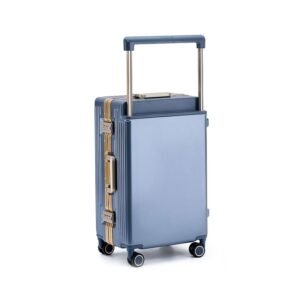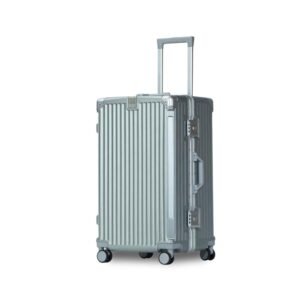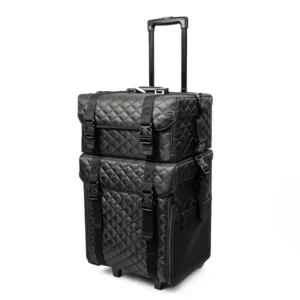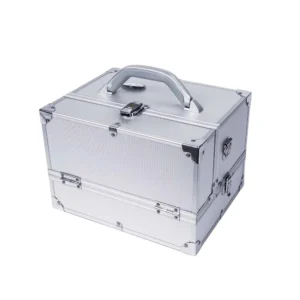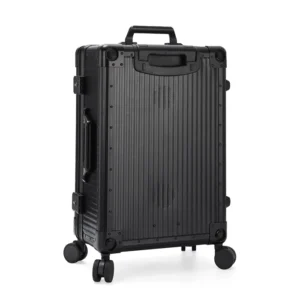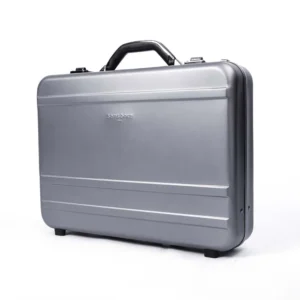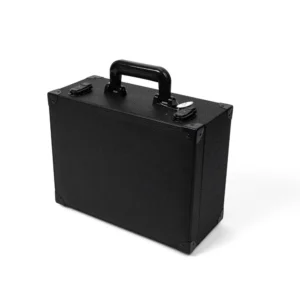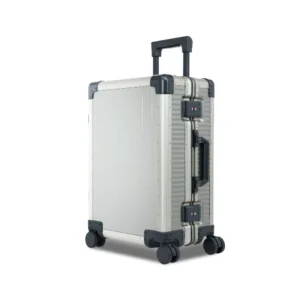

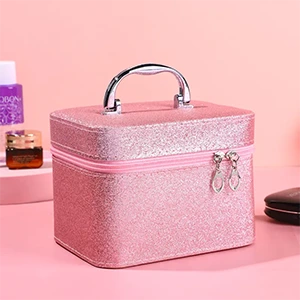
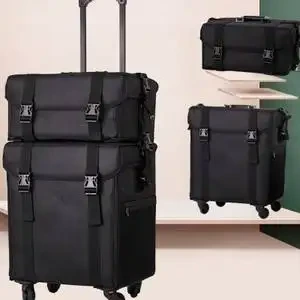
On a fabric bag the logo is a label you attach. On an aluminum case, and the two constructions that name covers, it is a step in the process, and where that step sits in the sequence decides how the mark looks, how long it survives, and whether you can change it later.
Most branding guides for this category are written by soft goods factories. They cover woven labels and embroidery, which are useful on a duffel and irrelevant on a metal shell. Which sewn labels a suitcase actually needs is a separate question with a surprising answer, covered in fabric content and care labels on luggage.
Before or after anodizing
That is the first fork, and it is not a style question.
Engrave the bare aluminum, then anodize. The mark goes under the coating. Laserax describes this route as engraving the most resistant marks on the bare aluminum so they keep their readability after surface treatments. The mark becomes part of the panel rather than something applied to it.
Anodize first, then laser the coating. Here the surface is not removed. Trotec describes the result as comparable to an annealing mark on steel, permanent and high contrast, with the contrast depending on the color of the anodized layer. Laserax notes that marking on the anodized layer preserves the corrosion and wear resistance the anodizing was there to provide.
Sources: Laserax, laser marking anodized aluminum and Trotec, laser engraving anodized aluminum, both checked as of August 2026.
The commercial consequence is the part nobody writes down. Route one has to be decided before the panel goes to the finishing line. Route two can be done later, which makes it the one that survives a late brand decision without holding up the shells.
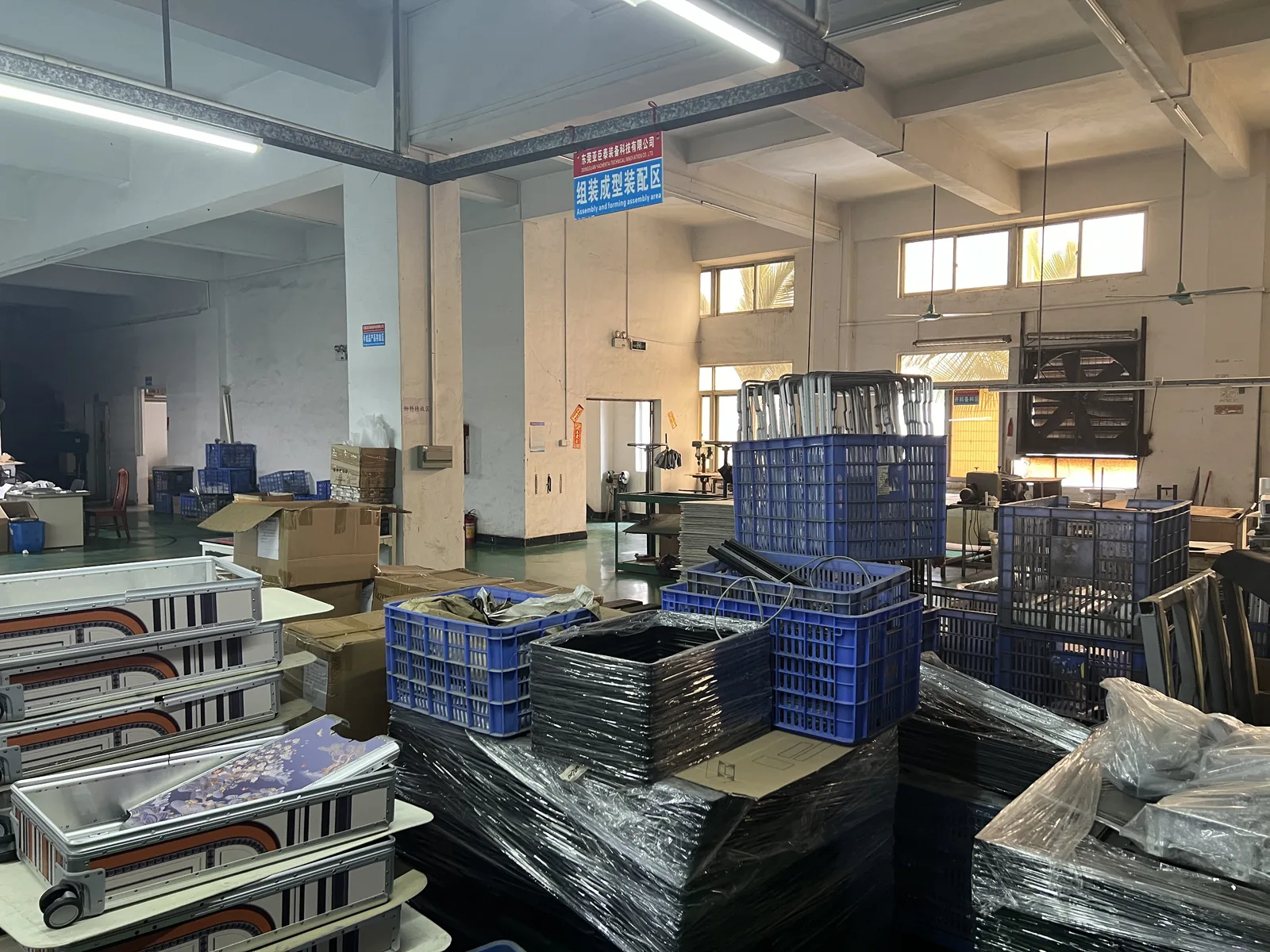
Five ways a mark gets onto a case
Laser on the anodized layer. Permanent, no added part, no added tooling. Contrast depends on the anodizing color, so approve it on the actual finish rather than on a rendering.
Engraving before finishing. The most durable route. It fixes the mark early in the sequence, so a logo change means new panels rather than new artwork.
Printing. Pad print, silk screen, and transfer all sit on top of the finish. They give you color, including colors laser cannot produce, and they wear first at the places a case gets handled. Fine on an interior panel, exposed on a lid corner.
Embossed or debossed in the die. Costs nothing per unit and a lot once. It is also locked at die sign off, which makes it the least reversible option on this list.
A separate plate. A part with its own tooling, its own finish, its own color match against the shell, and its own attachment method. Every one of those is a thing that can go wrong independently of the case.
What changes on a plastic shell
The same five exist, minus the anodizing fork. There is no coating to mark into, so the durable route is texture in the tool and the flexible route is printing.
Shell texture is the constraint people forget. A deep grain scatters a printed edge, so a fine logo that looks correct on a flat proof can read as fuzzy on the part. Ask for the print on the actual textured surface before approving it.
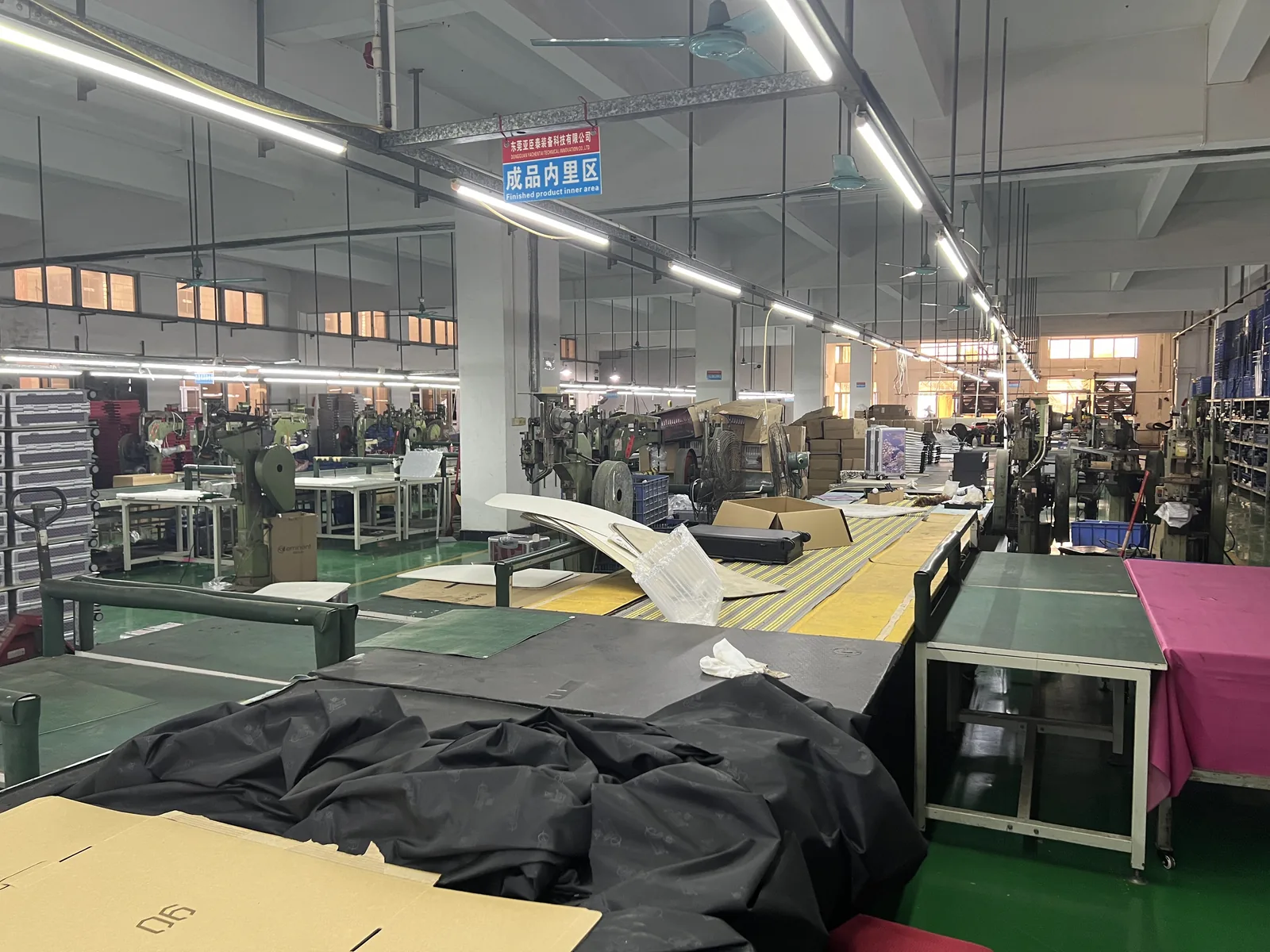
Color matching across components
This is the question we get most often in this area, and the honest answer starts with why it is hard.
A case is not one material. The shell may be anodized aluminum or a molded plastic. The lock and latches are usually a plated or painted metal. The wheels and handle grips are injected plastic. The zipper is woven tape with a metal or plastic chain. Each of those takes color through a different system, and none of them hits a target the same way.
So the workable instruction is not one color code sent to everybody. It is a physical master for each component, approved together under the same light, with a stated tolerance. Approving a set of parts on a screen is the reliable way to be surprised. Why the codes cannot all be hit at once is the subject of matching one color across a shell, a zipper, wheels and a lock.
What to put in the specification
Six lines, and they fit in a table.
Method. Placement, given as a dimension from a stated datum rather than as centered. Size in millimeters. The surface it goes on, by name. Which sizes in the range carry it. The physical sample it is approved against.
State whether the logo appears on every size or only on the checked sizes. A mark that is proportionate on a 26 in case can look heavy on a 20 in one, and that is a decision rather than a scaling factor.
What we do and what we do not
We mark on aluminum, aluminum magnesium, titanium, and the plastics we run, and we will tell you which route the finish allows before you choose one.
We work from your artwork as supplied. Where the artwork will not hold at the size and on the surface you have asked for, you will get that back as a question rather than as a silently adjusted file.
We do not apply a mark that is not yours. A brand asking us to reproduce another company’s logo or a trade dress that belongs to someone else is a conversation we end rather than price.
We also do not approve color across components on a screen. If a program needs the shell, lock, wheels, and zipper to read as one color, that gets approved on physical parts or it does not get approved.
An embossed mark lives in the die, which makes it a tooling decision. See what a tooling number actually buys.
Where a mark goes is a process question. What a mark is allowed to say about origin is a different one, and the boundary between designed somewhere and made somewhere is set out in designed in USA and made in China.
Frequently asked questions
Can the shell color, zipper, handle, wheels, and lock all be color matched?
They can be brought close, and how close depends on the components. Each part is a different material with a different colorant system, so matching means approving physical masters for each part together under the same light with a stated tolerance, rather than issuing one color code to every supplier.
Which logo method lasts longest on an aluminum case?
Engraving the bare panel before the surface treatment, because the mark then sits under the finish. Laser marking the anodized layer is the next most durable and does not remove the surface. Printing is the least durable on exposed faces and the most flexible on color.
Can we change the logo after the first order?
It depends which route you chose. A laser mark on the anodized layer changes with a file. An embossed logo is in the die, so changing it is a tooling job. That is the argument for deciding the route before the die rather than after the artwork.
Written by James
James works at aluvox.com in Houjie, Dongguan. References on this page were checked against the sources linked above in August 2026.