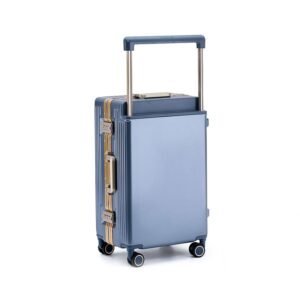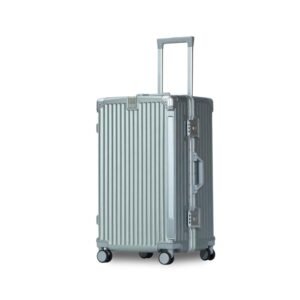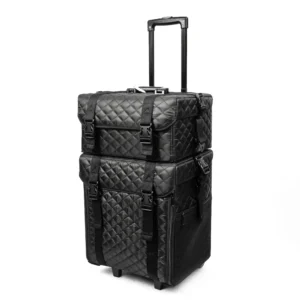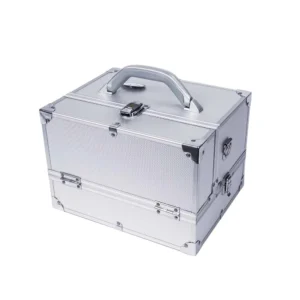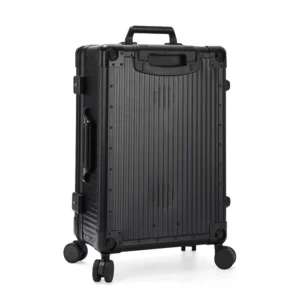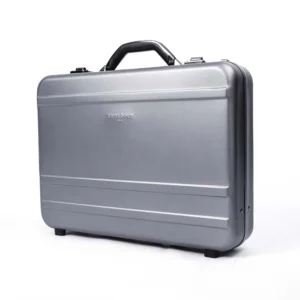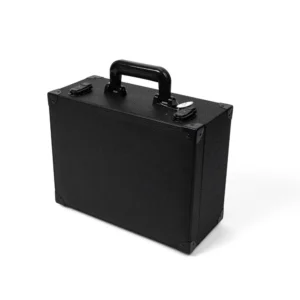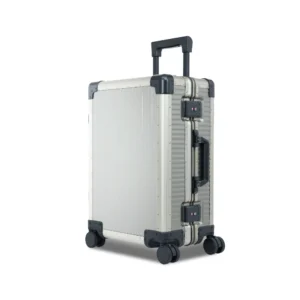


If you are adding aluminum luggage to your brand or buying a new range for wholesale, your budget needs to cover three things: the price of each case, the development work required for your customization, and packing and delivery costs.
Two aluminum cases that look similar may use different structures, components, and interiors. Even after you select a model, changes to quantity, colors, or packaging can change the quote. At Aluvox, we start with your chosen product and separate the specifications you want to keep, the changes you need, and any additional charges.
You can select a model from our catalog or send us a reference product and the features you want to retain. From there, we can discuss an existing case design and identify the component changes and development work involved.
In this guide
- What does an aluminum luggage quote include?
- How do the shell, frame, and finish affect price?
- How do wheels, handles, locks, and lining change the quote?
- Why can the same total quantity produce different unit prices?
- How does an existing model compare with a new design on cost?
- How can you compare two quotes for the same case?
- How can we adjust the product to fit your budget?
- What else should you check before approving a quote?
- Questions about custom aluminum luggage quotes
- Discuss your aluminum luggage budget with Aluvox
What does an aluminum luggage quote include?
Separate the finished-case price, one-time charges, and delivery costs before comparing options.
| Cost category | What it covers | What to compare |
|---|---|---|
| Finished-case price | Agreed shells, frame, wheels, telescopic handle, locks, lining, manufacturing, and assembly; logo and packaging as specified in the quote | Model, size, configuration, and order quantity |
| Samples and development | Sample production, agreed revisions, and any new molds or fixtures required for the project | Work included, separately charged items, and costs already included in the unit price |
| Packaging and accompanying items | Shipping cartons, branded packaging, labels, instructions, and spare parts | Included items versus items quoted separately |
| Delivery | Freight and other delivery items covered by the agreed terms | Delivery location and each party's responsibilities |
These categories clarify the scope of the quote. A finished-case price covers manufacturing and supply; it is not simply the purchase price of raw materials and parts added together. When we quote, we distinguish included items from additional charges. If a standard shipping carton is already included, for example, do not add it to your budget again.
For a per-case quote, list the quantity of each size. For a per-set quote, list what each set contains. If your channel sells luggage sets, the quoted price needs to match the size combination and number of sets. Compare a two-piece set with a three-piece set by looking at the cases included, rather than just choosing the lower total.
Calculate the goods total using the quoted unit: price per case multiplied by the corresponding number of cases, or price per set multiplied by the number of sets. Then add sample, development, packaging, and delivery costs that actually apply to this order and have not already been included.
How do the shell, frame, and finish affect price?
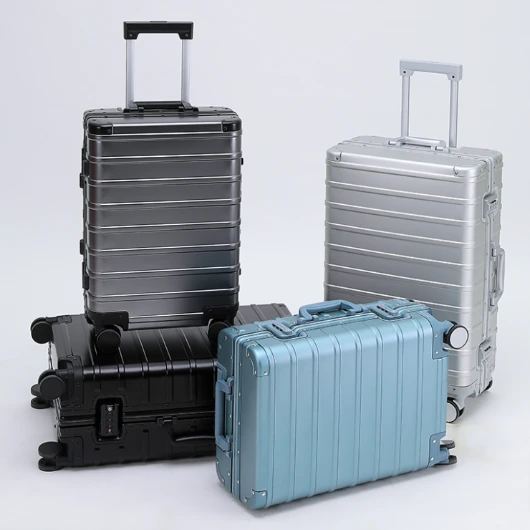
We first establish the case construction. Full-aluminum luggage uses metal shells; a polycarbonate shell with an aluminum frame is a different construction. Similar appearances do not mean the same materials or manufacturing work. This guide focuses on our aluminum-alloy luggage.
For an aluminum shell, size, sheet specification, shape, and rib pattern affect material requirements and processing. Two cases with the same nominal size may still have different outside dimensions, shell depths, or structures.
The frame and connecting parts also contribute to cost. Alongside the shell, compare the frame, hinges, latches, corners, and how they are installed. A different latch position or connection may affect neighboring parts and assembly, so the change cannot always be priced as the purchase-price difference of one component.
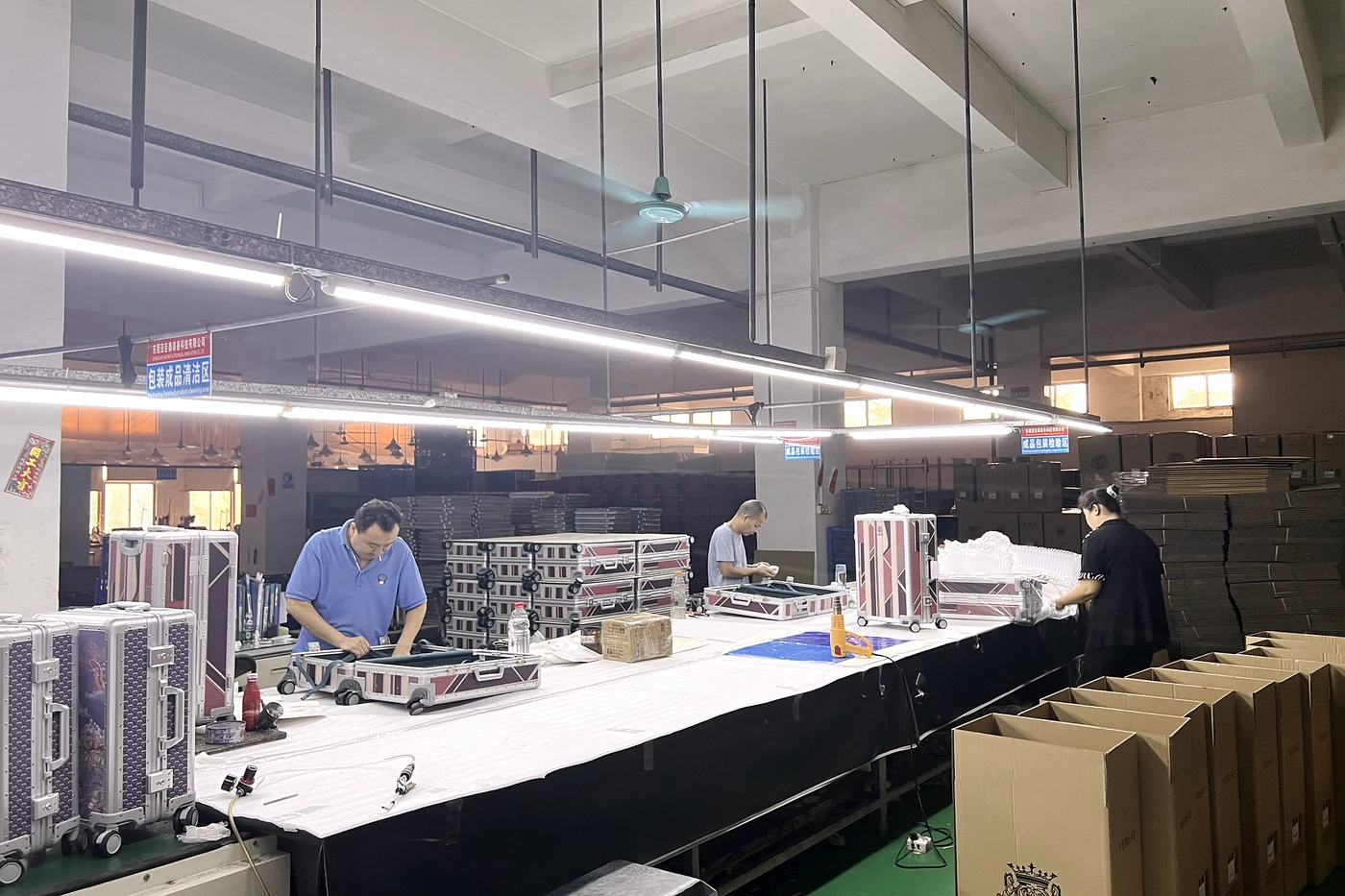
The finished-case price also covers the work of turning these materials and parts into a product. Shell forming, trimming, drilling, frame fitting, component installation, and lining assembly are all manufacturing operations. We need to establish which operations a proposed change affects when calculating its cost.
Include the finish in the same specification. Matching color names do not guarantee the same treatment, gloss, or texture. If you want a distinctive matte aluminum case, send us a color and texture reference. We can discuss finishes suitable for the selected case and confirm the quoted scope against the sample result.
If the main difference is the surface appearance, keep the same case design while comparing finish options. If the shell shape also changes, include that structural development separately. This makes the source of the price difference easier to see.
How do wheels, handles, locks, and lining change the quote?
“Spinner wheels, aluminum handle, and TSA locks” does not specify an identical set of components in two quotes.
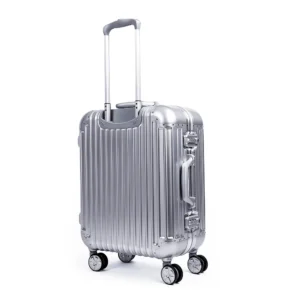
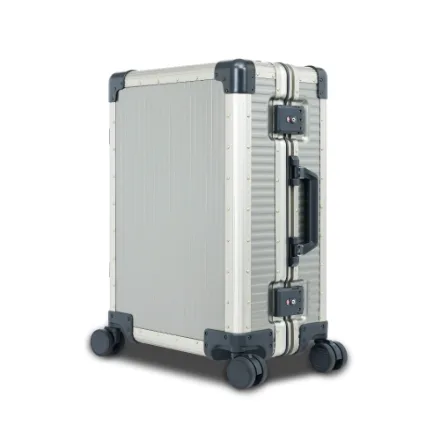
Our TS-004 aluminum luggage has two TSA combination locks, removable spinner wheels, and an aluminum telescopic handle. After selecting this model, we can start with its existing configuration and compare options for a different wheel assembly, grip, or interior.

Wheels: quote the specific assembly and mounting arrangement. If your brand wants a quiet, smooth rolling feel, we can discuss candidate wheels for the case and compare them on a complete sample. Cost depends on the wheel assembly and whether its housing or mounting position needs to change. “Quiet wheels” can describe your requirement; the final quote needs to identify the selected parts.
Telescopic handles: distinguish appearance changes from a new layout. Changing a grip's appearance involves different work from changing the entire handle layout and the space it occupies. We discuss the required height, locking positions, and mounting arrangement to establish what can be retained and what needs modification.
Locks: specify the design, quantity, and mounting structure. TSA combination locks can differ in shape, operation, and installation position. We discuss suitable options for the case. Whether a change requires tooling or structural work depends on the particular lock and how it is installed.
Lining: compare the layout as well as the fabric. Full dividers, several zippered pockets, and removable organizers involve different materials, cutting, and sewing from a simple lining with straps. If you want shoe pockets or removable storage, we can discuss the layout and check the materials, production, and attachment work separately. “Upgraded lining” alone does not describe the extra work.
Once the changes are listed by component, you can decide where to spend the budget. For example, you might keep the existing telescopic handle and put more into the selected wheels and interior organization, subject to compatibility and sample approval.
Why can the same total quantity produce different unit prices?
Quantity matters, but we also need to know how it is divided among sizes, colors, and configurations.
As order quantity increases, an agreed fixed development cost can be spread across more cases. Materials, parts, manufacturing, and assembly still apply to each case. We calculate the quote using both the total quantity and the order mix.
Consider two hypothetical orders: one concentrates the quantity in one size and color; the other divides the same total among several sizes and colors. They require different material specifications and production arrangements, so each needs its own calculation.
Concentrating quantity in one configuration lets us purchase parts and arrange production around that specification. Different sizes may need their own shells, frames, and lining dimensions. Additional custom colors also bring the batch requirements of the relevant parts or finishing processes into the discussion. A larger total therefore does not mean that every individual variant meets the same quantity conditions.
For a brand launching its first aluminum range, a broad mix at small quantities may increase the budget. We can compare keeping that mix with starting from the main size and color, then adding variants later. We quote the specific alternatives so you can decide what fits your channel.
Logo customization on an existing model can start from 50 pieces. Component changes, custom colors, and new structures need their own quantity review; the logo minimum does not apply automatically to every customization. Our wholesale luggage buying guide discusses planning the first order in more detail.
How does an existing model compare with a new design on cost?
An existing model gives the project a starting structure and tooling. If you retain its shell shape and main mounting arrangements, the project does not need to be costed as a completely new case.
However, using an existing case does not make every modification free of development charges. A custom raised badge, a different grip, or a changed mounting structure may still require new tooling. The cost depends on the part being changed and how it will be made.
For a new shell shape, rib pattern, or structure, we first discuss which elements need development and which can be reused. The quote should distinguish shell tooling, component tooling, and other fixtures so that a single “mold fee” does not hide the scope of work.
Development can be quoted separately or included in the unit price under an agreed arrangement. Compare the unit price and separate charges together to avoid missing or counting a cost twice. The charging method and the quantity over which a cost is spread need to be agreed for the project. See our luggage mold cost guide for a closer look at tooling expenses.
How can you compare two quotes for the same case?
Start from a common specification, then list what changes in each option. This helps distinguish a product-cost difference from a change in quantity, packaging, or delivery scope.
The following example uses TS-004 to illustrate a comparison method. It is not a customer order or a previously quoted configuration.
| Item | Option A: existing model with branding | Option B: component or interior changes |
|---|---|---|
| Model and size | Selected TS-004 model and size | Keep the same model and size for comparison |
| Shell and color | Selected existing specification | Retain the same specification if unchanged |
| Wheels, handle, and locks | Selected existing components | Identify changes; check compatibility before quoting |
| Interior | Selected existing layout | List added pockets, dividers, or removable parts |
| Logo | State method, position, and dimensions | Keep these consistent or identify the differences |
| Quantity, packaging, and delivery | Record the conditions of the quote | Use the same conditions; list any changes separately |
| Cost comparison | Finished-case price plus separate charges | Revised unit price plus any additional development charges |
We can then refine Option B: which component upgrades to keep, which interior changes can wait, and how each affects the per-case price or separate charges. If the model, size, or quantity changes too, compare those items separately rather than attributing the whole difference to one component.
How can we adjust the product to fit your budget?
We start by understanding the features you want to retain. Then we can discuss what to simplify, reuse, or leave for a later development stage. Here are three possible project situations.
A brand is adding an aluminum case for business travel. If rolling feel, handle operation, and everyday organization are the priorities, these can lead the configuration discussion. When the budget is tight, compare whether a new shell shape, several exclusive colors, or complex decorative parts are necessary. This can reduce development work while preserving the main use features.
A wholesaler wants a range for repeat orders. We can start by comparing existing models, core sizes, and standard configurations, then discuss branding and interiors. If different models could share components, we first check the mounting and use requirements. A shared purchasing plan should not force an unsuitable part onto a case.
A brand wants a visibly different new range. If the new exterior is central to the product, reverting to an existing shell just to reduce the first-order cost would remove that distinction. Instead, we can focus development spending on the shape and key structure while assessing which components and interior features can be retained.
After selecting an adjusted specification, review the complete sample's appearance, operation, and storage layout. The lower-cost version still needs to deliver the features you intend to launch. If a simplification takes those away, we need to reconsider the adjustment.
What else should you check before approving a quote?
Beyond the case configuration, the following items can change the actual order budget.
Packaging. Confirm whether shipping cartons, branded boxes, dust bags, labels, and instructions are included. Added packaging can change both packaging cost and carton dimensions. Delivery calculations should use the dimensions and weight of the packed goods. Our export packing guide covers packing arrangements in more detail.
Spare parts. Agree spare parts with us when placing the order: matching models, quantities, whether they ship with the cases, and whether their cost is included. Your brand or distributor will then know which spares were supplied for that batch when organizing after-sales support.
Samples and revisions. Agree the sample configuration, changes to be assessed, and sample quantity together. If the agreed production scope changes later, confirm the associated cost and time. Additional sample work should be clear before the bulk order is placed.
Testing and documents. Project-specific tests, third-party services, and documents need an agreed scope and cost. Distinguish production checks from separately commissioned services so the latter are not left out of the budget.
Delivery scope and quote validity. A factory pickup price, a price delivered to an agreed location, and a quote covering onward transport may include different items. Review the delivery point, included work, scheduling conditions, and validity period together.
If another option is cheaper, discuss the specifications you want to retain with us. First establish what differs in the case, components, quantities, and delivery terms, then decide whether the prices can be compared on the same basis. A price difference alone does not establish that either product is better or worse.
Questions about custom aluminum luggage quotes
Why is the sample price different from the bulk unit price?
A sample may involve separately preparing materials and parts, making the case, and carrying out revisions. Its price cannot simply be multiplied to estimate the entire order. We first distinguish a sample using existing specifications from one requiring development. The bulk quote is calculated separately using the final configuration and quantity. Any credit of sample charges against a later order also needs a separate agreement; it should not be assumed.
Can we use the previous price for a repeat order?
The previously approved configuration is a useful starting point. We still need to check quantity, color allocation, component supply, packaging, and delivery conditions. If the first order had separate development charges, clarify whether any of those costs apply again. We can then confirm the new order's quote.
Can we get a catalog and indicative quote before finalizing every detail?
Yes. Tell us which models interest you, your estimated quantity, and the product line you want to add. We can discuss an indicative quote based on the relevant existing configuration. Subsequent changes to components, lining, or packaging are priced against the revised scope. The order uses the final approved specification. Our quote brief template can help you organize the complete information.
Discuss your aluminum luggage budget with Aluvox
Send us your chosen model or reference images, estimated quantity, and the features you most want to keep. If you have a target budget, tell us whether it covers the cases alone or also needs to include packaging, development, and transport. We can then discuss the configuration and customization scope for the product you actually intend to order.