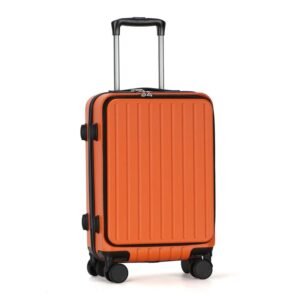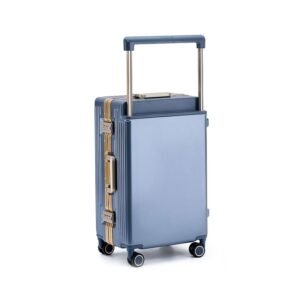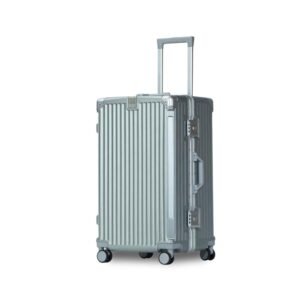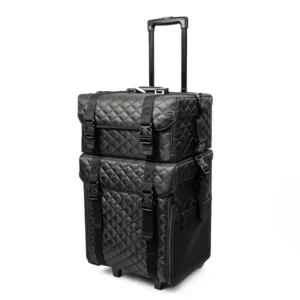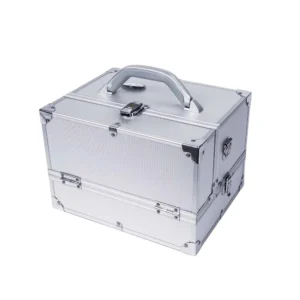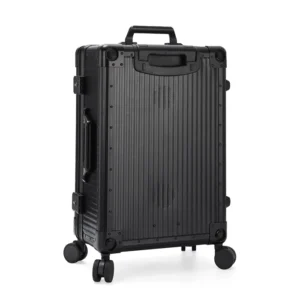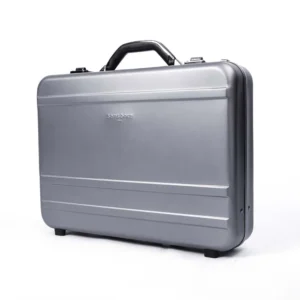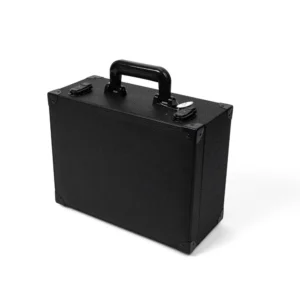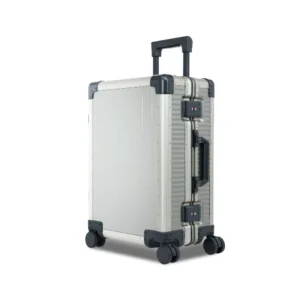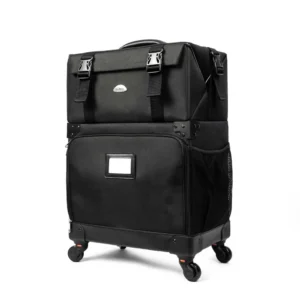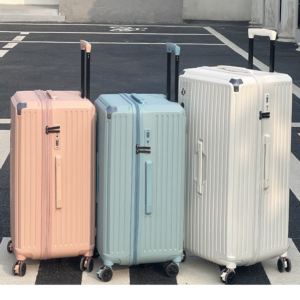

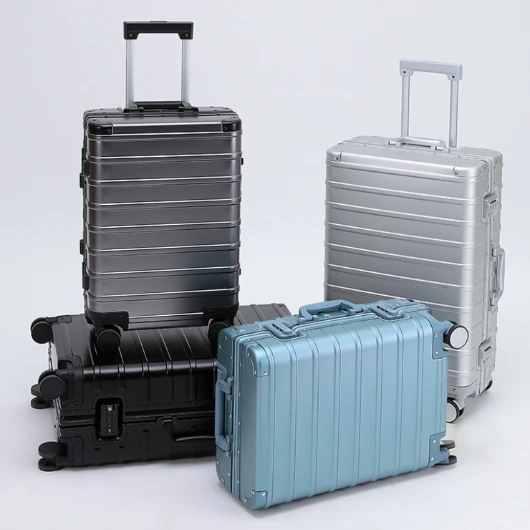
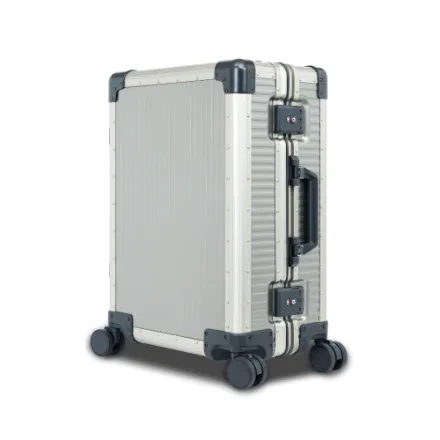
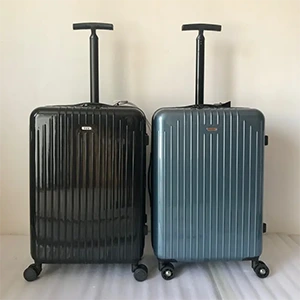
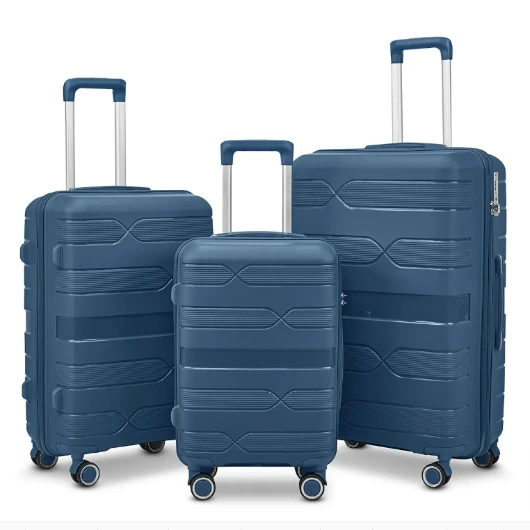
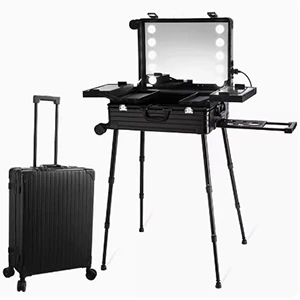
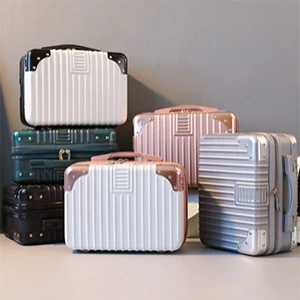
A buyer sends one Pantone chip and asks for the shell, the zipper tape, the wheels, the handle, the lock and the trim to match it.
That is one color and it is four or five unrelated coloring processes, some of which are not capable of landing on the same place. Worth knowing which pairs to fight for and which to design around, because the fight is expensive and some of it is unwinnable.
One color, four different physics
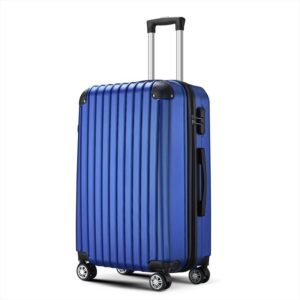
A molded shell gets its color from pigment mixed into the resin before it is formed. The color is in the material all the way through, and it is repeatable if the masterbatch and the process are controlled.
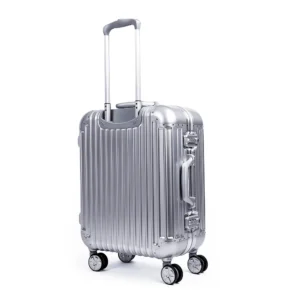
Anodized aluminum gets its color from dye held in a porous oxide layer grown on the surface. The metal underneath is still showing through that layer, so the result is metal seen through a tint rather than a solid color.
Zipper tape is dyed yarn, woven. It comes in dye lots, the same way any dyed textile does, and two lots are not obliged to agree with each other.
Wheels, handles and hardware are usually molded from a different resin than the shell, or coated. A different resin takes the same pigment differently.
Four processes. Four tolerances. Four suppliers. Which is why the answer to can you match it is almost always yes with a caveat rather than yes.
Metal and plastic do not match, and it is not the factory being lazy
A molded shell scatters light in every direction. An anodized panel reflects it directionally, because there is still metal under the tint. That difference does not go away.
So two parts can measure as the same color under one light and look clearly different under another, and they will look different at different viewing angles no matter what the meter says. The effect has a name, metamerism, and it is a property of the materials rather than a defect in the work.
The practical consequence is that a cross material color agreement has to name the light source it is judged under. Agree one, for example a daylight simulating source in a viewing booth, put every part under it at the same time, and decide there. A match approved on a phone screen in an office is not an agreement, it is a disappointment scheduled for later.
What holds and what drifts
Shell to shell across a production run holds well. Same masterbatch, same supplier, same process, and the run comes out consistent.
Anodized batch to batch is the hard one, and it is the one buyers are least prepared for. Dye uptake moves with the alloy, the thickness of the oxide layer and the age of the bath, so two batches of the same nominal color can sit slightly apart. This is a normal property of the process and it is worth building a tolerance around rather than pretending it away.
Zipper tape across dye lots behaves like any dyed textile. Order the whole program’s tape in one lot where the quantity allows it, which is one of the sourcing points in how luggage zippers are actually sourced.
Hardware usually has the fewest color options, because it is the part most likely to come from a catalog rather than from a dedicated run.
Pick a hero part and match to it
The method that works is not trying to hit the chip with every component. It is choosing the part that carries the color and treating the chip as its target, then matching the others to that physical part rather than to the paper.
On a full aluminum case the hero is the panel, because it is most of what a customer sees and it is the least controllable. On a frame case it is the shell. Which construction you are building changes the answer, and that distinction is set out in aluminum frame case vs full aluminum case. Everything else gets judged against the approved hero sample, under the agreed light, with a stated tolerance and a stated list of which parts are allowed to sit outside it.
That list matters. A zipper tape half a shade off inside a dark interior is invisible. The same half shade on a wheel housing against a pale shell is the first thing anyone notices.
What custom color does to cost and lead time
Every component you take off the catalog and into a custom color brings its own minimum. A custom masterbatch has one, a custom anodizing run has one, and dyed zipper tape has one, and those minimums do not care that your order is 300 cases.
This is where a color decision quietly becomes a quantity decision, and it belongs in the same conversation as minimum order quantity per design. It also lengthens sampling, because each custom component has to arrive before anything can be judged together, which is why color rounds sit inside the sampling process rather than beside it.
Changing a color mid program is not free either. New masterbatch, new dye lot, and a fresh approval against the same light source, or you end up with two versions of the same product in the same warehouse.
Where this belongs in the paperwork
Color is a specification item. Not an email. It wants a target reference per component, a nominated hero part, a light source, a tolerance, and a note on which components are permitted to deviate.
That whole block belongs in the document described in what a luggage tech pack has to contain, and it interacts with the branding method, since a logo applied by one process on a metal panel and by another on a molded shell will not read as the same color either, which is covered in logo application on metal and plastic cases.
What we do and what we do not
We will tell you before sampling which of your six parts can realistically hit the chip and which cannot, rather than agreeing to everything and letting the sample deliver the news.
Our minimum is 300 units per design, and smaller test batches are negotiable rather than refused. Sampling runs 7 to 15 days per round and bulk is 45 days from a confirmed sample. Custom color components add their own minimums and their own lead time on top of that.
We do not guarantee a cross material Pantone match, because no one can. We agree a hero part, a light source and a tolerance, and we hold that.
Frequently asked questions
Can the shell, zipper, wheels and lock all be the same color?
Close, not identical, and how close depends on which pairs you are comparing. Molded parts can be held tightly to each other because the color sits in the resin. Anodized aluminum is dye in an oxide layer with metal showing through, so it will never read exactly like a molded part under every light. Agree a hero part, match the rest to that physical sample rather than to the paper chip, and state which components may sit outside the tolerance.
Why does the color look right in the factory and wrong when it arrives?
Usually the light changed. Materials that measure the same under one light source can look clearly different under another, which is a property of the materials rather than a mistake. Approve physical parts together, under one agreed light source, and record which source it was so the same judgment can be repeated later.
Does a custom color raise the minimum order?
Often, and not at the case level. Custom masterbatch, custom anodizing runs and dyed zipper tape each carry their own component minimums, which are set by those suppliers rather than by us. A 300 unit program in stock colors and a 300 unit program in four custom colors are different quantities of work, so it is worth pricing the color plan at the same time as the quantity plan.
Written by James
James works at aluvox.com in Houjie, Dongguan. The color behavior described here is what we see across our own molding, anodizing and component suppliers.