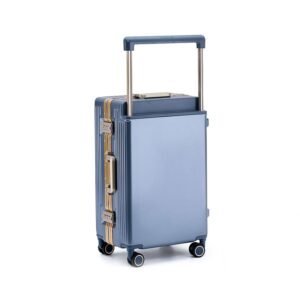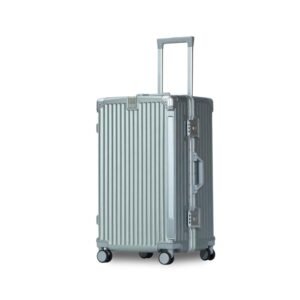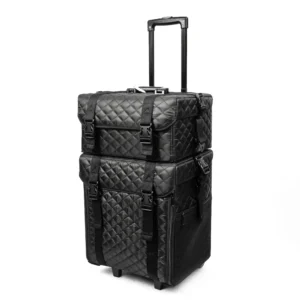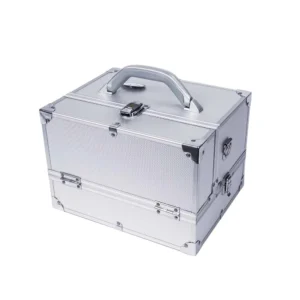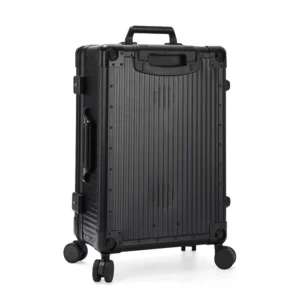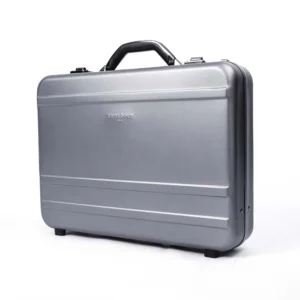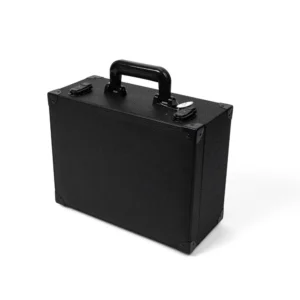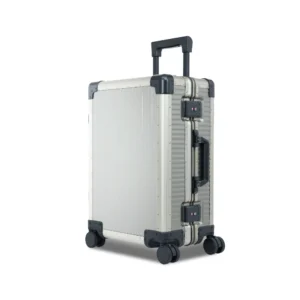

TSA luggage locks let travelers secure their bags while providing an inspection access method for authorized security officers. For a brand developing a new suitcase, that function needs to work with the case structure, lock operation, and overall design.
If you are adding a suitcase with TSA locks to your range, the next questions are practical: which case will carry the lock, how will it operate, and will its appearance and configuration suit your product? Two specifications that both say “TSA lock” can involve different operating methods, mounting arrangements, and customization options on zippered and aluminum-frame cases.
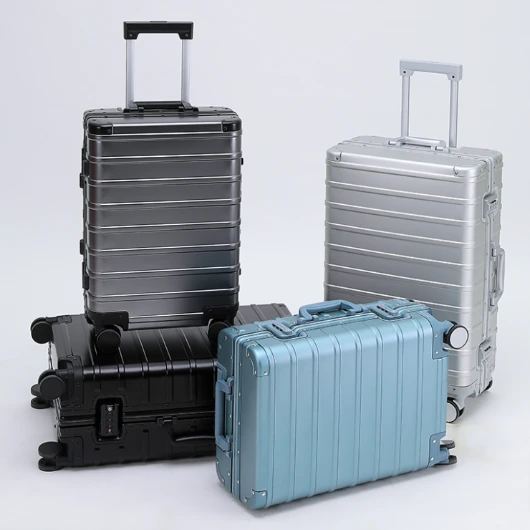
At Aluvox, we can start with an actual case model when discussing configurations with brands, wholesalers, and distributors. Choose a full-aluminum case from our metal luggage range or a PC-shell aluminum-frame case, then discuss the lock, finish, sample, and spare parts for the order.
How do TSA locks work, and who uses the keyhole?
TSA stands for the U.S. Transportation Security Administration. A TSA-compatible luggage lock allows authorized screening officers to use the appropriate tools to open locked baggage when an inspection is needed.
Take a Travel Sentry combination lock as an example. The traveler sets a personal combination and uses it to open the lock. If the bag requires further inspection, authorized officers can open it through the inspection keyhole. After the inspection, the lock can be secured again.
On this type of combination lock, the keyhole is for security screening. Travelers use the combination and do not receive a separate passenger key for that keyhole. When a customer asks where the key is, explaining these two access methods answers the question.
The Travel Sentry Red Diamond identifies its system. When confirming an order, we can review the selected lock model, its markings, and the corresponding documentation together.

How does a TSA lock differ from a standard luggage lock?
Both can secure a bag for everyday use. The key difference is inspection access: a TSA-compatible lock provides an opening method for authorized screening personnel. A standard lock without this function cannot be opened through the same system.
| What to compare | TSA-compatible lock | Standard lock without this function |
|---|---|---|
| Traveler access | A combination or key, depending on the lock | A combination or key, depending on the lock |
| Inspection access | Authorized officers can use the appropriate inspection tools | If it cannot be opened another way, the lock may need to be damaged or removed to access the bag |
| Role in your product | Everyday locking plus access for the relevant screening system | Its own everyday locking function |
| Durability and feel | Depend on the particular lock, installation, and complete case | Also require evaluation of the particular product |
After choosing TSA compatibility, you can still compare different designs and operating methods. We can discuss lock options around the candidate suitcase, then use a sample to review the dials, latch, and finish. The specification can then describe the product you have actually selected.
Which luggage ranges should consider TSA locks?
If your products serve travelers visiting or connecting through the United States, TSA compatibility is worth considering during product selection. The Travel Sentry system also operates in countries outside the U.S. For European and other markets, we can discuss the configuration in relation to the intended destinations and travel routes.
For example, your brand may sell mainly in Europe while adding a case for international travel. We can consider the intended destinations when discussing the lock. A model sold across several markets also needs an appropriate understanding of where the relevant inspection system is used.
Checked luggage: Select the inspection-compatible lock together with the case’s closure structure. On aluminum-frame models, sample evaluation should also consider how the frame and latches work together with the case packed.
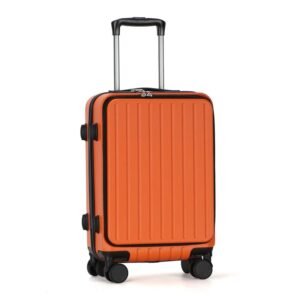
Business and short-trip carry-ons: Ease of operation and overall appearance can guide the comparison. If you want the latches, handles, and corner guards to have a coordinated finish, we can discuss options for the candidate case and review the physical sample.
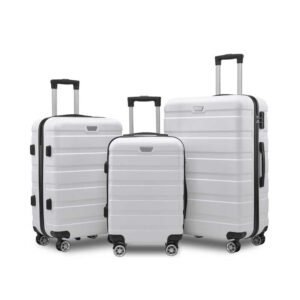
Ranges with several sizes: Similar lock designs and operating methods can help keep the collection consistent. If you want to share a lock model across sizes, its installation and use still need to be checked on each case.
The same lock can provide everyday locking during hotel stays, rail trips, or luggage storage. Its TSA inspection access function serves a different purpose when screening takes place within a participating system.
How do you choose between zipper locks, frame latches, and padlocks?
TSA compatibility is available in different lock formats. When developing luggage, start with how the case closes and select a lock that fits that structure.
Zippered cases: securing the zipper pulls
The zipper closes the case, and the two pulls fit into the corresponding lock openings. Check that the pulls and lock work together, that insertion and release are comfortable, and that the lock is easy to reach. Selecting the lock body alone does not define the complete closure.
Aluminum-frame cases: latches working with the frame
The two frame halves meet, and the latches close and lock the case. The lock body, catch, and mounting positions affect operation. Review opening and closing on the complete sample, rather than relying only on a loose lock tested on a desk.
Separate padlocks and cable locks: checking the attachment points
A separate lock can be used with suitable openings in zipper pulls or other compatible attachment points. Unlike an integrated lock, it is an additional accessory for the traveler to keep track of. A cable format offers flexibility in how it connects, but the actual openings and closure still need to suit it.
Whether a frame-latch case can take a separate padlock depends on its attachment features. If you are planning an aluminum-frame case with a coordinated appearance, we would start by discussing its integrated latch configuration. Any separate travel-lock accessory can be considered as an additional requirement.
How do TSA locks fit our full-aluminum and PC-frame cases?
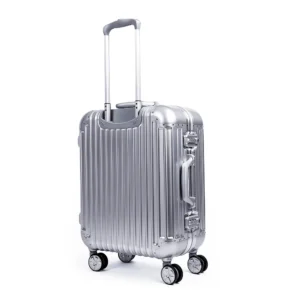
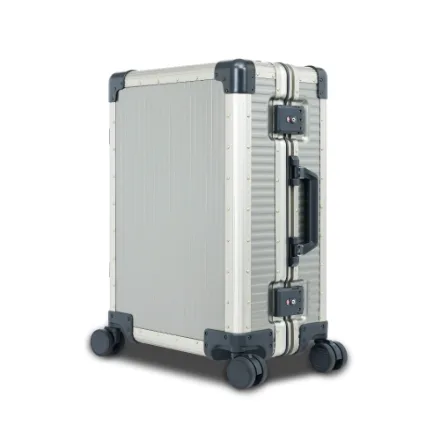
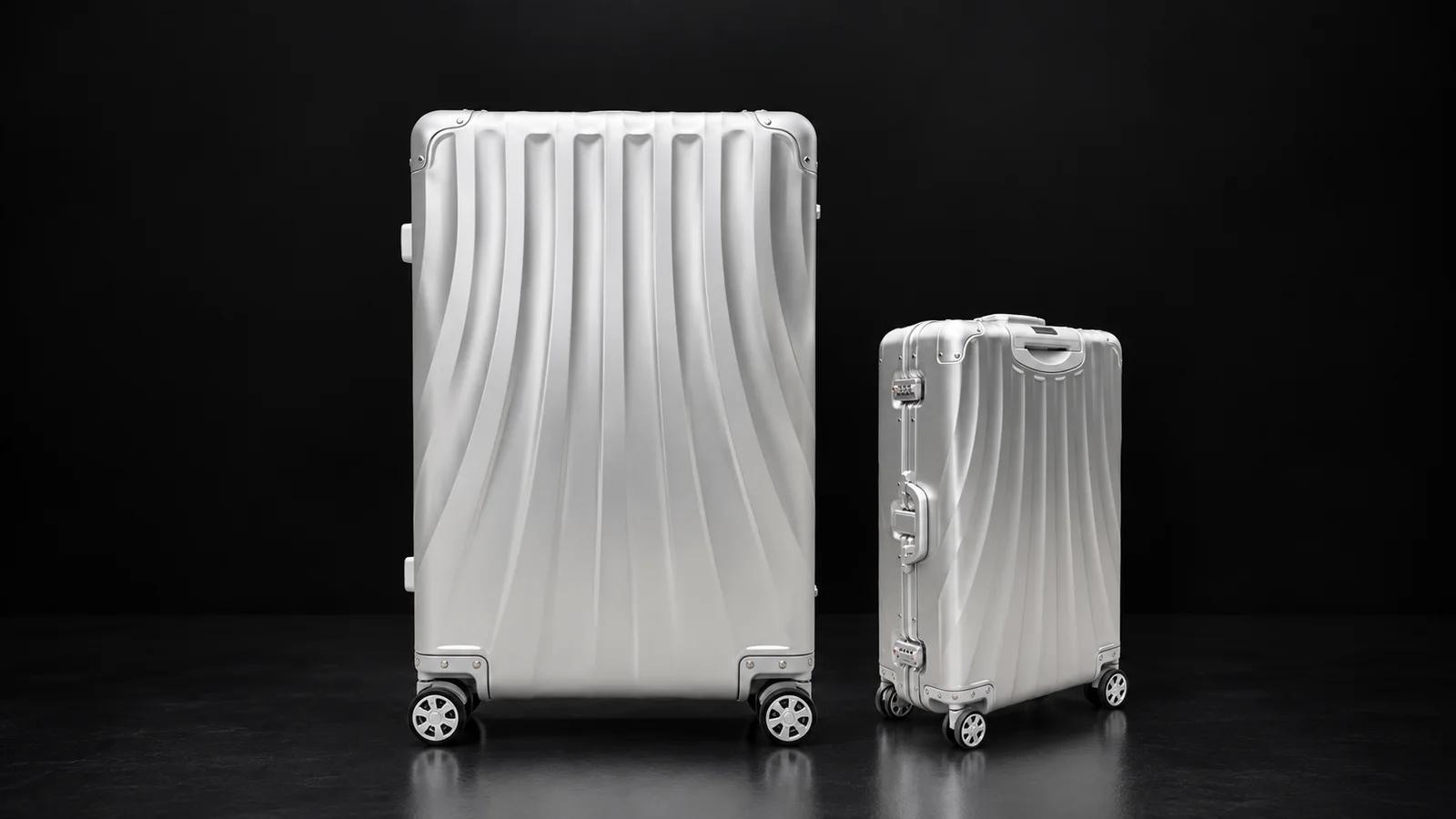
You can start with our TS-006 aluminum carry-on suitcase. It has an aluminum shell and frame, a zipperless closure, and TSA combination locks. The locks are part of the complete opening and closing system, so their placement needs to be considered alongside the frame, handles, and corner guards.
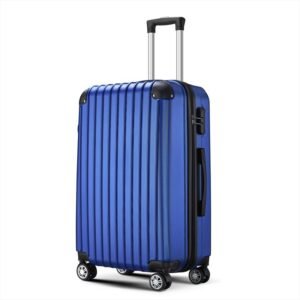
For a PC-shell alternative with frame latches, consider our HQ-009 aluminum-frame PC suitcase. This model combines a PC shell, aluminum frame, TSA combination locks, and a zipperless closure.
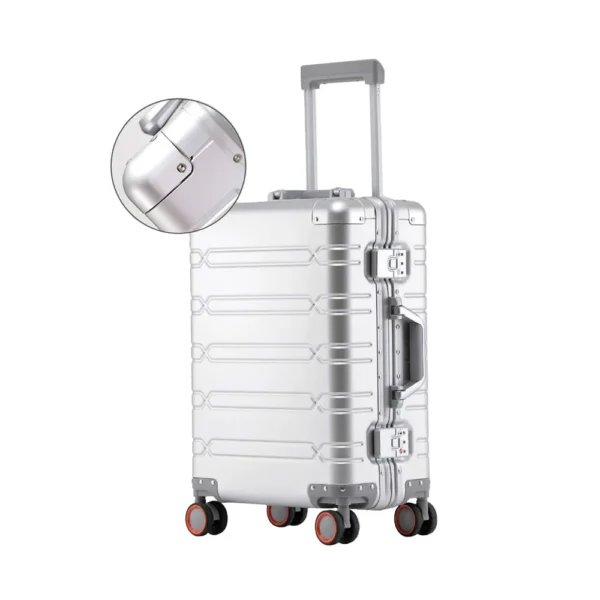
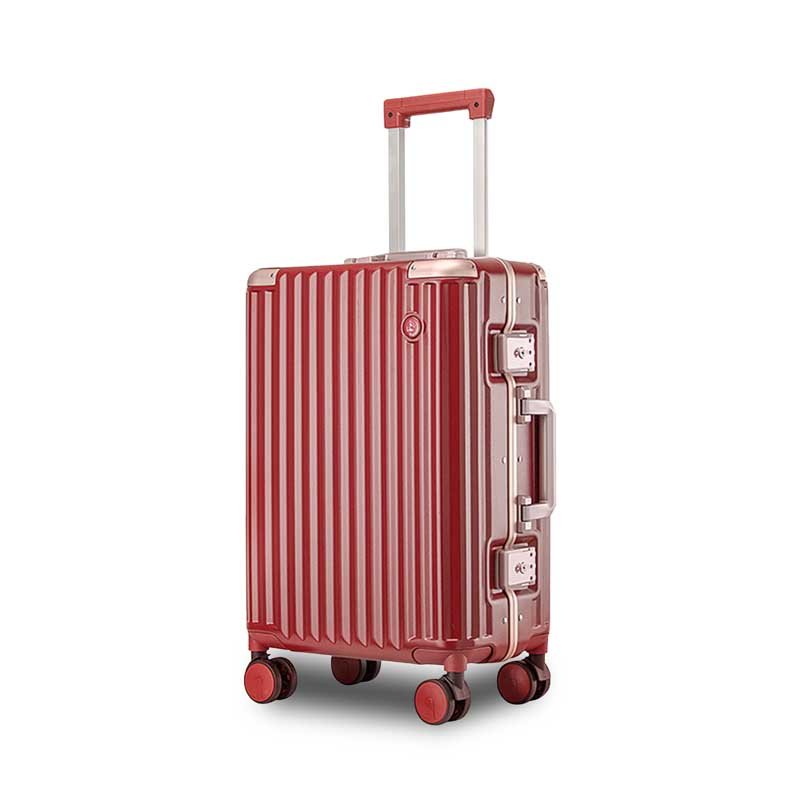
These models illustrate an important distinction: TSA locks are not exclusive to full-aluminum cases. A PC shell with an aluminum frame can also use them, and different shell materials do not necessarily require entirely different closure formats.
Tell us which type of case you want to add and the appearance and colors you have in mind. Once a candidate is selected, we can discuss keeping its existing lock or evaluating changes to the lock’s design and installation. The selected specification and sample establish the configuration for your order.
What else should you compare between TSA lock samples?
When both candidate configurations include TSA locks, compare the actions the traveler will perform. The following checks are useful on complete cases with the locks installed.
Dials and numbers: Turn the dials and check finger access and number visibility. A photograph of the loose lock may not show how accessible it will be next to a frame or handle.
Release controls and latches: Try the required pushing, pressing, or sliding action. Compare finger placement and how the latch releases. On each candidate case, unlock, open, close, and lock it again to assess which operation suits the product.
Appearance and finish: View the locks, handles, corner guards, and frame together. Names such as “silver” or “black” describe a general color; compare brightness, texture, and finish on physical samples.
This step helps narrow down the operating feel and appearance you want. Durability evaluation requires an agreed method and a check of whether the lock still functions afterward. The sample-check section below explains what to examine.
Which lock changes affect cost and development work?
It helps to separate customization requests into specific changes. This distinguishes component options from requirements that need further structural assessment.
Keep the lock model and discuss its finish
For example, you may want black latches on a silver frame. Start by keeping the existing case and mounting position, checking available colors, finishes, and quantity conditions for that lock, and comparing physical samples. This shows whether an available component option meets the brief before considering structural changes.
Switch to another existing lock and check the fit
Two locks that look similar may differ in body dimensions, fixing points, catch position, or the space they occupy behind the mounting surface. If the existing case can retain its mounting arrangement, development may focus on the component change and sample review. Any differences should be identified before deciding how to address them.
Change the lock’s shape, position, or release method
A narrower lock body, lower mounting position, or different release method may affect openings, fixing structures, or nearby components. Identify the affected areas first, then assess whether machining or tooling needs to change.
If color is your main requirement, we can first discuss available options for the existing lock while keeping the case and mounting position. If you want a different release action, we can discuss suitable candidate locks and then assess installation. More extensive structural development becomes a discussion when existing options cannot deliver the required design or function.
A quotation can distinguish lock options, complete-case samples, installation changes, and any tooling work involved. This helps you see which requirement creates each cost and decide what to keep or achieve with an existing option. Sample fees and development timing are confirmed for the agreed scope.
How should the combination instructions be prepared?
Once the lock is selected, we can discuss its operating instructions with you. The instruction card’s control positions and setting method should match the fitted lock. Your stores or customer-service team can also use this material to answer product questions.
Setting methods vary. Some locks use a reset button; others use a setting switch. We can work from the selected lock’s actual operation to agree which images are needed and how to explain each step.
A card that matches the product should guide the user through the following:
- Identify the controls. Show the combination dials, release control, and setting mechanism in a product image. Explain what the inspection keyhole is for.
- Enter the setting mode for that lock. Explain the required open position and which button or switch to use. Use the actual product information for the factory combination.
- Save the new combination. Show where the button or switch should be after setting.
- Verify before closing the case for use. Test the new combination according to that lock’s instructions. If the case has two independent combination locks, set and verify each one.
Before approving print, ask someone who was not involved in lock selection to operate the sample using the card. If they cannot find a control or repeatedly need help with the next step, clarify the relevant image or instruction. The card’s language and presentation can also be discussed for your sales market.
How should the locks be checked on a complete sample?
A loose lock sample helps with design, finish, and operation. The complete case also needs a review of its installed fit, particularly on frame-latch models.
Start by opening and closing the empty case and observing the frame halves and latches. Then pack it for the intended use, within the agreed load, and repeat. This separates the empty-case fit from operation under load, rather than treating every closing problem as a lock fault.
If the empty case closes smoothly but the packed case is difficult to latch, check whether it is overfilled, whether the lining or divider is trapped at the edge, and whether the contents prevent the lid from closing properly. If the empty lid must also be pushed noticeably sideways to latch, review the frame, catch, and mounting arrangement. The aim is to identify the area needing attention before deciding on an adjustment.
Operate nearby handles and other fittings as well to check access around the lock. If a problem appears, record the load condition, action, and affected area. After adjustment, repeat the check under the same conditions to see whether normal operation has been restored.
If the project includes repeated opening-and-closing or loaded-drop evaluation, check function afterward as well as appearance: can the case still lock and unlock, does the combination work, do the latches or zipper pulls release, and have any mountings loosened? On a frame case, also check that the frame halves still meet correctly.
Comparisons between candidate configurations require comparable methods and conditions, with the load, number of repetitions, and acceptance requirements agreed beforehand. Testing and documentation are discussed for the order. Once the sample is approved, the selected lock, color, and installation photographs can be recorded against it for later configuration checks.
How can brands handle forgotten combinations or stuck locks?
Your brand, stores, or distribution channels handle service for the end customer. When factory support is needed, we can discuss information or replacement parts based on the case model, order batch, and actual problem.
Combination questions: First distinguish a user who knows the current code and wants to change it from one who has forgotten it. The first situation can use the instructions for that lock; the second needs the product’s service process. Routine combination-change instructions are not a universal recovery method.
Opening or closing problems: Ask for the case model, lock photographs, and a video showing the action. Knowing whether the button will not move, the latch will not release, or the case will not latch shut is more useful than “the lock is broken.” The next step can then be discussed: operating guidance, repair, or replacement parts.
Replacement parts: Match the problem to the original order’s lock, mounting position, and component orientation before selecting a part. By discussing spares with you when the order is placed, subsequent support can refer to the agreed product configuration.
How are lock markings and order documents checked?
For the Travel Sentry system, documentation should relate to the selected lock and actual order. Its licensing framework includes lock manufacturers, luggage manufacturers, and distributors. Project documentation needs to be reviewed for the relevant roles and requirements.
For a branded project, consider the selected lock, applicable documentation, and use of markings on the case, hangtags, and packaging together. We can discuss which documents and explanations are needed for your particular configuration.
Product descriptions can identify the fitted lock and its inspection access function. If you also want to assess the case’s impact or water resistance, we can separately discuss its structure and evaluation requirements.
Agree on spare parts and reorders when placing the order
Luggage spare parts, including locks, are arranged with the brand, wholesaler, or distributor. We can discuss which components to prepare, their colors and quantities, and whether matching fixing hardware is required.
Where parts have different left/right orientations or mounting positions, identify them separately. Spares should correspond to the case and lock model. Quantities and supply arrangements are agreed for the project.
If you want a different lock on a repeat order, consider service needs for the earlier batch as well. Whether the old and new parts are interchangeable depends on their installation. If they are not, keep a clear record connecting each batch, case model, and replacement part so your sales channels can support existing products.
When changing locks on a reorder, also check whether the instruction card needs updating and distinguish the parts used in each batch. This keeps information clear for both existing-product service and the new delivery.
TSA lock questions from brands and wholesale buyers
Does a TSA lock make luggage theft-proof?
No. A lock can discourage casual opening; TSA compatibility provides an inspection access method. The case’s overall protection also depends on its closure, components, and conditions of use.
Does a TSA lock guarantee damage-free inspection?
No. The system provides a way to open the lock for inspection, but a lock may still be removed or cut if security officers cannot open it normally.
Can carry-on and checked cases share the same lock?
A common lock can be a collection-development goal. Each model still needs a check of its mounting position, frame or zipper-pull fit, and intended use. An approved sample in one size does not replace review of the other sizes.
Do two combination locks need the same code?
With two independent combination locks, the user can choose the same or different codes, but each lock needs to be set and verified separately. The supplied instructions should explain the actual lock’s operation.
Can we simply add our logo to an existing case?
Yes, we can start by discussing logo customization on an existing model, from 50 pieces. This refers to branding on the case. A logo on the lock body itself requires a separate review of component options, placement, and the marking process.
Can one order combine sizes and styles?
Our standard order discussions start at 300 pieces in total, with sizes and styles combinable. List the lock configuration for each case separately. Special locks, new structures, or requirements beyond existing options need their own project conditions.
What should you send us for a TSA-lock luggage project?
Send your reference case, target markets, sizes, estimated quantity, and the features you want to add or change. If you have selected TS-006, HQ-009, or another model, tell us whether you want to retain the existing locks or discuss a different finish, design, or operating method.
Reference images help explain the style you like. Include a lock model if you have already specified one. As a custom luggage manufacturer, we can discuss installation, samples, and the scope of the order around the candidate case, then agree on the lock configuration, operating information, and spare parts for your brand and sales channels.