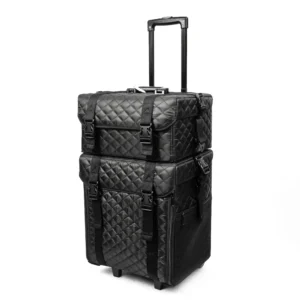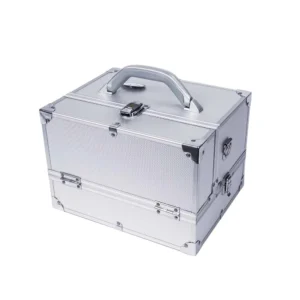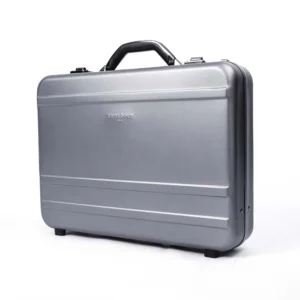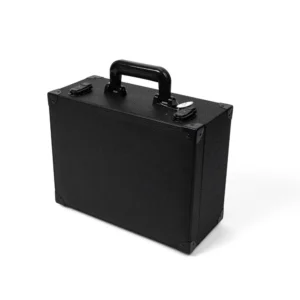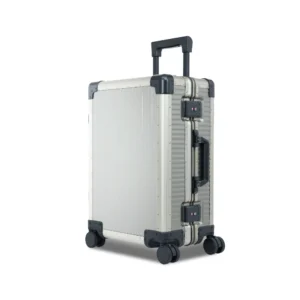

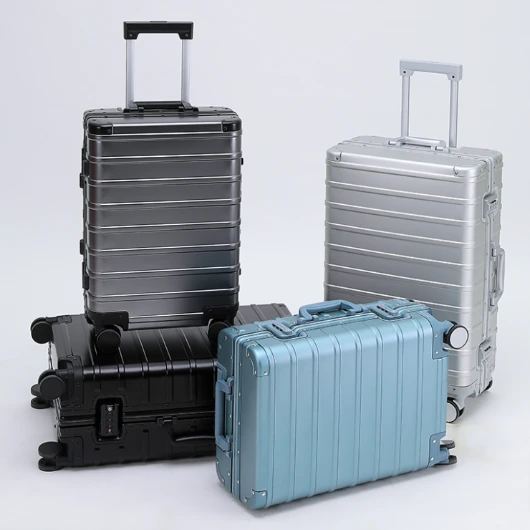
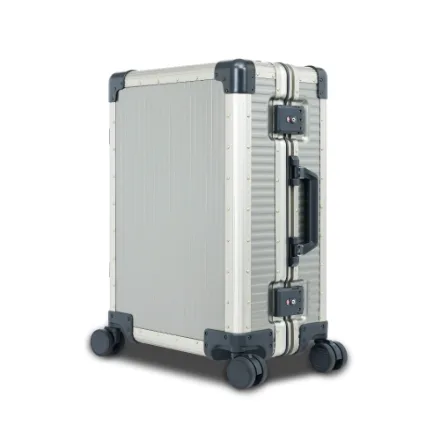


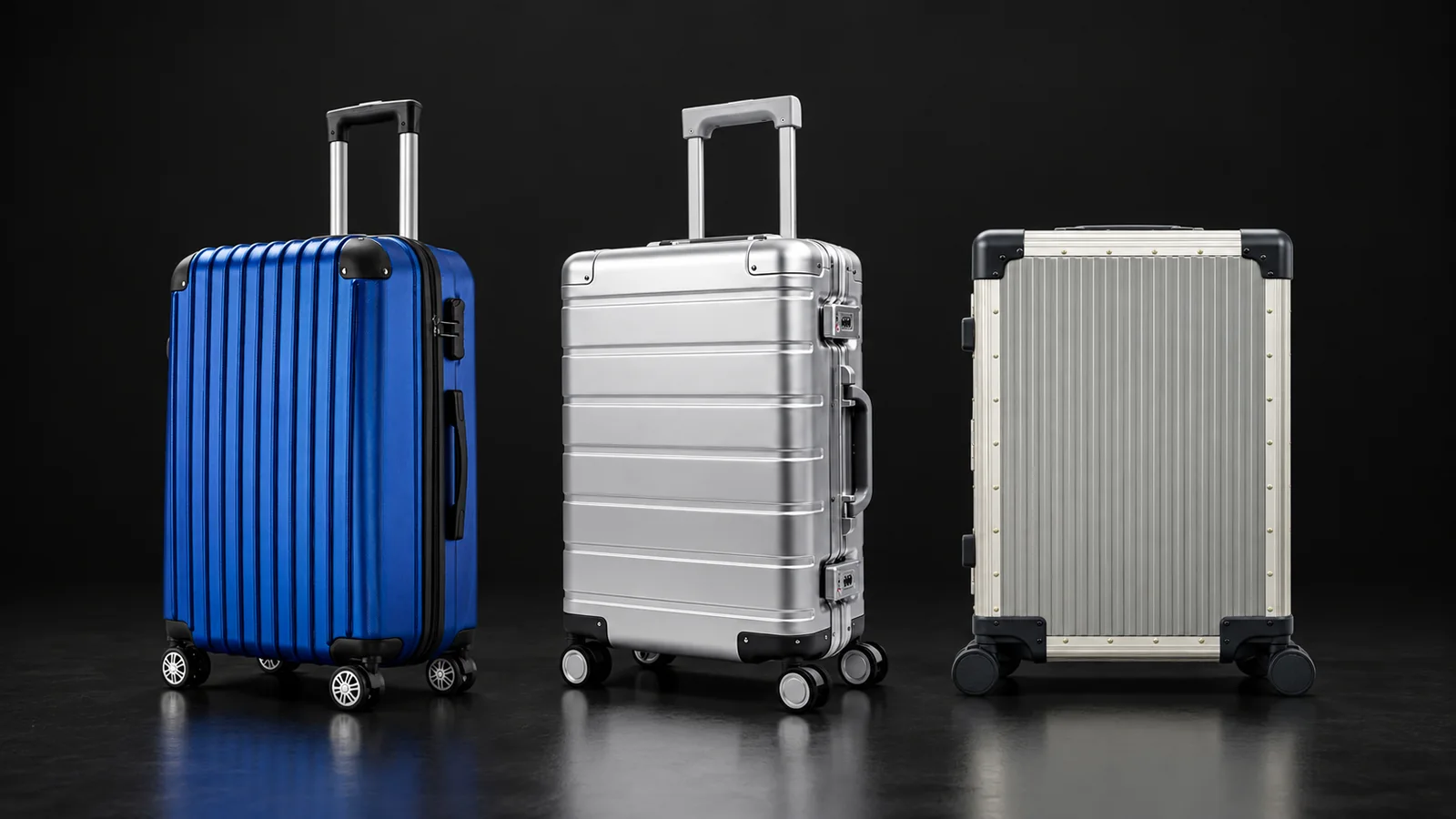
Choose luggage materials around the product you want to develop. Plastic shells offer options for a lower empty weight. Aluminum can deliver a real metal surface and distinct case lines. Titanium needs a clear product reason that justifies the material, processing and development investment.
Start with three questions: what experience should the case provide, which features will customers pay for, and what weight and cost limits must the design meet? The same retail positioning can be served by different materials. Two cases both described as PC or aluminum alloy can also perform differently.
The material provides a design starting point. Shell geometry, thickness distribution, opening construction, wheels and trolley handle all contribute to the result. A lightweight carry-on needs a weight allowance for the shell, frame and components. A case built around a metal appearance needs attention to frame fit, finish and the visible effects of scratches or dents.
Compare what each material can contribute with the construction needed to turn it into a usable, repeatable product. This guide focuses on hardside travel cases: PC, PP, ABS, ABS+PC, aluminum and titanium. Nylon and polyester softside luggage involve different sewing, support and storage structures and deserve a separate comparison.
Common luggage materials at a glance
Use this overview to identify promising directions. The final choice depends on the material specification, case construction and finished-product requirements.
| Material or construction | A useful starting objective | Main tradeoff |
|---|---|---|
| PC, polycarbonate | Balance shell toughness, appearance and finished weight. | Control thickness after forming and support the opening, wheel mounts and handle attachments. |
| PP, polypropylene | Develop a case with a defined weight target, using the material's low density. | Select the grade, stiffness, reinforcement and forming process together so the benefit reaches the complete case. |
| ABS | Meet a defined budget with suitable shape, color and surface options. | Compare costs between builds that meet the same use requirements, including grade, local thickness and attachments. |
| ABS+PC constructions | Combine materials to address processing, appearance or cost requirements. | Establish whether the proposal uses multilayer sheet or a PC/ABS blend, then assess the actual construction or grade. |
| Aluminum alloy | Build a product around a real metal surface and coordinated shell, frame and closure. | Account for weight, forming, assembly and finish; distinguish acceptable wear from deformation that affects operation. |
| Titanium or titanium alloy | Support a specific material positioning with an appropriate manufacturing budget. | Confirm the material, processing route and complete configuration before promising a weight or performance benefit. |
Keep material, construction and appearance separate. A PC case normally describes the shell material. An aluminum-frame case describes the structure around the opening, which can be combined with a plastic shell. A metallic color describes appearance and still needs a shell-material specification.
If the aim is to retain a metal frame line while controlling shell weight, a plastic-shell and frame combination is a useful direction. If the shell itself must have a real metal surface, evaluate a metal-shell build and its forming, finishing, edge connections and weight. Compare existing platforms in our travel luggage collection before deciding which parts of the product need new development.
PC: toughness, thickness and attachments
PC is worth comparing when the product needs a balance of toughness, styling and weight. Converting those properties into a finished case depends on how the shell is formed and attached to the rest of the product.
Allow shell movement while supporting the mounting areas

A PC shell can deform within a certain range under compression. Recovery and damage depend on the grade, load location, load level and temperature. The design should account for where that movement occurs and which components it affects.
A broad panel and a wheel-mounting area have different tasks. The panel can respond through bending; the wheel mount must transfer forces from rolling, turning and impacts into the case. A mount attached to a small, poorly supported shell area repeatedly loads that area. The solution may involve its position, contact area and backing support. A more expensive PC resin alone may leave the mounting problem unresolved.
Carry handles and trolley handles need corresponding support. When a loaded case is lifted, the shell, fasteners and internal supports should work together to transfer the load. The weight should not depend on a few holes in an inadequately supported thin wall.
Compare formed thickness as well as starting sheet thickness
In sheet thermoforming, a heated flat sheet is stretched into the shell shape. Different areas stretch by different amounts, redistributing thickness. Shell depth, corners, raised details and grooves all influence the result.
A deep shell with pronounced local features can develop a different thickness distribution from a shallower, smoother design made from the same starting sheet. Ask what remains at the important locations after forming, alongside the original sheet specification.
If excessive local thinning creates a weak point, possible changes include the shape, corner geometry, forming conditions or sheet specification. Increasing the whole sheet thickness adds material, weight and cost. For a lightweight product, first consider whether geometry and processing can retain material where it is needed.
Predrying, heating and forming control also affect bubbles, surface quality and production consistency for the selected sheet. The price of an acceptable shell includes the work needed to form it reliably.
Connect the PC premium to a product benefit
If a PC proposal costs more, identify what the extra budget delivers: an appropriate weight, impact behavior that meets the requirement, or the desired appearance and construction combination.
A carry-on intended to reduce weight while retaining suitable shell performance needs coordinated sheet selection, forming and attachments. Changing the material name while retaining unsuitable construction may leave much of the intended benefit unrealized.
Treat the finish separately. Impact toughness and scratch resistance are different properties. Gloss, fine textures and other effects should be reviewed for how wear becomes visible and whether that appearance suits the range. Shell behavior, finish and hardware need to support the same positioning.
PP: turn low density into a lighter case
PP's low density provides a starting point for reducing shell weight. The actual saving depends on material volume, reinforcement and hardware. Grades also differ in stiffness, impact behavior and processing characteristics, so the selection needs to follow the product objective.
Plan stiffness and reinforcement alongside weight
Using less material reduces weight but changes deformation. A case that must be light while retaining support at the panels, opening and mounting areas needs material selection and geometry to work together.
For an injection-molded design, ribs, edge shapes and mounting features can be incorporated into the mold. Panels need suitable deformation control, the opening needs to maintain its fit, and wheel and handle areas need to transfer loads. Targeted geometry can use material more effectively than increasing thickness everywhere.
Reinforcement also uses material and space. Ribs, wall transitions and local thickness differences must suit filling, cooling and appearance requirements. Excess reinforcement may add weight or introduce forming issues.
PP can also be used in suitable sheet and thermoforming constructions. Establish the production route before comparing tooling or processing costs; the material name does not identify one universal manufacturing method.
Dimensional control affects the opening and hardware fit
Injection-molded PP shrinks as it cools, and dimensions can continue changing after molding. Filling, cooling and thickness distribution influence how uniform that shrinkage is.
Changes around the shell edge can affect the fit between the two halves. Changes in mounting areas can affect wheels, locks or other components. A sample that assembles at one point in time does not by itself establish dimensional stability afterward.
Review dimensions, conditioning and assembly together. When a deviation appears, investigate the material, mold and process. Pulling parts into place during assembly can carry the original dimensional problem into the finished case and make consistency harder to control.
Cooling, stabilization and inspection influence production time. Cutting these stages too far may increase short-term output while moving cost into trimming, assembly or rejected parts.
Separate an existing platform from a new development
An existing model can retain proven tooling, processes and component combinations. A new silhouette, opening or mounting layout may require additional tooling, trials and structural changes. Include those costs in the first-order investment.
A range that keeps its size and shape over repeat orders can spread development costs across those orders. A brand still changing the design frequently should consider the cost of modifying the chosen construction later.
Give wheels, handles and interiors their own weight allowances. If those parts consume all the weight saved in the shell, customers may not experience the intended lightness. The material advantage needs to survive the complete specification.
ABS: balance cost, finish and use requirements
ABS belongs in the comparison when the product has a defined budget and needs suitable shape, color and surface options. Appropriate materials and processes exist for case shells; the right choice depends on grade, construction and finished-case requirements.
A firm panel and impact resistance answer different questions
Pressing a shell by hand mainly shows how that area resists deformation. Drops, collisions and loaded use can concentrate force at corners, edges or attachments in different ways.
ABS includes different grades and formulations, including impact-focused options. The chosen grade still needs to suit thickness, corners and mounting details. Avoid treating all ABS as brittle, or treating an impact-grade resin as a substitute for finished-case checks.
Thermoformed ABS shells also need local thickness control. Deep grooves, abrupt changes and decorative features should be assessed against the material distribution after forming. If one area is weak, a shape or process change can address the problem more directly than an argument over the material label.
Calculate savings between comparable, acceptable builds
A price difference that includes a thinner shell, downgraded wheels and simpler assembly does not show what ABS itself saves.
Keep target dimensions, closure, wheels, trolley handle and interior requirements consistent when comparing shell proposals. That separates changes in material and processing from changes in the overall configuration.
A suitable ABS build can leave more of a limited budget for other components. Wheel, carry-handle and trolley-handle attachments still need to suit the loaded case. Savings in the shell should preserve those basic functions.
Stricter cold-temperature, impact or long-term-use requirements may call for another grade, thickness or structure, with corresponding cost changes. Compare the resulting acceptable builds before deciding which material is economical.
Consider the new appearance and the appearance after use together. Glossy and textured surfaces can make the same scratch look different. Texture can change how noticeable a mark is, while shell performance remains a separate requirement. Agree both the initial finish and acceptable wear during sampling.
ABS+PC: understand the material construction
ABS+PC does not fully describe how a shell is made. A multilayer sheet containing ABS and PC and a formulated PC/ABS blend are different constructions.
Multilayer sheet: location and thickness matter
For a sheet built from ABS and PC layers, specify the material, position and thickness of each layer. Surface and body layers can serve different appearance, processing and structural roles.
For example, a proposal with an ABS body layer and PC outer layer needs to explain the purpose of the outer layer, its distribution and the result at critical locations after forming. Depth, corners and details affect stretching, so the starting layer specification should be connected to the formed shell.
Layered constructions also need suitable bonding through processing and intended use. That control matters alongside overall shell behavior.
The economic aim is to assign materials to useful roles. A combination may save cost by using less of a higher-cost material, but coextrusion, layer control, forming and inspection also have costs. Finished-case price cannot be calculated from resin proportions alone.
PC/ABS blends: select the formulation and grade
A PC/ABS blend combines polymers through formulation and processing to achieve a particular balance of properties. Selection may involve processability, toughness, heat resistance and appearance.
Grades can target different processes and uses. A property description for an electronics or automotive component cannot simply become a luggage performance claim. Confirm suitability for the chosen manufacturing route, then assess shell geometry, formed thickness and attachments together.
A blend is not automatically a low-cost material. Grades meeting specific performance or processing needs can carry their own material and control costs. Judge value against the combination of properties the product actually needs.
Explain the benefit of including PC
A brand using an ABS+PC construction should be able to explain the problem it solves: a surface effect, a processing requirement or suitable shell behavior within a cost limit.
When upgrading an existing ABS case, keep the target size and hardware requirements consistent while comparing changes in weight, finish, processing and test behavior. Identify where the added cost occurs.
If the main change is visual, position the product around that appearance. If improved shell performance is also intended, support it with the construction and verification results. Material composition, actual benefit and customer description should agree.
Aluminum: shell, frame and finish tradeoffs
An aluminum shell can distinguish a product through its real metal surface, case lines and the combination of frame, hinges and latches. The choice also brings forming, weight, assembly and finishing decisions into close connection.
Select the alloy and temper for the forming task
An alloy designation identifies the composition family. Temper further describes the material's processing and strengthening condition. The same alloy in different tempers can differ in strength, ductility and forming suitability.
Deep forming, defined corners or complex lines require a material and process suited to that geometry. Greater strength or hardness can change forming requirements. The objective is a shell that can be made consistently in the chosen shape and meet its use requirements.
The shell and frame can have different specifications because their tasks differ. The shell must be formed and provide the outer surface; the frame provides the opening shape and a mounting basis. They do not need an identical specification simply because both are aluminum.
Establish the shell and frame construction separately, then assess weight and structural behavior as an assembly. One alloy number leaves much of that comparison unanswered.
Check operation after loading or deformation

An aluminum shell can retain permanent deformation under a sufficiently high local load. Where that change occurs determines its significance.
A shallow dent in a broad panel may mainly affect appearance. Deformation near the opening can affect frame fit, latch alignment and operation. Changes near wheels or handles need corresponding attachment and functional checks.
A brand can accept a defined amount of metal wear while keeping clear requirements for closing, rolling and lifting. Establish cosmetic and functional standards separately, rather than calling every dent a failure or treating every mark as acceptable character.
Thickness is one factor. Geometry, local supports, frame sections, connection positions and assembly accuracy all influence load transfer. Our aluminum luggage build-quality guide examines those details in more depth.
Finishing and assembly consistency are part of the cost
The visual value of aluminum needs to be produced consistently. Brushing direction, the reflectivity of a blasted surface, color treatment and coordination between shell and frame all influence the finished appearance.
If visible parts must have a coordinated color and texture, plan materials, processing sequence and surface requirements together. An attractive finish sample alone does not establish the appearance of the assembled case.
Surface treatments serve particular protective and decorative purposes, but they do not remove every scratch or dent risk. Review both the desired finish and the visible changes the brand is prepared to accept.
The budget for an aluminum case can include shell forming, trimming, the frame, connections, finishing and assembly control. Those investments should create the intended product features. For manufacturing and customization routes, see our custom aluminum luggage service. If very low empty weight is the first priority, compare the complete aluminum proposal with suitable plastic-shell or combination constructions.
Titanium: define the value before development
Titanium can support a differentiated product, but it needs a specific development reason. Establish the intended material identity, construction or use benefit, then assess whether the manufacturing route and cost fit.
Separate commercially pure titanium, alloys, strength and weight
Commercially pure titanium and titanium alloys differ in composition, properties and processing requirements. A titanium alloy such as Ti-6Al-4V should not be described interchangeably as pure titanium.
Titanium is not automatically lighter than aluminum. At the same volume, Ti-6Al-4V is denser than 5052 aluminum alloy. A titanium case's finished weight still depends on material volume, frame, wheels, trolley handle and the rest of the configuration.
Even a higher-strength candidate material cannot simply be reduced in thickness in direct proportion to its strength advantage. A thin shell also needs suitable panel stiffness, local deformation behavior, connections and formability. Reducing thickness changes those considerations.
If weight reduction is the main reason for choosing titanium, the complete proposal needs to demonstrate that result. If the value is primarily a specific material positioning, describe it accurately without extending the material identity into unverified finished-case claims.
Consider forming, finish and components before committing
Titanium processing needs to suit the particular grade, shape and production route. Springback, friction at tool contact and surface control can affect final dimensions and results.
An existing aluminum shape is therefore a development reference, not a completed titanium design after a sheet substitution. Establish which geometry, tooling, connections and finishing arrangements can remain and which need adjustment, then verify the sample.
Separate material, forming and trimming, finish, assembly and inspection costs. A mature construction and a new design have different investment requirements.
Plan components and service arrangements as well. Wheels, handles, locks and attachments should suit the positioning, with identified part codes and compatibility for replacement. Material differentiation needs to work alongside the rolling, opening and repair experience customers use every day.
If an established aluminum construction already meets the main requirements, titanium needs an additional, clear value proposition. Connect that reason to the complete product before committing the development budget.
Compare materials against one product objective
Comparisons become misleading when two very different builds are compared and every difference is attributed to the shell material. A zipper case with lightweight lining and basic wheels and a framed case with another handle system and complex interior differ in several ways at once.
Start with a common objective. Identify the configuration requirements that can remain consistent and those that need to change with material or construction. For the specific two-material decision, our aluminum versus polycarbonate guide provides a closer comparison.
| Comparison condition | Define or hold consistent | Why it matters |
|---|---|---|
| Size and storage | Actual external dimensions, usable storage requirements, carry-on or checked positioning. | Separates material effects from size and interior-space differences. |
| Load and use | Expected packed weight, environment and frequency. | Gives shells, attachments and wheels a common design requirement. |
| Closure and opening | Zipper, frame, front opening or another construction. | Identifies the contribution of a structural change. |
| Hardware and interior | Wheels, trolley handle, carry handles, locks and internal organization. | Creates a common basis for weight, price and handling. |
| Appearance and verification | Finish, color, acceptable wear and functional criteria. | Checks whether each option delivers the same positioning. |
Separate material comparison from design optimization
First, keep target dimensions and main component requirements as consistent as practical to observe the effect of changing the shell material on weight, cost, processing and behavior.
Next, allow each construction to be optimized. Different materials may need different forming and reinforcement approaches. Identical thickness or geometry is not always a fair requirement.
For a lightweight carry-on, compare candidate shell materials, then optimize the shell, closure and components in each build toward the same weight and use objective. The final decision compares complete, sensibly developed products and their costs. This identifies the material's contribution without losing the opportunity to design around it.
Protect the functions customers will keep using
Shells and components share one budget. After choosing a more expensive material, establish what remains for wheels, handles, locks and the interior.
If lightness and rolling comfort drive the purchase, those requirements need appropriate investment. If a real metal appearance is the main distinction, the shell, frame and finish take priority while basic use functions remain supported.
Brands can allocate the budget differently. Each cost increase should still correspond to a specific, understandable result rather than a general upgrade label.
Prepare a comparable factory quote
A brand does not need every resin or alloy designation settled before the first discussion. Start with the requirements the product must meet so candidate materials can be developed against the same objective.
An initial brief can include target dimensions, intended use, packed load, empty-weight target, appearance, closure, key components and order scope. With reference images, explain whether the important features are shape, material effect, opening or a particular use experience.
A reference case contains several design decisions at once. Asking for something similar does not establish which can change and which must remain. Our luggage development and quotation brief helps organize that information.
Separate development charges from repeat production cost
A quote should distinguish material and per-case manufacturing costs, tooling and development investment, and the agreed packaging, components and other items.
An existing platform and a new case design can have different first-order cost structures. Establish how one-time charges are included and whether they recur on reorders. This distinguishes a high initial investment from a higher continuing cost per case.
Identify the material, configuration, quantity and appearance covered by the quote. A lower price based on different wheels, a simpler interior or another finish needs to show those changes.
Confirm order thresholds for the actual customization scope. Our custom luggage MOQ guide explains that question separately; material selection does not create one universal ordering rule for every project.
Approve samples and fix production requirements
Sampling turns the selected material and construction into a product that can be inspected and used. A material swatch can establish some color, texture and material information. An empty shell shows only part of the shape and forming result. Closing, rolling, lifting and loaded behavior need an appropriately assembled sample.
Review appearance and verify function under agreed conditions

Approve the assembled appearance: the relationship between shell and frame, color, texture, visible assembly and initial surface condition. Metal finishes and coordinated colors need to be judged on the actual combination of parts.
Base functional checks on use requirements. Pack the case to the intended load and review opening, lifting and rolling. Agree temperature, drop, rolling or other verification conditions as the project requires, with methods and pass criteria that match the objective.
Separate cosmetic and functional results. A scratch, a local dent and damage that prevents closing or rolling have different implications. A brand can define acceptable appearance changes while keeping clear functional limits. Our luggage testing guide explains methods and report scope without treating material or component data as a finished-case test.
Make revisions against an identified cause
Locate the problem before deciding the change. A locally weak shell may involve grade, formed thickness or geometry. Unstable opening fit may involve dimensions, frame or connections. Wheel movement or deformation near a handle needs attachment and support checks.
Record what changes and repeat checks under comparable conditions. If the shell material, thickness, wheels and interior all change together and the only conclusion is that the new version feels better, the useful cause is harder to identify and preserve in production.
Translate the approved sample into production requirements
Fix the details that influence the result: shell material and construction, critical dimensions and thickness requirements, main component models, finish standards, sample version and inspection conditions.
Describe multilayer construction where used. Identify specified materials and list different wheel or handle assemblies separately for each size. Establish an approval arrangement for later changes in material source, components or processing.
These details give development, purchasing, production and inspection a common reference, and give reorders and after-sales work an identifiable basis. Replacement wheels, locks and other parts can then follow the agreed codes and compatibility.
If you are planning a new range, share the target sizes, use positioning, weight and budget limits, and the appearance and construction features that must remain. Through our private label luggage service, we can discuss candidate materials and configurations, then develop the choice through quotations and samples.