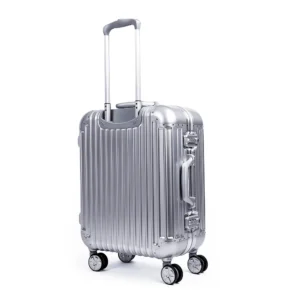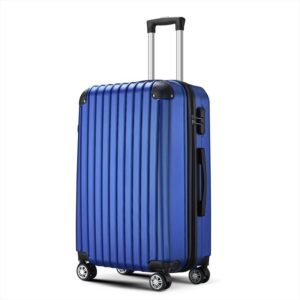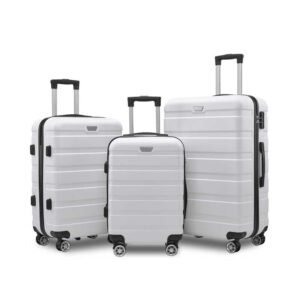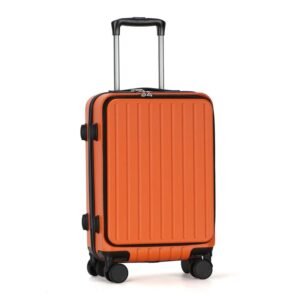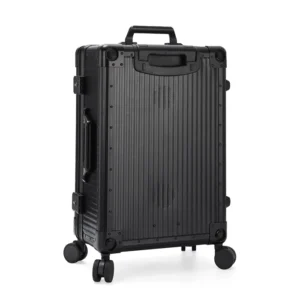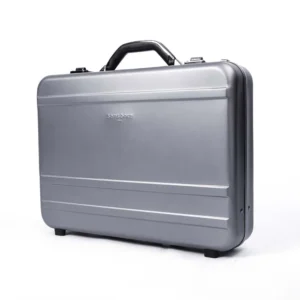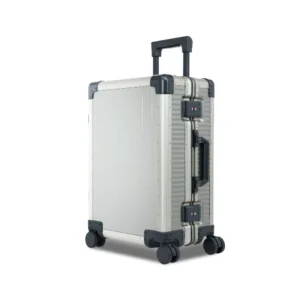

Most suitcases are molded. Aluminum luggage is not. A plastic shell is moulded or thermoformed in one operation; an aluminum shell starts as a flat sheet of alloy and is pressed, cut, framed and riveted into a case by hand and machine, step by step. That is why it costs more, why it is heavier, and why it behaves differently when it gets hit.
We have been stamping aluminum cases in Dongguan since 1993. This is how one is made on our floor, in the order it actually happens, and where along the way a buyer’s own brand, colour or hardware gets built in.
1. What the shell is made of
What an aluminum suitcase is actually made of is aluminum-magnesium alloy sheet, the 5000 series. Pure aluminum is too soft for a suitcase shell; adding magnesium makes the sheet harder and more resistant to denting. Our full-metal cases (for example the YCT range in our aluminum luggage range) use this alloy for both shell halves.
Sheets go through a controlled heat treatment before forming. This is what sets the balance between strength and formability: too hard and the sheet cracks in the press, too soft and the finished case flexes. Shell thickness is decided at this stage too, and it is the single biggest factor in how a case resists denting later, more than the brand name on the front.
2. Stamping the shell halves
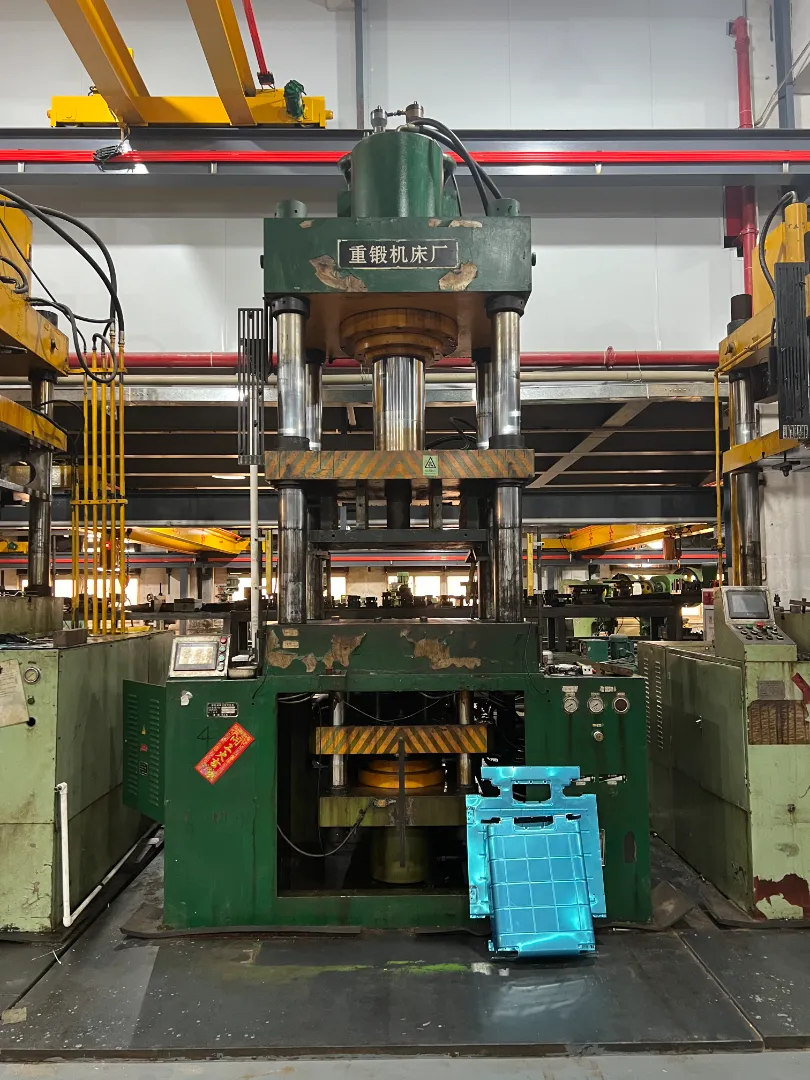
Each case is two shell halves, and each half is formed on a hydraulic press against a steel mold. We run two 500-ton presses imported from Japan, plus a metal stamping line. The sheet is clamped, the mold closes, and the aluminum is drawn into the shape of the shell in a single stroke. This is the step that makes the aluminum suitcase manufacturing process different from every plastic one.
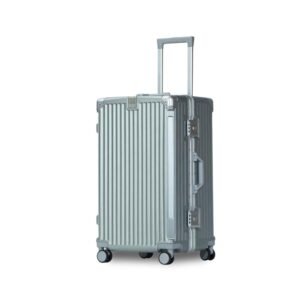
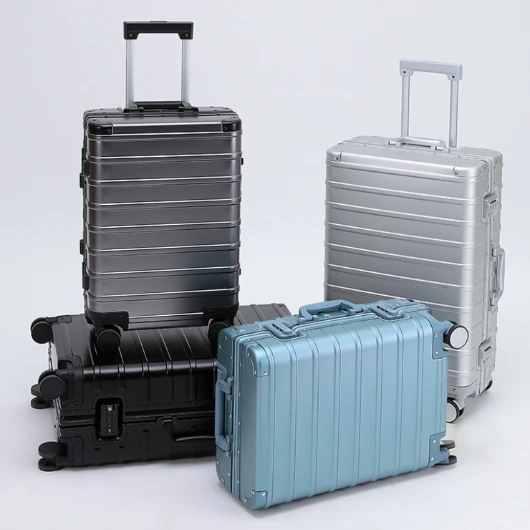
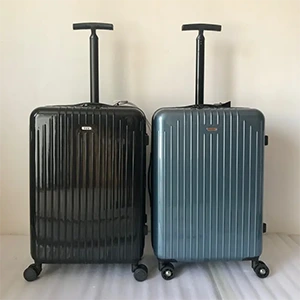
Two things are fixed at this moment and cannot be changed afterwards. The first is the corner radius: aluminum has to be drawn, not bent, around a corner, so aluminum cases always have rounded corners, and the tighter the radius the greater the risk of tearing the sheet. How far a shell can be pushed is covered in what shapes a custom aluminum shell can take. The second is the surface pattern. The ribbed or striped texture you see on most aluminum luggage is in the mold itself, pressed into the sheet as the shell forms. It is not added later and it is not decoration only: the ribs stiffen a flat panel the same way corrugation stiffens cardboard.
This is also why an aluminum case has a real tooling cost. A new shell shape means a new steel mold for the press, and that is a cost and a lead time that a polycarbonate case shares but an ordinary soft bag does not.
3. Machining and cut-outs
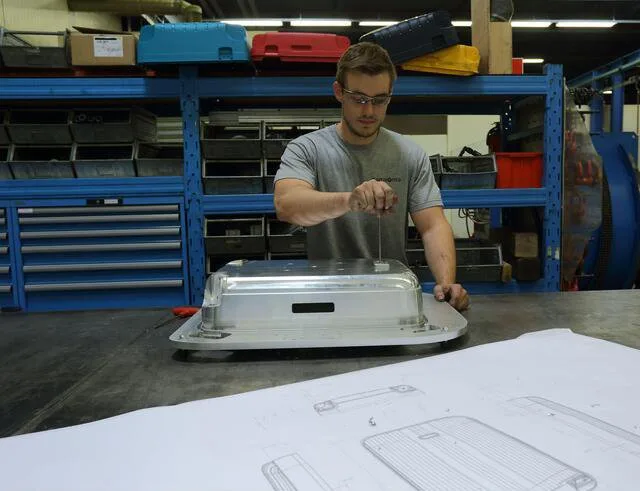
A shell straight off the press has a rough flange around the edge and no holes. The next station trims the flange to the exact height, cuts the openings for the handle, the lock and the wheel housings, and machines the groove that will later take the sealing gasket. We do the laser cutting and engraving in-house, which is also where a customer’s logo can be laser-marked directly into the metal rather than printed on it. The options are compared in our note on putting a logo on aluminum luggage.
Tolerance matters here more than anywhere else. The two halves have to meet along a metal-to-metal edge with a gasket between them; if the trim is off by a millimetre the frame will not close square. That is the practical reason we keep forming and machining under the same roof instead of buying shells in.
4. The frame, the hinge and the rivets
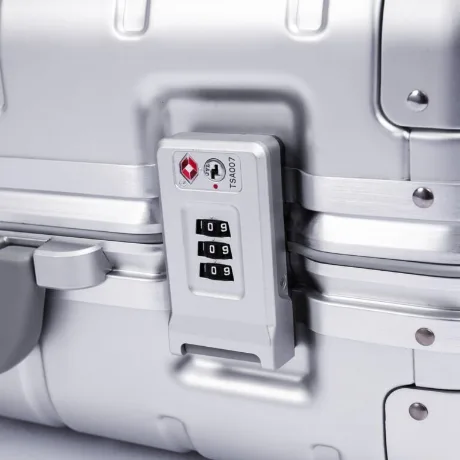
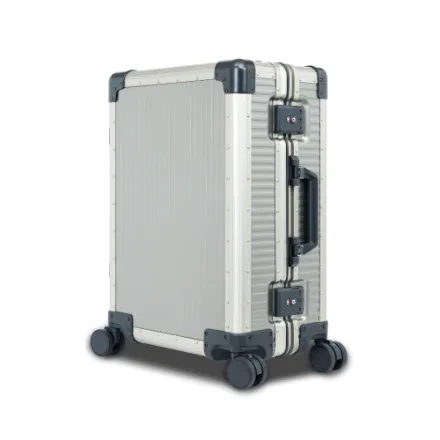
An aluminum case has no zipper. The two halves are held together by an aluminum frame that runs around the mouth of each half, joined by a hinge on one long side and latches on the other. The frame is what gives a zipperless case its rigidity, and it is the part that takes the load when the case is closed on a full pack.
Frames are fitted to the shells with rivets, not glue and not screws. A rivet is a permanent, solid metal fastener; on a case that will be thrown by baggage handlers for years, it is the joint that does not loosen. Every rivet on the frame is set on the line and then checked, because a single loose rivet on the frame is the usual start of a case that will not close properly.
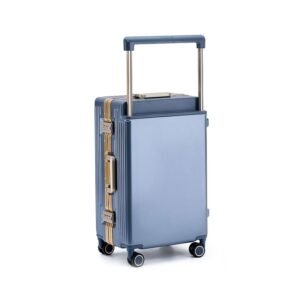
The frame is also the structural difference between a full-aluminum case and an aluminum-frame case. On an aluminum-frame case the shells are polycarbonate and only the frame is metal; on a full-aluminum case both the shells and the frame are aluminum. They look similar from the outside; the difference is in the shell, not the frame.
5. Surface
Colour is a surface finish applied after the shell is formed and machined, not a property of the sheet. Silver is the metal itself; black, grey, red and the other colours in a range like the TS-010 are finishes applied on top. Finishing is done on site, after machining and before assembly.
6. Assembly
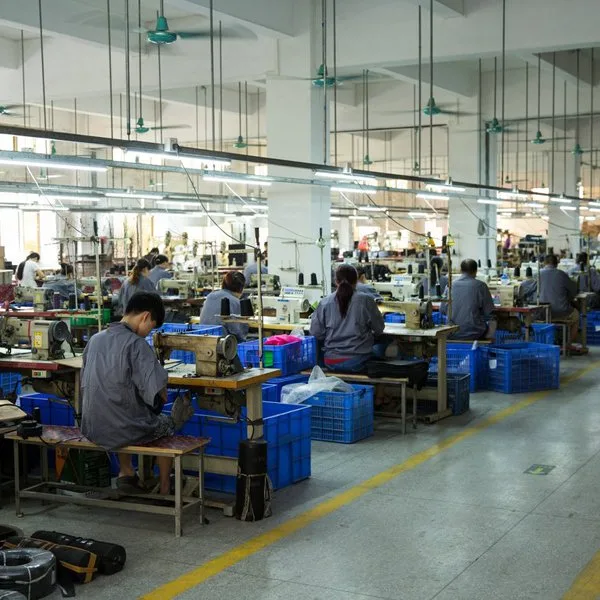
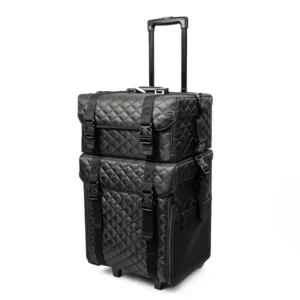
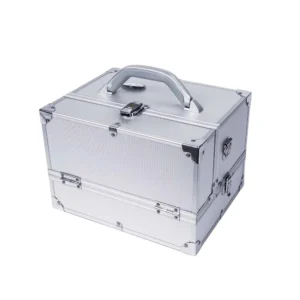
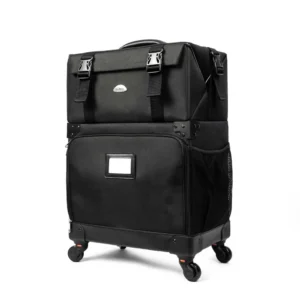
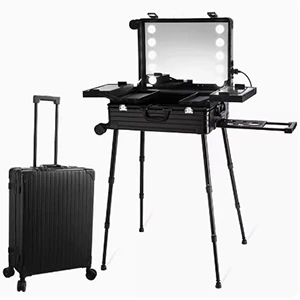
With the two framed halves finished, the case goes to assembly. In order: the telescopic handle rails are fitted inside the back shell, the spinner wheels are fitted into the wheel housings, the TSA combination locks (or a plain lock, depending on the model) are set into the frame, the gasket is pressed into its groove, and the lining is fitted. Interior layouts differ by model: the TS carry-ons take a nylon inner compartment, while a case like the YCT-026T makeup trolley takes a fibreboard interior with trays, a mirror and lighting.
Wheels, handles and locks are specified per order, and on an OEM order they are one of the things a buyer can choose. Which wheel suits which case is covered in suitcase wheels: spinner or inline, single or double, and handles in telescopic handle sourcing.
7. Testing before it leaves
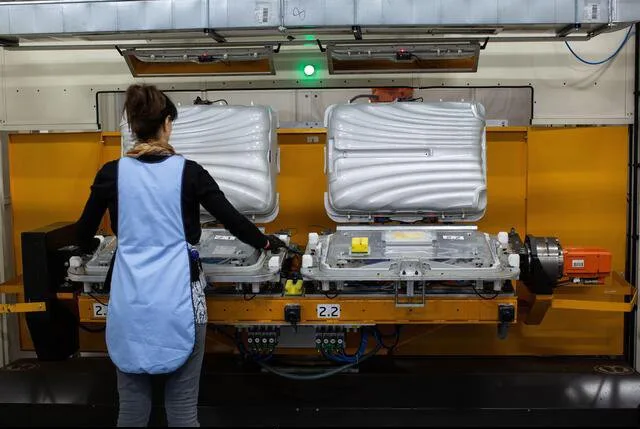
Every batch passes seven tests before packing: high-temperature exposure, compression under load, waterproofing at the gasket, scratch resistance of the finish, load bearing, handle extension lifespan and wheel drag endurance. Finished units are also drop-tested from real-world heights and angles. The handle test alone runs thousands of pull cycles, and the wheel drag test runs on rough surfaces rather than a smooth floor, because those are the two parts that fail in year two rather than in the showroom.
Temperature matters more for aluminum than buyers expect. Aluminum conducts heat quickly, so a case left on hot tarmac gets hot all the way through, and the gasket, the lining and the adhesives inside have to come through that without softening or losing their seal. That is why the heat test is on the list. How these checks line up with international standards is in our note on luggage testing standards.
What a buyer can change, and where
Because the case is built in stages, what can be customized depends on which stage it touches. This is the honest map:
| Change | Where it happens | What it involves |
|---|---|---|
| Logo (engraved or badged) | Machining / assembly | Laser engraving into the shell, or a metal badge riveted on. No tooling. |
| Colour and finish | Surface | Applied per order. No tooling. |
| Wheels, handle, lock | Assembly | Component choice; specified on the quote. |
| Interior lining and layout | Assembly | Fabric, colour, dividers, trays. No tooling. |
| Shell texture (ribs, stripes) | Stamping | Part of the mold. Changing it means a new mold. |
| Shell size or shape | Stamping | New mold on the 500-ton press. Tooling cost and lead time. |
Most private-label programmes start with an existing shell and change everything from the surface onward. A logo on an existing model starts from 50 pieces and a full-shell pattern from 300. The full options are on our aluminum luggage manufacturer page and the private label luggage page.
Questions we get asked
How long does it take to make an aluminum suitcase? A sample takes 15 to 20 working days. Production on a confirmed order takes about 45 days. Our aluminum lines have a capacity of up to 60,000 cases a year.
What is the minimum order? 300 pieces per design on an existing shell, and a logo on an existing model can start from 50 pieces. We reply to enquiries within 24 hours.
Do you make aluminum-frame cases too? Yes. Full-aluminum cases are in our aluminum luggage range and aluminum-frame polycarbonate cases are with our zipperless luggage; the frame, hinge and rivets are the same job on both.
Why do aluminum cases dent? Because aluminum deforms instead of cracking. A polycarbonate shell flexes and springs back until the day it splits; an aluminum shell takes the energy as a dent and stays in one piece. Thicker sheet and the ribbed pattern both reduce how easily that happens.
Can I see the factory? Yes. We are in Houjie, Dongguan, and visits are welcome.