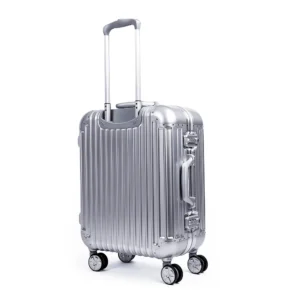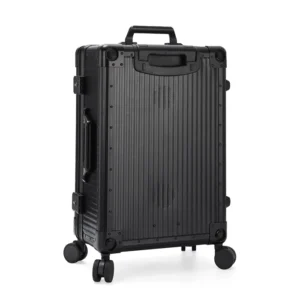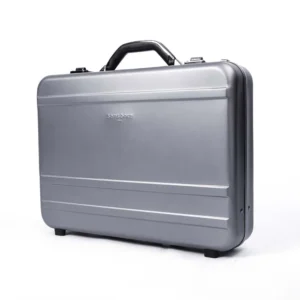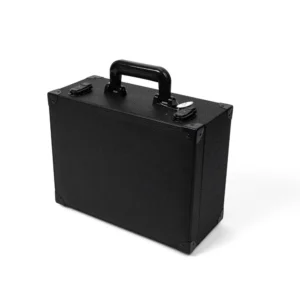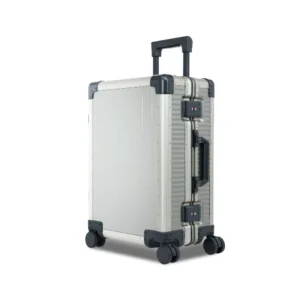

Ask any luggage factory in China for four numbers before you ask for a price. Minimum order, sampling days, bulk production days, and which aluminum grade sits in stock. A real plant answers all four in one email. A trading company answers two and goes quiet on the other two.
That is the whole test. The rest of this page explains why those four, what the answers mean, and how to check the claims that cannot be answered in an email at all.
Why the four numbers work
Each one is tied to something a trading company does not control.
Minimum order is set by tooling. A plant that already runs a shell profile can quote 300 pieces without flinching, because the mold is paid for, and where that minimum actually comes from is worth understanding before you compare quotes. A company sourcing from someone else has to pass through whatever minimum its supplier sets, plus a margin, so the number arrives vague or inflated.
Sampling time is set by whether the sample gets made on the same floor as the production run. Ours is 7 to 15 days. A middleman adds a week in each direction just moving the sample.
Bulk lead time is set by line capacity. Ours is 45 days. Anyone quoting 20 days for a first custom run is either sitting on finished stock or has not thought about the anodizing queue.
Stock alloy is the one most buyers skip, and it is the one that moves your cost the most. We hold 5052, the grade most aluminum luggage shells run on, and run it through existing molds. 5083 and 5182 we make to order, which means a longer wait and a higher unit cost. If a supplier cannot tell you which grade is stock and which is made to order, they are not the ones buying the metal.
Ask for patent numbers, then go check them
Every factory site in this category claims patents. Almost none print the numbers, because printing a number invites verification.
Ours are below. The holder and inventor on all ten is Bao Xiangqian.
| Title | Type | Number | Status |
|---|---|---|---|
| Luggage caster mounting structure | Utility Model | ZL 2015 2 0460966.3 | Expired June 2025 |
| Luggage with positioning system | Utility Model | ZL 2015 2 0460895.7 | Expired June 2025 |
| Trolley case | Design | ZL 2017 3 0602196.6 | Valid to Nov 2027 |
| Trolley handle with safety lock | Utility Model | ZL 2017 2 1645526.0 | Valid to Nov 2027 |
| Travel and vanity combination case | Utility Model | ZL 2018 2 0143205.9 | Valid to Jan 2028 |
| Luggage roller mechanism | Utility Model | ZL 2018 2 0143208.2 | Valid to Jan 2028 |
| Multifunction luggage, design one | Design | ZL 2018 3 0038957.4 | Valid to Jan 2028 |
| Multifunction luggage, design two | Design | ZL 2018 3 0038605.9 | Valid to Jan 2028 |
| Lid linked storage case | Utility Model | ZL 2018 2 1941714.2 | Valid to Nov 2028 |
| Luggage case | Design | ZL 2018 3 0666326.7 | Valid to Nov 2028 |
Two of those expired in June 2025 and we are telling you so, because a utility model in China runs ten years from the filing date and anyone who checks will see it. A supplier who lists expired patents as current is telling you how they handle a spec sheet.
Two things to know when you check. Utility Model and Design are not the same as an Invention Patent, and any English page that flattens all three into the word “patent” is hiding which one it holds. And the number is searchable by anyone through the China National Intellectual Property Administration public bulletin, which is the point of asking for it. That search is open without an account, as of August 2026.
What buyers ask us first, and what it tells you
We pulled every inquiry that came through our own forms and cleaned out the bot traffic. That left 2,424 real messages. Here is what they asked about.
| Topic | Share of all inquiries | Share of the last six months |
|---|---|---|
| Customization and private label | 10.6% | 19.0% |
| Material and grade | 10.1% | 20.3% |
| Certification and audits | 4.4% | 5.3% |
| Sampling | 4.2% | 12.1% |
| Minimum order | 3.5% | 7.9% |
| Lead time | 2.5% | 4.7% |
| Tooling and molds | 1.1% | 1.6% |
Look at the last row. Tooling shows up in one inquiry in a hundred, while material shows up in one in five. Most sourcing advice tells you to open with mold ownership. Real first contact does not work that way, because at first contact the buyer still does not know whether the supplier can make the thing at all.
Use it as a sequence. Confirm the material and the minimum first. Bring up molds when you are down to two or three suppliers, which is when the answer actually changes your cost.
Certifications: ask for the report, not the logo
A logo wall proves nothing. Three questions do.
Who issued it. What is the report number. Which product and which batch does it cover.
Audit reports for ISO 9001, amfori BSCI, and Sedex SMETA are released on request at first inquiry, and so are third party test reports where the buyer’s market requires them. If a supplier will not put a report number in writing before you place an order, assume the report does not cover the product you are buying.
Where the luggage factories in China are, and why that changes your timeline
Three clusters make almost all of it. Guangdong, mainly Dongguan and Guangzhou, does aluminum and higher end hard shell. Zhejiang, centered on Pinghu, does high volume hard case trolley. Hebei, around Baigou, does budget bags and sets.
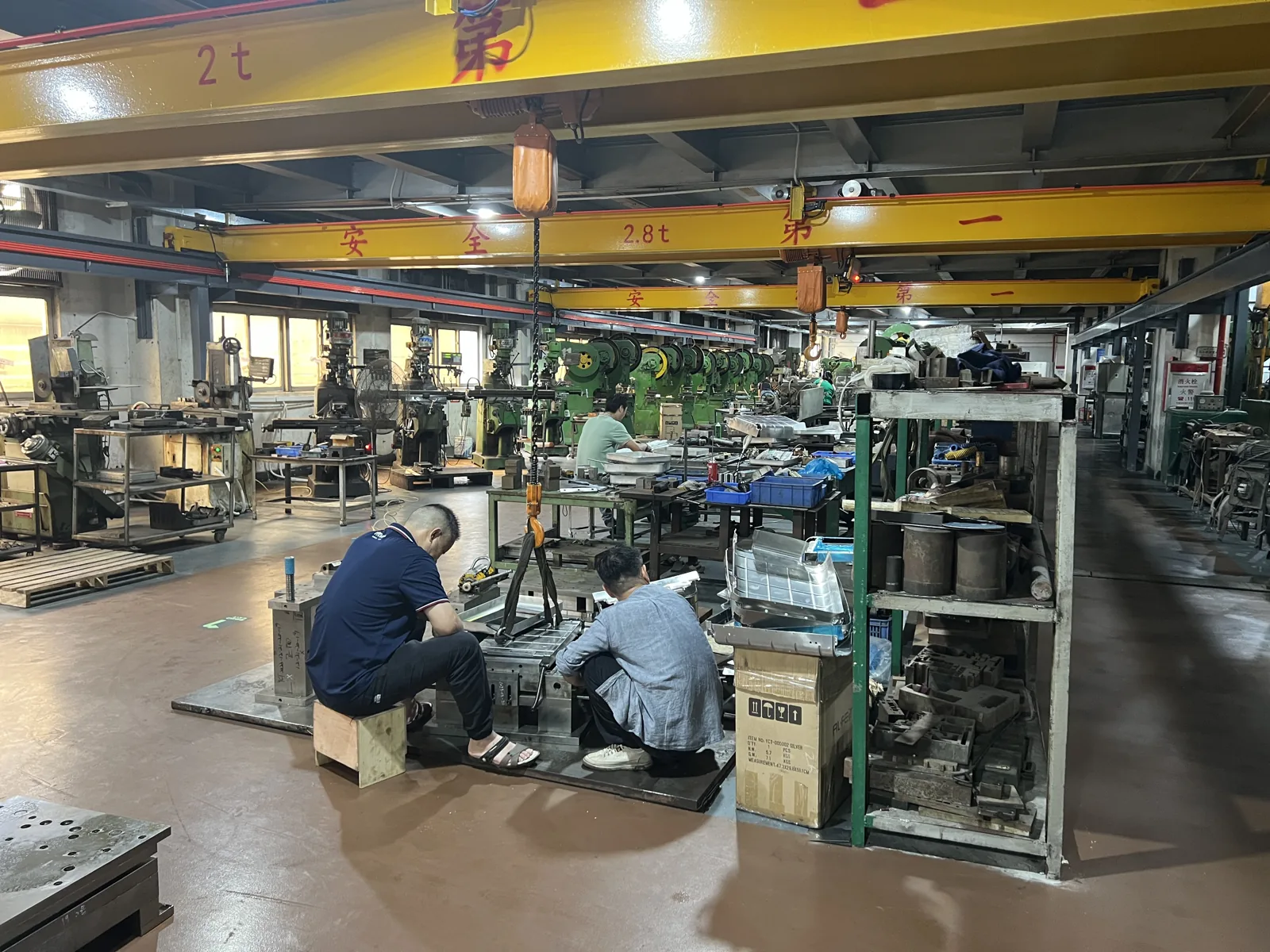
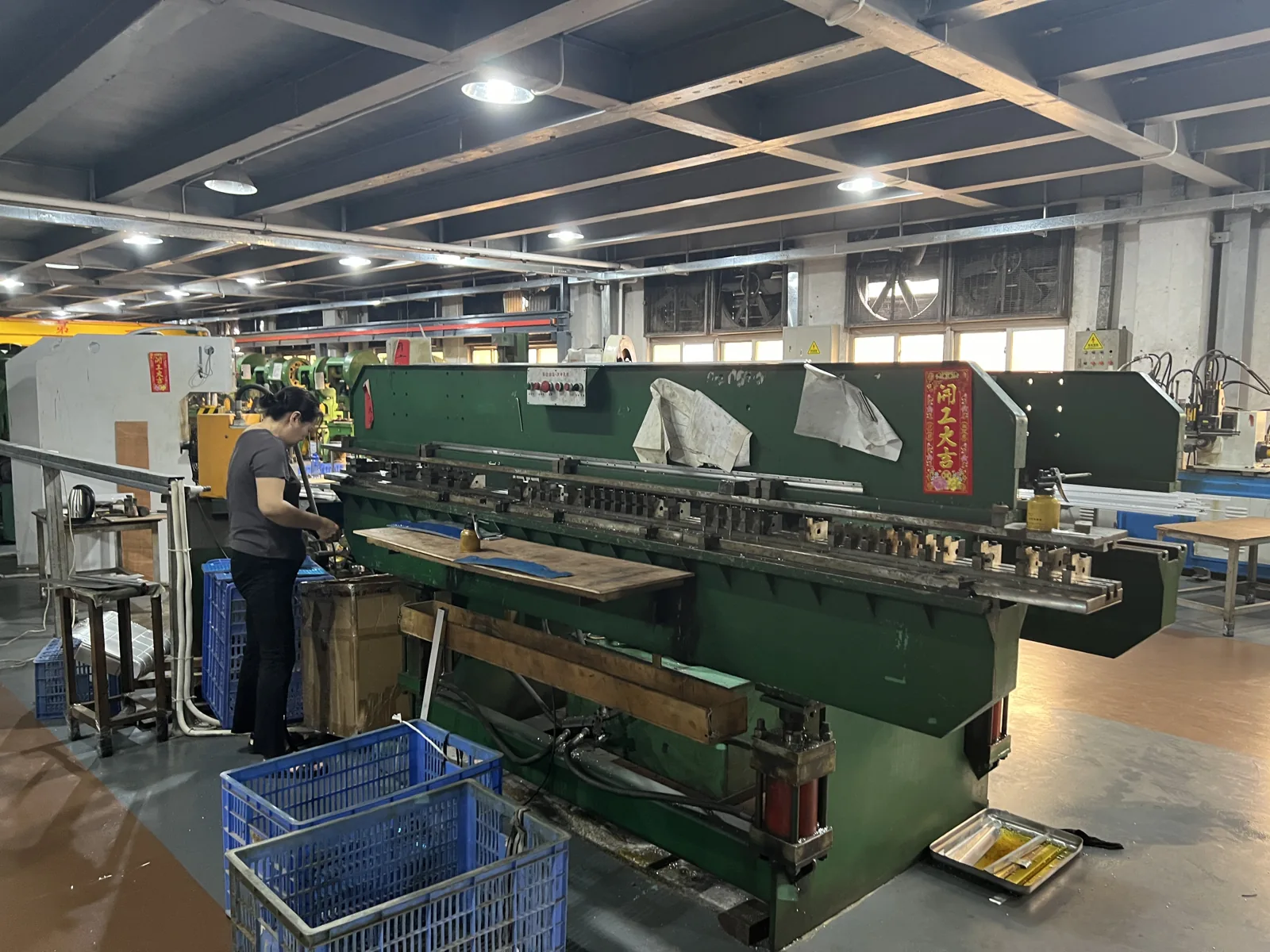
We are in Houjie, Dongguan, in a 49,600 sq m (534,000 sq ft) plant with about 250 people across design, engineering, testing, production, and sales.
The cluster matters for one practical reason. Hardware moves inside a cluster in a day and between clusters in a week. Our trolley handles come from Jiangshun, Sunsen, and Boluo Jingxiang, all built to the standard that Away, July, Level8, and Samsonite specify. When a handle spec changes mid run, that is a two day problem in Dongguan and a two week problem if the handle ships in from another province.
What we are slow at, and what we will not pretend
We take orders down to 300 pieces on stock 5052 through existing molds, which is where most private label programs start, and we will quote below 300, but the unit price climbs and we will say so on the first call rather than after the deposit.
New tooling is where we are honest to a fault. The lock cavity is milled into the extrusion when the die is cut, so the closure decision has to be final before tooling starts. Zippered body means a zipper lock. Frame body with no zipper means a frame mounted lock. Change your mind after the die is signed off and you are buying a second die.
We also do not hold finished stock in your colorway. If your launch date is six weeks out and you have not signed a drawing, we are the wrong plant for that run and a stock program supplier is the right one.
If that boundary works for you, send us the drawing and the target quantity and we will come back with a feasibility note before a quote.
Two product types carry their own rules on top of the ones above. If the range includes a powered case, read the smart luggage battery rules before the die is cut. If it includes a kids size, read who has to hold the certificate under kids luggage CPSIA testing.
Two documents decide how well a first contact goes. On the buyer side it is what a tech pack has to contain. On the tooling side, if the range uses plastic shells, it is whether a luggage mold transfers between materials.
Two things sit either side of a first order. Before it, which payment structure puts the risk where. After the spec is fixed, how a logo actually gets onto a metal shell.
Frequently asked questions
What is your MOQ for this type of product, and do you support small test batches (100-300 units)?
300 pieces on stock 5052 running existing molds, and we quote below that. Under 300 the per unit price rises because setup and material minimums stop spreading out. For a first market test that trade is usually worth it, and it beats committing to a tooling program before you have sell through data.
Is there an option for low or no minimum order quantities for emerging brands?
Low, yes. None, no. Any supplier offering zero minimum on a custom aluminum case is reselling someone else’s stock with your logo applied after the fact, which is a different product with a different failure rate.
Do you customize from customer’s drawings and specs?
Yes. Send a 3D file or a dimensioned 2D drawing with the closure type marked. We come back with a feasibility note before quoting. The field that most often needs changing is the corner radius, because an extrusion cannot hold a tighter radius than its wall thickness allows.
Can you produce a fully custom mold, or do you only customize existing designs?
Both. Existing molds cover most travel sizes and get you to market fastest. A fully custom mold is the right call when the silhouette is the product, and it changes your timeline more than your unit cost.
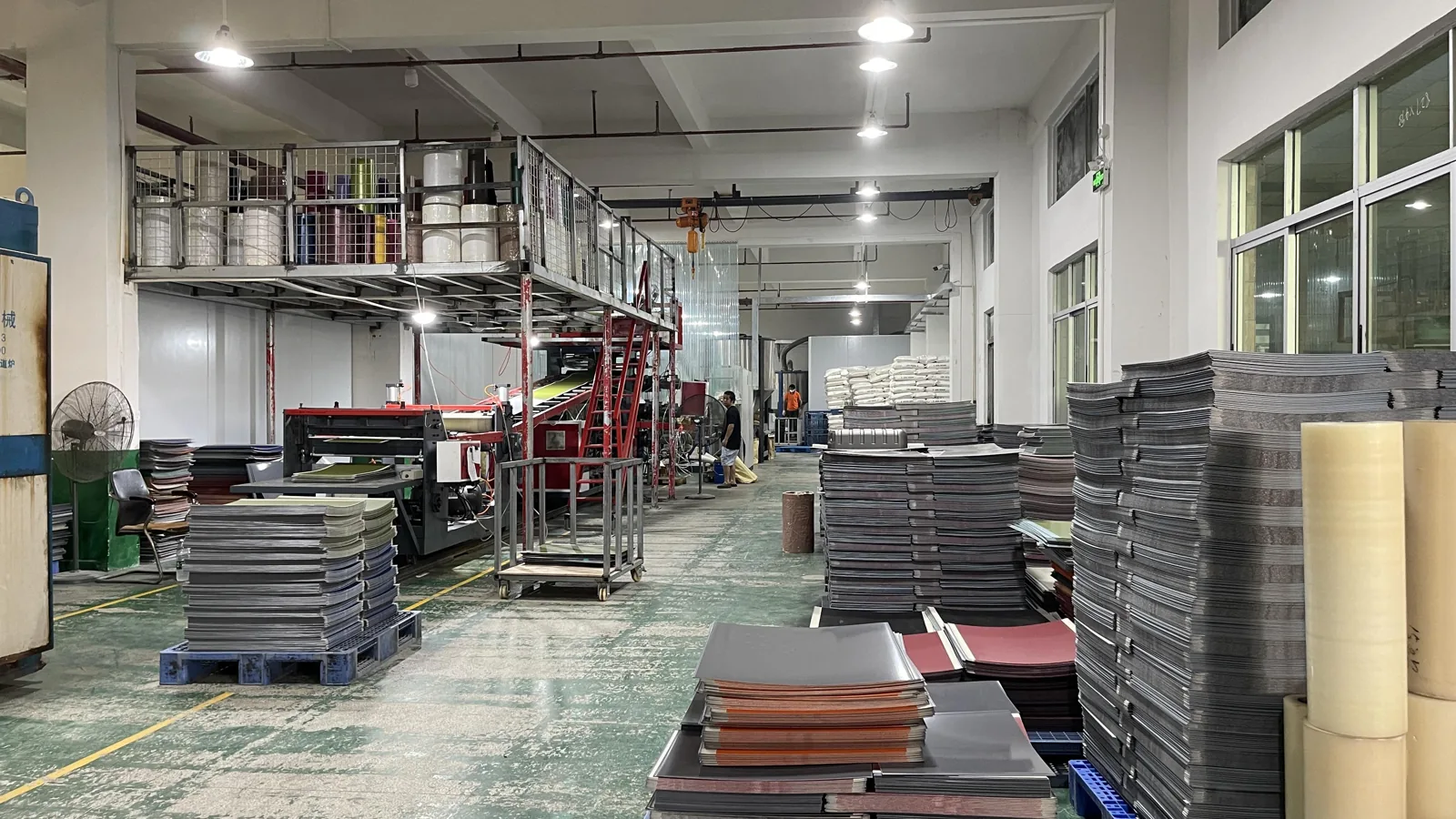
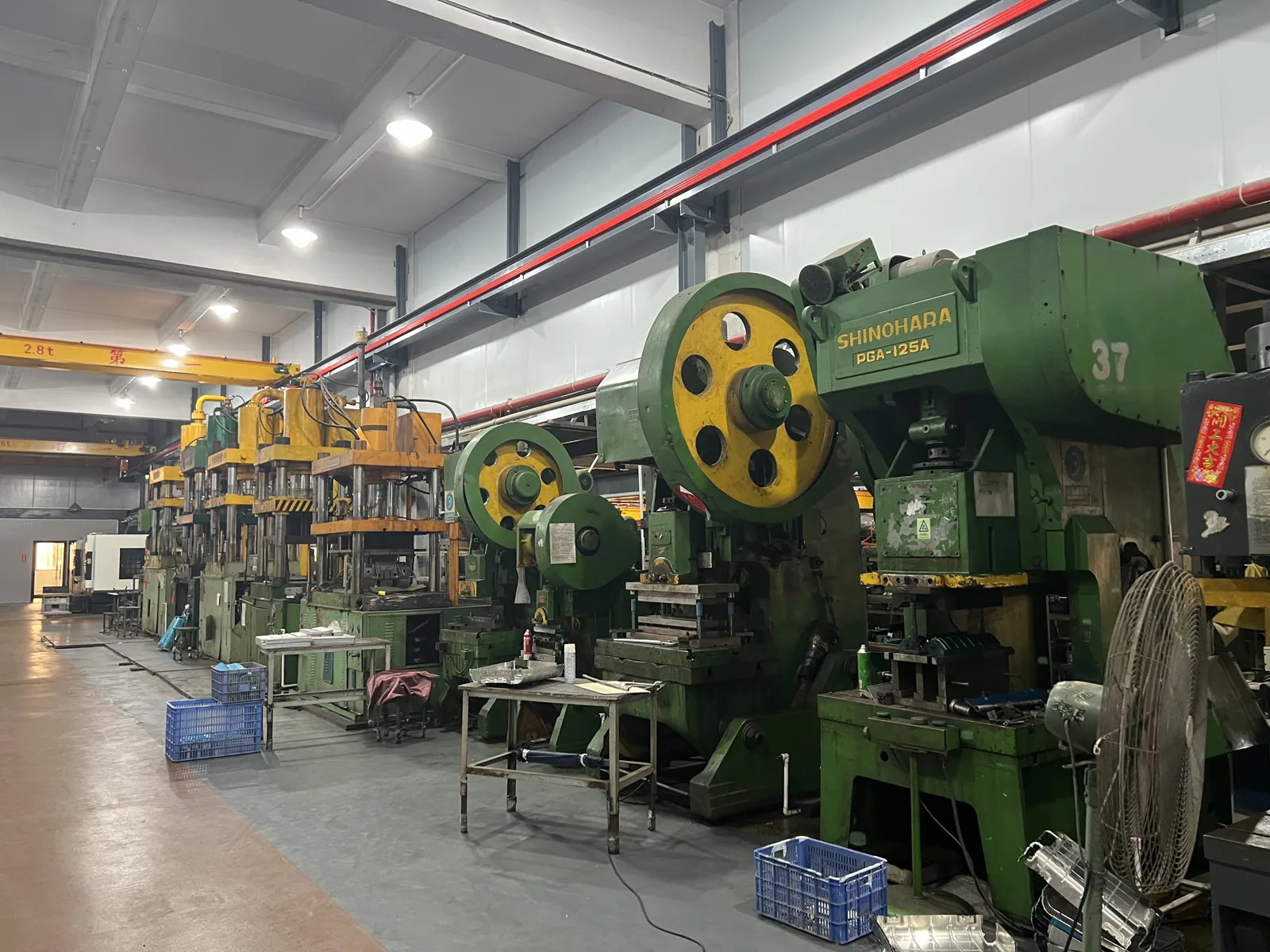
Can you send real photos or videos of aluminum luggage samples you produced before?
Yes, including line photos rather than showroom shots. Ask for footage of the forming and assembly area rather than a finished product reel, since a finished product reel can be filmed anywhere.
Do you hold any relevant certifications (ISO, BSCI, REACH)?
Audit and test reports are released on request at first inquiry. Ask us, and any other supplier, for the issuing body, the report number, and the covered product before you compare quotes.
What is the estimated production lead time after deposit and sample approval?
45 days for bulk on a confirmed sample. Sampling before that runs 7 to 15 days. Sea freight applies once an order reaches 100 kg (220 lb) or 300 pieces.
Still comparing suppliers? Request the spec sheets and put our numbers next to the other quotes on your desk.
Written by James
James works at aluvox.com in Houjie, Dongguan. The inquiry figures in this article come from the company’s own form records, pulled in August 2026.