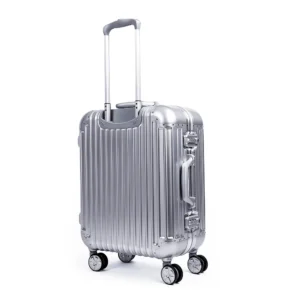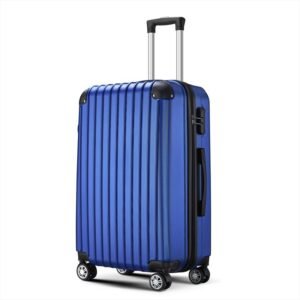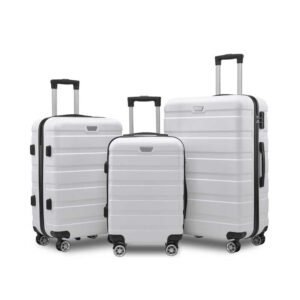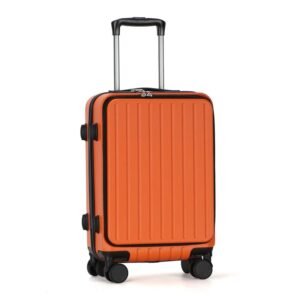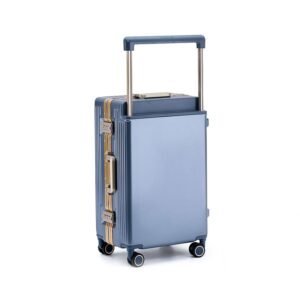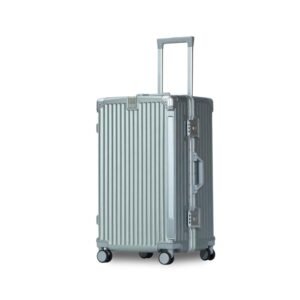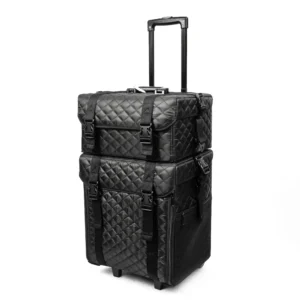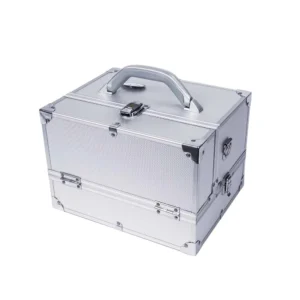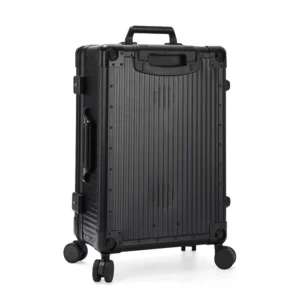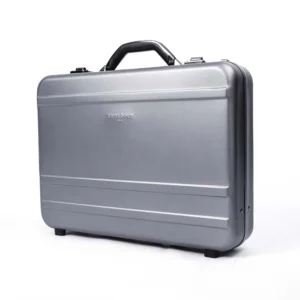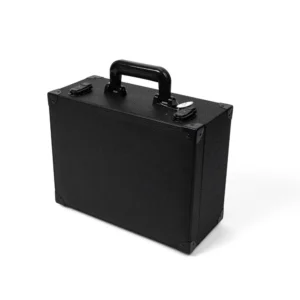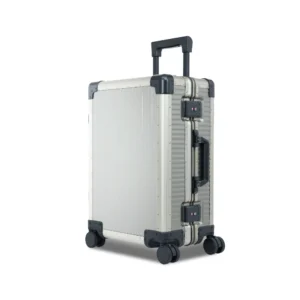

When you add a model to an existing luggage range, the way it opens and packs can give the product a distinct purpose. Bulky shoe bags, jackets, and packing cubes may benefit from a deeper main compartment. A two-sided layout lets travelers keep clothing and other belongings in separate sections.
We recommend starting with what the case needs to carry and how those items will be accessed, then choosing the layout. Using our TS-005 and YCT-053 as examples, this guide explains the differences in packing, hotel-room use, and product development for brands and wholesale buyers.
How do deep-compartment and clamshell layouts differ?
The main difference is how depth is divided between the two sides, not just the shape of the case.
A clamshell case opens like a book, with packing space on both sides. A deep-compartment layout gives more depth to one main section. It does not always mean a thin lid over a single large compartment: some designs retain a shallower secondary compartment that can hold clothing, while others use the lid mainly for slim pockets.
When selecting a model, distinguish three arrangements: two sides of similar depth; a deeper main compartment with a usable secondary compartment; and a deep main compartment with a slim lid. They do not pack or open in exactly the same way.
Brands use the term “trunk” for different case designs and compartment arrangements. We compare open-case photographs and dimensions with you rather than assigning a fixed split based on the name. Likewise, “clamshell” here describes two-sided packing, not a measured 50/50 split on every model.
The interior layout is also separate from the closure system. A zipperless case can have either two packing compartments or a deeper main section. Our zipperless luggage sourcing guide discusses zippers, frames, and latch closures in more detail.
TS-005 and YCT-053: which layout fits your product?


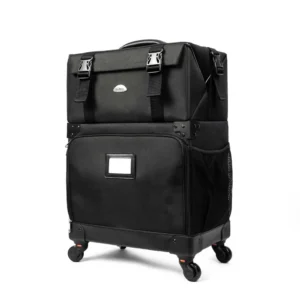
Our TS-005 has a shallow lid and a deeper main compartment, with storage pockets inside the lid. Start by checking whether the intended shoe bags and packing cubes fit as planned, then discuss pockets, straps, and dividers. If frequently needed items are buried at the bottom, adding lid pockets alone will not solve the problem; the packing arrangement matters too.
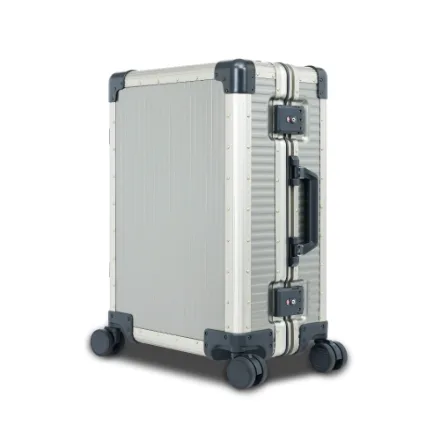
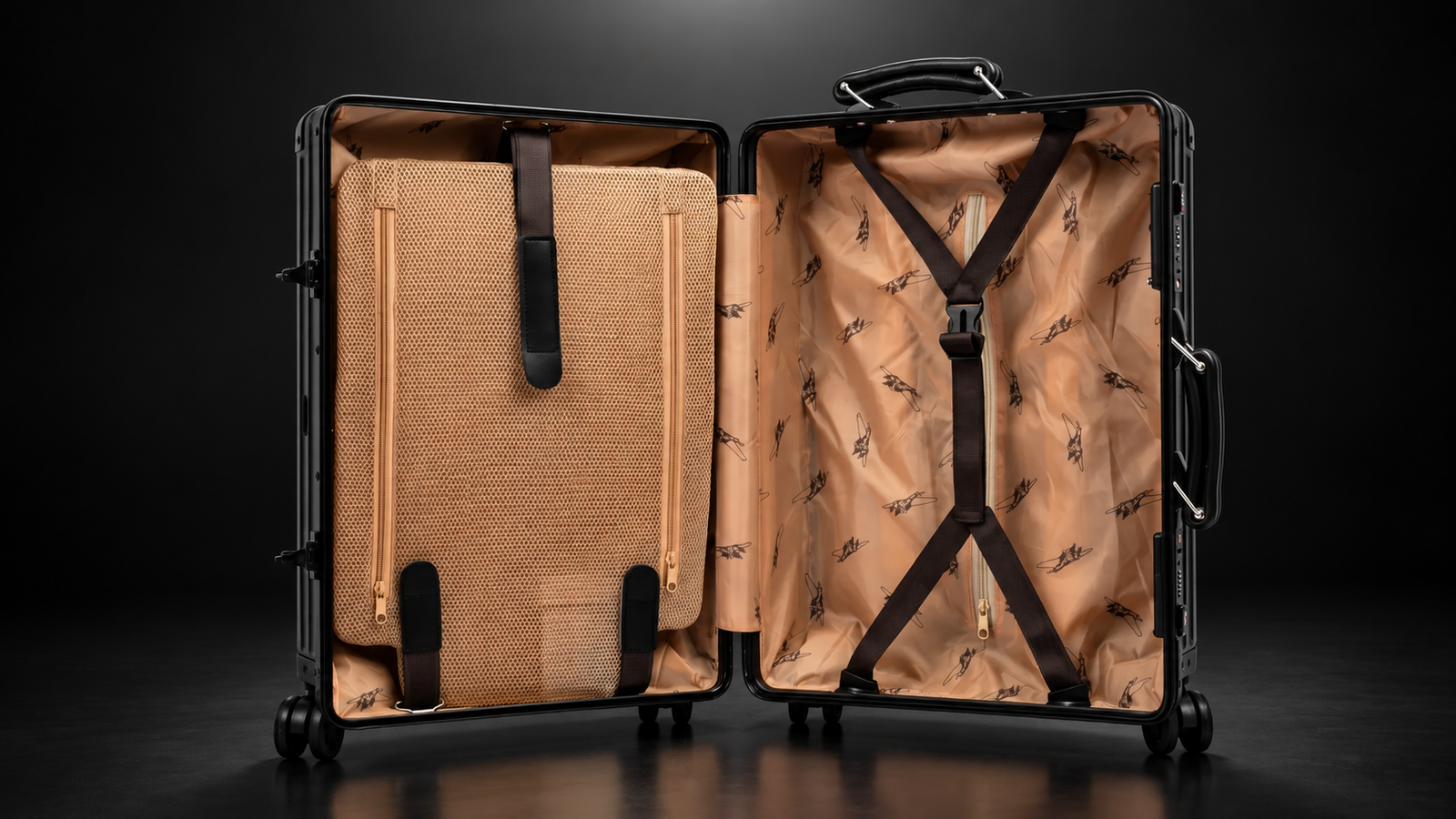
Our YCT-053 provides two-sided packing, with a pocketed divider on one side and crossed straps on the other. It is a starting point for a range built around separate storage sections. For example, the divider side could hold smaller belongings while the straps secure folded clothing. The arrangement can be discussed around your target items and interior design.
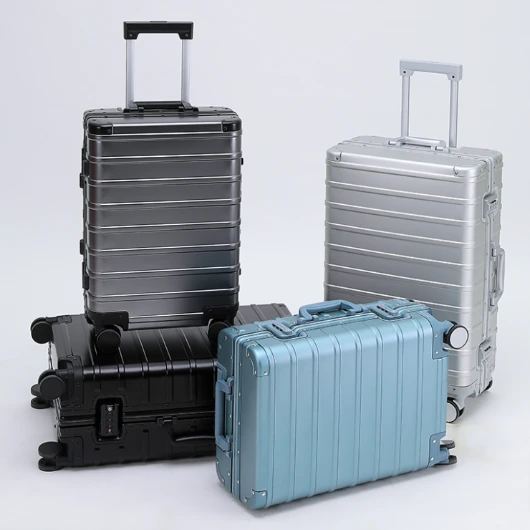
Once you have a preferred layout, select candidates from our aluminum luggage range and compare samples against the target dimensions and configuration.
How do clothing, shoes, and bulky items fit?
A deeper compartment concentrates usable depth; a two-sided layout separates groups of items. Compare them with the belongings the product is intended to carry.
Take a bulky shoe bag as an example. First check whether it passes through the compartment opening and fits in the intended position, then see how much room remains above it for clothing. Wheel housings, telescopic-handle assemblies, and shell corners can restrict placement, so measuring only the deepest point is not enough. In a clamshell layout, check whether the shoe bag projects above one compartment’s rim and presses against items on the opposite side when the case closes.
If the shoe bag fits a deep compartment but clothing must be stacked above it, consider the unpacking sequence. A frequently used toiletry bag should not be buried at the bottom. Compare packing by frequency of use with grouping items in organizers that can be lifted out separately. The better arrangement depends on how those items fit the actual interior.
Two-sided packing can separate clothing from shoe bags or divide two travelers’ belongings. Seeing both sections when the case opens is useful, but separation alone does not keep items in place. Divider coverage, strap placement, and the ability to secure a light load also matter. Ordinary compartments are not waterproof barriers; wet-item storage needs a separate discussion of the pouch construction and materials.
We suggest using the same shoe bags, folded clothing, toiletry bag, and organizers in each candidate sample. Record which items do not fit, which need repositioning, and where closing the case causes pressure. This helps distinguish a size limitation from an unsuitable compartment split or an interior that needs adjustment.
How much room does the case need to open?
A fully opened clamshell case needs support beneath both sides. For a range aimed at travelers who change hotels frequently, assess the intended setting: whether a luggage rack supports both halves, whether the case blocks the walkway beside a bed, and whether it is convenient to close again after removing clothing.
With a shallow lid and deep main compartment, you can assess access with the main section lying flat and the lid raised. Allow space for the lid to move upward or backward as well as for the main compartment itself. Against a wall, below a low shelf, and on a luggage rack may produce different results. If the lid lacks suitable support, it must be positioned according to the actual construction; a deep compartment alone does not justify a claim that the case uses half the opening space.
Load the lid pockets before checking how it opens and rests. An empty lid that is easy to handle may behave differently once its pockets are filled.
If your product should allow quick access to a laptop or documents at a station, check for a separate, directly accessible storage area. A deep main compartment changes the distribution of packing space; it does not automatically provide the access of an independent front compartment.
Compare car loading and lifting, not just capacity
For a range aimed at road trips or frequent transfers, compare the complete exterior as well as the interior. Two cases with similar stated capacity may differ in width and depth, changing how they fit in a car’s cargo area. A narrower case is not necessarily easier to fit: the opening, available height, and other luggage also matter.
Try the sample in the positions relevant to the intended use. Can someone reach the grab handle to remove it when it lies flat? Is the handle still accessible when the case is upright or on its side? Do wheels or protruding parts get in the way? With a loaded sample, also check whether it is convenient to change grip while lifting and setting it down.
These comparisons help you choose the exterior shape and grab-handle positions. A trunk-style silhouette alone does not establish better stability or easier rolling; those depend on the wheels, component positions, and actual load as well.
What should the new model add to your existing range?
If you already sell two-sided cases, a deeper-compartment model can offer a different way to pack bulky items. Starting with a layout such as TS-005, compare how the target items fit before deciding whether to add organizers, dividers, or different pocket positions. That gives the new model a practical distinction beyond its exterior shape.
If your range emphasizes clearly separated storage, retain a two-sided layout such as YCT-053 and focus development on the dividers, straps, and pockets. For example, if clothing and shoe bags will be stored separately, check whether each side suits those items rather than simply adding more pockets.
Vacation, family-travel, and business ranges can all use different layouts. We recommend starting with the contents and access habits: even on a family trip, one traveler may need space for bulky items while another wants to separate two people’s belongings. The trip category alone does not resolve that difference.
For DTC brands, product photographs can show the same set of belongings packed in each layout and the case in its actual open position. For wholesalers and distributors, model information should identify both compartment depths, the main interior features, full exterior dimensions, and empty weight. Sales teams can then explain concentrated packing versus two-sided organization, rather than describing the options only as “standard” and “premium.”
Keep the existing case or change the opening layout?
First identify whether the limitation is in the interior fittings or the case body. That determines how much needs to change.
If a shoe bag fits but retrieving it means moving all the clothing, first discuss organizers, dividers, or strap arrangements. If a lid pocket presses against items at the top of the main compartment, its position or depth may need adjustment. These are interior options to assess before changing the entire case body.
If the intended item cannot pass through the opening, or the permitted case dimensions leave insufficient depth, changing the lining alone will not resolve it. We can first compare other existing models with you. If none meets the requirement, we can discuss new shell depths and opening positions.
For an aluminum-shell case with an aluminum frame, a change in shell depth needs to be assessed alongside the frame, hinges, latches, telescopic handle, and wheel housings. Reusing a component depends on mounting space and operation on the complete case, not just a matching part name.
Send us the item that does not fit the existing model, the intended packing arrangement, and the target exterior dimensions. That gives us a concrete change to discuss rather than only a request to “make the main compartment deeper.”
How should you compare cost and weight?
Bring the candidates onto a comparable basis first: target exterior dimensions, shell and frame specifications, wheels, telescopic handles, and interiors should be as closely matched as practical. Then compare empty weight and quotations. A large deep-compartment case and a smaller clamshell case do not isolate the effect of the opening layout.
For development costs, compare “adapting the interior of an existing deep-compartment model” separately from “changing a specified model to a new opening layout.” The work differs. Each option should identify retained parts, proposed changes, and tooling or sample work that needs further assessment. You can then judge whether retaining a particular exterior is worth the additional development.
If exterior dimensions change, review the shipping carton and packing arrangement too. Our luggage cost and quotation guide covers unit-price components and quote conditions in more detail.
How can packing and closing problems be addressed on a sample?
The following sample situations illustrate how we recommend assessing changes. After each adjustment, return to the same sample and the same set of items for comparison.
The case closes empty but not when packed
First check whether items, straps, or dividers are caught in the frame, then whether the contents of the two sides press against each other. If repositioning a pouch or changing the packing arrangement restores smooth closure, continue evaluating the interior. If the target items exceed the available space, reconsider case dimensions or layout. If the case also fails to close when empty, check the body and component fit first; a packing change should not conceal a structural problem.
After the adjustment, pack the original set of items again and check both closure and the condition of the contents. This shows whether the change addressed the original problem, rather than making the sample appear acceptable by removing items.
A full load stays organized, but a light load shifts
Check the area covered by the divider and straps, and whether they can still secure fewer items. Discuss attachment positions, strap adjustment, or organizer options, then assess both a light load and the planned load. Do not approve the interior only when the case is packed full.
The main compartment works, but lid pockets obstruct access
Fill the lid pockets with their intended contents. Check whether their openings remain usable, whether they press against the main-compartment contents, and whether the lid can rest at the intended angle. Discuss pocket position, dimensions, or attachment according to the problem. If the issue is lid support, return to the opening construction for assessment.
Once the layout is agreed, arrange loaded lifting, rolling, and relevant testing to the project’s requirements. Keep a record of the approved case version, interior arrangement, and components so later orders and replenishment can be checked against them. Discuss spare parts with us when placing the order.
Questions from brand buyers
Are deep-compartment cases only for checked luggage?
The opening layout does not determine whether a case is suitable as carry-on or checked baggage. Assess full exterior dimensions and weight against the target airline’s requirements. Establish the size target first, then compare layouts within it; a model name or nominal inch size is not sufficient.
Which layout is more durable?
The opening layout alone does not determine durability. We recommend comparing frame deformation, looseness at hinge and latch connections, and whether the case still closes normally after testing under the same loading and project-agreed conditions. The conclusion applies to the particular models and configurations, not to all deep-compartment or all clamshell luggage.
Discuss the right layout for your luggage range
Send us your target dimensions, exterior references, main packing items, and estimated order quantity. If you already sell a case, tell us what you want to retain and which packing or access problem you want to improve.
We can start with existing models such as TS-005 and YCT-053, discuss interior adjustments or further structural development, and agree on the sample options to assess.