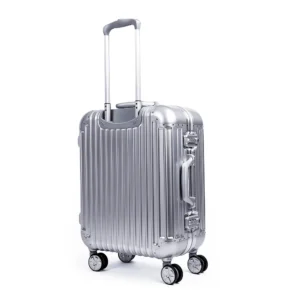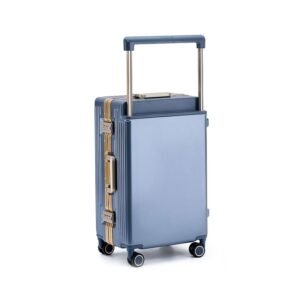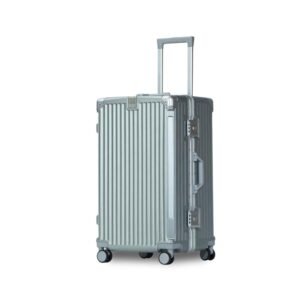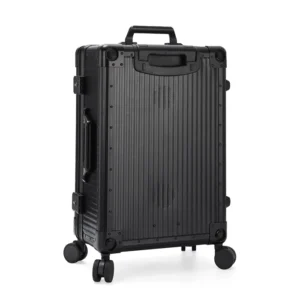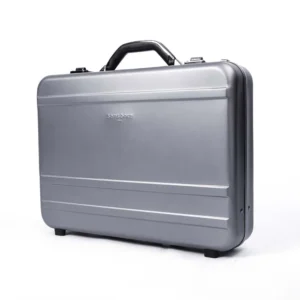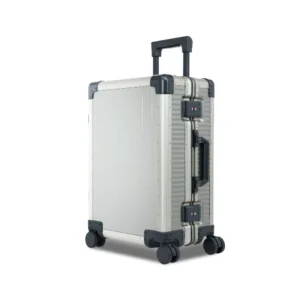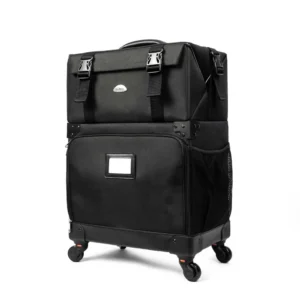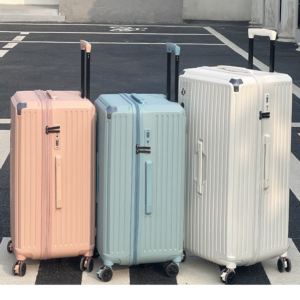

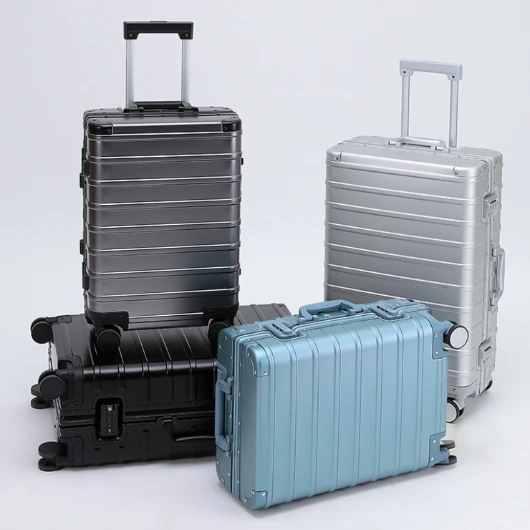
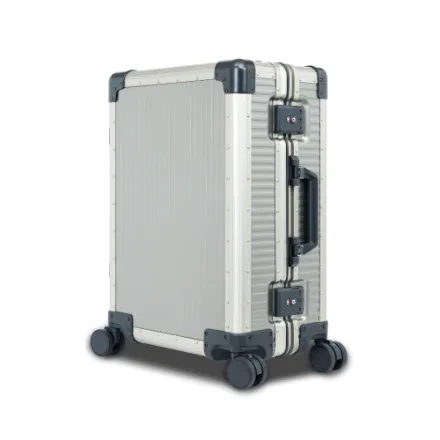
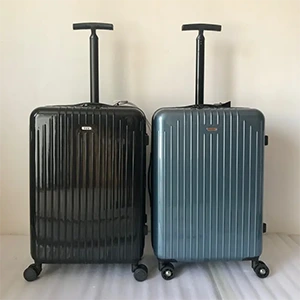
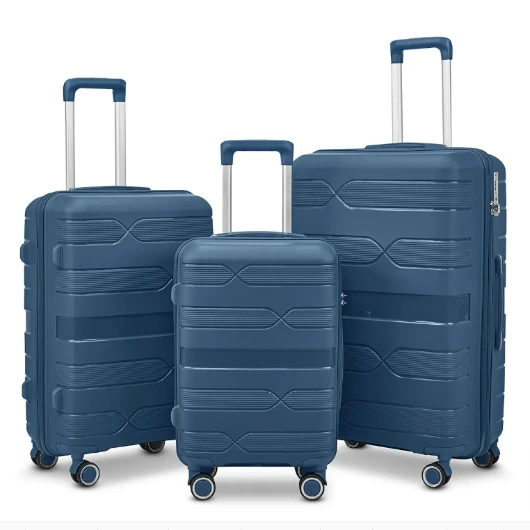
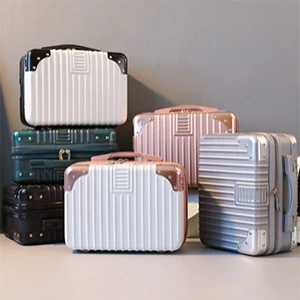

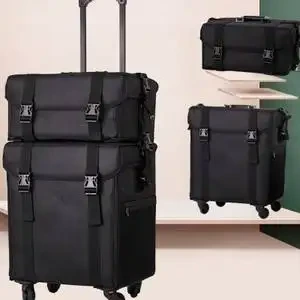
A designer sends a rendering. It looks like a suitcase, it is beautiful, and somewhere between a third and half of what makes it look good cannot be made in sheet aluminum.
That is not a criticism of the designer. Renderings do not have a material. The useful thing is to find out which half is which before anyone cuts a die, because after that the conversation costs money.
Sheet metal does not do what a molded shell does
On a molded shell the shape comes from a cavity. The material arrives soft, fills whatever the cavity says, and the curvature can be close to anything a tool maker can machine.
Sheet aluminum works the other way. You start with a flat blank and the shape comes from making that flat sheet travel, by bending it and drawing it. The metal has to stretch to get where you are sending it, and it has a limited appetite for stretching before it thins, wrinkles or splits.
So the two constructions are not just different in cost, which is the subject of aluminum frame case vs full aluminum case. They are different in what shapes are available at all.
Four shapes that come back from the floor as no
Deep compound curvature. A shell that domes in two directions at once, like a car hood, is asking the sheet to stretch a long way in every direction from the center. Shallow crowning is fine. A deeply sculpted shell is a molding shape wearing a metal finish in the render.
Tight corner radii. Renderings love a crisp edge. Metal does not bend to a point. The rule we work to is that the inside radius wants to be at least the thickness of the sheet, and anything tighter than that gets tested on real material before we agree to it, because it either cracks on the outside of the bend or it does not, and which one is not something to find out during production.
Undercuts. Any feature that curls back on itself cannot come off a press in one hit, because the tool has to be able to leave. Undercuts are possible, but only by adding operations or by splitting the part, and both of those are cost rather than impossibility.
Anything larger than the machine. This one is the least interesting and the most often fatal, so it gets its own section.
The nameplate is the specification nobody sends you
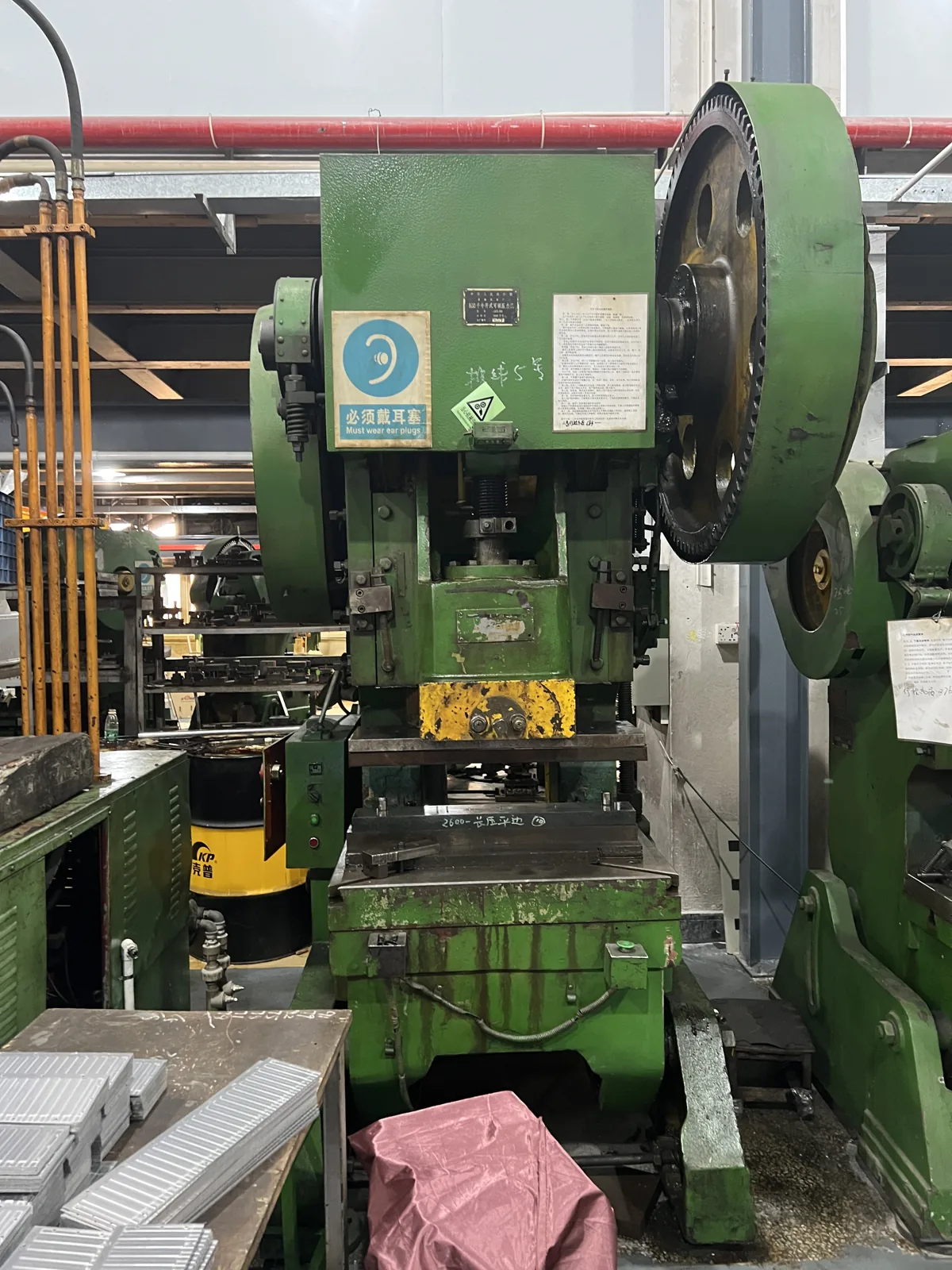
Every press has its limits stamped on it, and those limits are the outer boundary of your design whether or not anyone mentions them during quoting.
The JD23-25 open type inclinable press on our floor reads as follows on its plate. Nominal capacity 250 kN. Maximum mold height 205 mm. Depth of throat 200 mm. Slide adjustment 55 mm. That throat number is the one that surprises people, because it says how far in from the edge of a blank the press can reach, and a feature in the middle of a large panel may simply be out of range.
The larger press we described in the tooling list a luggage quote should itemize has a 1050 by 1500 mm table and 300 mm of die height. Those two numbers cap the size of a formed panel.
We get asked about oversize projects fairly often, and the honest answer is arithmetic rather than willingness. A request for a 1900 mm long piece is not a panel we can form in one operation on that table. It becomes a joined assembly, which is a different product with different tooling and different failure modes, and it should be priced as one from the start.
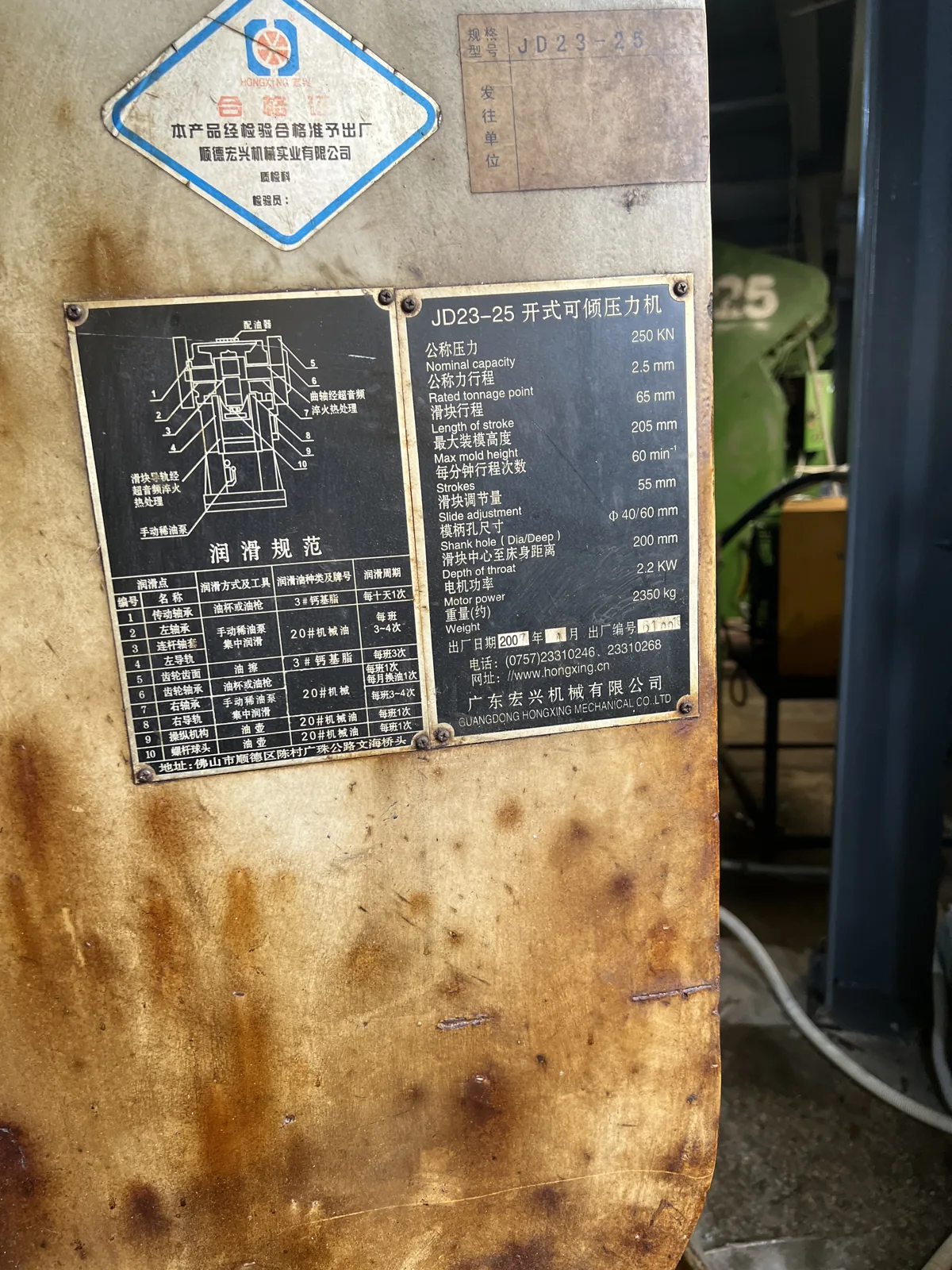
The ribs are structure, not decoration
Buyers regularly ask for a full aluminum case with smooth flat panels, because the ribbed look reads as dated to them.
Worth knowing what the ribs are doing. A flat metal panel of that size is floppy and it shows every knock. Corrugating it is what makes it stiff, and it also breaks up the surface so that handling marks read as texture rather than as damage. Take the ribs away and you have a stiffness problem and a cosmetic problem at the same time, and the usual answers are a thicker sheet, which adds weight and cost, or a different internal support arrangement.
Smooth is available. It is a specification decision with consequences, not a finish option, and it should be decided while the sample is being built rather than after the first container lands.
Changing the shape after the die exists
A die is a machined steel object. Changing what it produces means going back to the tool room and cutting metal, which is the same reason a shape change on a molded shell is expensive, covered in how luggage mold costs are quoted.
Some changes are cheap. Moving a hole, adjusting a bend angle, altering a cutout. On a frame case even moving a hole reaches steel, because the hardware positions are held by die blocks in the frame punch. Some changes are a new die. The line between them is not obvious from the outside, which is why it is worth asking before the sample round rather than after, and why we run shape questions through the sampling process instead of settling them by email.
How to send a shape we can actually quote
Six things, and with them a quote takes days instead of weeks.
Flat panel dimensions before forming. Where the bends are and which way they go. The inside radius you want at each bend. How deep the deepest formed feature is. Sheet thickness, or the weight target if you would rather we propose one, which is the approach described in hitting a weight target on an aluminum case. Finish, since that changes handling and sometimes the forming sequence.
What we do not need at this stage is a fully rendered product. We need the geometry. The rest of what belongs in the package is set out in what a luggage tech pack has to contain, and where the branding lands is a separate decision with its own timing.
What we do and what we do not
We will tell you which parts of a rendering are formable before you pay for anything, and we will say which of the unformable parts can be bought back with an extra operation and which cannot.
Our minimum is 300 units per design, and smaller test batches are negotiable rather than refused. Sampling runs 7 to 15 days per round and bulk is 45 days from a confirmed sample. Tooling terms are set per program rather than from a fixed table.
We do not redesign your product for you. If a shape does not work we will tell you why it does not work and what the nearest formable version looks like, and the design decision stays yours.
Frequently asked questions
Can you make a full aluminum case with smooth panels instead of ribs?
Yes, and it changes two things at once. The ribs are what make a large thin panel stiff, and they also disguise handling marks by giving the surface a texture. A smooth panel is floppier and shows knocks more clearly, so it usually needs a thicker sheet or extra internal support, both of which add weight and cost. Decide it during sampling rather than after production starts.
How big a panel can you form in one piece?
The press table and die height set the ceiling. Our larger press has a 1050 by 1500 mm table with 300 mm of die height, so a panel bigger than that is not a single forming operation. Oversize projects become joined assemblies with their own tooling and their own failure points, and they should be quoted that way from the beginning rather than treated as a larger version of a normal case.
Why is a tight edge radius a problem in metal but not in plastic?
A molded shell takes the shape of a cavity, so a crisp edge is just a crisp edge in the tool. Sheet aluminum has to bend around the radius, and the outside of that bend is in tension. Too tight and it cracks. We work to an inside radius of at least the sheet thickness and test anything tighter on real material before agreeing to it.
Written by James
James works at aluvox.com in Houjie, Dongguan. Equipment figures in this article were read from the nameplates on the machines described.