
The argument online is YKK against generic. That is a brand question standing in for a specification question, and the brand answer is the one you can get without knowing anything about the case.
A zipper has about seven decisions in it. Whose name is on the puller is one of them, and not the first.
What the number on a zipper means
No standards body assigns it. The convention across suppliers is that the number approximates the width of the closed chain in millimeters, so a size 5 measures roughly 5.5 mm across the closed teeth, a size 8 about 8 mm, and a size 10 about 10 mm. In luggage, size 5 turns up on soft cases and interior pockets, size 8 on backpacks and duffels, and size 10 on heavy or industrial covers. Source: Lenzip, zipper gauge sizes explained, checked as of August 2026.
Two things follow from that. A bigger number is a bigger chain, not automatically a better one, because a size 10 on a panel designed around a size 5 changes the seam allowance and the way the lid closes. And because the number is a convention rather than a standard, it tells you the width and nothing else. Two size 8 zippers from two suppliers are the same width and can be entirely different products.
The standard the comparison articles never name
There is a published test method for this, and it has been sitting there the whole time.
ASTM D2061-07(2021), Standard Test Methods for Strength Tests for Zippers, covers the determination of the strengths for zipper and zipper parts. The standard itself notes that all methods are not suitable for use with all kinds of zipper, which is the sentence that tells you it expects you to choose.
It runs to ten groups of tests. Strength of chains and elements. Holding strength of stops. Holding strengths of separable units. Resistance to cushioned compression of sliders. Slider deflection and recovery. Resistance to twist of pull and slider. Torsional resistance of slider pull for removal of components. Resistance to pull-off of slider pull. Resistance to angular pull-off of slider pull. Holding strength of slider lock. Source: ASTM D2061-07(2021), checked as of August 2026.
Read that list against how a case actually dies. The chain rarely tears. What goes is the slider, the stop at the end of the run, or the pull coming off in somebody’s hand at a baggage carousel. Six of the ten test groups are about the slider and the pull.
Which reframes the whole question. You are not buying a zipper. You are buying a slider on a chain, and the failure is almost always on the slider side.
What belongs in the specification
Seven lines. A supplier who can answer all seven is a supplier you can compare against another one.
Gauge. The size number, plus where it applies. Main closure and interior pockets are usually not the same.
Chain type. Coil, molded plastic tooth, or metal tooth. These behave differently when a case is overpacked and differently again when a case is dropped on a corner.
Slider type and lock. Automatic lock, semi-automatic, or non-lock. This is the one that decides whether a loaded case stays shut on its own.
Puller. Material, finish, and whether it carries branding. Also whether it is replaceable, because it is the part most likely to need replacing.
Tape. Width, material, and color, approved against a physical sample rather than a code, and ordered in one dye lot where the quantity allows, for the reasons set out in matching one color across a shell, a zipper, wheels and a lock.
Number of sliders. Two facing sliders let a case be padlocked. One does not. That is a security decision disguised as a hardware count.
Test methods and acceptance. Which D2061 methods apply, and the value that passes. Without this line the other six are preferences.
Where those results land in your inspection paperwork is a separate question, and it belongs in the defect classification list rather than in the AQL figure.

The decision that comes before the brand
On a metal case the zipper conversation often arrives after the point where it could have changed anything.
An aluminum frame case closes on latches with a gasket between two shells. A full aluminum case does the same. A zipper closure is a different construction with a different lid edge, a different seal, and a different way of taking load. That difference is in the tool, and the tool is cut early, which is covered in our note on what kind of tool your case actually needs.
So the order is closure type, then hardware. A buyer who has approved a latched aluminum design and then asks which zipper brand we use has asked a question the design already answered. The security argument runs the same way, since a latched case and a zippered case are locked by different mechanisms, which is the subject of our note on TSA approved locks.
What our inquiry inbox actually says
We cleaned 2,424 substantive inquiries from our own forms and counted how often each component gets mentioned. The result is lopsided.
Aluminum or a specific alloy comes up in 165 of them, 6.8 percent. Locks in 93, 3.8 percent. Wheels in 93, also 3.8 percent. Handles in 63, 2.6 percent. Zippers in 36, 1.5 percent. Lining or interior fabric in 28, 1.2 percent. Closure type as a decision, meaning latches or clasps rather than a zipper, appears in 4.
Buyers ask about the shell four and a half times more often than about the closure. They ask about the lock two and a half times more often than about the zipper that the lock is attached to.
That gap is not carelessness. The shell is what a buyer can see in a photograph and the closure is what they find out about eighteen months later. The same pattern shows up on lead time, which we wrote about in why buyers ask about delivery last.
What we do and what we do not
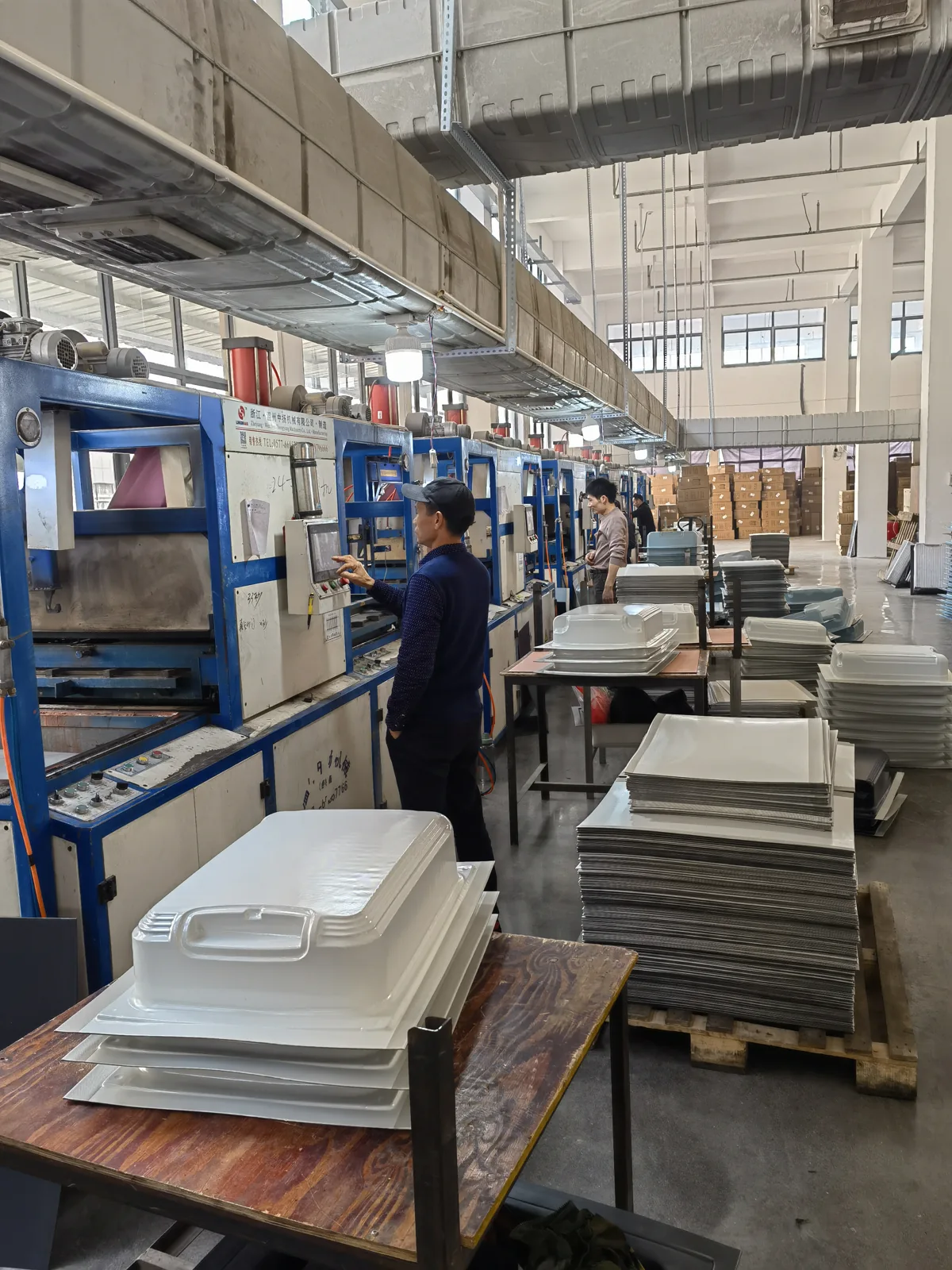
We buy zippers to the specification in the tech pack. If the tech pack names a brand and nothing else, you will get a question back rather than an assumption, because a brand name alone does not fix the gauge, the chain type, or the slider lock.
We will tell you when the closure type you have approved makes the zipper question moot, and we would rather say that at drawing stage than after the tool is cut.
Our minimum is 300 units per design, and smaller test batches are negotiable rather than refused. Sampling runs 7 to 15 days per round and bulk is 45 days from a confirmed sample.
We do not substitute a component quietly. If a specified zipper is unavailable in the quantity or the color the program needs, that comes back to you as a choice with the difference described, not as a part that turns up in the shipment.
Frequently asked questions
Is a YKK zipper worth the cost difference on a luggage program?
It depends what you are comparing. A brand name fixes the supplier, not the gauge, the chain type, or the slider lock, so a branded zipper specified loosely can underperform a generic one specified tightly. The way to settle it is to write the seven specification lines and name which ASTM D2061 methods apply with a pass value, then price both against the same document.
What size zipper should a suitcase use?
By trade convention the number approximates the closed chain width in millimeters, and luggage typically uses size 5 for soft cases and interior pockets, size 8 for backpacks, duffels and heavier soft luggage, and size 10 for industrial covers. The main closure and the interior pockets do not have to match, and the gauge has to suit the panel and seam the case was designed around rather than being chosen on its own.
What actually fails first on a luggage zipper?
Usually the slider side rather than the chain. That is visible in the structure of the published test method, where six of the ten test groups in ASTM D2061 address the slider, the pull, and the slider lock. Specifying the slider type and its lock, and requiring a pull-off value, targets the part that fails rather than the part that is easy to name.
Written by James
James works at aluvox.com in Houjie, Dongguan. Standards and test method references on this page were checked against the sources linked above in August 2026.