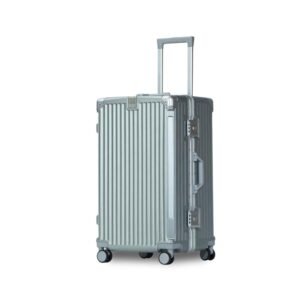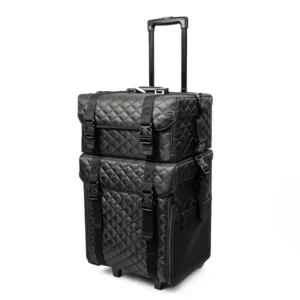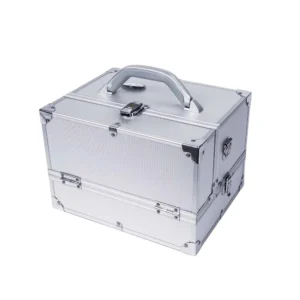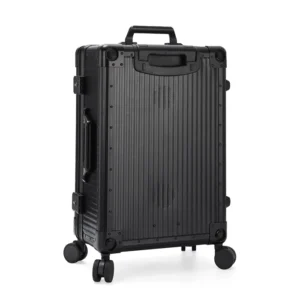

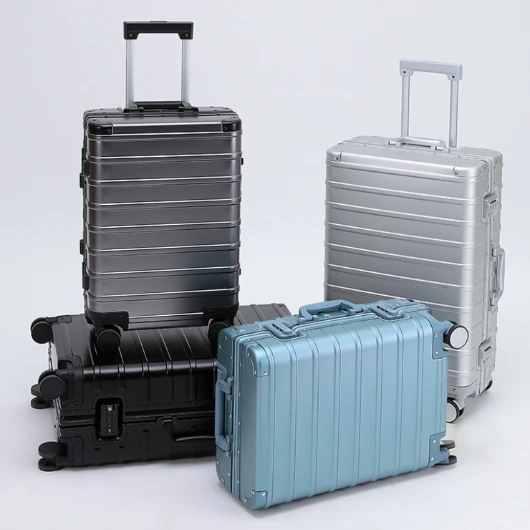
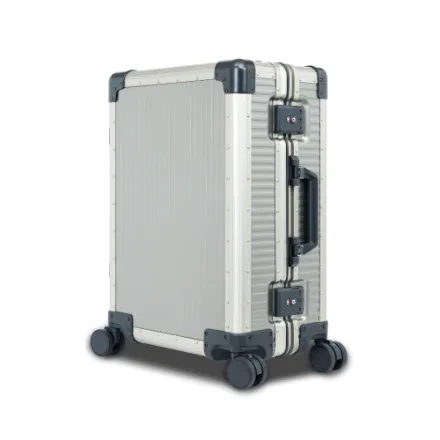
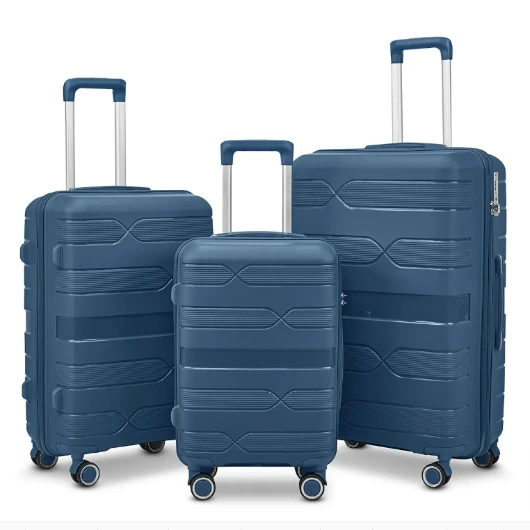
Usually not, and the first thing to settle is not the material. It is which kind of tool you are actually being offered, because luggage shells are made two different ways and the word mold covers both.
Get that wrong and the rest of the conversation is people answering different questions.
Two processes, two kinds of tool
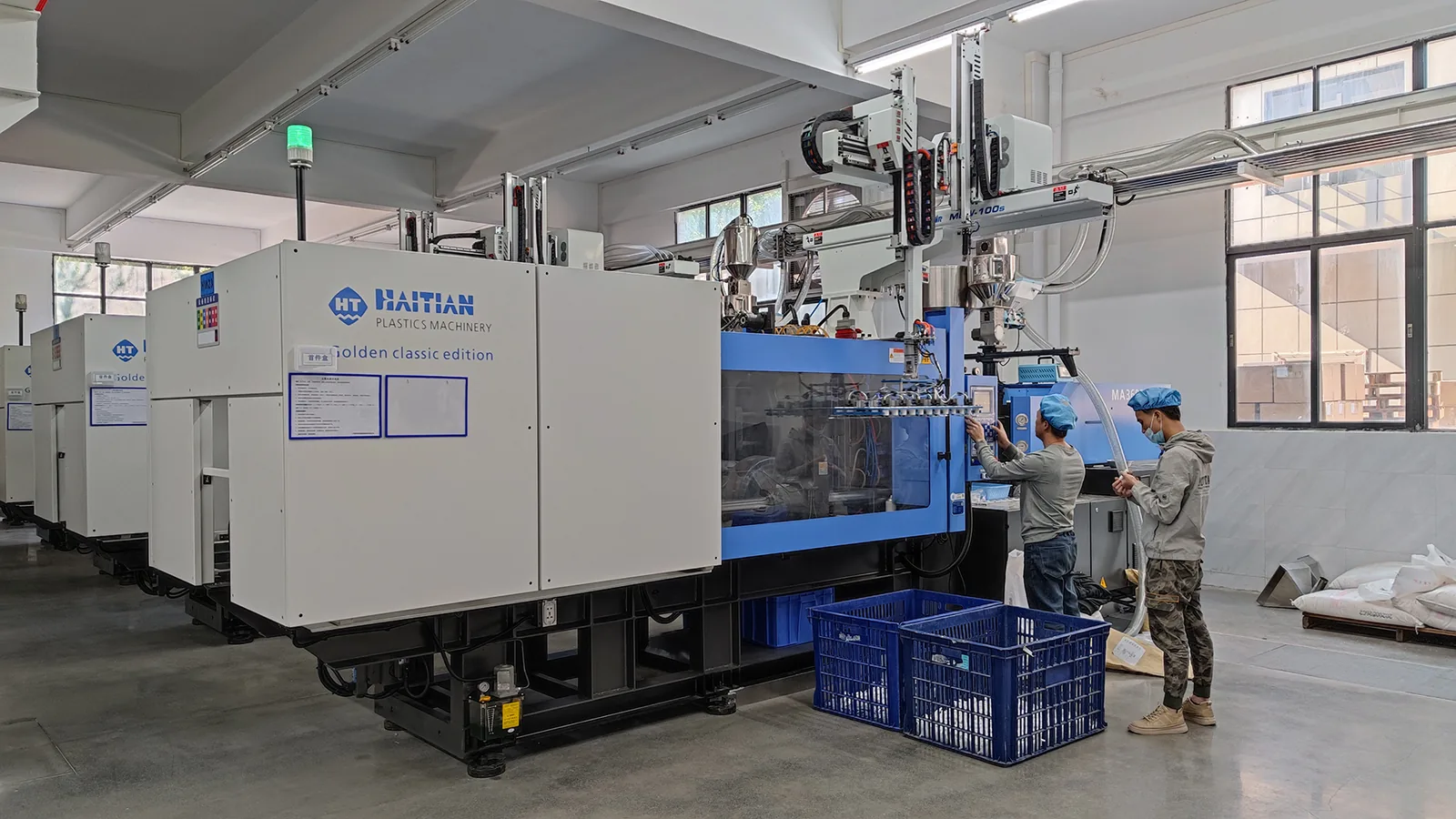
Some shells are injection molded. Resin is forced into a closed cavity, and the cavity is cut oversize by exactly the amount that resin will shrink as it cools.
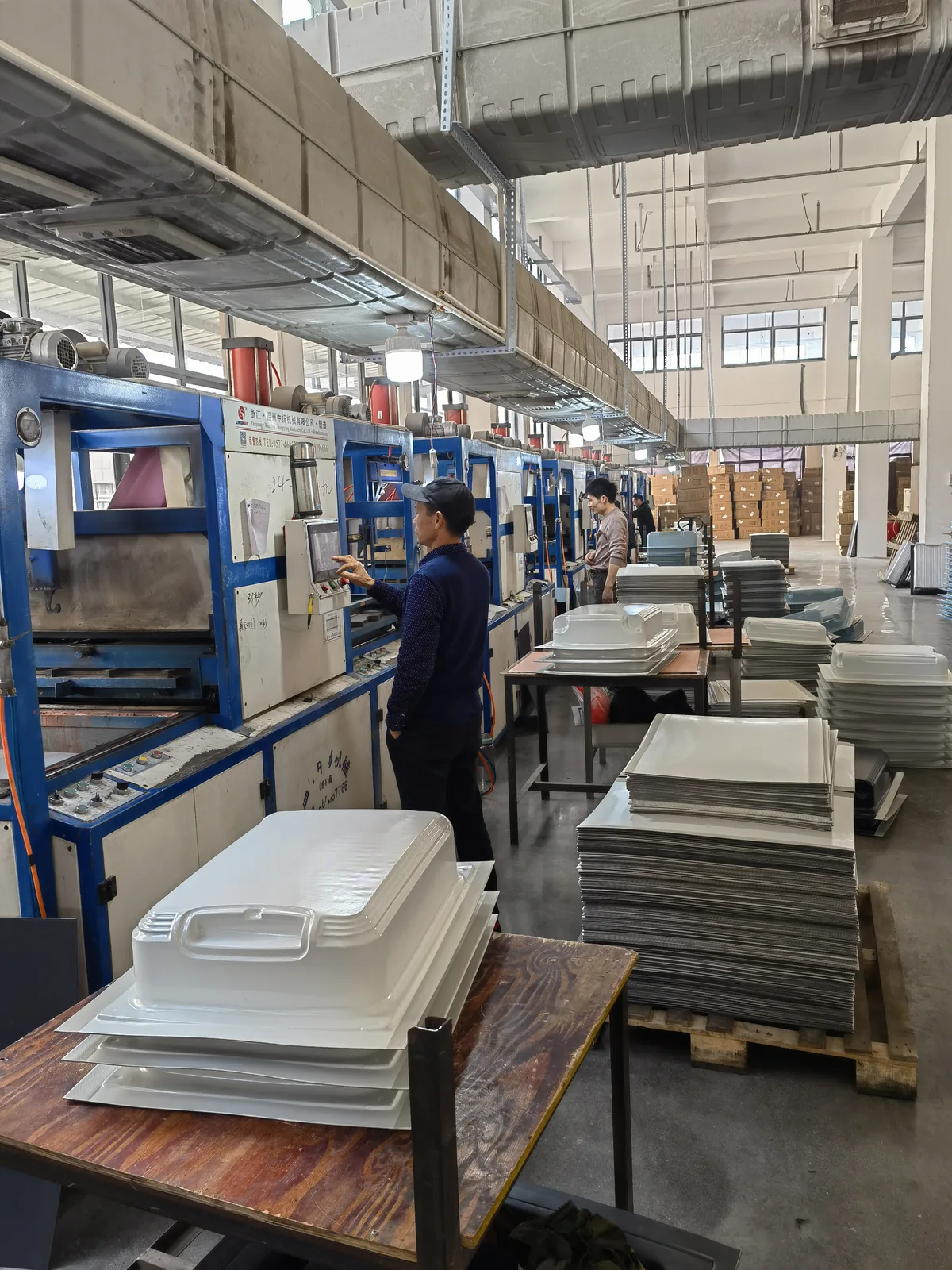
Others are thermoformed. A sheet is extruded, heated until it softens, and pressed or drawn onto a tool surface. Samsonite’s own process patent for a luggage shell describes extruding a thermoplastic substrate and shaping it in a matched mold press rather than injecting it, and names both ABS and polypropylene as substrates. Source: US 5,376,322, process for making a thermoformed shell for a luggage case, granted 1994, checked as of August 2026.
Both objects get called the mold. They are not interchangeable, and neither are the questions you should ask about them.
If it is an injection tool, the number is shrinkage
Published shrink rates put the three luggage plastics in a clear order.
| Material | Rosti shrink rate guide | SpecialChem shrinkage guide |
|---|---|---|
| ABS | 0.4% to 0.8% | 0.70% to 1.60% |
| Polycarbonate | 0.5% to 0.7% | 0.70% to 1.00% (high heat) |
| Polypropylene | 1.0% to 3.0% | 1.00% to 3.00% (homopolymer) |
Sources: Rosti, plastic injection moulding material shrink rate chart and SpecialChem, shrinkage value of plastics, both checked as of August 2026.
The two sources disagree at the edges, which is normal, because shrinkage also moves with wall thickness, gate position, and packing pressure. They agree on what matters. Polypropylene sits in a different band from the other two.
That is structural rather than a quality difference. SpecialChem puts it plainly. Semi-crystalline polymers always show higher shrinkage than amorphous polymers, because on cooling parts of their chains re-arrange into an organized structure that needs less space for the same number of atoms. Polypropylene is semi-crystalline. ABS and polycarbonate are amorphous.
So the ABS to polycarbonate swap is the one that sometimes survives a trial. The polypropylene swap is the one that does not.
What that costs on a real shell
Take a 26 in (660 mm) checked shell, measured on its long dimension.
A cavity compensated for ABS at 0.6% is cut oversize by 660 x 0.006, which is 4.0 mm. A cavity compensated for polypropylene at 2.0% is cut oversize by 660 x 0.020, which is 13.2 mm.
Run polypropylene in the ABS tool and the part lands roughly 9 mm short on that dimension. On a 55 cm (21.7 in) carry-on the absolute gap is smaller and the consequence is worse, because carry-on size is checked against a gauge and a few millimeters decides whether the case passes.
Then there is everything that is not the silhouette. The frame groove, the lock cutout, the wheel housing bosses, and the handle rail seats all move by the same percentage. The shell can look right and still refuse the hardware it was designed around.
If it is a thermoform tool, the number is the forming window
Here the part takes its shape from the tool surface and its thickness from the sheet, so there is no cavity compensation to carry across. The constraint moves to the material.
Polycarbonate forms at roughly 170 to 205 C (338 to 401 F) and has to be dried before forming, typically in a circulating oven at about 125 C, for anywhere from two hours to well over a dozen depending on sheet thickness. Skip the drying and you get bubbling and surface defects. Source: Excelite, how to thermoform polycarbonate, checked as of August 2026.
A line set up to run one sheet material is not set up to run another by loading a different roll. Heater profile, cycle time, draw behavior, and the drying step all change. The tool may well transfer. The process around it does not transfer for free, and the honest answer from a factory is a trial rather than a yes.
What to ask before you accept a shared tool
Existing tools are often the right call, and a factory offering one is not cutting a corner. The offer is only meaningful with four answers attached.
Which process is this tool for. Injection or thermoform. Ask first, because it determines every other answer.
Which material was it built around. For an injection tool, what shrink rate was compensated, as a number rather than a material name. Two ABS grades can be compensated differently.
What changes if we switch material. The real answers are a new tool, reworking the cavity, running trials, or accepting a dimensional shift. There is no fifth answer.
Who holds the tool and what happens at the end of the program. Ask this in writing at the quotation stage rather than after the first order. It is a commercial term, not a technical one.
Where this does not apply
None of it touches a full aluminum case. An aluminum sheet shell is cut, formed, and joined rather than molded or drawn from softened plastic, so there is no cavity and no forming window to match. Changing alloy changes springback and forming limits, which is a real constraint decided at the die, but it is a different constraint.
An aluminum frame case sits across both worlds. The plastic shells behave exactly as above. The extruded frame does not.
What we do and what we do not
We run PP, PC, and ABS alongside aluminum, aluminum magnesium, and titanium. Our minimum is 300 units per design, and smaller test batches are negotiable rather than refused. Sampling runs 7 to 15 days and bulk is 45 days from a confirmed sample.
We will not run a tool built around one material in another and hand you the result as the same product. Where a material change is what the project needs, the dimensional consequence goes on the drawing before anyone runs a shot.
We also will not call a tool transferable because the part looks the same. Fit is decided by the cutouts and the seats, not by the outline.
Tooling decisions land on the schedule as well as the drawing. See where the calendar actually goes for where the weeks go.
Once you know which kind of tool it is, the next two questions are what a tooling number actually buys and who owns the tooling once it is paid for.
The shell process question is also the fastest way to tell a factory from a trading company. See agent or direct factory.
Two follow-on questions come up on almost every program. How many tools a range actually needs, set out in what belongs on a tooling list, and whether an existing tool can run a different plastic, which shrinkage decides in can one mold run a different resin.
Frequently asked questions
Is it possible to use an existing mold made for ABS or PP and produce it in polycarbonate?
It depends on which process the tool belongs to. For an injection tool, ABS to polycarbonate can sometimes work because published shrink rates for the two overlap, and polypropylene to either generally cannot, because PP shrinks up to 3.0% against roughly 1% or less. For a thermoform tool the tool itself often transfers, and what has to be requalified is the forming window and the drying step.
Are luggage molds strictly material specific?
An injection tool is cut for a shrink rate rather than for a material name, so what is fixed is the compensation. Materials in the same shrinkage band can share a tool subject to trials. Materials in different bands cannot without cutting the cavity again.
Does the same issue affect aluminum luggage?
No. Aluminum shells are formed from sheet, so there is no shrink compensation built into a cavity and no forming window to rematch. Aluminum has its own version of the problem in springback and forming limits, and it is decided at the die.
Written by James
James works at aluvox.com in Houjie, Dongguan. References on this page were checked against the sources linked above in August 2026.