



If the battery does not come out, the bag cannot be checked. That is the whole product brief for smart luggage, and it is a tooling decision rather than a feature decision.
The threshold that settles it is 2.7 Wh, and no usable power bank is anywhere near that small.
What the rule actually says
FAA guidance for baggage equipped with lithium batteries is direct. Such baggage must be carried as carry-on unless the batteries are removed from the baggage.
Checked baggage is allowed in one narrow case. Lithium metal batteries with lithium content not exceeding 0.3 grams, or lithium ion batteries with a Watt-hour rating not exceeding 2.7 Wh.
Removed batteries then follow the spare battery provisions, which put them in the cabin with the passenger. Any device left in checked baggage has to be completely switched off, not asleep and not hibernating, and protected against unintentional activation.
Source: FAA PackSafe, baggage equipped with lithium batteries, checked as of August 2026. The same page tells passengers to check with the airline before traveling, and notes that international rules can differ from domestic ones.
Why 2.7 Wh ends the argument
Run the number against what buyers actually specify. A power bank worth putting in a case sits in the tens of Watt-hours. Nothing in that range comes close to 2.7 Wh.
So there is no design where a fixed battery passes as checked baggage. Either the battery is removable, or the product is a carry-on only product and has to be sold as one.
Both are legitimate. What is not legitimate is shipping a fixed battery case into the US market without telling the brand which of the two it just bought.
What removable actually has to mean
Not removable with a screwdriver. Removable by a traveler standing at a bag drop with a queue behind them.
That gives you three constraints, and all three land on the shell before the die is cut.
An external access point. A door or pocket reachable from outside the packed case. A battery bay that only opens when the case is open is not usable at a gate.
A connector the traveler can release one handed. If it takes two hands and good light, it will get forced.
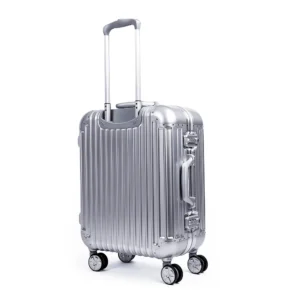
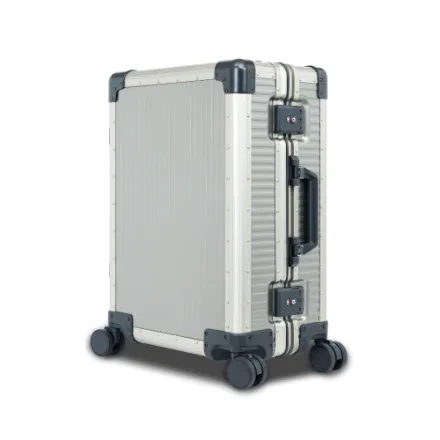
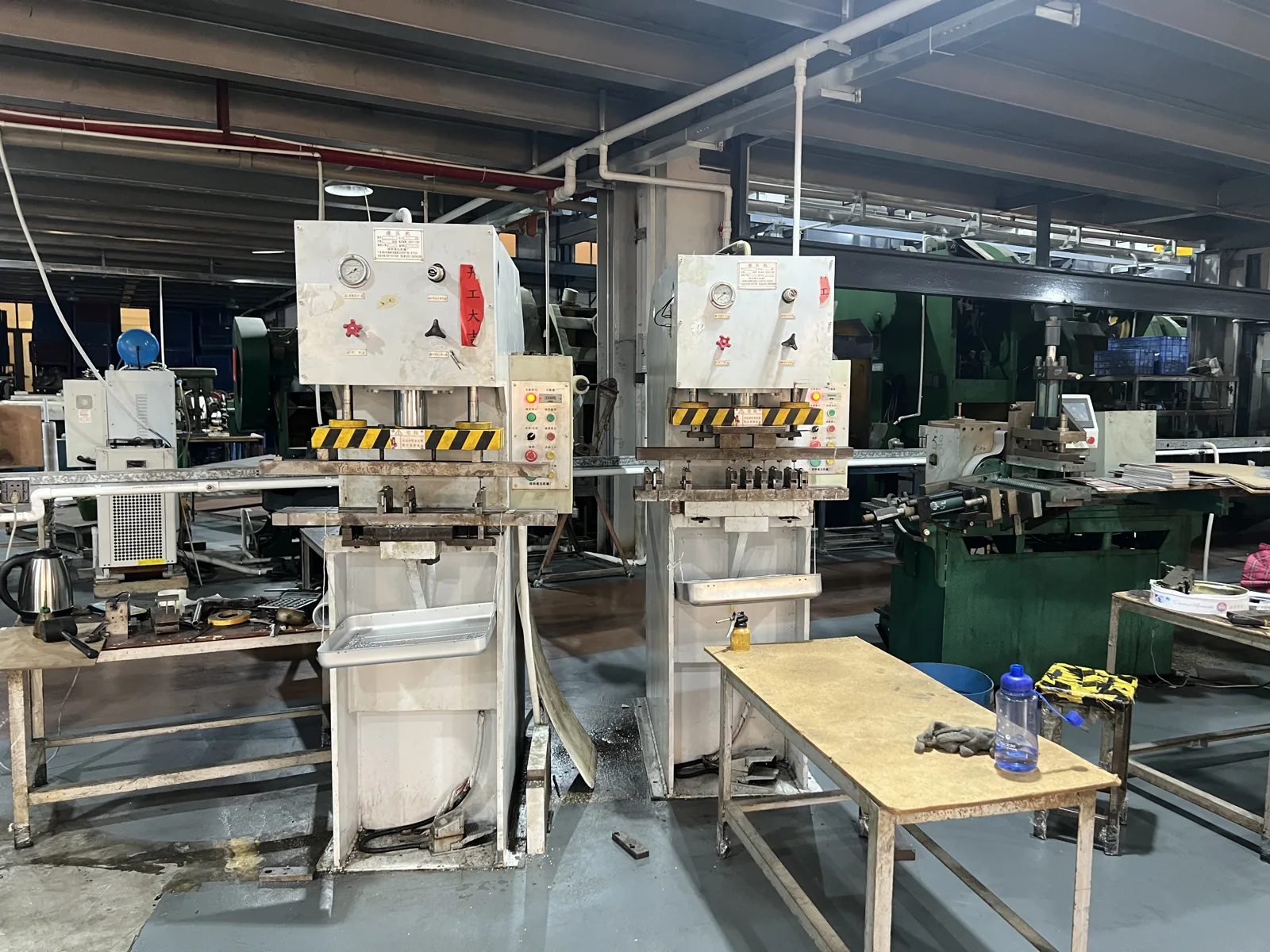
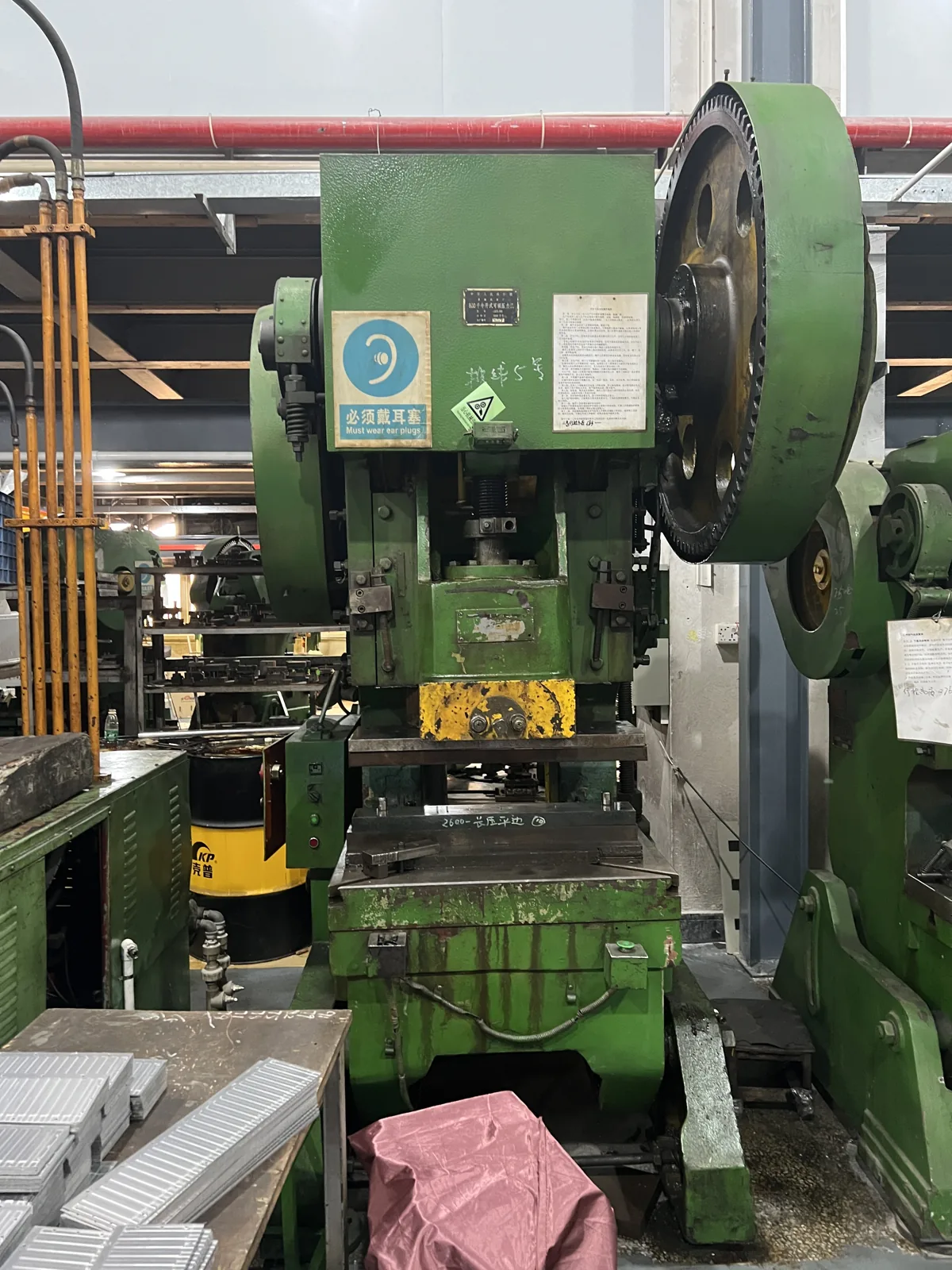
A cavity in the shell. On an aluminum case that pocket is cut in the same operation as the lock cavity and the handle rails, which means the battery decision belongs on the same drawing as the closure. Change it after die sign off and you are buying a second die.
What to put on the product page and the box
This is where brands get complaints rather than fines.
State the Watt-hour rating. Buyers checking airline rules look for that number and cannot find it on most listings.
State that the battery is removable and show how, with a photograph rather than a sentence.
Tell the traveler the battery travels in the cabin. Most returns on smart bags are not product failures, they are passengers who were surprised at the counter.
What the EU adds from February 2027
The FAA rule decides whether a bag can be checked. The EU rule decides whether it can be sold, and it points at the same design from the other side.
Regulation (EU) 2023/1542 requires that any person placing on the market products incorporating portable batteries shall ensure that those batteries are readily removable and replaceable by the end-user at any time during the lifetime of the product. Readily removable carries a definition. The battery has to come out using commercially available tools, without specialised tools unless those are supplied free with the product, and without proprietary tools, thermal energy, or solvents.
The product also has to be accompanied by instructions and safety information covering use, removal, and replacement.
Article 11 applies from 18 February 2027. Source: Regulation (EU) 2023/1542, EUR-Lex, checked as of August 2026.
Two regulators, two reasons, one shell. A bay built to satisfy the FAA rule usually satisfies the EU one, because both are asking for the same thing, which is that a traveler with no tools can get the battery out. The EU adds one word the FAA does not, and that word is replaceable. Replaceable is a spare parts question rather than a hatch question, and it has a date attached.
The document your freight forwarder will ask for
Separate from what a passenger may carry, there is a document that has to exist before a battery moves at all, and brands routinely discover it at the worst moment.
US regulation requires each lithium cell or battery to be tested to the criteria in part III, sub-section 38.3 of the UN Manual of Tests and Criteria. It then requires that each manufacturer and subsequent distributor of lithium cells or batteries, except for button cells installed in equipment, manufactured on or after January 1, 2008, must make a test summary available. Source: 49 CFR 173.185, eCFR, checked as of August 2026.
Note the phrase subsequent distributor. The obligation follows the battery down the chain. It does not stop at the cell maker.
The summary has ten required elements, and the list is worth reading against whatever your supplier sent you. Name of the cell, battery, or product manufacturer. Manufacturer contact information including address, phone, email, and website. Test laboratory name and contact details. A unique test report identification number. The date of the test report. A description of the cell or battery covering chemistry, mass, watt-hour rating or lithium content, physical description, and model number. A list of tests conducted and results, meaning pass or fail. A reference to the assembled battery testing requirements. A reference to the edition of the UN Manual of Tests and Criteria used. And the name and title of the person validating the information.
Two of those ten are where documents usually fail. A summary with no unique report number cannot be traced to a test, and a summary that names no edition of the manual does not tell you which version of the criteria was applied.
The practical instruction is short. Ask for the test summary at quotation stage rather than at booking stage, check that the model number on it is the cell actually in your case, and keep it with the technical file. A battery changed mid-program invalidates the summary you hold, which is the same substitution problem covered in our note on pre-shipment inspection.
What we build and what we will not
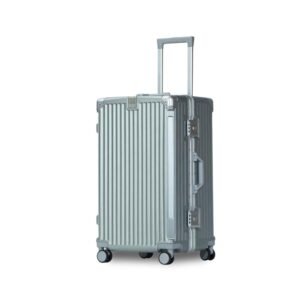
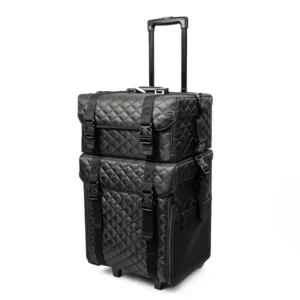
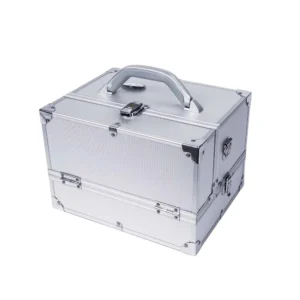
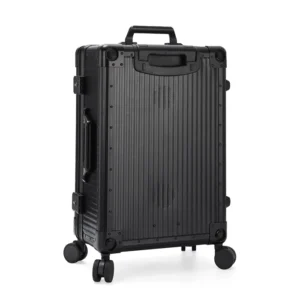
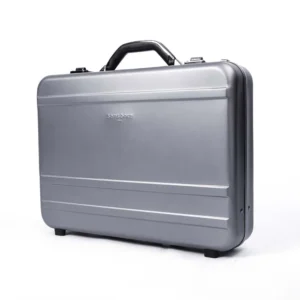
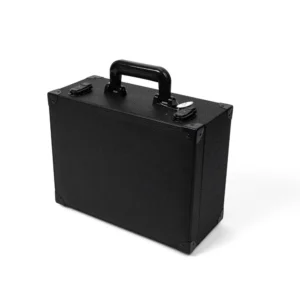
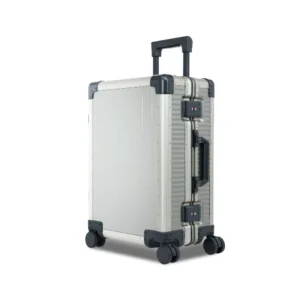
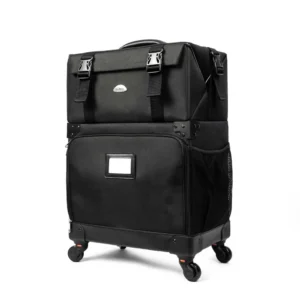
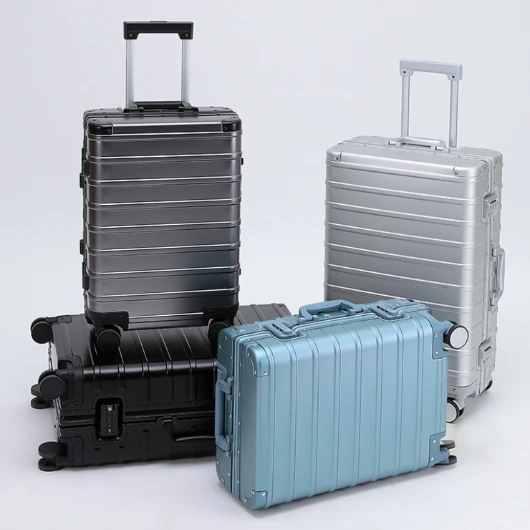
We make cases with integrated power, in aluminum, aluminum magnesium, titanium, and the plastics we run. Sampling is 7 to 15 days and bulk is 45 days from a confirmed sample, and the battery cavity does not change either number as long as it is on the first drawing.
We will not build a sealed battery bay for a US program and call it a checked bag. If a brand wants a fixed battery for design reasons, we will build it and write on the specification that the resulting product is carry-on only, so it reaches the marketing team rather than the customer service team.
We also do not supply the cell. Battery packs come from the brand’s own supplier or from a source we agree in writing, and the transport documentation for those cells sits with whoever manufactures them, not with the case factory.
We take orders from 300 pieces on stock 5052 through existing molds, and we quote below that. Under 300 with a new battery cavity the die will not amortize.
If you are speccing a powered case now, send the battery dimensions and the Watt-hour rating with the drawing and we will come back on whether the cavity works before anything is quoted.
The battery cavity belongs on the same document as everything else the shell has to carry, which is what a tech pack has to contain.
Placing the product in Europe raises a separate question from the battery rule, which is who has to be responsible for it inside the EU.
Frequently asked questions
Can a smart bag with a built in battery be checked on a US flight?
Only if the battery stays under 2.7 Wh for lithium ion or 0.3 grams lithium content for lithium metal, which no practical power bank does. Otherwise the battery has to be removed and carried in the cabin, per FAA PackSafe as of August 2026.
Does the battery have to be removable?
For a product intended to be checked, yes in practice. A fixed battery case is a carry-on only product and should be specified and sold as one.
Who is responsible for the battery documentation?
The battery manufacturer holds the transport test documentation for the cells. A case factory can fit a pack and should not be the party certifying it.
Do you customize from customer’s drawings and specs?
Yes. Send a 3D file or a dimensioned 2D drawing with the closure type, the handle rail position, and the battery cavity marked. Those three are cut in the same operation.
What is your MOQ for this type of product, and do you support small test batches?
300 pieces on stock 5052 running existing molds, and we quote below that. Under 300 on new tooling the die cost will not amortize.
What is the estimated production lead time after deposit and sample approval?
45 days for bulk on a confirmed sample. Sampling before that runs 7 to 15 days.
Written by James
James works at aluvox.com in Houjie, Dongguan. Transport references on this page were checked against the FAA source linked above in August 2026. Airline policies vary and the carrier’s current rules govern at the gate.