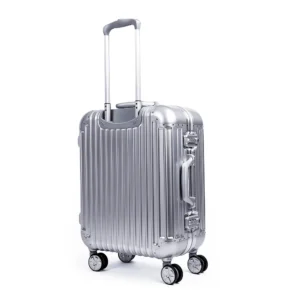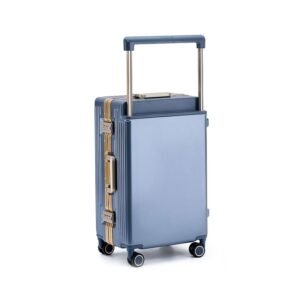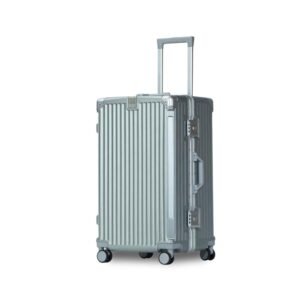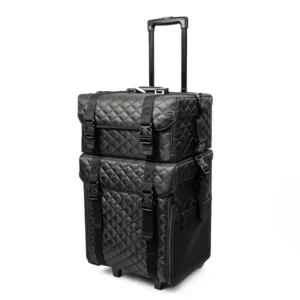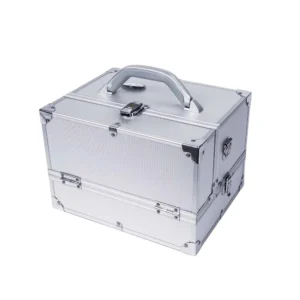

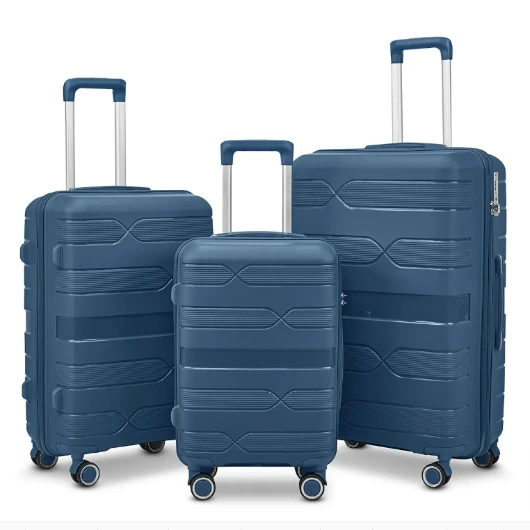
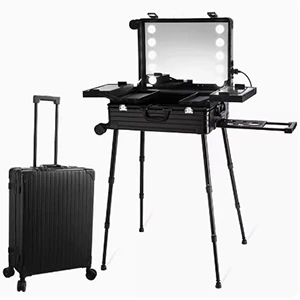


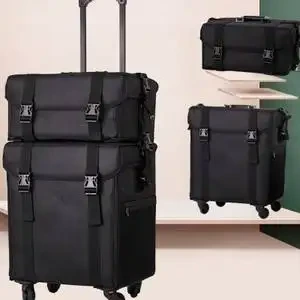
Two things decide what your aluminum cases cost at the US border, and only one of them is the tariff. The other is whether the country of origin mark survives the trip to the shelf. Get the second one wrong and Customs adds 10 percent of appraised value on top of everything else.
Here is the classification, the marking rule, and the part that changes often enough that you should check it yourself rather than trust any supplier page including this one.
Which line your case falls under
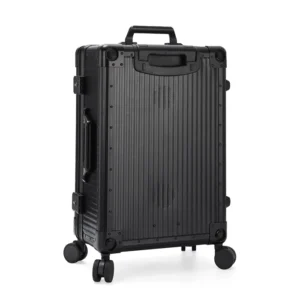
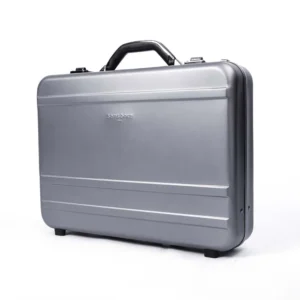
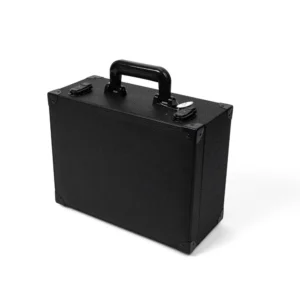
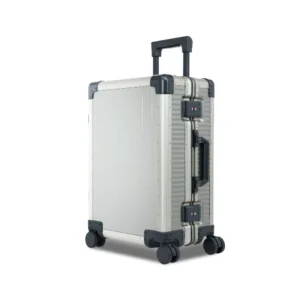
Heading 4202 splits by the outer surface of the case, not by what is inside it. That single rule puts a full aluminum case and an aluminum frame case with plastic shells on two different lines.
| Product | HTS subheading | General rate of duty |
|---|---|---|
| Full aluminum case, aluminum outer surface | 4202.19.00.00, Other | 20% |
| Aluminum frame case, PC or ABS outer shells | 4202.12.21.20, structured, rigid on all sides | 20% |
| Soft case, man-made fiber outer surface | 4202.12.81 | 17.6% |
| Soft case, other textile | 4202.12.60 | 5.7% |
Source: Harmonized Tariff Schedule of the United States, 2026 Revision 16, checked as of August 2026. Rates shown are the general column and change with the schedule, so confirm your own line before you build a landed cost model.
This is also why the vocabulary on a quotation matters. An aluminum frame case is not an aluminum case, and the difference is not marketing. The two products enter the United States under different subheadings, and a broker who classifies from the product name rather than the construction will put yours on the wrong line.
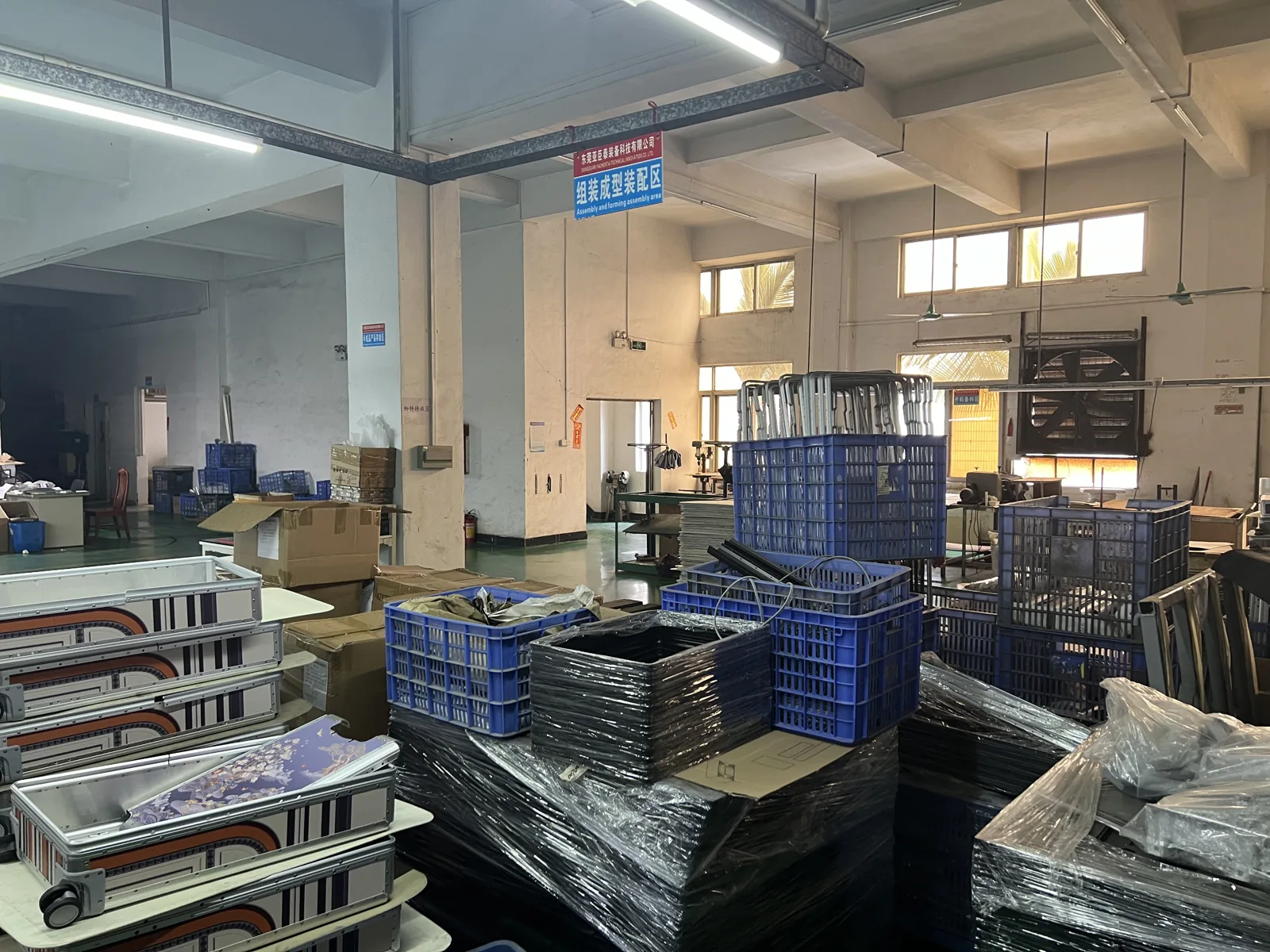
The marking rule that costs 10 percent
Every imported article has to carry the English name of its country of origin. The standard is set out in 19 CFR Part 134 and it is stricter than most first time importers expect.
Section 134.41 requires the mark to be legible, indelible, and permanent, and to survive normal distribution and store handling so the ultimate purchaser can find and read it.
Section 134.44 requires it to appear in a conspicuous place.
Section 134.2 adds duties of 10 percent of the final appraised value for articles that are not properly marked, under 19 U.S.C. 1304(f).
Source: 19 CFR Part 134, checked as of August 2026.
Read the word indelible again. A printed sticker on a shell is not indelible and it is the most common way this goes wrong on aluminum cases, because a sticker is the cheapest option at the factory and the first thing to peel in a container.
What that means on our line
On an aluminum shell the durable options are laser engraving or etching into the metal, or a plate riveted rather than glued. On a frame case with plastic shells, a molded in mark on the shell or a sewn label inside the lid both hold.
Decide which one you want at drawing stage. Engraving position has to be agreed before tooling on the same drawing that carries the closure and the handle rails, because all three are cut in the same operation.
Ask any supplier, including us, one question. Show me the origin mark on a unit from the last run, not on a sample. Samples get marked carefully. Runs are where the sticker appears.
The part that changes, and how to check it
Goods of Chinese origin carry additional duties beyond the general rate, applied through Chapter 99 subheadings in the 9903.88 series. Those lists and rates have been revised repeatedly since 2018 and continue to be.
We are not going to print a current combined rate on this page, because a rate printed today is wrong within a quarter and a wrong rate in your cost model is worse than no rate. Check it yourself in four steps.
One, confirm the subheading for your actual construction, not your product name.
Two, look that subheading up in the current HTS revision and read the general column.
Three, check the Chapter 99 notes for any additional duty that applies to goods of China on that line.
Four, have your customs broker confirm both before you commit to a retail price, and put the date of that confirmation in your cost sheet.
All duties are as published by the relevant agency at the time of entry, and the current official notice governs.
Two more things that sit with you, not with the factory
The importer of record is you. Classification, valuation, and marking are the importer’s legal responsibility. A factory can build to your spec and mark to your instruction, and none of that transfers liability.
California is its own question. Proposition 65 requires a clear and reasonable warning before exposing anyone in California to a listed chemical, and businesses with fewer than 10 employees are exempt. Source: California OEHHA, checked as of August 2026. If any part of your program sells into California, raise it at spec stage rather than at first shipment.
What we do and do not do here
We mark to your instruction and we will tell you when the instruction will not survive. If you ask for a sticker on an anodized shell, we will quote it and say in writing that it is unlikely to meet the permanence standard.
We do not classify your goods and we do not give customs advice. We can describe the construction precisely enough for your broker to classify it correctly, which is the useful thing a factory can actually do.
We take orders from 300 pieces on stock 5052 through existing molds, and marking method is part of the drawing rather than a later decision.
If you are sizing landed cost now, send us the construction detail your broker needs and we will write it out in the terms the classification actually turns on.
Two categories add a second layer on top of entry. Powered cases run into the smart luggage battery rules, and kids sizes run into kids luggage CPSIA testing.
Entry rules decide what can land. Before that, the vessel has to be booked against a real production date, which is where the calendar actually goes.
Entry rules are one side of a shipment. The other is when money moves against it, which is which payment structure puts the risk where.
The US is one entry regime. Selling the same case in Europe raises a different question, which is who has to be responsible for it inside the EU.
Frequently asked questions
What HTS code applies to an aluminum suitcase imported into the United States?
Classification under heading 4202 follows the outer surface. A full aluminum case falls to 4202.19.00.00 at a 20 percent general rate, while an aluminum frame case with plastic shells falls to 4202.12.21.20, also 20 percent general, per the 2026 HTS as of August 2026. Confirm your own line with your broker.
Does an aluminum frame case use the same code as a full aluminum case?
No. The subheading follows the outer surface material, so a frame case with polycarbonate or ABS shells classifies with plastics rather than with metal.
Can we put a Made in China sticker on the case?
19 CFR 134.41 requires the mark to be legible, indelible, and permanent through normal distribution and store handling. A sticker generally does not meet that, and improperly marked goods carry additional duties of 10 percent of appraised value under 19 CFR 134.2.
Who is responsible if the classification is wrong?
The importer of record, which is you rather than the factory. A supplier can describe the construction accurately and should. Classification and valuation remain the importer’s obligation.
What is your MOQ for this type of product, and do you support small test batches?
300 pieces on stock 5052 running existing molds, and we quote below that. Under 300 on new tooling the die cost will not amortize.
What is the estimated production lead time after deposit and sample approval?
45 days for bulk on a confirmed sample. Sampling before that runs 7 to 15 days.
Origin marking has a second half, which is what a brand may claim on the product when the design work happened somewhere other than the assembly, set out in designed in USA and made in China. Where every one of these marks physically lands on the carton is covered in export packing and marks.
Written by James
James works at aluvox.com in Houjie, Dongguan. Tariff and marking references on this page were checked against the official sources linked above in August 2026, and the current official notice governs at the time of entry.